Rooted in textiles, embroidery, found objects, and tactile languages, Marisa Caichiolo’s fragile works carry heavy narratives of loss, migration, and political violence. By privileging touch, intimacy, and embodied experience, her work resists spectacle and instead creates spaces for reflection and care. Her works do not speak for the past, but hold it gently, allowing memory to remain open, relational, and unfinished. Through familiar materials such as textiles, natural elements, and sound, she translates memory to reveal how it travels, what is carried, what is forgotten, and what is reimagined.
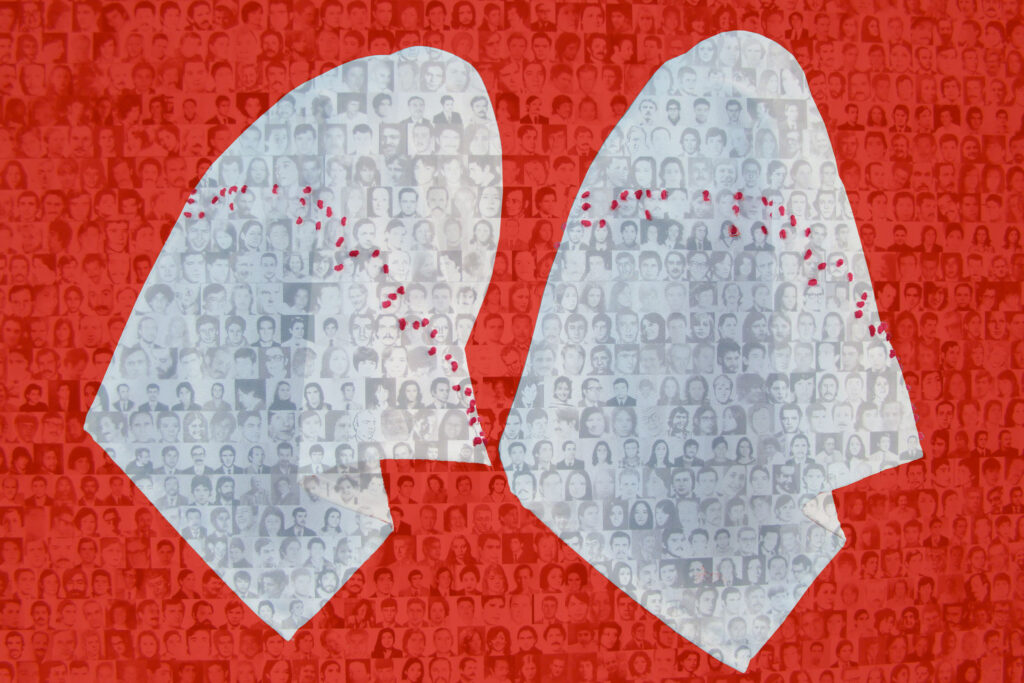
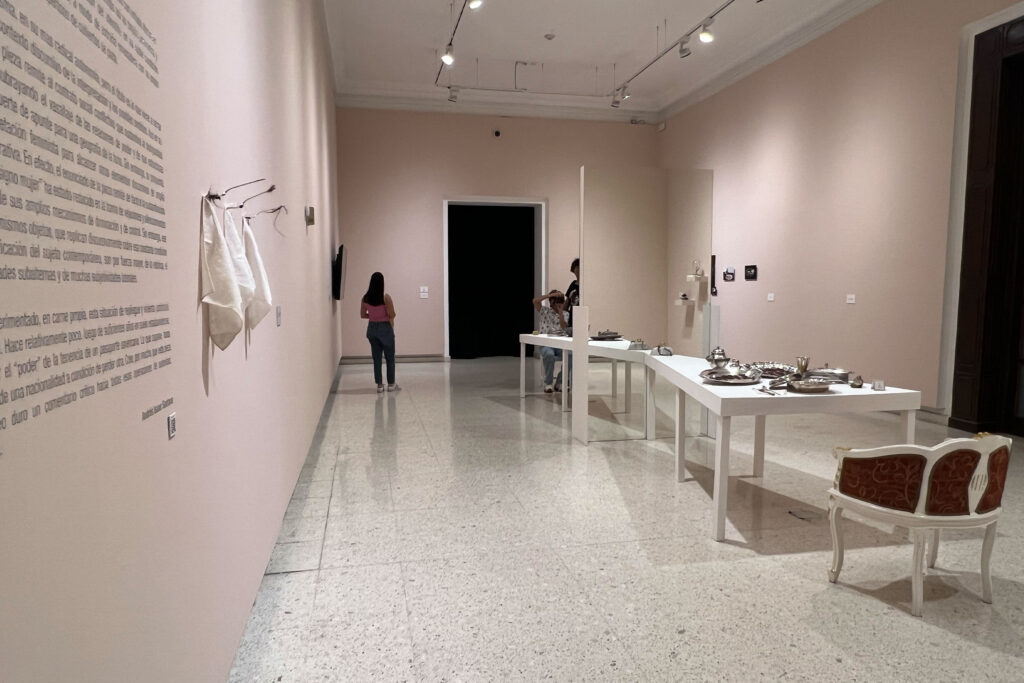
Anna Borrie The work “No More Blind Than Those Who Choose Not to See” uses Braille embroidery on handkerchiefs to address Argentina’s forced disappearances during the military dictatorship. What is the connection between memory and materiality in this work?
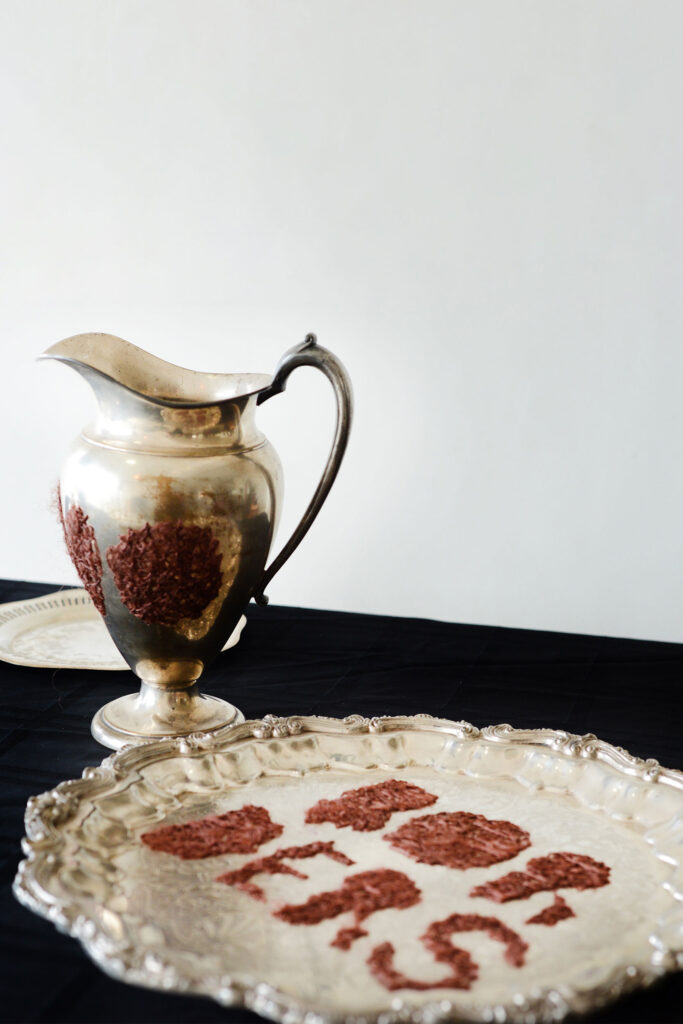
Marisa Caichiolo The work ties memory to materiality by making absence visible through tangible, relational media. I have grounded much of my conceptual practice in embroidery on everyday objects, such as silverware and objects, textiles and handkerchiefs with calligraphy, hair, thread and Braille, turning textile and textual surfaces into vessels of memory.
The material choices, in this particular case delicately stitched fabric, red dye, and the tactile potential of handkerchiefs, invite viewers to physically engage with history’s traces, not merely read about them. The Braille/embroidery intertwines coded language with intimate, portable objects, foregrounding how memory is carried, touched, and made legible through matter.
By embedding the historical trauma of Argentina’s forced disappearances into objects that are handled, worn, or touched, the work links recollection to sensory experience, suggesting that memory requires both cognitive decoding and embodied perception. At the same time, the installation becomes an experiential space where viewers can engage their senses, particularly through touch. Trying with this process to make visible the invisible.
Anna Embroidery has been central to your work over the past decade, from precious threads on paper to hair on silver service sets. What draws you to this traditionally feminine craft as a vehicle for addressing political violence?
Marisa Sewing and embroidery have long been central to my practice because materiality and memory are inseparable for me. The objects, textiles, and embroidery I work with connect to my personal history; every painful moment in my life feels present in them. These practices come from my ancestors, my grandmother and great-grandmothers who fled war in Europe, and were passed down from generation to generation. For them, sewing and embroidery were primary means of connection and communication with the world, and those tactile, intimate acts are how I engage with political violence and with my own personal healing through art.
Engaging with embroidery allows me to translate collective trauma into something portable, tangible, and intimate, something that can be touched, worn, and carried. In this sense, the craft is not merely decorative; it becomes a method of making memory legible through matter. I would even describe it as a political act: reclaiming agency through a traditionally feminine medium, turning private making into a public, critical conversation about violence, memory, and justice.
By embedding the historical trauma of Argentina’s forced disappearances into objects that are handled, worn, or touched, the work links recollection to sensory experience, suggesting that memory requires both cognitive decoding and embodied perception.
Marisa Caichiolo
Artist and curator
Anna As founder of Building Bridges Art Exchange, you’ve worked with international biennials, including Casablanca, Sharjah, and the Biennial of the Americas. What role do you see art playing in building understanding across borders?
Marisa As founder of Building Bridges Art Exchange 20 years ago, I’ve seen firsthand how art can translate across cultural and linguistic divides.
Art is a shared language that invites curiosity, empathy, and dialogue where words alone often fall short. By organizing exchanges, residencies, traveling exhibitions, and collaborations that place artists from diverse contexts in dialogue with one another, we create spaces where different histories and perspectives can be witnessed and reflected upon.
Art functions as a bridge not by smoothing over differences, but by making them visible and negotiable. It foregrounds questions rather than answers, allowing audiences to encounter experiences outside their own frame of reference. When communities encounter contemporary art, from Casablanca to Sharjah to the Americas, they are prompted to reconsider assumptions, recognize common humanity, and imagine new forms of collaboration and solidarity.
In practice, this means supporting projects that center artists’ voices, foster co-creation, and present work in accessible, community-minded settings. It also means building infrastructures that are reciprocal, learning from partners, sharing resources, and elevating art’s capacity to illuminate social, political, and cultural realities. Ultimately, art can help people see each other more clearly, laying the groundwork for trust, understanding, and peace across borders. This truly connects with our mission at BBAX.
Anna Your work consistently engages with collective memory and trauma. How do you navigate the responsibility of representing such painful historical events in your art? How do you balance honouring the disappeared while avoiding speaking for them?
Marisa Personally navigating the responsibility of representing collective memory and trauma begins with humility, listening, and a clear ethical stance. I approach painful stories and histories not as a single authorial account, but as a listening practice. I learn from survivors, families, and communities most directly affected, and I center their voices in the development of my work. For example, through visits and interviews with family members involved with centers for the disappeared in South America, listening to their stories and bearing their tears gave me the strength to approach trauma with a different ethical lens, an ethics of care over spectacle.
I create works that invite touch, reflection, and ongoing engagement rather than sensational display. Materiality, the fabrics, embroidery, textures, and objects, serves as a conduit for memory that can be handled, worn, and carried, making the past present without collapsing it into a single narrative.
I see memory as collective. I collaborate with communities and voices connected to the events, ensuring their perspectives shape the imagery, language, and presentation. This helps resist speaking for the disappeared and instead amplifying the stories and testimonies that exist within those communities.
The acts of omission, silence, and forgetting are as important as what is shown. By foregrounding absence through carefully chosen materials and formats (braille, empty spaces, portable objects), the work invites viewers to read the traces and make their own meanings, rather than prescribing a fixed interpretation.
I acknowledge the limits of representation. There will always be aspects I cannot fully capture. I strive to contextualize my work within historical research, testimonies, and archival materials, and to provide pathways for viewers to access additional sources and voices. For me representing trauma is not a one-off gesture but a long-term responsibility.
I see memory as collective. I collaborate with communities and voices connected to the events, ensuring their perspectives shape the imagery, language, and presentation. This helps resist speaking for the disappeared and instead amplifying the stories and testimonies that exist within those communities.
Marisa Caichiolo
Artist and curator
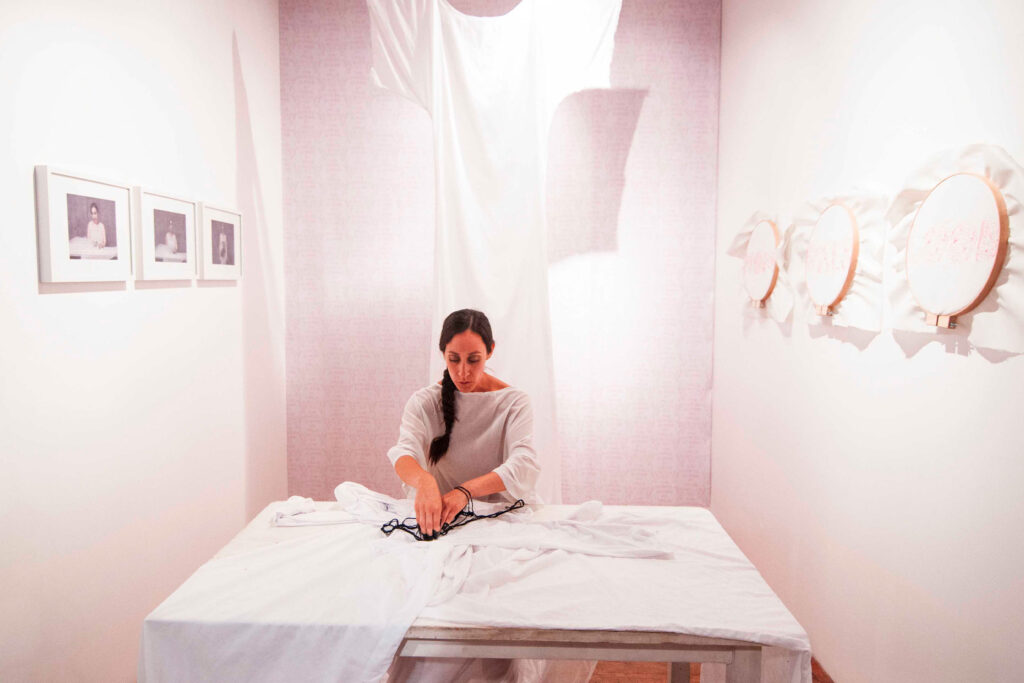
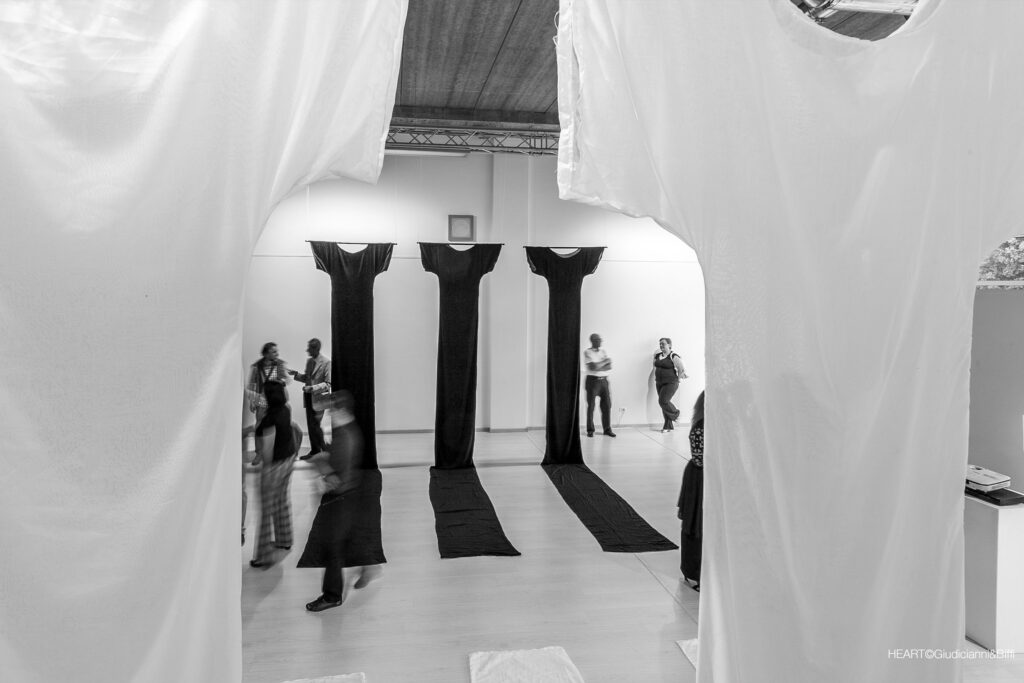
Anna “The House” emerged from your firsthand experience with California wildfires. The work addresses both destruction and the regenerative power of nature and the resilience of the human spirit. How do you balance depicting loss while suggesting hope?
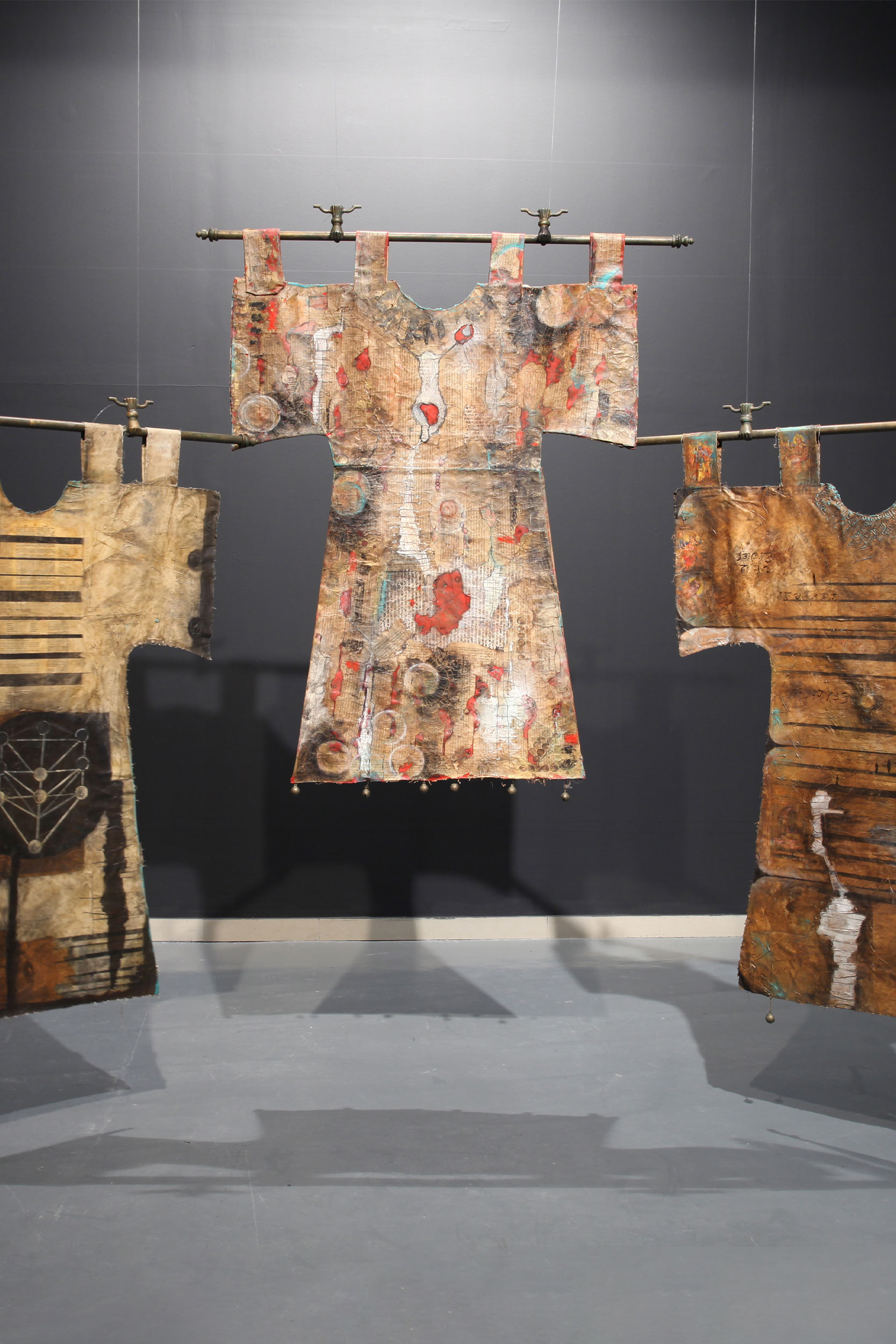
Marisa The House for me was a project that touched me deeply…and also balances loss and hope by anchoring the work in lived experience while holding space for renewal.
I approach destruction with honesty and restraint, avoiding sensationalism, and I invite viewers to witness not only the violence of fire but the enduring capacity for regeneration, both in nature and in people.
The installation foregrounds women’s roles in domestic spaces, acknowledging how homes have been shaped by generations of labor, care, and memory. In doing so, loss is not abstract; it is connected to intimate histories of survival, love, and resilience. The “house” becomes a tribute to those who endured and a metaphor for persistence, continuity, and the possibility of rebuilding.
I use the objects in connection with nature, the houses with branches and roots, careful reconstruction to suggest that even after devastation, memory and identity can be reimagined.
The work speaks to my own experience as a mother, immigrant, and observer, turning personal loss into a broader signal of hope, community, and renewal.
Anna Fire has such powerful symbolic resonance across cultures. In earlier works you explored mysticism and incorporated motifs from various religions and belief systems. For “The House”, are you drawing on any specific cultural or mythological references?
Marisa While fire is a universal symbol with deep, cross-cultural resonance, my approach in The House is less about citing specific mythological references and more about engaging lived experience through objects, memory, and the intimate labor of women within the domestic sphere.
I treat the fire in this body of work as a catalyst to explore resilience, regeneration, and collective memory, and the imagery, especially after the devastation of the fires in Los Angeles and California in general, I used houses, roots, garments, objects, and the spaces in between, as a language of endurance rather than a literal iconography of a single tradition.
That said, I remain attentive to cultural meanings around fire, transformation, and home across contexts. If particular cultural or mythological references emerge through conversations with communities or viewers, I welcome those testimonies as part of the work’s evolving dialogue. In essence, The House speaks through personal and communal memory, inviting diverse interpretive threads rather than asserting a fixed symbolic lineage.
I use the objects in connection with nature, the houses with branches and roots, careful reconstruction to suggest that even after devastation, memory and identity can be reimagined. The work speaks to my own experience as a mother, immigrant, and observer, turning personal loss into a broader signal of hope, community, and renewal.
Marisa Caichiolo
Artist and curator
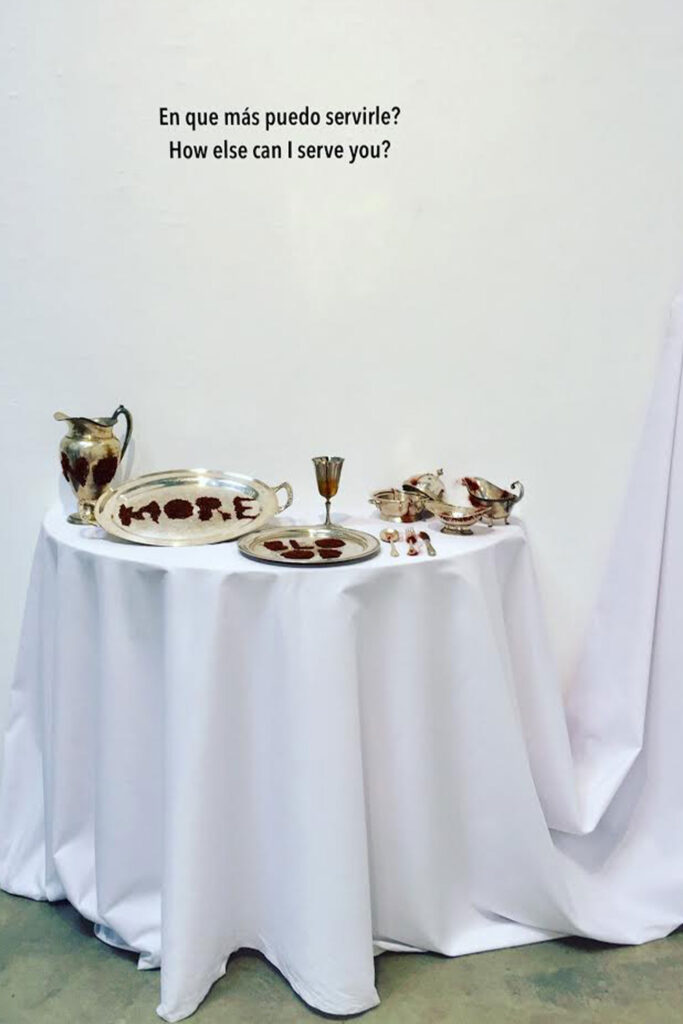
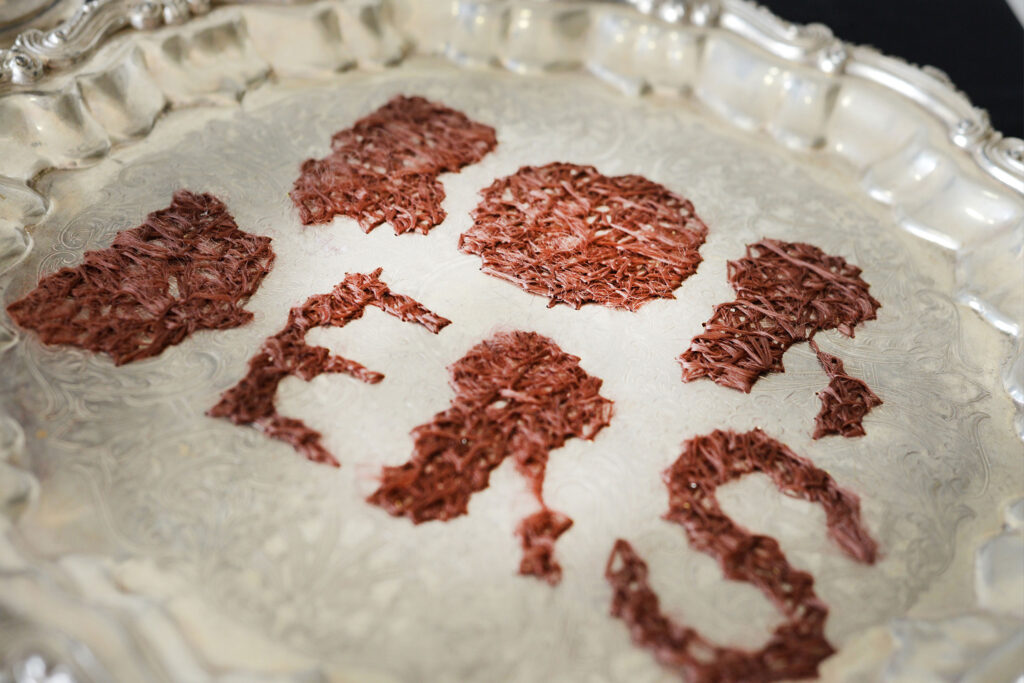
Anna Your work often addresses displacement and migration. How does working in landscapes connect to these themes of movement and belonging?
Marisa Working in landscape contexts and through nature-based interventions deepens my engagement with displacement, migration, and belonging by foregrounding spatial, environmental, and ecological factors that shape movement and memory. Landscapes are not neutral backdrops; they carry histories of growth, loss, and return, and they can be transformed through acts of intervention.
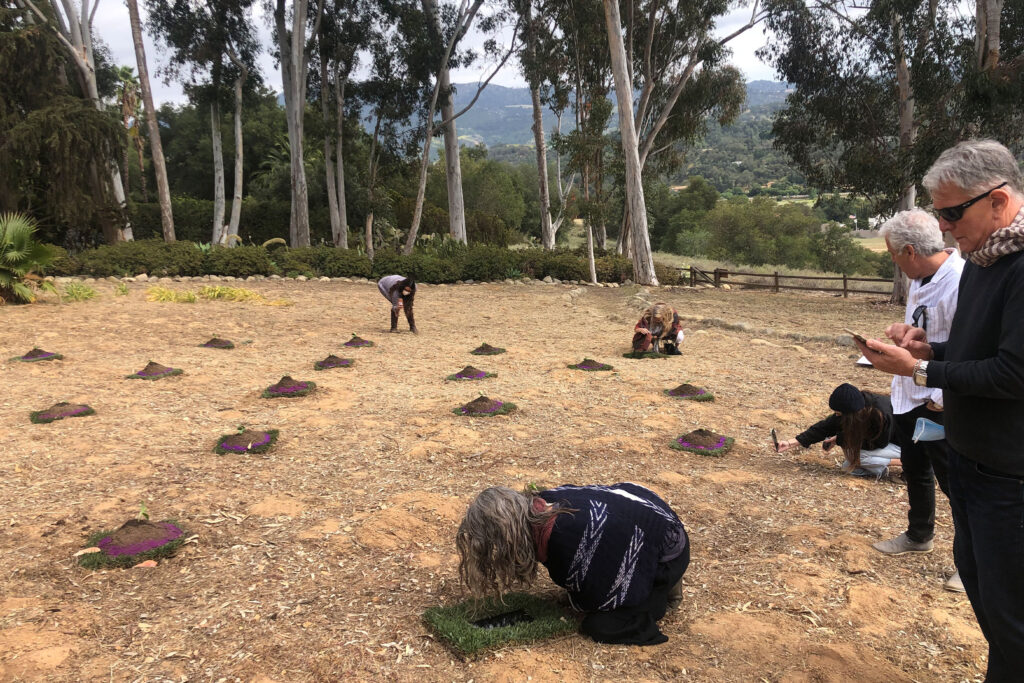
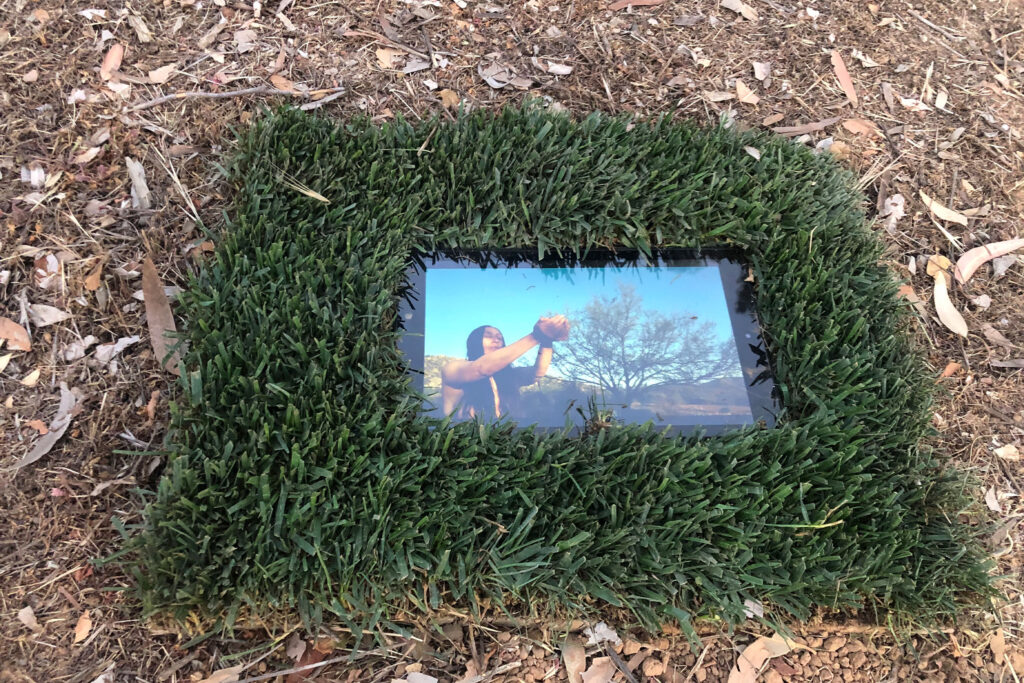
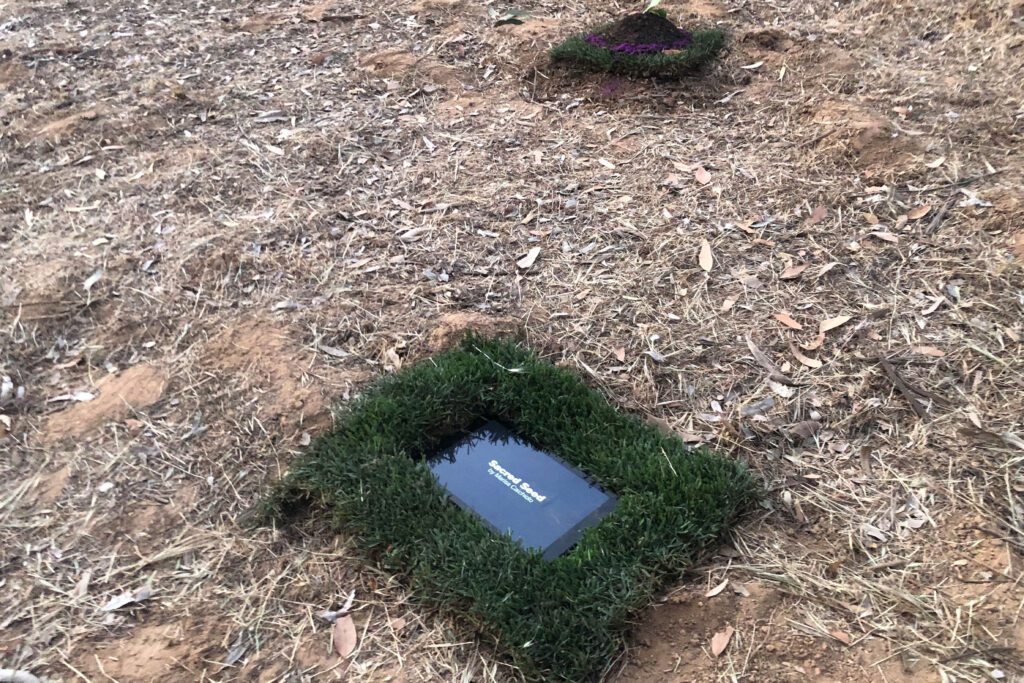
When I work with the land, like in the case of Sacred Seed, whether large extensions of land, wildfire-affected terrains, or dynamic geographies, I’m tracing how people navigate boundaries, rebuild lives, and renegotiate identity in relation to where they are from and where they are going.
Some of my interventions in nature invite viewers to experience memory and belonging through touch, exploration, rituals, participation, and altered perceptions of our connection with mother earth and land.
Landscape becomes a kind of archive: erosion, regrowth, water, soil, seeds, and terrain encode stories of migration, labor, and resilience. By attending to scale, texture, and materiality in these environments, my practice maps the sensory and emotional dimensions of moving through space, what is left behind, what is carried, and what is imagined for the future.
The goal is to invite viewers to reflect on belonging not as static rootedness but as an ongoing negotiation with place, memory, and community. Landscapes and nature-based interventions illuminate the nervous system of movement: they reveal how people endure, adapt, and create new forms of home, even as they traverse uncertain territories.
Anna Coming from Argentina and living in California, how do these different landscapes hold memory, and how do you access or activate these histories in your performance work?
Marisa Coming from Argentina and living in California, I experience memory as a cross-landscape dialogue. Each place holds different textures of history: Argentina’s landscapes carry memories of displacement, political trauma, and collective endurance; California offers new geographies of wildfire, migration, and evolving communities. I activate these stories at every step of my artistic and curatorial practice, treating landscape and environment as active collaborators in each piece—using site-specific cues, climate, light, and terrain to shape movement, breath, and timing.
I translate memory across borders by employing familiar materials from both contexts—textiles, natural elements, sound, and embodied actions—to reveal how memory travels, what is carried, what is forgotten, and what is reimagined.
Performance foregrounds the body as an archive of history. I strive to create collective offerings that invite women from diverse corners of the planet to participate, recognizing how we all hold pain, resilience, and belonging. By juxtaposing Argentine memory with California contexts, I encourage audiences to see shared human concerns—loss, migration, care, and renewal—across geographies, and to recognize memory as something that travels and evolves through performance. Examples include performances of land with the Chumash communities in California and with Mapuche voices in the south, united by a common sensibility of the land.
In practice, my work becomes a moving map: traces of the South, the paths of migrants, the scars and rebirths of places, enacted through body, gesture, and sensory detail. The aim is not to fix a single narrative but to make visible how memory travels, transforms, and continues to shape who we are in the spaces we inhabit.
I translate memory across borders by employing familiar materials from both contexts—textiles, natural elements, sound, and embodied actions—to reveal how memory travels, what is carried, what is forgotten, and what is reimagined.
Marisa Caichiolo
Artist and curator
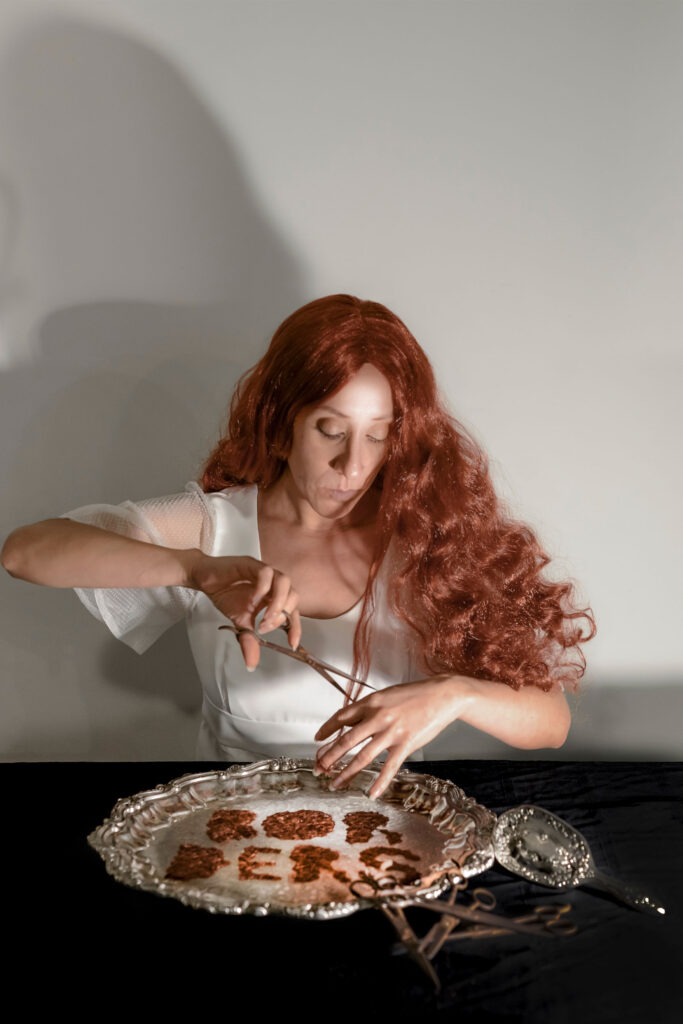
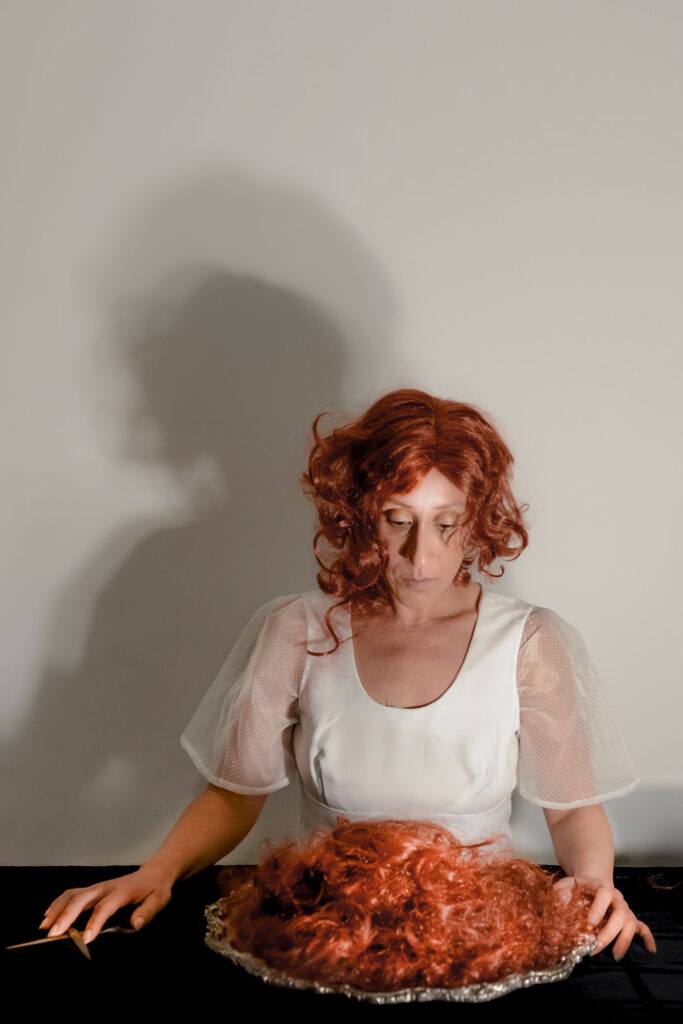
Anna How is art relevant and necessary in the Anthropocene, an era marked by climate change and ecological crisis? In what ways do you respond to these challenges, and what responsibilities or roles do you hold in serving society through your work?
Marisa Climate change and ecological disruption are not abstract futures; they are lived experiences that press on communities and humanity in general. Art makes visible the unseen consequences of extraction, displacement, and loss, while also revealing the imaginative and ethical possibilities for collective action, care, and resilience.
My practice responds to these challenges by engaging memory as a diagnostic and a compass; I work with landscapes and coastal or wildfire-affected geographies as sites where memory, trauma, and ecological change meet.
By connecting personal histories with place-based interventions in nature (landscape performances, textiles embedded in sites, and community collaboration), I reveal how memory can ground present action and future re-imagination.
Acting as a catalyst for care and dialogue, rather than depicting catastrophe from a distance, I created inclusive, participatory experiences that invite communities, especially women and marginalized groups, to participate, reflect, and co-create.
These interventions become spaces for memory-work, healing, and renegotiation of belonging in evolving ecologies.
Terrain, soil, water, and fire become active participants in the artwork. By foregrounding materiality, fabric, braid, texture, braille, soil traces, or smoke’s residue, I translate ecological change into sensory, tactile experience, making abstract climate data legible through embodied perception.
I center survivor voices in my practice, acknowledging limits of representation, and creating pathways to access diverse sources, histories, and knowledge. My work seeks to illuminate structural injustices that exacerbate vulnerability to climate shocks and to propose avenues for restorative justice and solidarity.
Building connective futures across borders, across lands, from Argentina’s memory to California’s ecological frontiers, I seek to foster transborder empathy and shared responsibility. Art can model reciprocal learning, illuminate common humanity, and catalyze collaboration that spans disciplines, communities, and nations.
A bridge between science, policy, and personal experience, translating data and trauma into accessible, actionable narratives.
Anna Reverence is the deep respect and acknowledgement of the interconnectedness of all beings, recognising the value and significance of every story, culture, and experience. Do you consider your work a reflection of reverence for these connections, and how does that shape the stories you tell through your work?
Marisa Yes !!! I view reverence as the foundation of meaningful work because it centers respect, humility, and responsibility toward the people and stories involved.
I aim to recognize that every story sits at the intersection of individual experience, culture, history, and context. This means listening deeply, avoiding surface-level treatments, and seeking genuine nuance rather than quick tropes.
Somehow in my practice I actively seek diverse perspectives, especially from communities that have been marginalized or misrepresented.
I strive to amplify those voices with accuracy, care, and consent. I consider the impact of what I create on real lives. This includes checking assumptions, avoiding sensationalism, and prioritizing consent, fair representation, and the potential consequences of sharing certain stories.
I provide context that helps audiences understand the broader significance of a story; this includes historical, cultural, and socio-political dimensions.
I try to approach storytelling as a collaborative process, learning from others, being open to correction, and letting the story guide ethical choices rather than personal ego or novelty.
In practice, this reverence translates to concrete actions.
Conducting thorough, respectful research and engaging with community members and representatives when appropriate. Seeking permission, giving credit, and protecting sensitive information.
It’s about treating every narrative as a thread in a larger tapestry of shared existence, and striving to tell it in a way that adds dignity, insight, and connection rather than division.
Climate change and ecological disruption are not abstract futures; they are lived experiences that press on communities and humanity in general. Art makes visible the unseen consequences of extraction, displacement, and loss, while also revealing the imaginative and ethical possibilities for collective action, care, and resilience.
Marisa Caichiolo
Artist and curator