
Documenting Conflict: Research as Transformation | Maddalena Fragnito
This interview is part of Documenting Conflict, a series that explores the ways in which conflict is documented and how who gets to document it shapes how we remember, interpret, and understand it. Documentation extends beyond journalists and historians, spilling into studios, workshops, galleries, and public spaces.

This series of interviews with artists will provide a critique on how truth is constructed and what it means to witness in an era of mass media. Trace how creativity and care intersect with the recording of conflict, turning trauma and societal fracture into forms of reflection and dialogue.

Rethinking how conflict is documented means placing empathy and witness at the centre. It is about uncovering what is often silenced and shaping memory in ways that go beyond mere collection, inviting dialogue, reflection, and understanding.
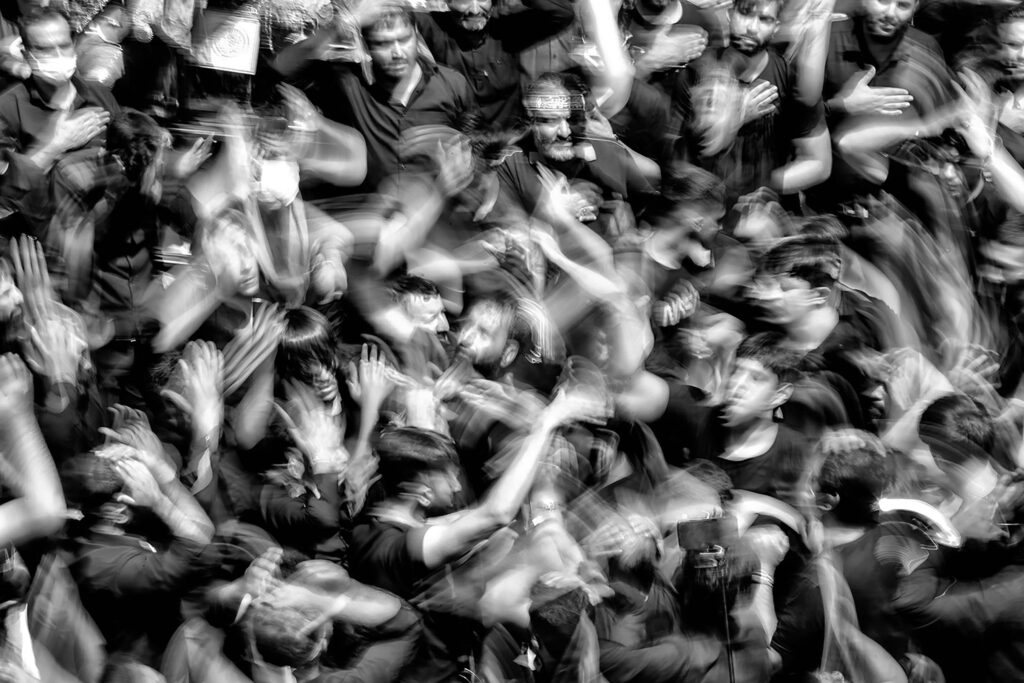
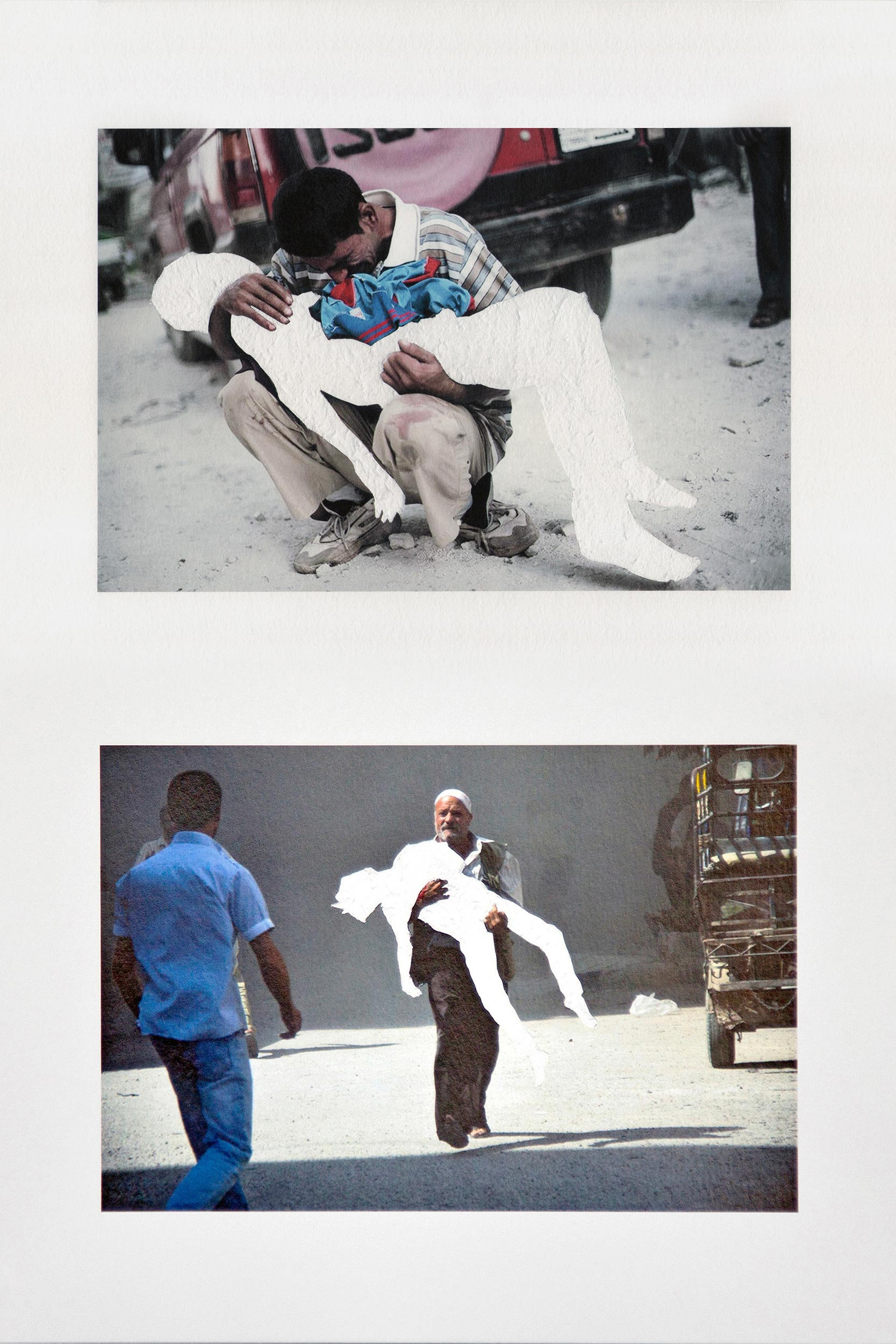
Too often, those most affected by violence appear only as bodies to be saved, counted, photographed, or mourned. I distrust writing that turns people into symbols, case studies, or “perfect victims”. I am interested in people—and I place myself among them—as political subjects who think, organise, grieve, resist, and refuse.
Maddalena Fragnito
Cultural Theorist
Maddalena Fragnito is an Italian cultural theorist whose research examines the entanglements of violence, care, and social reproduction. Her research also investigates the politics of silences and erasure, in particular the selective empathy in the West toward the Palestinian people’s ongoing struggles for justice and liberation. She sees information dissemination as a practice of resistance, which gives space, breath, and life to alternative forms of collectivity.
Anna Borrie: When documenting conflict, what choices do you make about voice, narrative, and framing, and how do these decisions affect the stories that are told or omitted?
Maddalena Fragnito: Conflict is often narrated through the language of states, institutions, or media platforms that claim neutrality while deciding who is seen and who is not. There is no detached observer; every account has a frame. In this sense, Antonio Gramsci remains a sharp guide: there is nothing innocent about the lens through which we see the world. How we look shapes how we act, and a different way of seeing can open a different horizon of action.
Framing also decides what disappears. If conflict is told only as tragedy, resistance drops out. If it is told only as geopolitics, daily life disappears. If it is framed as a clash between equal sides, power is washed away.
I try to write in a way that keeps power visible and does not flatten the scene. I usually begin with a standpoint: who is speaking, from where, and with what relation to the violence being described? I try to start from those living with censorship, displacement, occupation, abandonment, or organised erasure—but above all from those resisting it.
Too often, those most affected by violence appear only as bodies to be saved, counted, photographed, or mourned. I distrust writing that turns people into symbols, case studies, or “perfect victims”. I am interested in people—and I place myself among them—as political subjects who think, organise, grieve, resist, and refuse.
In narrative terms, I move between structure and everyday life. Statistics matter. So do broken routines, fear at work, self-censorship, inaccessible archives, and the climate of repression entering ordinary life. Premesh Lalu captures this sharply when writing about “petty apartheid”: the minor, bureaucratic, repetitive practices that humiliate, discipline, and wear people down in daily life. Violence is not only the visible force of bombs, borders, and hunger. It is also organised through debt, paperwork, and attacks on the means of living. I am interested in making these everyday forms of violence visible, especially those that usually pass unnoticed.
Conflict is often narrated through the language of states, institutions, or media platforms that claim neutrality while deciding who is seen and who is not. There is no detached observer; every account has a frame.
Anna: Could you give some examples of ways in which published work, either yours or others, has provided a way to resist oppression and bear witness to experiences that are otherwise silenced?
Maddalena: Published work cannot stop violence on its own. But it can do practical things: document what institutions try to erase, name structures that present themselves as common sense, and hold memory in hostile times. It can also expose silence, not as absence but as something actively produced and made to serve power.
For me, knowledge matters when it helps make the world more just, and the clearest example I know is Palestinian literature itself. The work of writers and poets such as Ghassan Kanafani, Fadwa Tuqan, Edward Said, and more recent voices such as Mohammed El-Kurd, Rafeef Ziadah, and Hiba Abu Nada has refused disappearance across generations, preserving memory, language, grief, humour, and the right to narrate a people’s own history against ongoing attempts to erase it. This is the literal survival of a political and cultural subject that has been targeted precisely at the level of its capacity to speak and be heard.
Much of my recent work concerns the politics of silence and erasure. An example is S Is for Silence, first published online by L’Internationale and later printed by Learning Palestine—a project that freely distributes pamphlets “to disseminate knowledge on the history and present-day struggles for justice and liberation for Palestine and the Palestinian people.” The text asks how liberal discomfort, selective empathy, and institutional caution in the West become part of the machinery that isolates Palestine.
Permission to Narrate (borrowing the phrase from Edward Said), the book I am developing with Palestinian curator Rana Anani, takes that argument further. The project examines the silencing of pro-Palestinian voices inside Western cultural institutions in the present genocidal conjuncture, focusing both on the material life of censorship—emails, ghosting, withdrawn funding, cancelled exhibitions, reputational threats, donor pressure, accusations of extremism, as well as softer methods such as delay, vagueness, or appeals to neutrality—and on its political economy, including “toxic funding” linked to arms industries, fossil capital, and other interests aligned with the Israeli state apparatus.
In the article “Training the Muscle of Resistance”, written with a collective of anti-Zionist Italian artists and cultural workers, we looked at another issue: how refusal builds capacity. When artists withdraw work, when staff speak publicly, and when activist archives record cancelled projects, they interrupt the normalisation of violence, showing others that resistance is possible.
A similar impulse animates the Institute of Radical Imagination, of which I have been part for years: a space of militant reflection dedicated to building autonomous artistic infrastructures. The collective includes artists, curators, and researchers, mainly from Southern Europe but also from Palestine and Indonesia. In all these cases, publishing is not separate from political organising.
Published work cannot stop violence on its own. But it can do practical things: document what institutions try to erase, name structures that present themselves as common sense, and hold memory in hostile times.
Anna: How can artists and writers document conflict, but living outside it, balance their personal expression with the responsibility of representing others’ experiences?
Maddalena: Living outside a conflict does not automatically disqualify someone from writing about it, but it changes the terms. Distance can bring perspective, access to platforms, or relative safety. Yet it can also produce projection, simplification, vanity, and extraction.
The starting point is humility. Speak with people, not for them. Cite living voices. Support journalists, organisers, archives, and cultural workers already carrying the work. Be clear about what you know, what you do not know, and what reaches you through mediation. Above all, we should drop the idea that other people’s experiences are there for us to represent. That idea has a colonial history.
At the same time, I would question the terms of “personal expression” itself—because the problem is not only how we represent others, but why artistic value has been built around individual expression in the first place. As an artist and researcher living in advanced capitalism, personal expression has never interested me as an end in itself. Expression is often treated as a commodity: something to brand, circulate, monetise, and mistake for freedom.
In this context, the art system frequently rewards visibility while leaving labour conditions untouched. Indeed, too often we see cultural institutions staging decolonial or feminist politics while leaving their foundations intact. As Françoise Vergès has argued in relation to the Western museum, reformist gestures can coexist with extractive structures: one can attend a decolonial panel discussion while the room is cleaned afterwards by an underpaid racialised woman whose labour remains invisible.
Contextually, the question is not whether I have the right to speak, but what my speech does, through which structures it moves, and for whom. I am less interested in the cult of expression than in the conditions that make truthful expression possible. This means infrastructures: autonomous spaces, collective resources, fair labour conditions, political solidarity, and institutions not captured by donor interests or governments’ agendas. Therefore, for me, to rethink artistic and literary expression means rethinking its material base: who funds it, who is excluded from it, who speaks inside it, who is protected by it, and who cleans the spaces where that expression takes place. Without that, “personal expression” risks becoming another decorative freedom.
For all these reasons, the most useful contribution from outside a conflict may lie in exposing institutional complicity, following money, challenging propaganda, and building cultural infrastructures of autonomy and solidarity. It may also mean translation, publishing access, legal support, archiving, fundraising, or redistributing visibility.
Contextually, the question is not whether I have the right to speak, but what my speech does, through which structures it moves, and for whom. I am less interested in the cult of expression than in the conditions that make truthful expression possible. This means infrastructures: autonomous spaces, collective resources, fair labour conditions, political solidarity, and institutions not captured by donor interests or governments’ agendas.
Anna: What research methods do you use when engaging with conflict and how do these methods influence how you approach writing about conflict?
Maddalena: My methods are interdisciplinary and shaped by the tradition of militant research. I combine activism with archival work, discourse analysis, interviews, assemblies, visual analysis, and close reading of institutional documents.
For example, when I study censorship in the cultural field, I do not look only at public scandals. I also examine emails, funding criteria, contracts, board compositions, press releases, cancelled programmes, governance structures, and patterns of silence. In other words, the material life of censorship or, as I call it, the art of censorship.
I also work with a long historical lens. Present conflicts are tied to older histories of colonial extraction, patriarchal rule, ecological devastation, and defeated struggles. Without historical depth, every emergency appears accidental. With it, patterns become legible.
I also treat conversations as sites of knowledge production: I am sceptical of research models in which the researcher knows and others merely testify or are reduced to data collection. I come from the Italian post-Operaist tradition and distrust the separation between subject and object of research. I see them, rather, as political subjects in struggle, implicated in shared processes of liberation.
In most cases, I am involved in the conflicts I study. When I research censorship in cultural institutions, toxic funding, or the governance of artistic labour, I am not approaching these questions as an outside observer. I am part of a generation of cultural workers who have organised around precarity, autonomy, and institutional capture for over two decades—from the EuroMayDay mobilisations of the early 2000s, which made immaterial labour and the precarious cultural worker politically visible, to campaigns against financial speculation in museums and galleries, to more recent struggles over the conditions under which artists and curators are expected to work, exhibit, and remain silent. These are the practical conflicts from which my research and writing emerge.
I also try to avoid what Marta Malo has described as the risk of a “pornography of horror”: the endless circulation of suffering that overwhelms the senses and produces paralysis. Research should work towards transformation, not merely shock. It should help us read structures, identify responsibility, and recognise resistance. It should not consume suffering as material, but clarify relations of power, strengthen memory, and be useful, where possible, to those resisting. Also, it should bring buried histories of struggle, care, and collective survival back to light. Last but not least, I believe research can help identify Kairòs, in the Negrian sense of the term: not linear, measurable time, but the dense moment in which a political possibility opens. A point of rupture within the present, where decision, imagination, and collective action can converge.
These methods make my writing slower and less certain because it forms part of a collective process. I try not to rush into judgment before understanding how power is organised, and before understanding how a collective chooses to situate itself within a conflict that is rarely an event and almost always an infrastructure.
Research should work towards transformation, not merely shock. It should help us read structures, identify responsibility, and recognise resistance. It should not consume suffering as material, but clarify relations of power, strengthen memory, and be useful, where possible, to those resisting. Also, it should bring buried histories of struggle, care, and collective survival back to light.
Words by Maddalena Fragnito
Interview and Introduction by Anna Borrie
Anna Borrie is Associate Editor at Planted Journal, where she explores the intersections between ecology, art, and storytelling. Her work is rooted in a creating meaningful connections between people and their environments. She runs a community garden in Madrid, where she cultivates both plants and relationships with fellow gardeners. Her interests lie in creating collaborative environmental art and promoting zero-waste practices, seeking ways to harmonise creativity with environmental responsibility.