
Many decisions shaping the future of food – from gene editing to large-scale land use shifts – are discussed primarily in technical or economic terms. Artists can intervene by asking important questions about culture and taste and by bringing an accessible, critical, and participatory lens to the conversation.
Since 2010, the Center for Genomic Gastronomy has developed a food analysis based on inquiry, experimentation, and the shared table. As an artist-led think tank, their speculative works carry heavy narratives of climate rupture, agricultural loss, and technological uncertainty. By privileging taste, collective eating, and embodied experience, their practice resists techno-triumphalism and instead creates spaces to play with the future of food in a rapidly changing world. Through familiar mediums such as sourdough, wildfire-tainted wheat, and foraged landscapes, they translate ecology to reveal how food travels, what is carried, what is burned, and what can be regrown.
Madeleine Freundlich: Tell me a bit about how you organised to create the Center for Genomic Gastronomy. How do your backgrounds and experiences inform this genesis?
Genomic Gastronomy: Genomic Gastronomy began as a way to ask questions about the relationships between food, technology, and culture. Around the late 2000s, we noticed that many important conversations about biotechnology and agricultural biodiversity were happening in scientific or policy spaces, but rarely through culture, cuisine, or everyday eating. At the same time, chefs and food media were celebrating gastronomy without necessarily engaging directly with the emerging developments in the life sciences and biotechnology that were reshaping food systems.
We formed Genomic Gastronomy as an artist-led think tank to explore that gap. Rather than using conventional scientific research approaches, we used art and design practices to create situations and artifacts to engage expert and amateur publics around these topics. The research was shared through food events, exhibitions, and workshops that could make complex questions about biotechnology and biodiversity tangible through food. Unlike scientists (and most technologists) the arts can aim for a range of inefficient subjectivities: joy, delight, antagonism, frustration, disgust, obsession.
From the beginning, our work has been collaborative and interdisciplinary. We often work with farmers, scientists, chefs, activists, and policymakers to map the cultural and ecological implications of new food technologies. Our projects try to translate complicated debates about emerging science and technology, climate change, and agricultural futures into experiences that people can literally taste and debate.
In this way, Genomic Gastronomy emerged not from a single discipline but from a shared curiosity: how can art and design help society better understand, and contest, the technologies and agroecological approaches that are transforming what we grow and eat?
Madeleine: What does “Genomic Gastronomy” mean to you, and why was it important to create this think tank?
Genomic Gastronomy: We define gastronomy as the art of choosing, cooking, and eating good food while genomics is the study of patterns within and between organisms in living systems. For us, “Genomic Gastronomy” combines these ideas. Genomic Gastronomy is the study of organisms and environments manipulated by human food cultures. As an artist-led think tank, we examine the biotechnologies and biodiversity of human food systems by mapping food controversies, prototyping alternative culinary futures, and imagining a more just, biodiverse, and beautiful food system.
Creating the think tank allowed us to investigate these transformations through creative research. Rather than treating biotechnology as purely technical, we approach it as a cultural force that raises questions about biodiversity, power, climate change, taste, desire, belonging, and the future of agriculture. Through exhibitions, meals, and participatory experiments, we try to make these questions accessible and experiential.
Ultimately, Genomic Gastronomy is about imagining different food futures together. By bringing together artists, scientists, and eaters, we create situations where the public can explore how emerging technologies might reshape what we grow, cook, and share – and how we might guide those changes toward more diverse and resilient food systems.
Madeleine: Your most recent project Mock Wild: Egypt, was a full scale opportunity for artistic immersion and inspiration. How was the location a conduit for creative output? How did you facilitate conversations and between curated meals and global perspectives on land sovereignty, energy consumption, and wilderness?
Genomic Gastronomy: The first thing to know is that a desert is not empty or dead. It is a wild landscape.
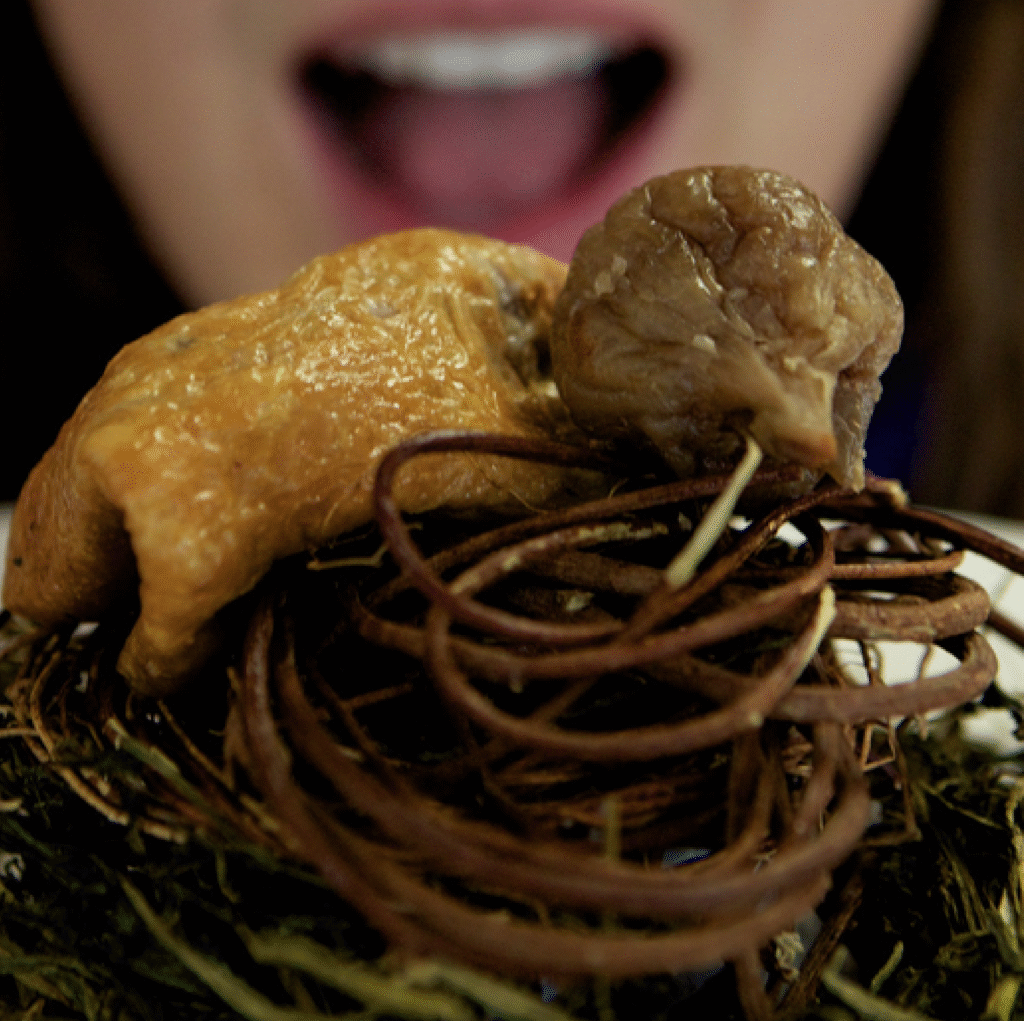
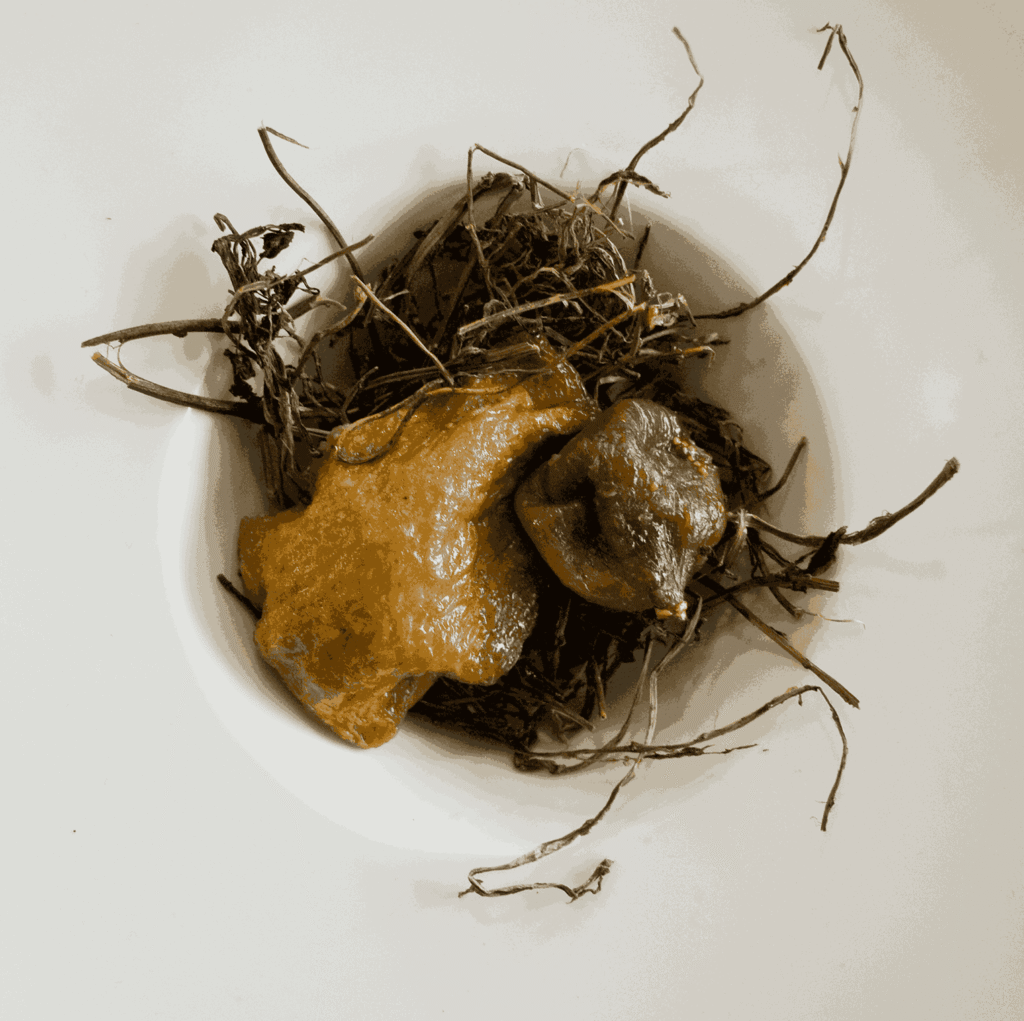
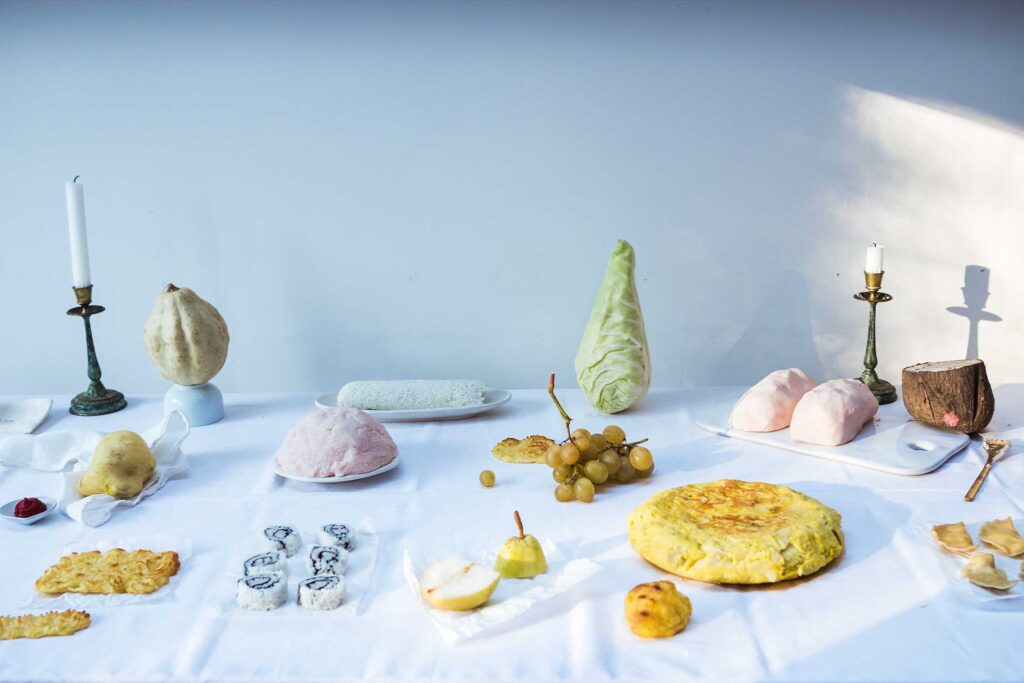
Mock Wild: Egypt grew out of a period of research and collaboration that Genomic Gastronomy conducted in Egypt between 2024 and 2025. Working with partners including Cairotronica New Media Festival and archaeobotanist Dr. Hala Barakat, we explored agricultural sites, emerging desert farming infrastructures, and everyday food practices across the region. These encounters revealed a rapidly shifting landscape where large-scale greening projects, experimental farming initiatives, and long-standing ecological knowledge coexist. The project asks what kinds of food cultures might emerge from these layered environments in the near future?
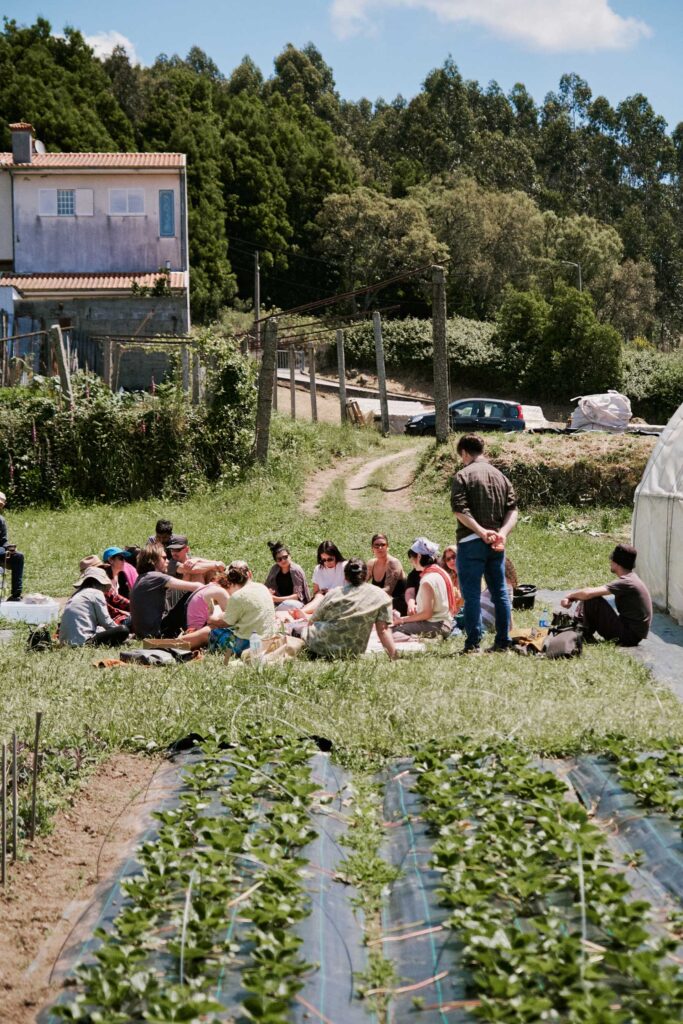
Using cooking as a speculative medium, we translated our research into participatory tastings, an installation for Cairotronica Festival, and a desert bus tour that brought food system experts to the New Delta mega-project where the Sahara is being transitioned to arable land via the largest water treatment plant in the world and an artificial river. These activities invited expert and non-expert audiences to taste and debate possible Egyptian food futures shaped by climate change, land transformation, and cultural exchange.
Madeleine: How do you navigate the tension between expert knowledge and the intuitive, sensory experience of tasting a landscape?
Genomic Gastronomy: The project also brought together a diverse group of collaborators – from chefs and food researchers to journalists, artists, and environmental specialists. Chef Mona El Sabbahy developed bespoke recipes, drawing ingredients from the project’s agricultural research and speculative landscape proposals.
Investigative journalist Nada Arafat contributed research on land use and infrastructure in the Western Desert, helping to plot our Mock Wild bus tour. In our work, a meal becomes a platform for dialogue: people bring their disciplinary expertise to the table, but they also respond through taste, memory, and intuition. By situating conversations about land sovereignty, energy use, and food systems within shared culinary experiences, Mock Wild: Egypt creates a space where technical debates can become tangible, cultural, and collectively imagined.
Genomic Gastronomy emerged not from a single discipline but from a shared curiosity: how can art and design help society better understand, and contest, the technologies and agroecological approaches that are transforming what we grow and eat?
Madeleine: I’m interested in your 2022 project Wildfire Loaf. Tell me how you were introduced to this project and what has become of this multi-year, multidisciplinary research.
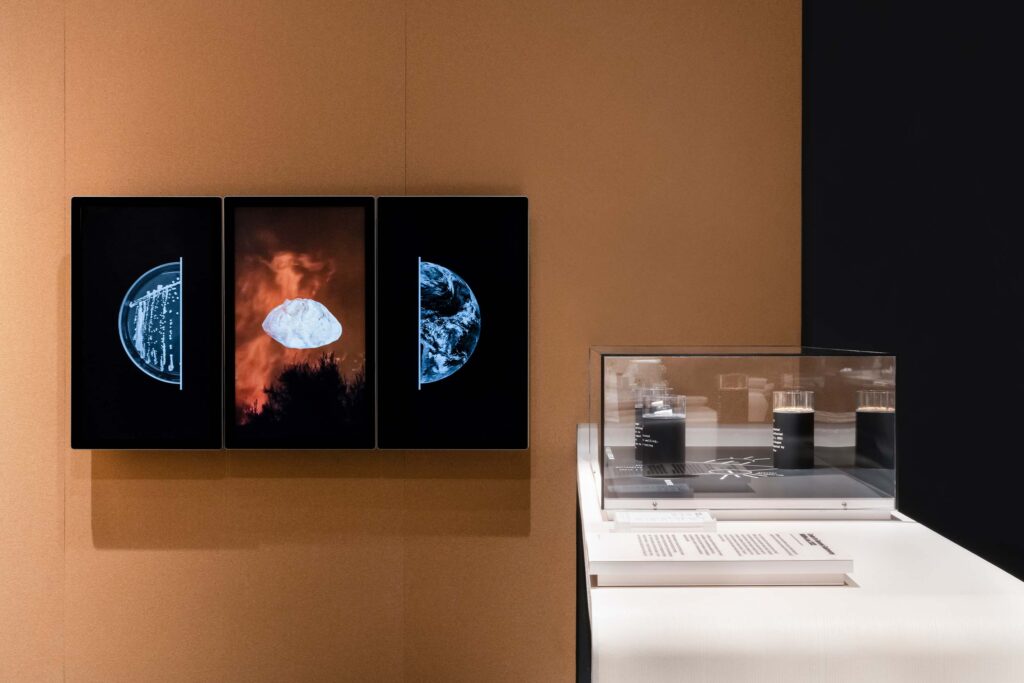
Genomic Gastronomy: Our Wildfire Loaf project began with a simple but unsettling question: how do wildfires affect the smell, taste, and texture of bread? As wildfire seasons have intensified around the world, farmers and millers have reported that wheat grown near fires can absorb smoke compounds, a phenomenon often referred to as “smoke taint.”
We began investigating this issue as an artistic research project by collaborating with amateur bakers, scientists, and grain producers to learn more about smoke-affected wheat flour and how it might alter the microbial make-up of sourdough starters and the resulting bread. The research expanded into a multi-year effort that included the search for smoke-tainted wheat (before it was disposed of), smoke-taint simulation taste tests, experimental sourdough starters, and public discussions about how wildfire smoke alters agricultural landscapes and food production.
In this project there is an underlying theme of trauma not simply to a defective commodity crop, but to the landscape, and the sensory memory of destruction that emanates from it. Can a loaf of bread become a kind of edible archive of trauma and change?
At its core, Wildfire Loaf explores whether environmental disruption can become legible through bread-making and taste. Wildfires reshape ecosystems, but they also leave subtle traces in the crops growing nearby. When smoke interacts with wheat fields, can those traces carry through harvest, milling, fermentation, and baking? Can a loaf of bread become a kind of edible archive – recording the atmospheric conditions of a particular season? Our research moves across scales, from microbial communities in sourdough starters to planetary climate patterns, to ask what happens to staple foods like wheat in a time of increasing climate instability.
The project acknowledges the trauma embedded in these landscapes while also creating a way to sense it collectively. We aim to create Wildfire Loaf events that directly bring stakeholders into the conversation; for example, a small-scale California grain grower and miller who’d recently had a forest fire cross his land. Through tastings, lectures, and exhibitions, we invite people to consider how climate change is already altering the foods we depend on. If the atmosphere is changing, how might those changes begin to appear – not only in data or satellite images, but in the everyday foods on our table and the traditions that surround those foods?
Madeleine: Tell me about your engagement in alternative proteins, for example in your Mock Wild Picnic and MVP X FFF. How do you understand your commitment to landscape and process with high process and production products? What do you mean by “hyperefficient proteins”? Can the creation of such products be a part of the creative process?
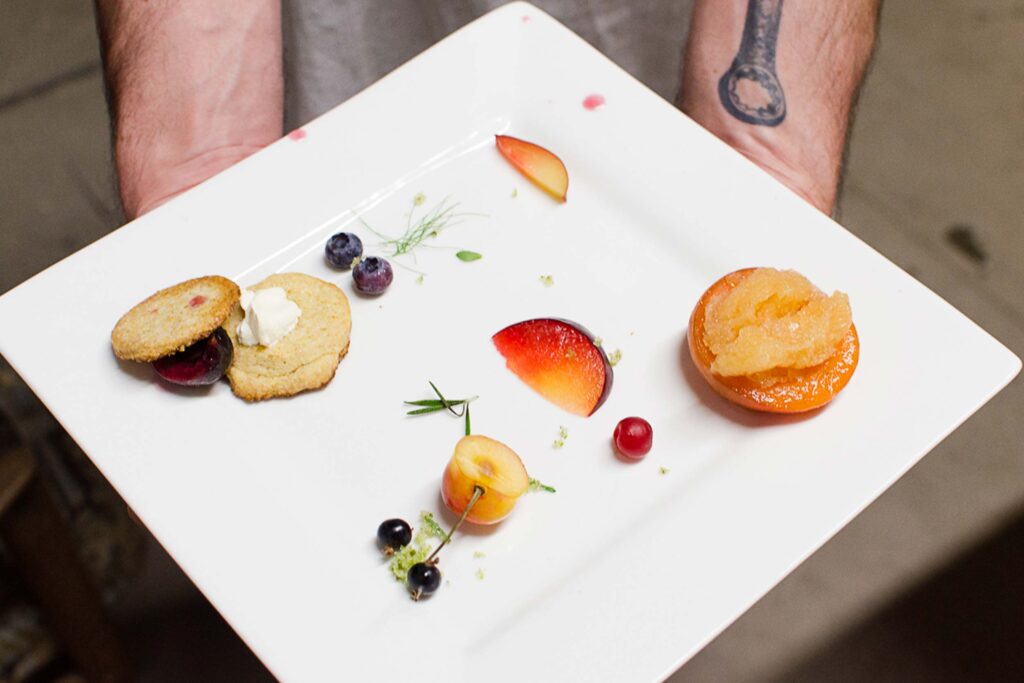
Genomic Gastronomy: Genomic Gastronomy has approached alternative proteins as a way to think through the long-standing debate between land sparing and land sharing. In projects like MVP × FFF and the Mock Wild Picnic, we ask how new protein technologies – plant-based, precision-fermented, or otherwise highly processed – might change the amount of land required to produce food and what could or should be done with that spared land. “Hyperefficient proteins” or “Minimum Viable Proteins (MVPs)” is our shorthand for foods claiming to deliver large amounts of nutrition while using dramatically fewer resources: less land, water, and feed. These products are often framed as purely technological solutions, but we are interested in the landscapes they might create or combine well with. If protein production becomes more efficient and less land-intensive, what happens to the land that is no longer required? Does it become a biodiversity greenspace, a space for new agricultural experiments, a parking lot, or something else entirely?
In the Mock Wild Picnic, we explored these questions through speculative recipes and outdoor tastings that imagine landscapes where rewilded ecosystems coexist with new food infrastructures. MVP × FFF similarly looked at emerging alternative protein industries and the narratives surrounding them, asking what kinds of futures they promise and who benefits from them. Rather than treating high-efficiency alternative protein production as the opposite of regenerative agriculture projects like food forests, in these projects we imagined how these two approaches could form a hybridised system. Cooking with “hyperefficient proteins” and food forest produce became part of a creative research process: by turning them into dishes, picnics, and public tastings, we can explore how technological food production might fit with other ecological strategies. In this sense, the culinary experience becomes a tool for debating how land, energy, and biodiversity might be reorganised in future food systems.
Can a loaf of bread become a kind of edible archive – recording the atmospheric conditions of a particular season? Our research moves across scales, from microbial communities in sourdough starters to planetary climate patterns, to ask what happens to staple foods like wheat in a time of increasing climate instability.
Madeleine: The pervasive quality of artificial intelligence tools, technologies are creeping into our lives with and without consent. As a group that speaks deeply about technology and environment, and has used AI in projects such as Terroir that Travels, how do you seek to untangle this?
Genomic Gastronomy: Artificial intelligence is increasingly embedded in the infrastructures that shape how food is grown, processed, distributed, and imagined. As with many technologies, it often arrives framed as neutral efficiency, even though it carries particular assumptions about knowledge, labor, and control. We witness a lot of techno-triumphalism, especially in agtech communities that fantasise about totally automated systems run and maintained by sensors, robots, algorithms and AI. On the other hand, it is worth observing closely the unexpected ways that emerging technology like AI are used in ways not intended by their corporate creators. For example, we met an organic farmer in 2023 who told us “AI does my paperwork so I can focus on farming.” The EU requires that organic farms fill out paperwork for each different crop that a farmer wants to get certified, thus massively disincentivising polycultural organic farms. This farmer used a very early version of ChatGPT to automate this paperwork, so he could focus on the physical farming aspect that he cared deeply about.
Madeleine: In our own work, the recent project Terroir That Travels used mapping tools (with AI), local agricultural knowledge, and climate predictions for pre-enacting disrupted tastes of place and asking, “What does local food taste like when climate changes everything?”.
Genomic Gastronomy: We partnered with a computational cartography studio to create a map of all the European protected Geographical Indication food products that otherwise only exist buried in a bureaucratic dataset called eAmbrosia. AI was specifically used to extract the textual geographic data from the eAmbrosia database, translate it from over twenty languages, and then map it spatially, so that the scale and scope of this registered food labeling and cultural heritage scheme could be visualised. This also allowed us to overlay this data with climate predictions. As a studio, our use of AI is almost always paired with on-the-ground research, agricultural site visits, food tasting, and recipe creation bringing the tangible, real, and tastable to the fore.
By experimenting with AI-generated recipes, datasets, or speculative food geographies, we can examine how algorithms interpret landscape, agriculture, and taste – and where those interpretations break down. For us, the goal is not simply to “use AI”, but to situate it or use it creatively within broader ecological and social contexts. Food systems are already shaped by sensors, satellites, predictive models, and logistics algorithms. By bringing these technologies into cultural spaces – through meals, installations, or workshops – we invite people to question how automated systems might redefine concepts like terroir, authorship, cultural heritage, and agricultural knowledge.
Madeleine: Genomic Gastronomy has been in motion for over ten years. What has been revelatory over a decade of collaboration?
Genomic Gastronomy: The work always begins with food, technology, and ecology but the thematic focus has developed from 2010 to today. In the early years (2010-2016) we took a critical approach to biotechnology and the life sciences. However, since 2017 our work has transitioned to a celebration of agricultural biodiversity in all its forms: taste, ecology, and culinary rituals. In 2025, we began reconnecting with previous scientific and technological collaborators and are looking to create work that bridges a critical approach to biotechnology with the desire for and pleasure of biodiversity.
Since our initiation in 2010, one of the most revelatory aspects of this work has been discovering how food can function as a shared research platform across disciplines. When people gather around a table – whether they are plant scientists, journalists, bakers, or policymakers – the conversation shifts. Food allows complex scientific and political questions to become sensory and experiential. That simple format has repeatedly shown us that meaningful dialogue about technology and ecology often begins with something as basic as a shared meal or recipe.
When people gather around a table – whether they are plant scientists, journalists, bakers, or policymakers – the conversation shifts. Food allows complex scientific and political questions to become sensory and experiential. That simple format has repeatedly shown us that meaningful dialogue about technology and ecology often begins with something as basic as a shared meal or recipe.
Madeleine: In an era of imminent climate crisis and corporate control of food technologies, how do you see art as relevant and necessary? What role do you feel artists serving as “Genomic Gastronomers” can contribute to meaningful change in the food system?
Genomic Gastronomy: As “genomic gastronomers,” we use food as a medium for inquiry. Art can create spaces where dominant narratives about food are questioned and reimagined. It can tap into latent desires or revive fading or less visible practices.
Many decisions shaping the future of food – from gene editing to large-scale land use shifts – are discussed primarily in technical or economic terms. Artists can intervene by asking important questions about culture and taste and by bringing an accessible, critical, and participatory lens to the conversation.
Madeleine: Your work prototypes “divergent food futures,” which can involve imagining both utopian and dystopian scenarios. How do you balance analytical observation with the act of imagining? Can a food future be fertile even when rooted in loss?
Genomic Gastronomy: Much of our work involves imagining and prototyping divergent food futures. These scenarios can range from hopeful to unsettling, and we often create space for the audience to debate and decide which futures are (un)desirable to them, or co-create possible futures together. It is essential that the objects, events and rituals we create move beyond the optimised and efficient futures that are core to the techno-capilalist regime that we exist within. We want to see Slow Futures, Mutant Futures, Delicious Futures, Obscure Futures, and Beautiful Futures. Optimise for anything but Efficient Futures!
Many landscapes are already shaped by loss – due to climate change, extinction, or pollution and environmental degradation. A food future can still be fertile in these conditions if it encourages adaptation, creativity, and reflection. We shape our projects in the hopes of cultivating spaces for conviviality, community nourishment, and action.
As “genomic gastronomers”, we use food as a medium for inquiry. Art can create spaces where dominant narratives about food are questioned and reimagined. It can tap into latent desires or revive fading or less visible practices.
Words by Zack Denfeld, Cathrine Kramer and Emma Dorothy Conley from The Center for Genomic Gastronomy
Introduction and Interview by Madeleine Freundlich
Madeleine Freundlich is a researcher, writer, and farmer who seeks to weave the threads that connect land stewardship to cultural futurity. Growing up in the American northeast, Madeleine’s outlook is informed by walks through the undergrowth, blueberry patches, and a deep sense of agricultural community. Having worked as a vegetable farmer, weaver, and cheesemaker, her sense of self is grounded in an understanding that labour has the potential to be a daily artistic expression. In turn, her background in fibre arts forms her perspective on sustainable systems that value cyclical thinking, craftwork, and meaning-making through the landscape.
As a writer, Madeleine is interested in exploring artisanality as an expression of both scientific inquiry and artistic practice. Issues concerning sustainable meat production, fermentation, and workers’ rights are central to the agricultural landscape these days and are hoped to be explored in future essays. Currently a Fulbright Scholar residing in northwest Italy, she is the Food and Agriculture Editor at Planted Journal.