

To nourish is a political act.
The creation of food is, at its heart, far more than nutritive subsistence. It is the embodiment of care. I love you enough to feed you, and to feed you well. Care is labour, it is thought, and it is the manifestation of time and intention.
This work is not possible without collaboration and deep, respectful interactions. The creation of well-intentioned foods under a capitalist regime is material resistance to the commodification of food and knowledge. This is craftwork, a fundamentally creative endeavour.
Indeed, cheese is an act of care for the landscape, an expression of respect for the animals that have been milked to preserve their bounty. It immortalizes their work, which is to say the work of the sun and the soil and the grasses as well. When cheese reaches your plate, it is the tangible manifestation of the work of those who came before you that want you to eat well, to be well.
I came to cheesemaking through convenience. Having worked in the verdant valleys of the Adirondack mountains as a vegetable farmer, I was familiar with the lowing calls of the dairy herd. We crossed paths each morning, exchanging silent nods of recognition as we moved with purpose to our morning tasks – me to harvest greens before the sun burnt their tender leaves, and them to file into their self-assigned spots in the barn to release their milk.
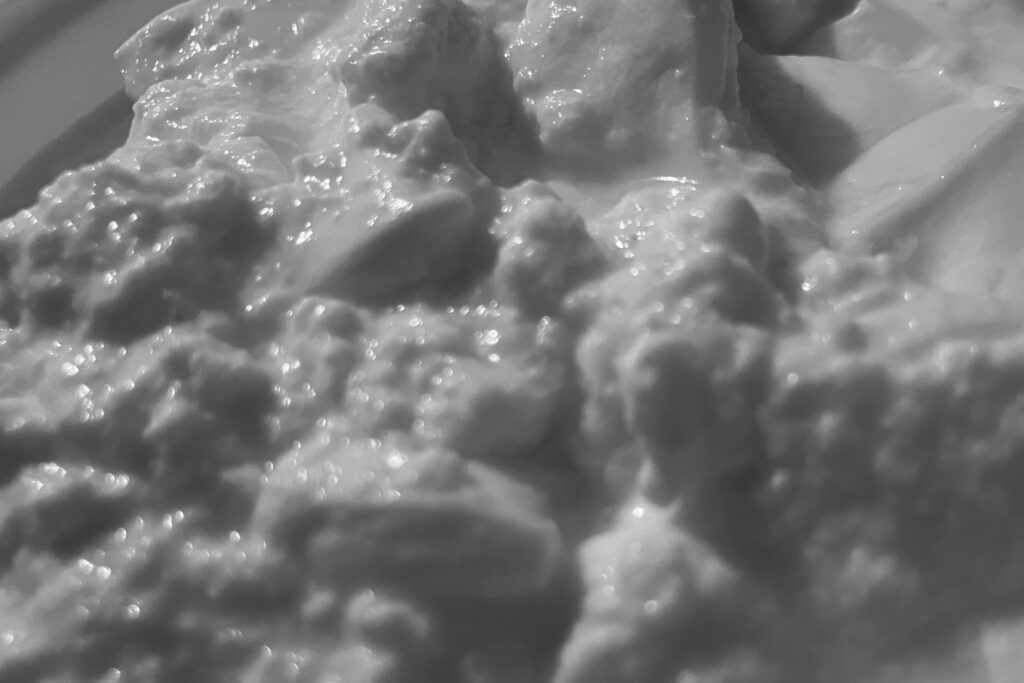
I drank their milk and used their manure to enrich our crops, but we had never met personally. That is, until I was called into the milking barn by Barbara – a severe-looking woman of 70 years who commanded dairy operations. Her assistant had gotten ill, and she needed another pair of hands, mine being the closest. As we heated the milk, introduced cultures, and poured fragile curds into their forms, I began to see the fruits of my labour in another dimension. All cheese is derived from four simple components: milk, rennet, cultures, and salt. When combined with differing ratios and techniques, an infinite universe unfolds before you. This unique balance of precision, embodiment, and artistry is characteristic of craftwork. In fact, many cheesemakers describe the process as breaching the mystical.
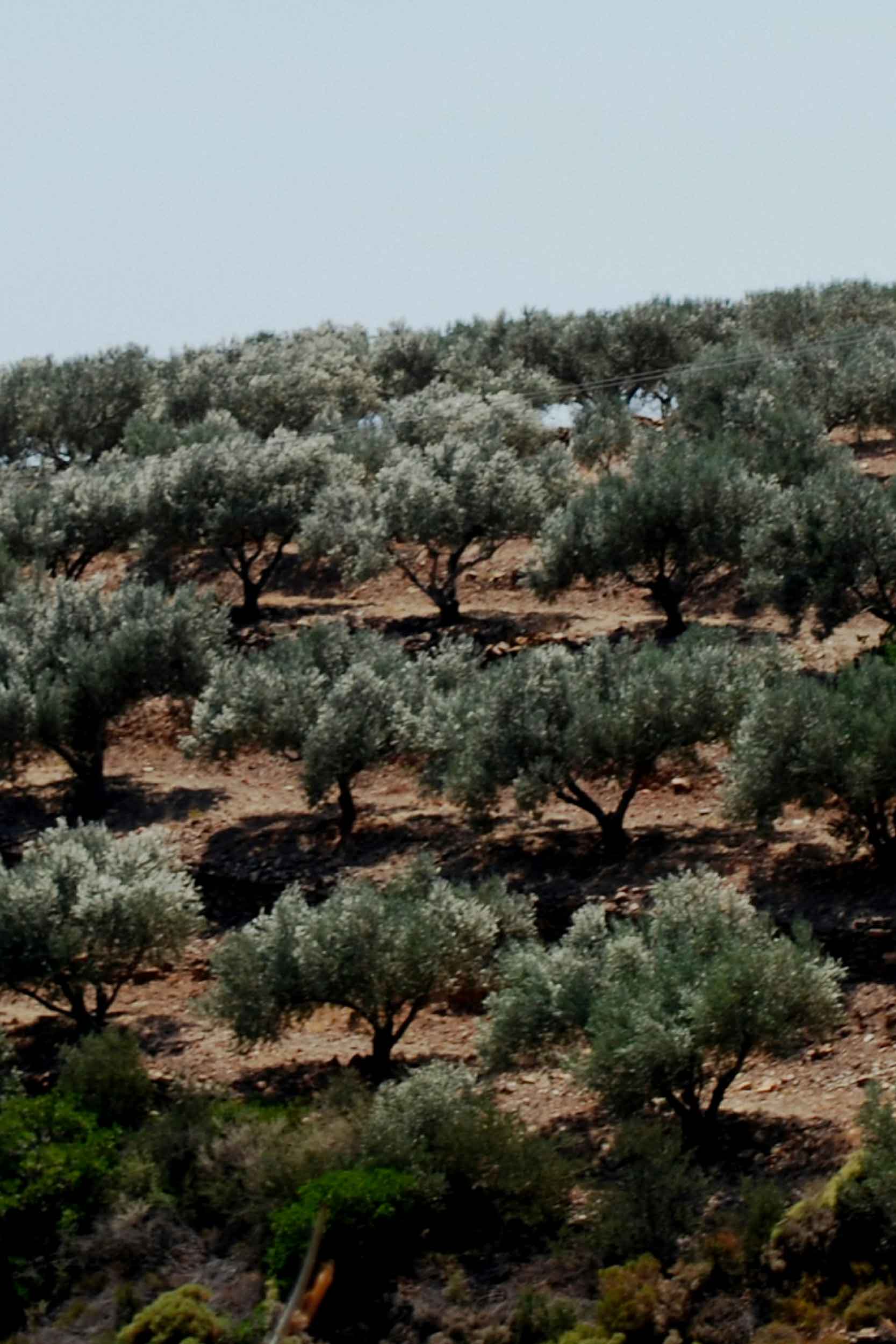
We start months before milk is released, in rhizomatic civilisations of the soil. Nutrients populate the ground, providing a beneficial environment for hard seeds to soften and sprout. The sun, an immortal caretaker, offers warmth, comfort, and energy. In well-raised fields, a diversity of life reigns and creates abundance for eager mouths. Even the hungry sheep, goats, and cows, give thanks to the plants by not consuming them in entirety. Those seven- or eight-centimetre stubs are enough to maintain life, spurring future growth.
From here we arrive at the milk: rich in fat from summer bounty, lean and reliable in the colder months. Milk is, lest we forget, meant to nourish the young. Through sight, touch, smell, and colour, this liquid has something to say, should we listen. As I move my fingers across the vat, the milk quivers, acknowledging the change that is yet to occur.
For those of us who embrace the complexity of working within a complex relation of plants, fungi, animals, and soil, the work of an artisanal cheesemaker is to allow the cheese to express the individuality of the landscape, animals, and people who brought it into the world. If the cheesemaker is aware of the landscape, they can work with the milk to coax out these features through choices in time, temperature, and form. This manifests as nuances in the flavor and texture. A stream that runs through pasture might leave a soft minerality. An abundance of clover often leaves sweet, custardy notes in the curd. Beautiful cheeses, in this way, are manifestations of acquaintance.
To succeed, we are taught to observe the infinite interactions that occur around us.
To witness the communion of flora and fauna.
To notice the density of milk as it is stirred.
To attend to bacterial growth – or the lack thereof – and understand what it means.
To know and be known by the bacteria around you.
It requires time, so much time, to learn how to work in a single landscape.
This labor is called affinage. It’s from the French, as much of our lexicon is, and refers to the careful ageing of cheese to achieve the intended result. Affinage comes from the verb affiner – to raise, refine, and mature. I find it fitting that, in this stage, our work as cheesemakers is not to impose, but to guide our charges through the next stages of life. We are caretakers. Through introducing our forms into new environments, washing and clothing them, and knowing when it is time to let go, we attempt to allow the form to become the best version of itself.
These interactions, perceptions, and entanglements are demonised in a system guided by dominance. Standardisation abstracts soil from seed, inundating it with chemicals until it cannot stand without support. Industrial dairying conceptualises these beings as livestock, a breathing unit of commodity. In this system, these beings are not allowed to graze, to move their minds and bodies to nourish themselves, or to feed their kin. Thus the land stands still, stripped of its autonomy. Animals breathe down each other’s necks in the dark. The system’s function is what it produces, and the milk is limp. It has no life-giving capacity. Attempts at futurity – microflora that protect the milk from contamination – are sterilized. Months of control create a controlled product, a unit from which to extract further profit from all its workers. By eliminating the unique qualities of the milk, the product cannot be tied to a certain place, people, or tradition. Commercial strains of bacteria can result in the same industrial cheddar, gouda, or swiss anywhere across the world. Abstracted, the cheese is reduced to a commodity that cannot bring pride or cultural significance back to those who produced it. Cheesemakers who work in this way are limited by their tools and cannot produce works of art or nourishment that live up to their potential.
The labour of care is life-giving. Cheese, and the larger world of agricultural production, is a tool to access the intimate and build solidarity. Ways of knowing, through taste and touch and connection, are an expression of respect for those who have provided life-giving resources. The cheeses I have made and described are pieces of art. Only through deep collaboration with rhizomal life, deep soils, rich forage, mighty herds, and skilled human hands can humble products such as these come into creation. They are edible muses – inspiration directly from the landscape that serves to nourish our stomachs and stimulate our minds. These forms are also an invitation. To bring yourself into the agricultural fold by thinking deeply about the food around you, what it means to you, and how those who produce it are far closer than you might believe.
We call our work affinage – raising cheese.
We raise it as our own and pass it onto you in good time.
This is not a sterile transaction.
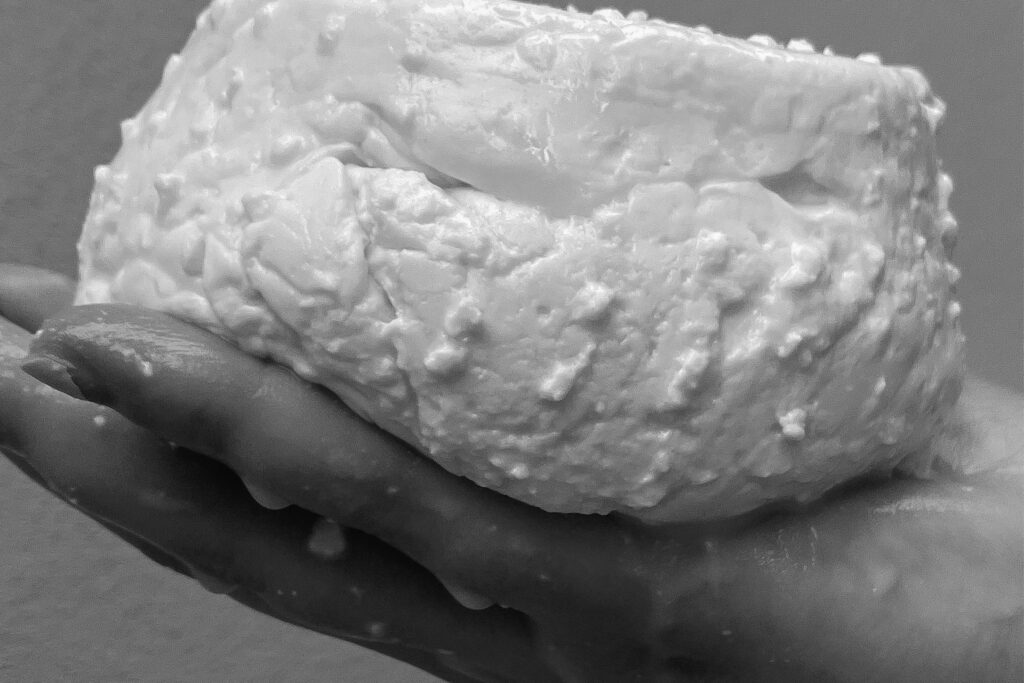
We inform one another.
Gifts pass through my hands and my touch makes them more precious, more useful.
I leave in my wake products made timeless by craft, and they will benefit myself and others.
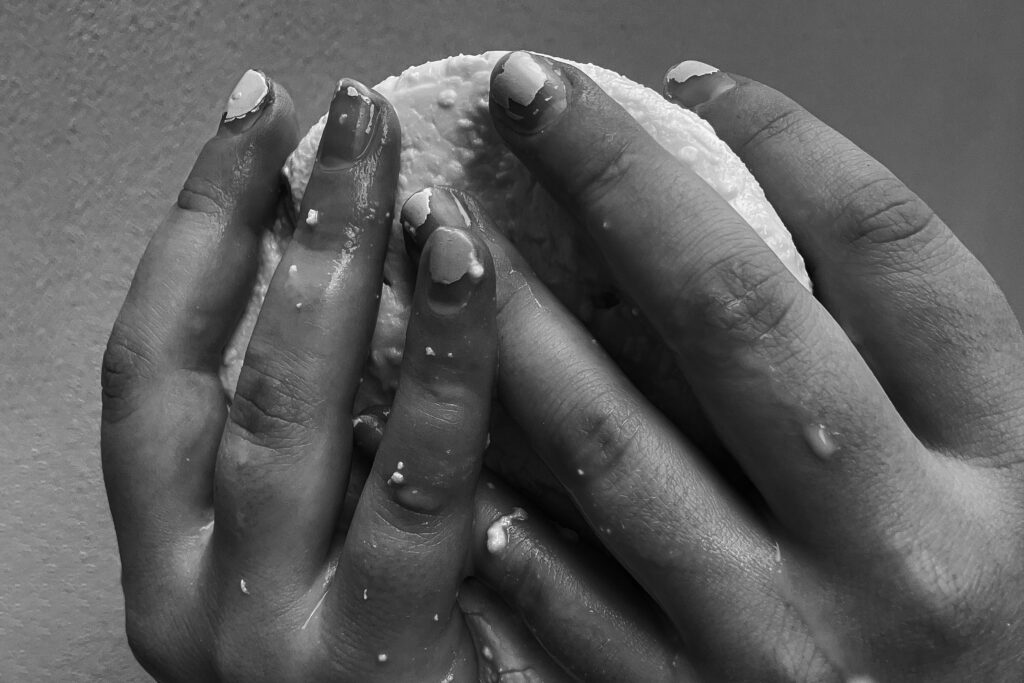
Our work is predicated on the excess of milk, sweet clover, and the hot, summer sun.
Hands
touch the soft teats of the cows as they yearn to release their bounty.
Hands
drag the milk cans to the parlor to be dumped into the gleaming silver bins.
Hands
add cultures and bacteria that will work on the interior as we care for the exterior.
Hands
cut the curd using large blades with romantic names like ‘harp’ and ‘bow’.
Hands
lift infant curd into molds to shape them softly, insistently, into a workable form.
Hands
flip, wash, and salt each and every being with the care of a mother.

Proper temperature, proper humidity, proper movement.
My hands move across the rinds, caressing them like my lover’s cheek.
Each one of them passes through my fingers.
My mind is at rest while my body does the work.
Each one is unique, despite an overwhelming insistence on uniformity. Like schoolchildren in uniforms, freckles, bumps, and scratches set them apart.
Raised the same yet all so different, our wheels travel the world while we stay put, day by day.
Filling, flipping, and washing each form.
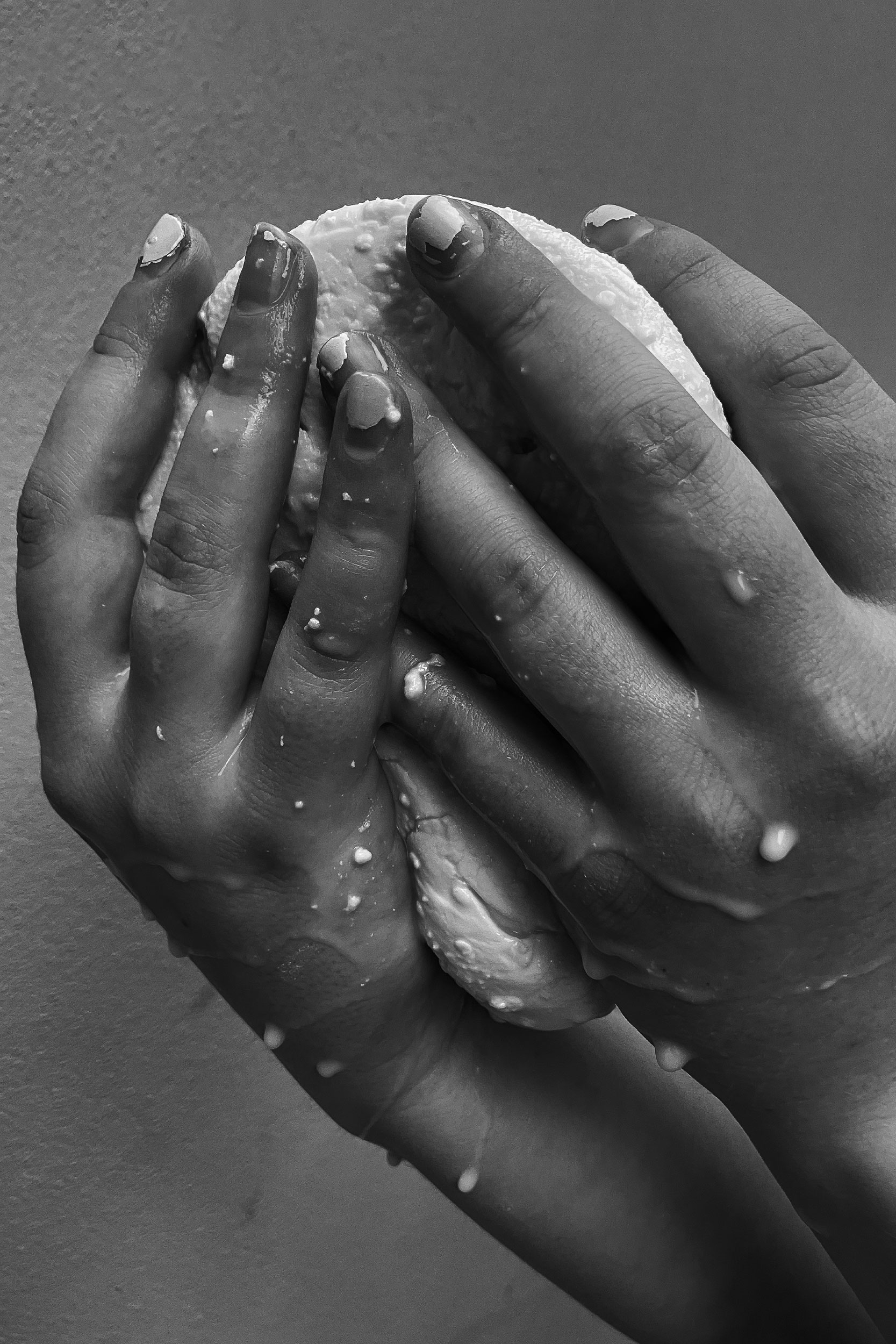
When I go to work, I go to feed others, not solely from my mind, but from my hands and my soul. Connected. When you consume that morsel, you consume a part of me as well. Breath, hands, and bacteria are collaborators in this haptic experience. Day after day I acquaint myself with the form, taking it from its resting place we’ve provided. Its weight rests on mine as I inspect its development. A flip, to ensure equilibrium, a swipe with a clean cotton cloth to keep things tidy, and no gloves. Contact is continuity between the ridges of my palms, remnants of bacteria, and the multitude of forms. Memories pass from one to another, facilitated by my movements. To conduct this work is to be in solidarity with all that comes before you.
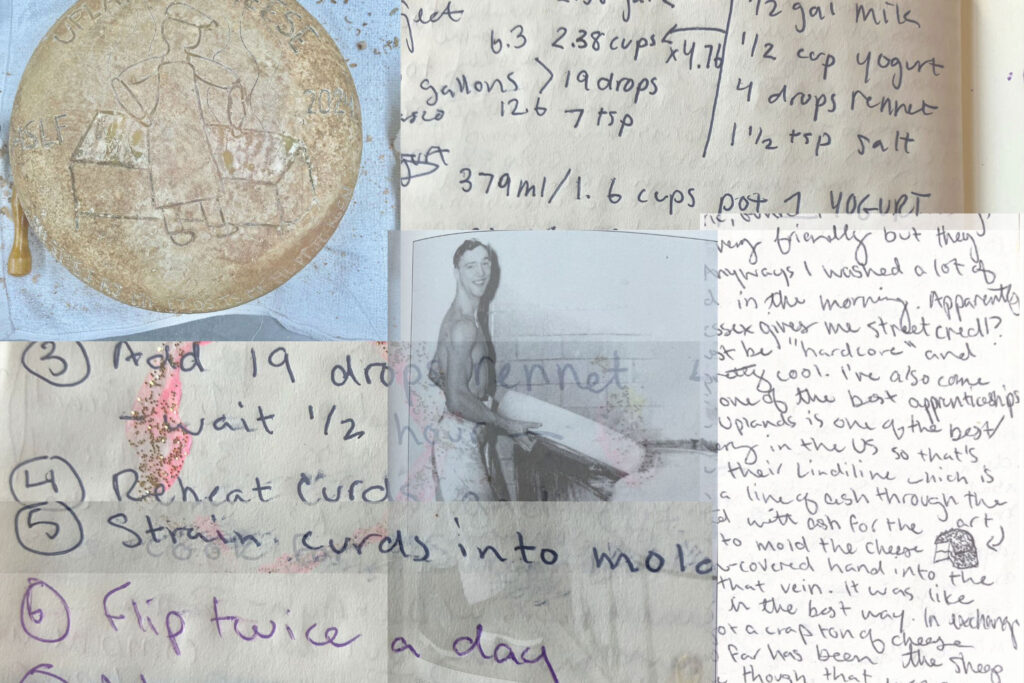
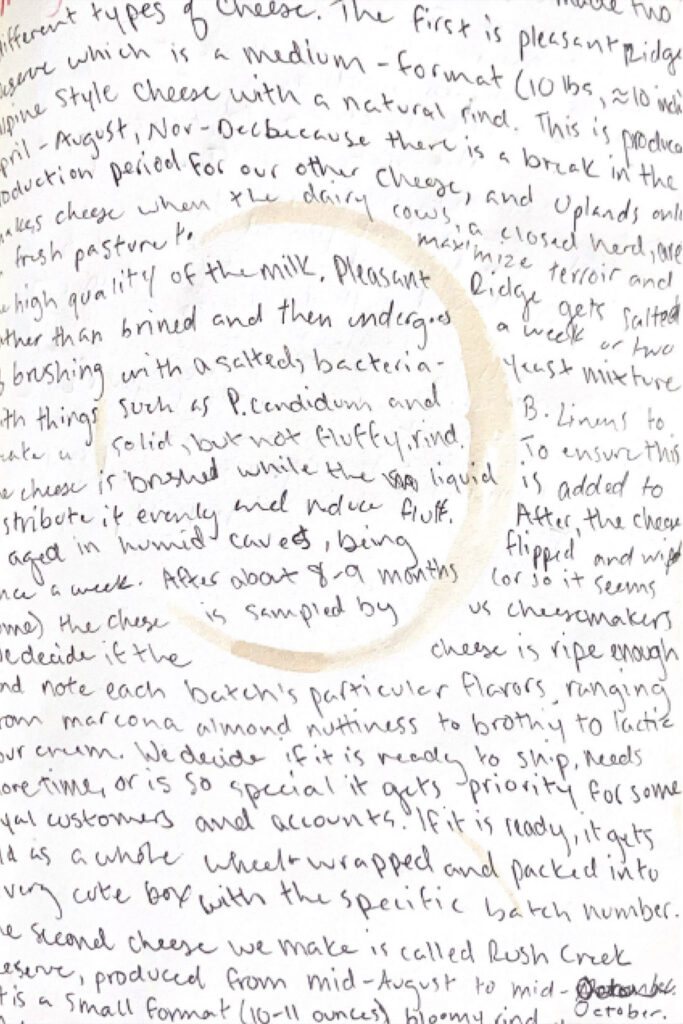
Words and Photography by Madeleine Freundlich
Madeleine Freundlich is a researcher, writer, and farmer who seeks to weave the threads that connect land stewardship to cultural futurity. Growing up in the American northeast, Madeleine’s outlook is informed by walks through the undergrowth, blueberry patches, and a deep sense of agricultural community. Having worked as a vegetable farmer, weaver, and cheesemaker, her sense of self is grounded in an understanding that labour has the potential to be a daily artistic expression. In turn, her background in fibre arts forms her perspective on sustainable systems that value cyclical thinking, craftwork, and meaning-making through the landscape.
As a writer, Madeleine is interested in exploring artisanality as an expression of both scientific inquiry and artistic practice. Issues concerning sustainable meat production, fermentation, and workers’ rights are central to the agricultural landscape these days and are hoped to be explored in future essays. Currently a Fulbright Scholar residing in northwest Italy, she is excited to contribute an agroecological lens to Planted.