As planet-bound animals, we live inside shortening and lengthening days; inside the weather, where certain flowers and scents come back, at least for now, to visit a year-older self. Sometimes time is not money but these things instead.
Jenny Odell
Time is moving through my body. I can hear it; if I focus, it’s in the sound of the heartbeat. But it is also moving through these words in a linear direction, from left to right. Our feet point forward, and as the light enters the eyes, we are interpreting the world in front of us. The metaphors of temporality and physicality collapse into each other. Then how do we make sense of the time that exists independently of the body, the earth, and perhaps even time itself?
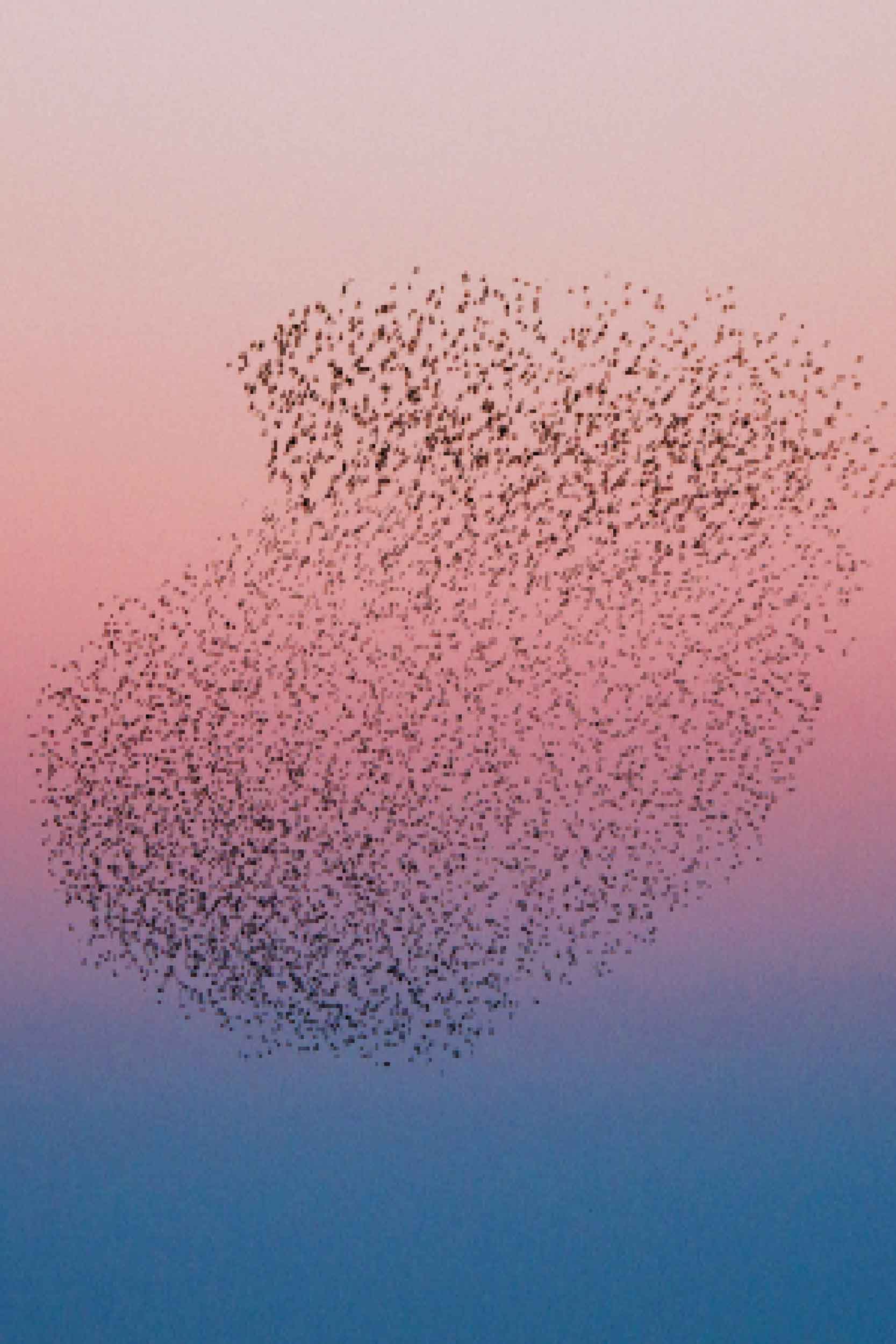
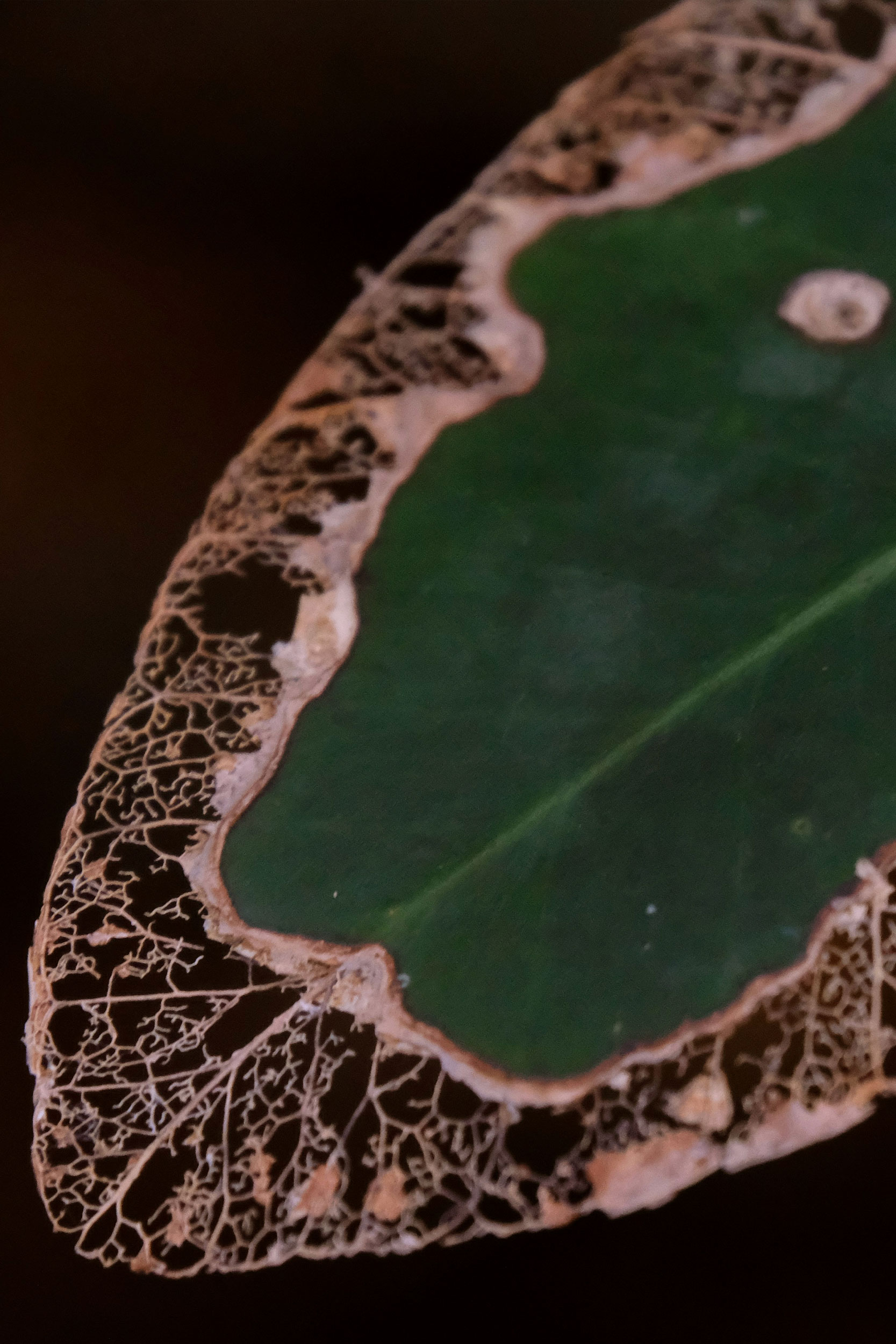
The mechanical timekeeping governed by numbers, seconds and dates stands outside the rhythms that interweave the web of life. In more than the human world, temporality becomes visible in textures, shapes and cycles of the earth. Circadian rhythms are internal biological clocks that sync organisms with the Earth’s rotation around the sun. In the plant world, it is in the opening and closing of the leaves and flowers; in the mammalian body, it is the ebb and flow of hormones; and for the migratory birds and butterflies, it is the magnetic pull that guides them from one day to another. A sharp intuition orchestrated by the light, the primary life-giver that resets the internal clock with the rising and setting sun. These clocks, which oscillate in each organism on a cellular level, also connect the cycles of life. Year to year, migratory birds take their flight by predicting the availability of resources across miles; the insects they consume must pupate in sync with budding flowers to pollinate them, and through these movements and relations, the food cycle remains intact. It binds each organism to another.
Time is only linear when observed in immediacy. The time that slipped into the past must be behind in its physicality. But what if it is not? We think of time in linearity because we are conditioned to make sense of life as a passage moving from birth to death. Yet the past is always in us; our own body dissolves within itself, birthing new shapes, stretching in space from infancy to youth and shrinking as we mature. Where are all those bodies? Are they behind in the past or still lingering within?
It is the longing to summon the unknown, or perhaps even to control it, that makes us look to the future and often dismiss the past as if it is already gone and done. The colonisation of temporality has disrupted the cycles of nature, from seasons to flowers and pollinators falling out of sync. Our own rhythms have become unknown to us, mastered by a clock that measures productivity as worth, a deception of infinite progress on a finite planet.
In Hindi, the word for ‘tomorrow’ and ‘yesterday’ is the same ( कल ). In our culture, it is common to refer to the actions of not only this life but also of past lives. Is it far-fetched to interpret time on scales that are beyond one lifetime? Or is it simply a way of acknowledging the interconnected way of being in which our actions can resonate for lifetimes to come? If so, who we are in the present is shaping the past and the future alike.
We are the ones that are weaving the stories of the past; through our collective imagination, industrial time sways our rhythms because it is the story that we hold together, overpowered by extractive systems. Yet individually, we disrupt these timelines through our internal clock as we enter the realms of dreams, memories and visions. The past is not behind us; it is in the present, we can talk to it, shape it, and mend it, and it is even more real than the future that still lingers in probabilities. It is in the knowing of the migratory birds, it is in the returning flowers, it is the memories that make us who we are, and it is in bodies of nature keeping time, unrushed, even against the ticking clock.