Queer Indigenous Stories: To Be Seen Otherwise | Kali Spitzer
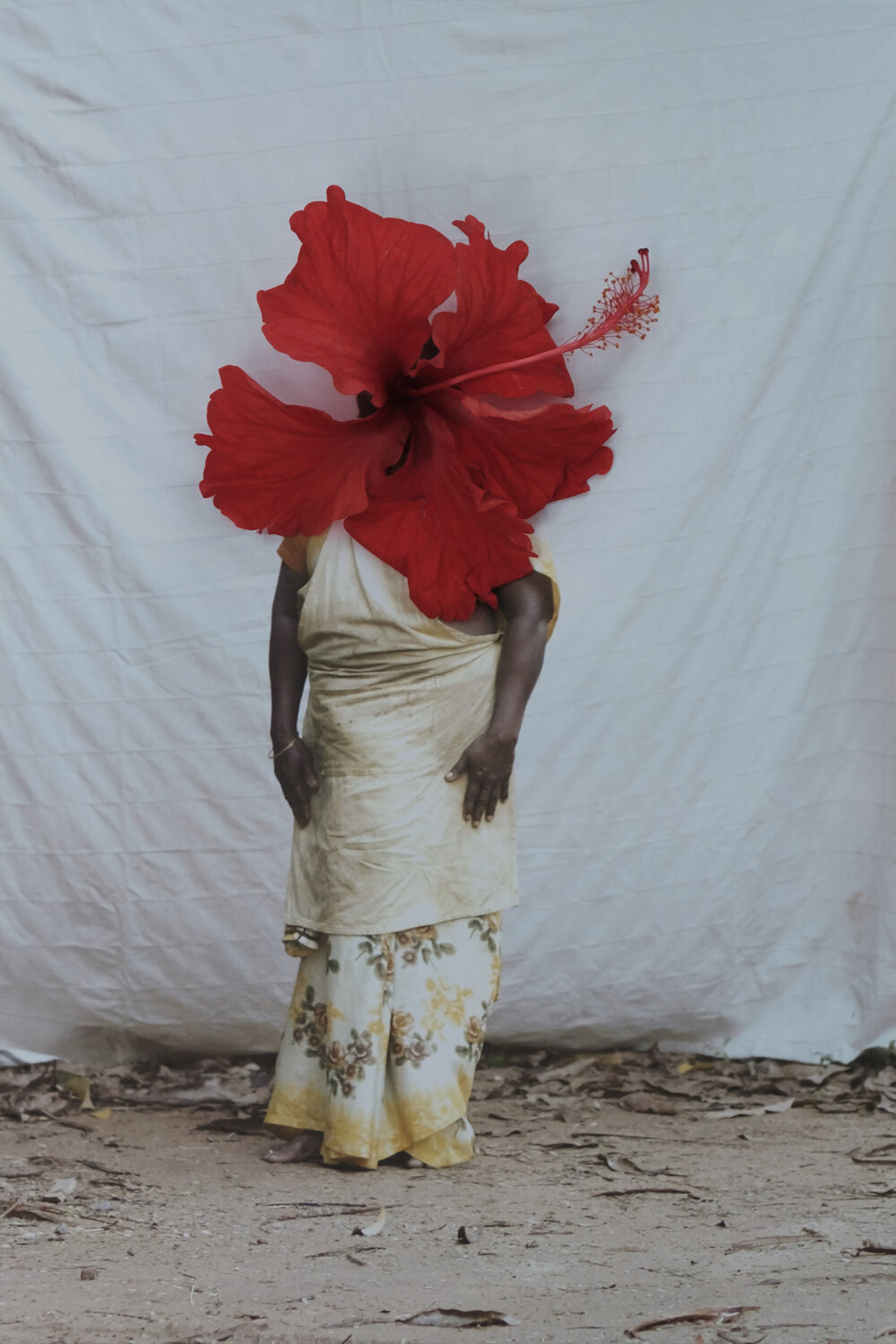
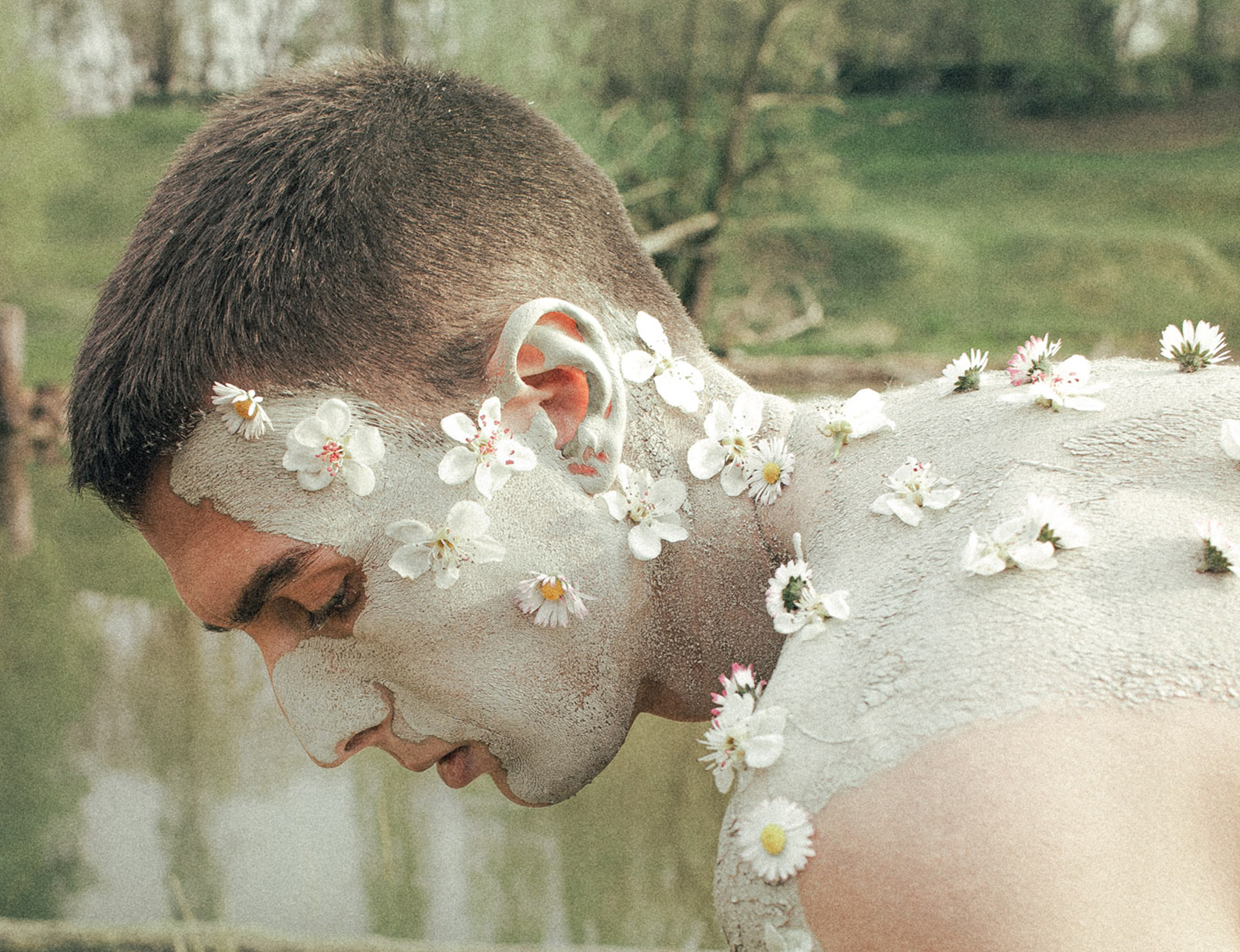
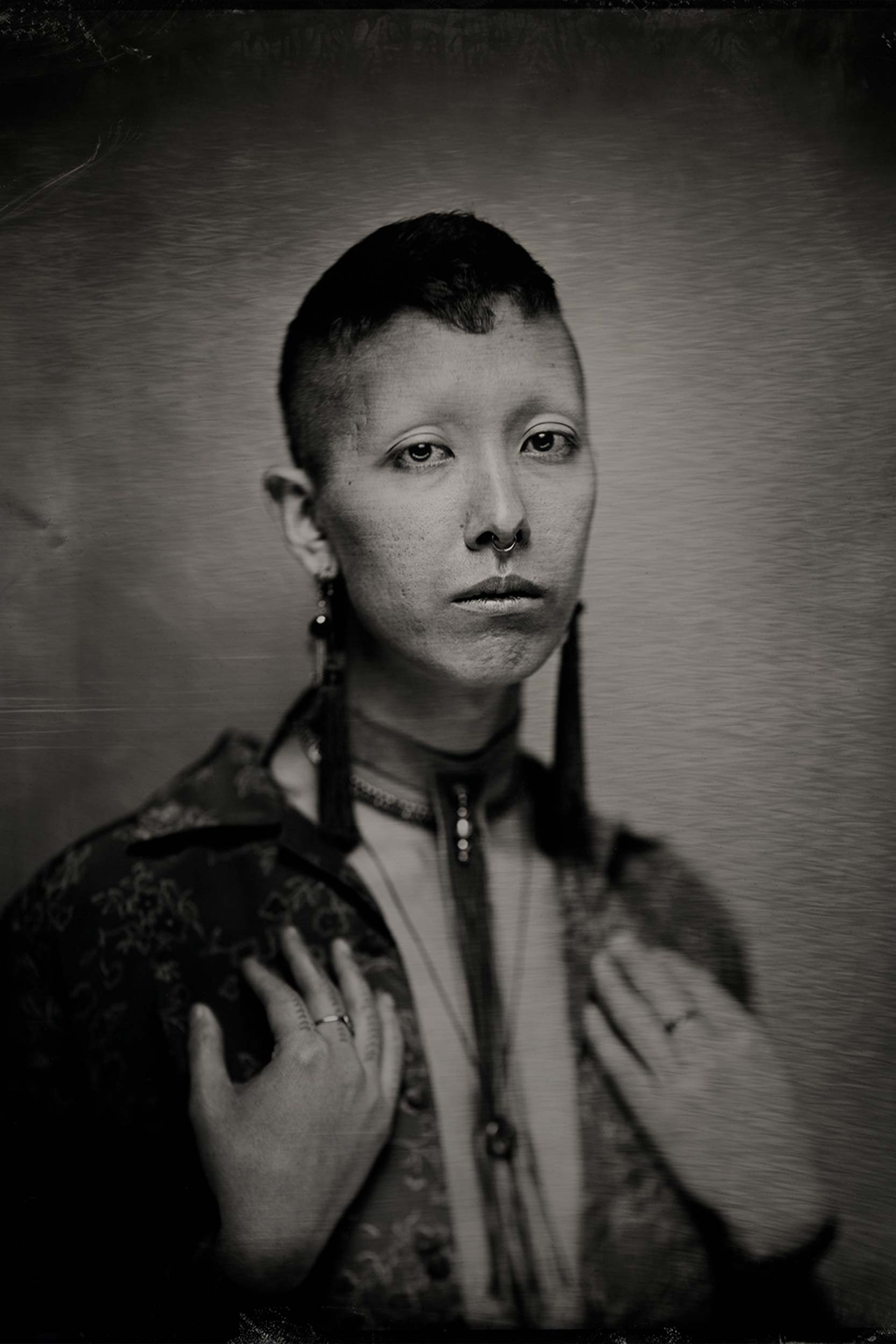
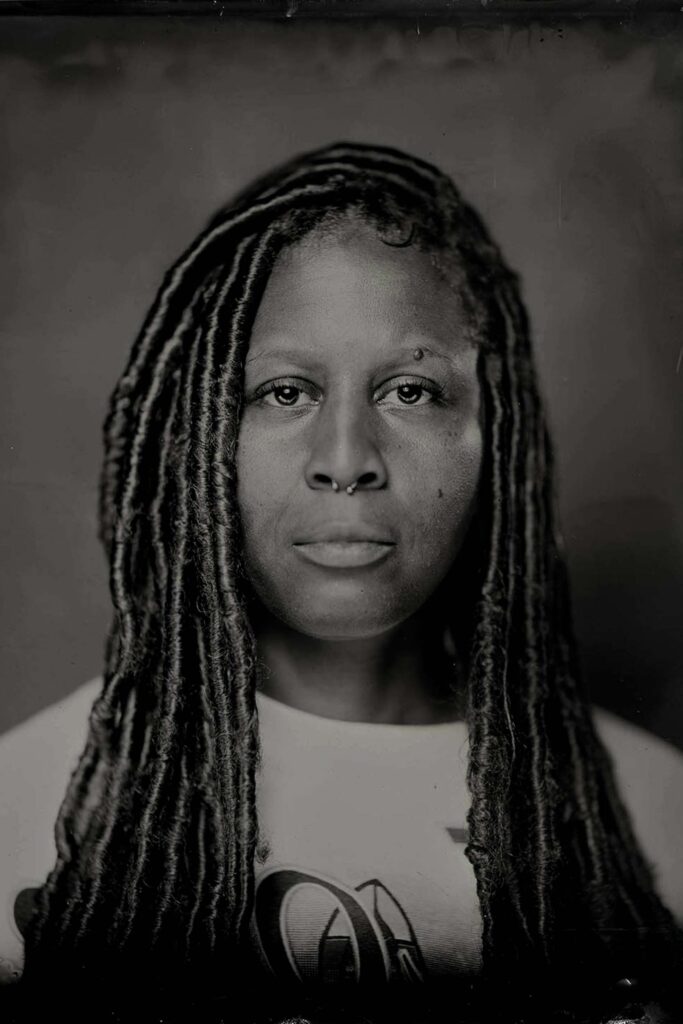
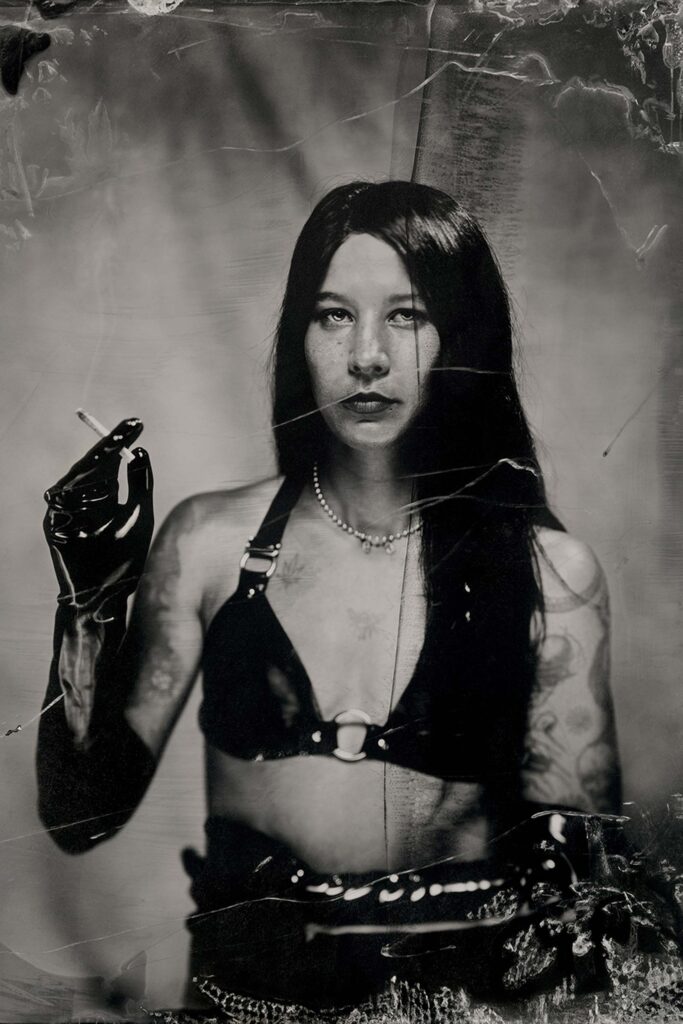
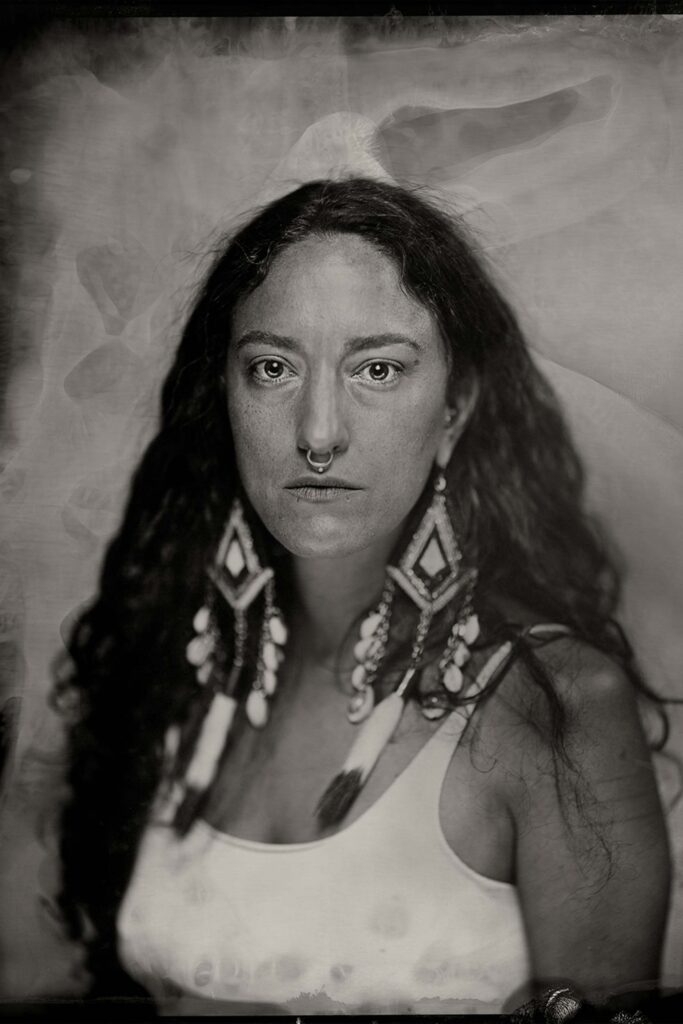
Historically, photography has been used as a violent colonial tool. Non-consensual images taken often spread misrepresentations and stereotypes. It has been a medium that has taken from Indigenous communities: images taken without our consent, organised by photographers who are not part of or in relationship to our communities. For this reason, I am committed to creating photographs of queer and Indigenous people from a queer and Indigenous perspective. I am juxtaposing this century-old process with contemporary depictions of being.
Kali Spitzer
Kali Spitzer is an Indigenous, femme, queer artist whose practice is rooted in relationships—between land, body, memory and image. Based on the Traditional Unceded Lands of the Musqueam, Squamish and Tsleil-Waututh peoples (Vancouver, BC), her work centres contemporary BIPOC, queer and trans communities, creating space for self-determined representation that resists and reconfigures colonial visual histories.
Of Kaska Dena heritage from Daylu (Lower Post, BC) on her father’s side, and Jewish heritage from Transylvania, Romania on her mother’s, Spitzer’s work is deeply informed by lineage and lived experience. Her photographs—often created through analogue and historic processes such as wet-plate collodion—are as much about care and collaboration as they are about image-making. Moving between portraiture, figure studies and documentation of cultural practices, her work becomes both an archive and an act of continuation: honouring Indigenous knowledge systems, kinship and ways of being.
Spitzer studied photography at the Institute of American Indian Arts and Santa Fe Community College, where, under the mentorship of Will Wilson, she developed her engagement with alternative photographic processes. Working across 35mm, 120 and large-format film, she brings a tactile, intentional slowness to her practice. Her work has been exhibited internationally, including Smoke in Our Hair: Native Memory and Unsettled Time (Hudson River Museum, 2025), Returning Home (Bard College, 2024), In Our Hands: Native Photography, 1890 to Now (Minneapolis Institute of Art, 2023), and Speaking With Light (Amon Carter Museum of American Art, 2023). In 2022, she received the Aftermath Grant to support her ongoing project, An Exploration of Resilience and Resistance.
Virginia Melodia: You describe yourself as Jewish (from Transylvania, Romania) on your mother’s side and Kaska Dena (the First Nations people) on your father’s side. How do these identities shape your work?
Kali Spitzer: Who I am shapes my work in that it shapes how I exist in the world, it is ever-present. My identity as a queer, Indigenous, Jewish woman informs the way I see the world. Where I come from, who I was raised by and the multitude of histories I hold within myself inform the way I see the world. My politics, experiences and histories are rooted in my identity. I cannot divorce my work from who I am.
Virginia Melodia: How did returning to your ancestral lands shape your decision to document Indigenous traditions and community life? What was that experience like, both personally and artistically?
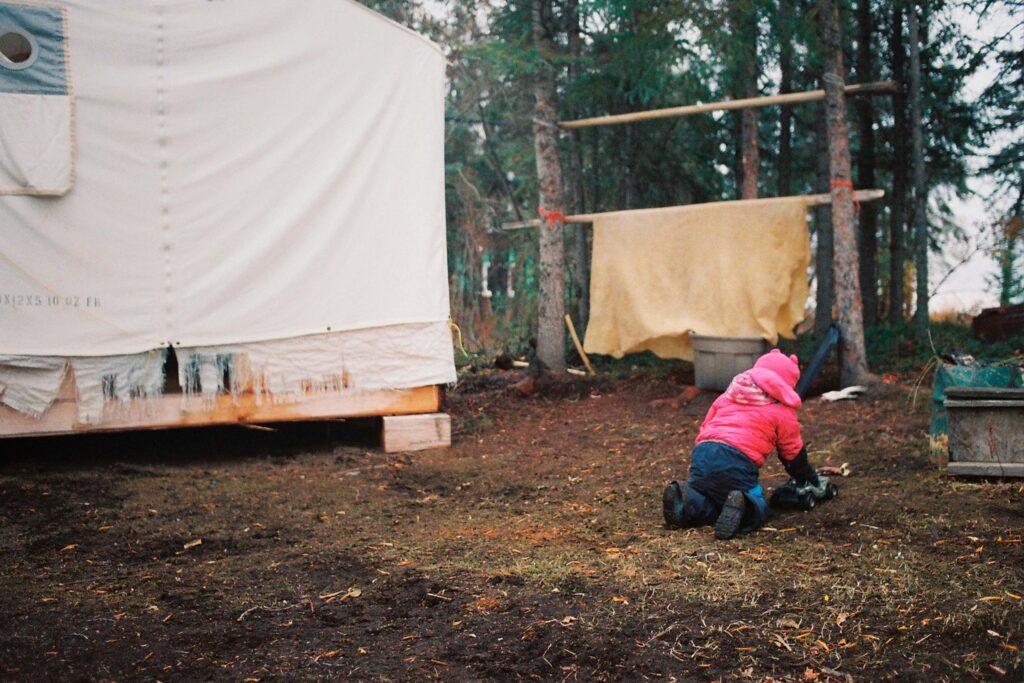
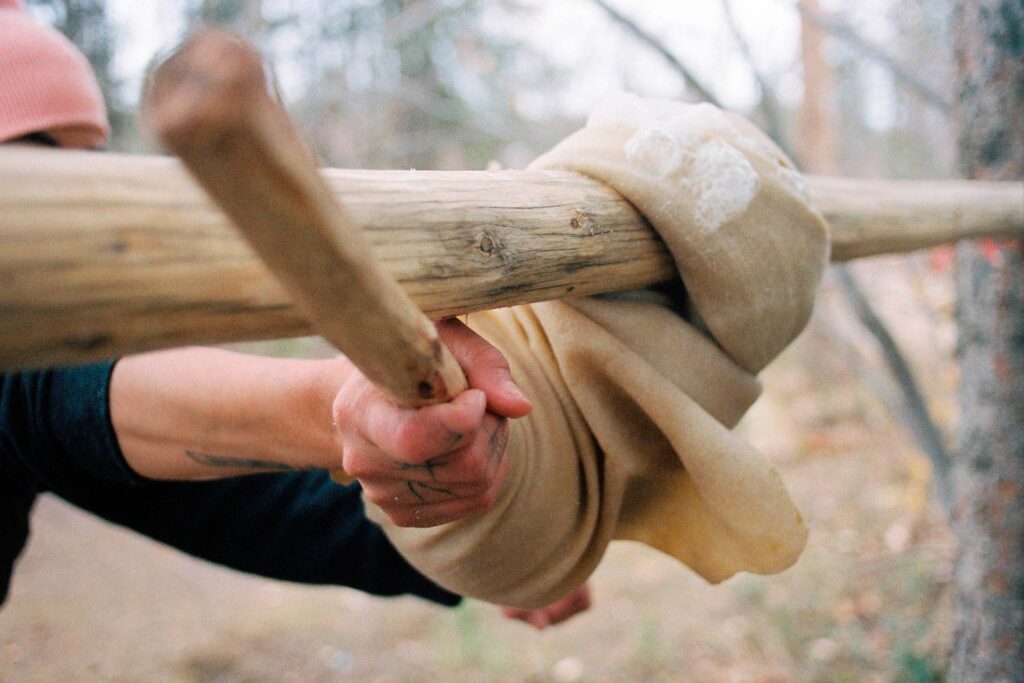
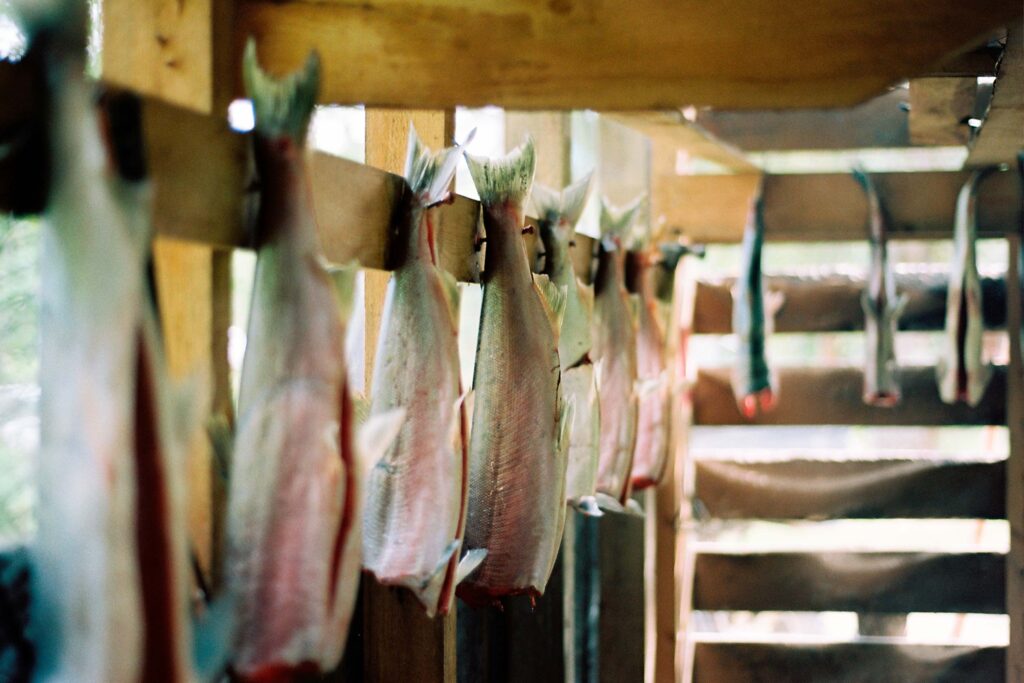
Kali Spitzer: I have always known and been connected to where I come from, to my land, my people and culture. My formative years were spent in the North. I then moved to southern British Columbia where I was raised by my mother. Being able to go back North as a young adult by myself was a beautiful and different experience than when I was young. I was able to learn things like how to tan hides, hunt and make beadwork with my grandmother. I believe so many things live in us as blood memory, and sometimes when learning these practices at an older age, I had already felt like I had done them before.
I don’t feel that I made a decision to document my community and other northern communities, it is just something that I have always done, just as it is a place I have always been in connection with. Since I was a child my dad has shared oral history and images of our territory and family with me. My maternal grandfather also had a passion for photography, photography has always been a way I saw the world.
Part of why it did not feel like a decision is because I was simply living in our ways, the photography was secondary. If I am photographing a friend or community member tanning hides, I am also tanning hides, though I am rarely imaged doing these things because I am behind the camera. The photograph is secondary to the activity itself, it is a way to archive and to document our ways of life, but another important piece of that archival work is practising and sharing that knowledge with others in my community.
I believe so many things live in us as blood memory.
Kali Spitzer
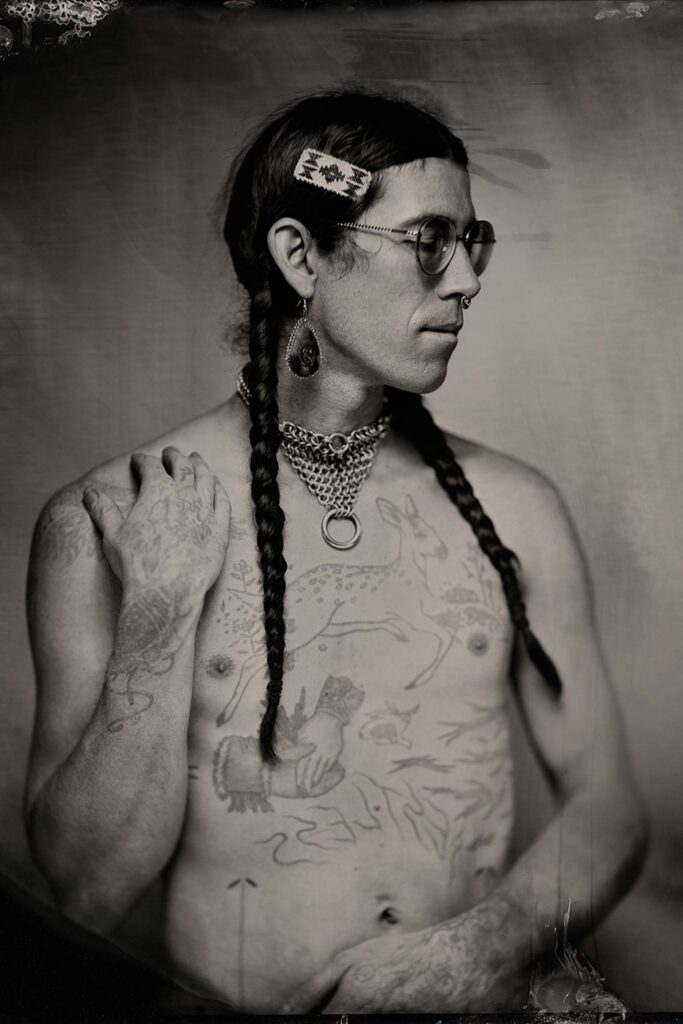
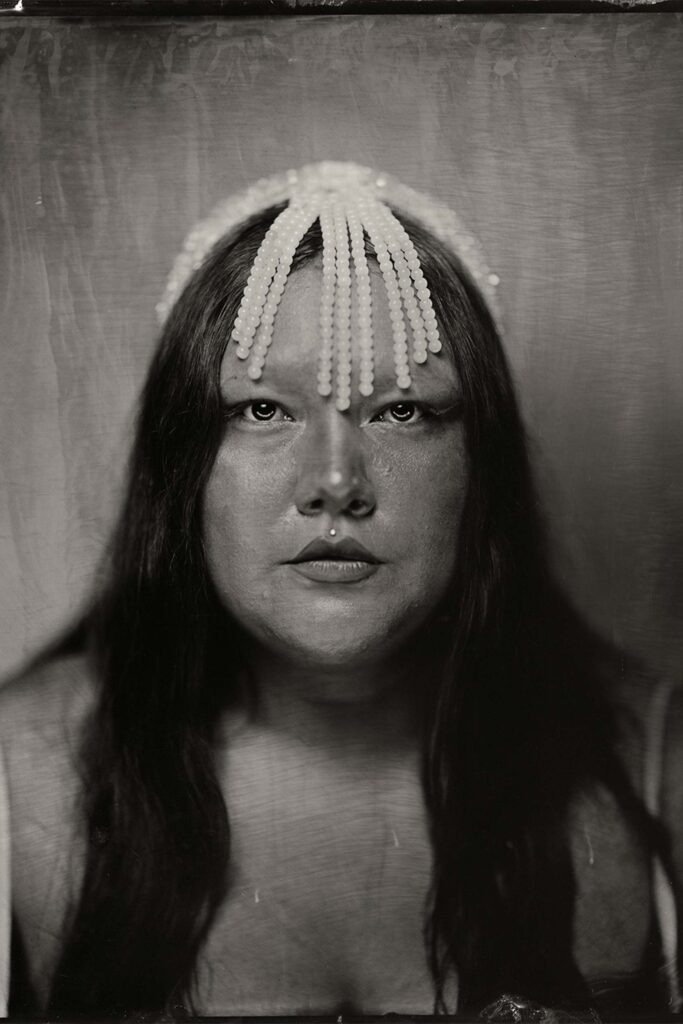
Virginia Melodia: Photography—especially the wet-plate collodion / tintype process—historically carries a heavy colonial legacy. What drew you to this medium, and how do you see your use of it functioning as a form of reclamation or resistance?
Kali Spitzer: Historically, photography has been used as a violent colonial tool. Non-consensual images taken often spread misrepresentations and stereotypes. It has been a medium that has taken from Indigenous communities: images taken without our consent, organised by photographers who are not part of, or in relationship to our communities. For this reason, I am committed to creating photographs of queer and Indigenous people from a queer and Indigenous perspective. I am juxtaposing this century-old process with contemporary depictions of being. I have always had a passion for working with metal and photography, especially polaroid images. When I learned about the wet plate collodion process I was so excited to find something that incorporated all of those things. Working with it is more about that and less about how this specific process has a harmful colonial history. For me the colonial history of photography as a whole is what I respond to as a way of reclamation.
The values I was raised with are present in the way I work, integrity and intentionality are the founding pillars. Most of my work directly comments on identity including culture, sexuality and gender. I am providing space for authenticity, for people to be heard, seen and represented accurately. The ability to slow down through the use of film enables me to build a relationship of trust and intimacy with the person I am collaborating with.
I am driven by healing the relationship of photography with each person I work with.
Virginia Melodia: In your collaborative portrait sessions, you emphasise consent, trust, and shared authorship. Can you describe a moment that deeply impacted you—perhaps where the subject felt seen or reclaimed in a way they hadn’t before?
Kali Spitzer: I appreciate you asking this question because it gives me an opportunity to talk about language. I do not use the word subject when speaking about my work as it separates me from my collaborators. Especially when talking about consent, trust and shared authorship, I feel it is important to use language that reflects that reality.
There’s no one moment that has deeply impacted me. I feel a deep connection to everyone I work with and every experience has its own unique moments. I treasure those moments and have memories with every collaborator during some part of the process. Every session stays with me for different reasons.
One of the reasons I love to work in wet plate collodion process is that I get to bring the person I am working with into the dark room and we can develop the image together. People’s reactions to seeing their image for the first time and seeing how I am able to reflect different parts of them within it, are often my favourite moments. To have someone feel seen and perceived in a way they relate to themselves is really at the heart of why I make images. I hope to create images that make people feel witnessed, whether that be in their queerness, their gender, their indigeneity and their power.
I hope to create images that make people feel witnessed, whether that be in their queerness, their gender, their indigeneity and their power.
Kali Spitzer
Virginia Melodia: Your project An Exploration of Resilience and Resistance centres Indigenous queer, trans, nonbinary, BIPOC persons. What role does community—chosen family, kinship, queer kin—play in your work and in your vision of representation?
Kali Spitzer: My community is my work. My work would not exist without the communities that claim me. It is an honour to be able to image my communities. I would also like to note that even though there is overlap within the communities I photograph, I photograph Indigenous communities and queer communities, as well as Indigiqueer communities.
Virginia Melodia: How do you see the connection between land, ancestral history, and contemporary queer Indigenous identity in your work?
Kali Spitzer: As Indigenous Peoples, we are inseparable from our ancestors as well as from the land. Our identities are intrinsically connected to and informed by these things, in that way, that connection is carried throughout my work.
Virginia Melodia: Can you speak about the emotional/ethical labour involved in creating these images? How do you navigate care, responsibility, and vulnerability—both for yourself and for those you photograph?
Kali Spitzer: For me, I often don’t think of it as labour. I feel grateful for the time shared between me and those I am working with. I feel honoured that I am trusted with each person’s stories and vulnerability within being photographed. I think entering the space as a shared container for creation helps us both navigate the space with care, responsibility, and vulnerability. I try to make the safest space to invite people into.
If I am invited into other territories, I always go by the protocol of the people whose lands I am on, and any kind of photography that I make is rooted in care. I have a responsibility to represent people accurately and I have a responsibility to check in with people I collaborate with about how they are shown, represented, and in which spaces (if at all). With each request I pause to make sure I am aligning with the ethics of my practice. Always placing people above anything to do with my “career”. It has always been important for me through the years to make sure people are comfortable about where their images go.
Virginia Melodia: What do you hope viewers—especially those outside Indigenous or queer communities—take away from your photographs? What kind of dialogue or change do you hope your art sparks?
Kali Spitzer: When I photograph somebody, my process is focused on them and how they wish to be represented, as well as reflecting back what I witness in them. This is the most important part of creating for me. So when I photograph someone, the photos we make are for them, first and foremost, and for our own communities, for future generations.
Beyond thinking about that, when other people view the work, my request is that they are viewed with care, respect and love. People get to see vulnerable parts of our stories, our cultures and our beings that people have so generously shared with me and allowed me to share with a broader audience. I am so grateful that people trust and want to share that with me.
Virginia Melodia: Looking forward: are there new stories, practices, or mediums you hope to explore? What’s next for you?
Kali Spitzer: I am feeling really excited about exploring different formats as well as playing around with alternative printing processes! I hope to get a larger format camera. I hope to spend more time working with the tangible prints created from my negatives, working with platinum, palladium, and albumin printing. I would also like to play around with polaroid transfers and do more 8 x 10 polaroid photos.
I have some creative collaborations with community members in the works that I will be excited to share about soon. I am also looking forward to starting a new tintype series.
As Indigenous Peoples, we are inseparable from our ancestors as well as from the land. Our identities are intrinsically connected to and informed by these things, in that way, that connection is carried throughout my work.
Kali Spitzer
Virginia Melodia: What do “resilience” and “resistance” mean to you today—as Indigenous queer communities—and how does that shape the future you hope to build?
Kali Spitzer: Thanks for asking how I feel about it today, as my thoughts do shift on the meaning of those words as time passes.
Right now, those words make me think of our joy. How we continue to thrive, make, and keep our culture close and pass down to future generations no matter what we have endured or continue to endure. I think it is important to focus on our happiness, our continual connection. It is so important to recognise our joy, celebrate it and treasure it. I find this especially important when thinking about media where there is such rhetoric of talking about the pain and trauma experienced by BIPOC and queer community members. It is so important for us to talk about the unjust treatment and violence faced by our communities, but it is just as important to balance that with the joy, love and care we experience.
Something that feels very present for me today when speaking of “resilience” and “resistance” is the awareness of all the ongoing genocides that are affecting Indigenous people throughout the world. There is active resistance and resilience occurring across the globe, of people facing current genocides. Being resilient through genocide is not something people choose but it is incredible—people’s strength and perseverance, especially for children.
Virginia Melodia: How do you see the role of art in the era of climate/ecological crisis?
Kali Spitzer: From an Indigenous perspective, our access to art is directly affected by climate change, especially from a northern perspective. The North is disproportionately affected by climate change. The way we create uses materials and stories from the land. As the land and animals continue to be affected by the climate crisis so will our ability to create. They are interconnected.
Virginia Melodia: Reverence is the deep respect and acknowledgement of the interconnectedness of all beings, recognising the value and significance of every story, culture, and experience. Do you consider your work a reflection of reverence for these connections, and how does that shape the stories you tell through your work?
Kali Spitzer: Absolutely, as Indigenous peoples we deeply honour the interconnectedness of all beings, we are inseparable from our land and ways of life. In working with and amongst Indigenous communities, when amplifying stories and creating visual records, this comes up. The work that I do is to honour these things.
The North is disproportionately affected by climate change. The way we create uses materials and stories from the land. As the land and animals continue to be affected by the climate crisis so will our ability to create. They are interconnected.
Kali Spitzer
Words and Photos by Kali Spitzer
Introduction and Interview by Virginia Melodia
Virginia Melodia is a creative storyteller. She tells stories through writing, poetry, photography and video. Her mission is to connect people with nature and our shared humanity. She wants to inspire others to consciously live and remain in the presence. She shares narratives that evoke a deep sense of connection and reverence for our planet and ourselves.
As a creative, Melodia loves shaping experiences that feel alive and draw people in. Growing up between languages and living in different countries opened her eyes to many ways of seeing, and taught her to value the beauty in every culture and viewpoint.
She’s passionate in blending visuals and language into stories that speak to the soul. She looks for inspiration in the world as it unfolds around her—the honesty of nature, the intensity of human feeling, and the many layers of everyday life. She believes storytelling can help us understand one another, look inward with courage, and ignite positive change in the world.