Planted

Artist Alicja Kwade investigates the boundaries between the natural and the constructed, inviting viewers to reconsider their place within vast systems of time, matter, and ultimately meaning. Working with materials like stone, metal, and glass, her practice is a collaboration with the earth itself. She talks to Anna Borrie about her sculptures that challenge our human assumptions about permanence, value, and truth. Digging into how her work exposes the quiet absurdities and inherited beliefs that shape our understanding of the universe. She urges us to see with greater humility and curiosity and to have reverence for the interconnectedness of all beings. This interview is published by Planted Journal, a non-profit publication dedicated to bridging the gap between humans and nature for personal and planetary well-being.

The Weight and Wonder of Materials: Reverence, Reality, and the Constructed World | Alicja Kwade

I think human value systems distort, above all, our relationship to ourselves.

Alicja Kwade

 Visual Artist
 

Artist Alicja Kwade’s work investigates the boundaries between the natural and the constructed, inviting viewers to reconsider their place within vast systems of time, matter, and ultimately meaning. Working with materials like stone, metal, and glass, her practice is a collaboration with the earth itself.

Her large-scale sculptures challenge our assumptions about permanence, value, and truth as they mirror, distort, and reconfigure reality. Subtly the quiet absurdities and inherited beliefs that shape our understanding of the universe are exposed through the way, manner and materials used. She urges us to see with greater humility and curiosity and to have reverence for the interconnectedness of all beings.

Anna Borrie Stone, metal and glass often appear in your sculptures, which are substances that seem to carry the memory of the earth itself. Do you see working with natural materials as a collaboration with the earth or is it more an investigation into how human systems of value distort our relationship to the natural world?

Alicja Kwade Yes, I absolutely see it as a form of collaboration, although it is almost impossible to see it any other way, because apart from a few artificially created compounds, most materials are ultimately given to us by the earth.  For me it is mainly about learning from these things.

Stones are time capsules, showing traces of enormous events in the history of our planet, billions of years pressed into solid matter. Or trees, shells, and crystals, which are the wonders of an almost incomprehensible internal mathematics. And so many other things which are almost hard to believe.

I think human value systems distort, above all, our relationship to ourselves.

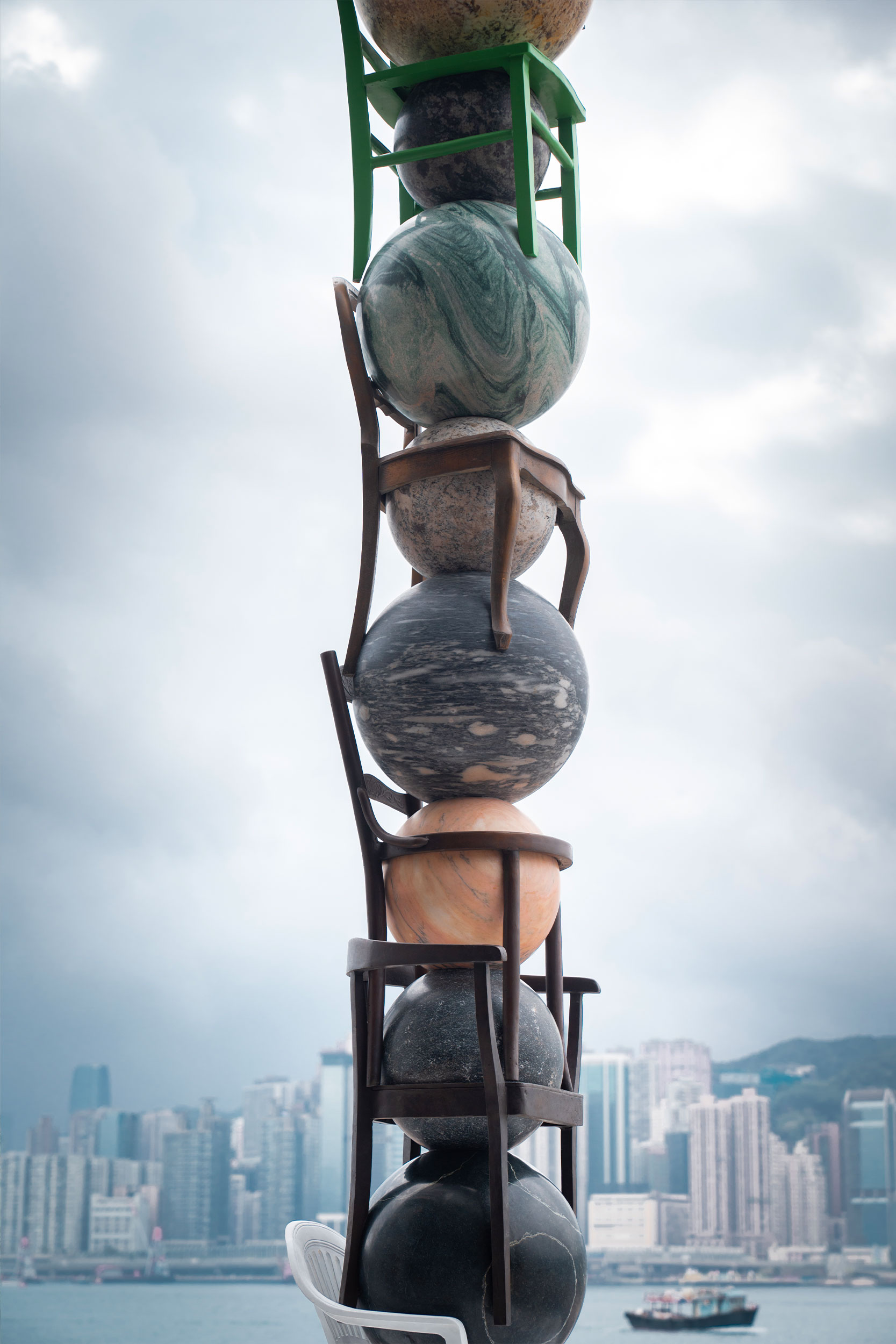
Anna Borrie ParaPivot (2019) installed on the Met’s rooftop, transformed stone into planets hovering above New York. Many viewers saw it as a reflection on our planet’s fragility and the scale of the universe. Was that ecological reading something you intended, or does it emerge naturally from your materials?

Alicja Kwade I never have a clear intention; it is always more layered than that. But I do like this reading.

Anna Borrie You’ve described stone as a “witness”, a material that endures beyond us. In today’s ecological context, what does it mean to work with something so ancient and enduring?

Alicja Kwade We have worked with stones since the moment we inhabited the first caves, and we live on a stone whose interior we still do not truly understand. This fascinates me, and it feels like the most natural thing one can do.

In addition, permanence is absolutely necessary when you create many works for public outdoor spaces, and yes, I am fascinated by the thought that these objects will remain in those places for a very long time. I know the precise origin of all my stones and all the people involved in their sourcing, production, and logistics. This is where my responsibility lies in a very concrete way.

Stones are time capsules, showing traces of enormous events in the history of our planet, billions of years pressed into solid matter.

Alicja Kwade
 Visual Artist
The Weight and Wonder of Materials: Reverence, Reality, and the Constructed World
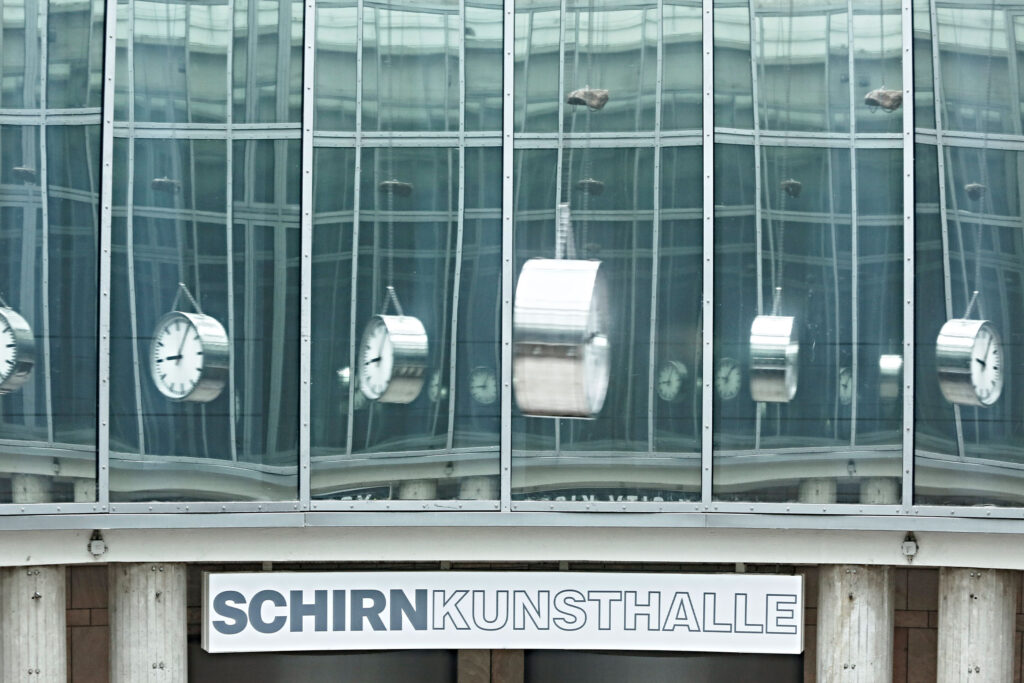
Alicja Kwade Die bewegte Leere des Moments, 2015/2017 clock, stone, stainless steel chain, electric motor, LED, audio equipment Dimensions variable. Photo Credit: Alicja Kwade. Installation view of Die bewegte Leere des Moments (2015) for Die bewegte Leere des Moments (The Void of the Moment in Motion) at Schirn Kunsthalle Frankfurt, 2015. Courtesy of the artist; KÖNIG GALERIE, Berlin. Image credit: Schirn Kunsthalle Frankfurt. Photograph by Norbert Miguletz.
Artist Alicja Kwade investigates the boundaries between the natural and the constructed, inviting viewers to reconsider their place within vast systems of time, matter, and ultimately meaning. Working with materials like stone, metal, and glass, her practice is a collaboration with the earth itself. She talks to Anna Borrie about her sculptures that challenge our human assumptions about permanence, value, and truth. Digging into how her work exposes the quiet absurdities and inherited beliefs that shape our understanding of the universe. She urges us to see with greater humility and curiosity and to have reverence for the interconnectedness of all beings. This interview is published by Planted Journal, a non-profit publication dedicated to bridging the gap between humans and nature for personal and planetary well-being.
Alicja Kwade Die bewegte Leere des Moments, 2015/2017 clock, stone, stainless steel chain, electric motor, LED, audio equipment Dimensions variable. Photo Credit: Alicja Kwade. Installation view of Die bewegte Leere des Moments (2015) for Die bewegte Leere des Moments (The Void of the Moment in Motion) at Schirn Kunsthalle Frankfurt, 2015. Courtesy of the artist; KÖNIG GALERIE, Berlin. Image credit: Schirn Kunsthalle Frankfurt. Photograph by Norbert Miguletz.
Artist Alicja Kwade investigates the boundaries between the natural and the constructed, inviting viewers to reconsider their place within vast systems of time, matter, and ultimately meaning. Working with materials like stone, metal, and glass, her practice is a collaboration with the earth itself. She talks to Anna Borrie about her sculptures that challenge our human assumptions about permanence, value, and truth. Digging into how her work exposes the quiet absurdities and inherited beliefs that shape our understanding of the universe. She urges us to see with greater humility and curiosity and to have reverence for the interconnectedness of all beings. This interview is published by Planted Journal, a non-profit publication dedicated to bridging the gap between humans and nature for personal and planetary well-being.
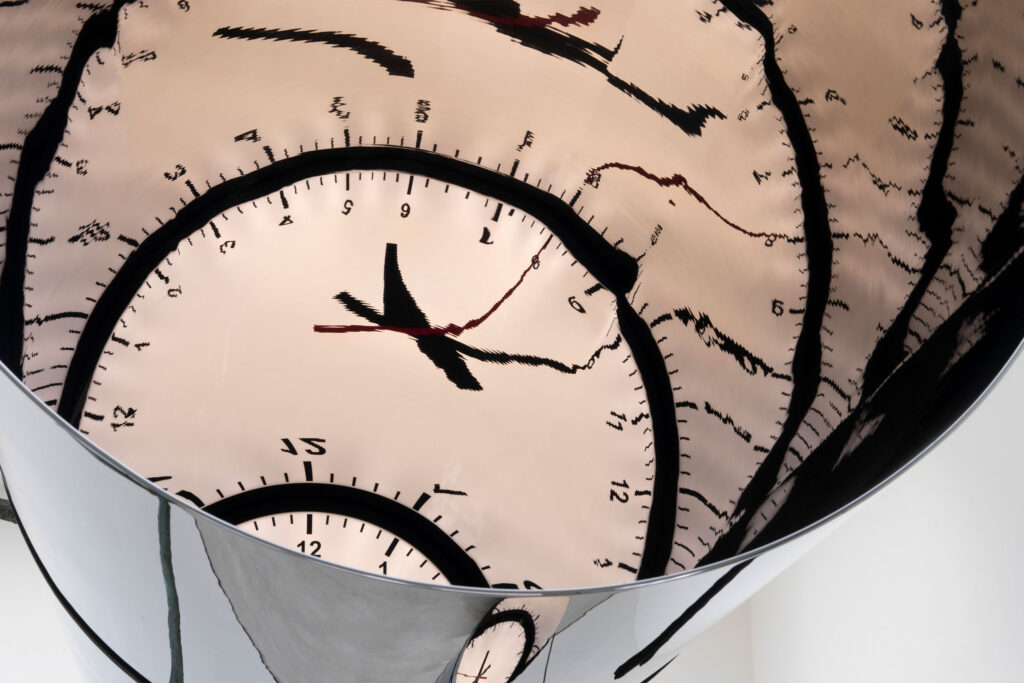
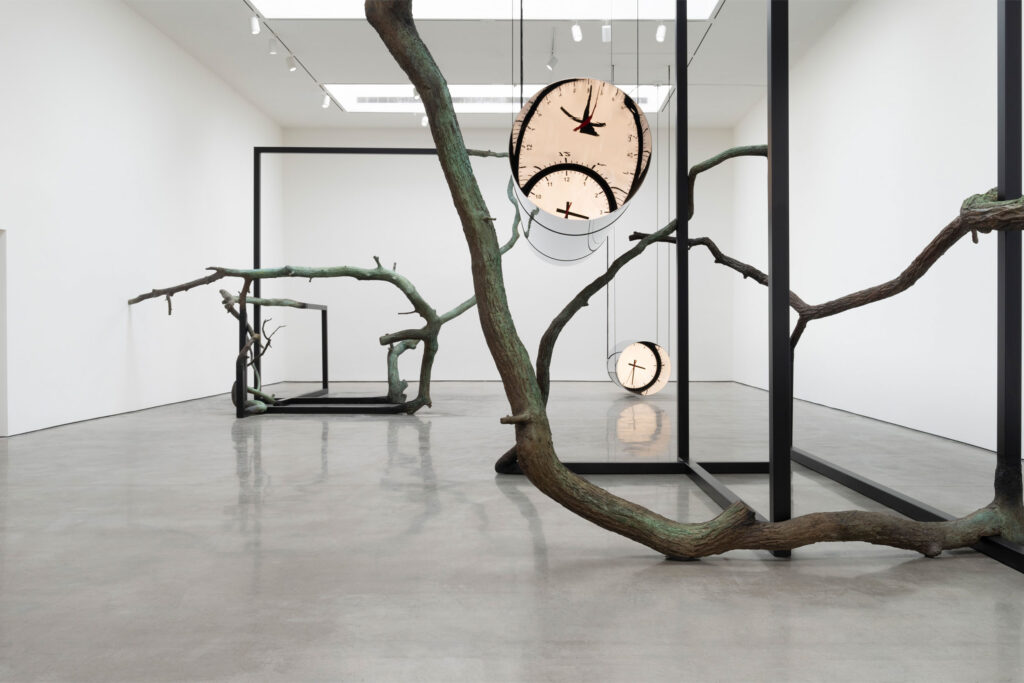
Alicja Kwade PhaseChase, 2025 stainless steel, clock, sound installation. + Installation View: Alicja Kwade. Telos Tales. Installation view, PACE Gallery, New York, 2025. Alicja Kwade. Telos Tales. Installation view, PACE Gallery, New York, 2025. Photograph by Peter Clough.
Artist Alicja Kwade investigates the boundaries between the natural and the constructed, inviting viewers to reconsider their place within vast systems of time, matter, and ultimately meaning. Working with materials like stone, metal, and glass, her practice is a collaboration with the earth itself. She talks to Anna Borrie about her sculptures that challenge our human assumptions about permanence, value, and truth. Digging into how her work exposes the quiet absurdities and inherited beliefs that shape our understanding of the universe. She urges us to see with greater humility and curiosity and to have reverence for the interconnectedness of all beings. This interview is published by Planted Journal, a non-profit publication dedicated to bridging the gap between humans and nature for personal and planetary well-being.
Alicja Kwade PhaseChase, 2025 stainless steel, clock, sound installation. + Installation View: Alicja Kwade. Telos Tales. Installation view, PACE Gallery, New York, 2025. Alicja Kwade. Telos Tales. Installation view, PACE Gallery, New York, 2025. Photograph by Peter Clough.

Anna Borrie You’ve said that art can “reveal what’s already there but unseen.” What’s unseen to you right now, either in the world or in your own practice, that you’re trying to make visible?

Alicja Kwade What is unseen becomes visible only through each individual person, through the viewer, and only for them. That is why I cannot define it in general terms. Almost nothing is truly visible to us; we know absolutely nothing, and yet we take ourselves so seriously. I find that almost unbearable — but you also have to face it with some humour.

What I try to make visible for myself are pieces of information about supposed facts that, when looked at more closely, turn out to be absurd agreements shaped by politics, power hunger, and dominance – supposed truths that we all, out of exhaustion, silently agree to.

I am not trying to correct anything. I only try to lay these absurdities out for myself in order to understand them.


Anna Borrie Many of your works play with the boundary between the organic and the industrial. How does nature inform your sense of form and material?

Alicja Kwade I try to understand what is truly man-made and what is given, but it is very difficult to draw that line. This takes us deep into the questions of natural philosophy, which cannot be answered in a single sentence. And it gets more and more difficult to answer the deeper you look into it; you are forced to end up in the void.


What I try to make visible for myself are pieces of information about supposed facts that, when looked at more closely, turn out to be absurd agreements shaped by politics, power hunger, and dominance – supposed truths that we all, out of exhaustion, silently agree to.

Alicja Kwade

 Visual Artist
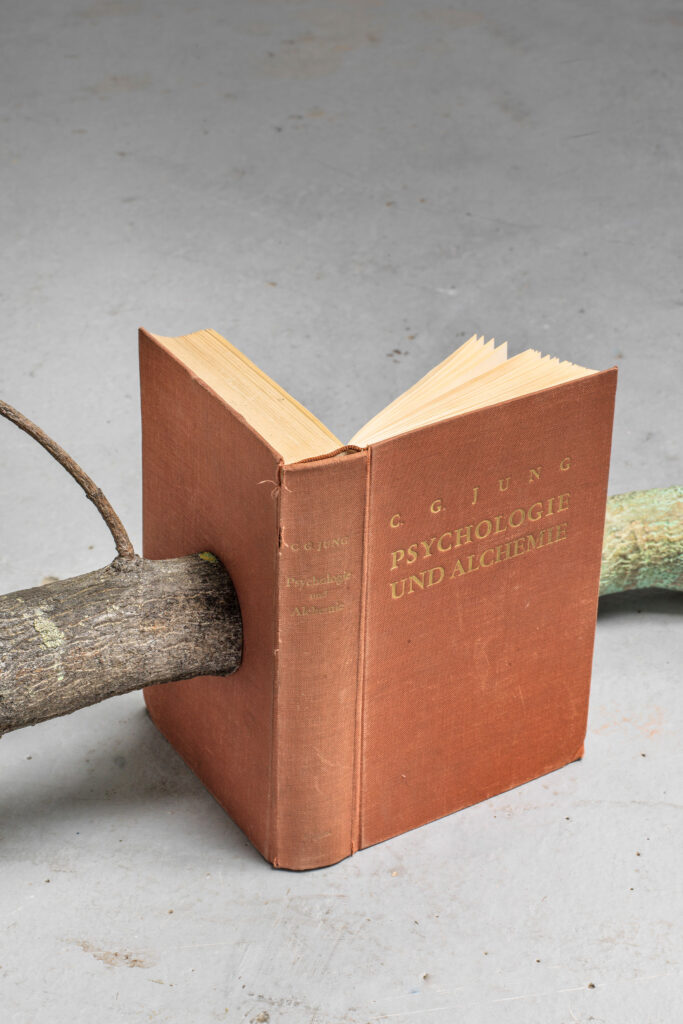
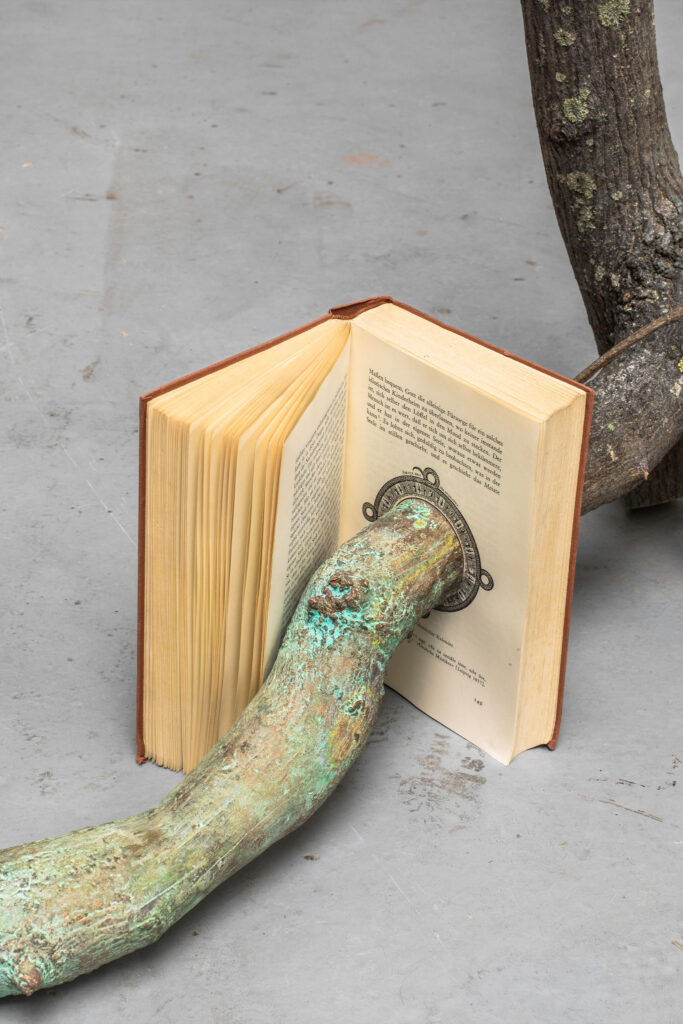
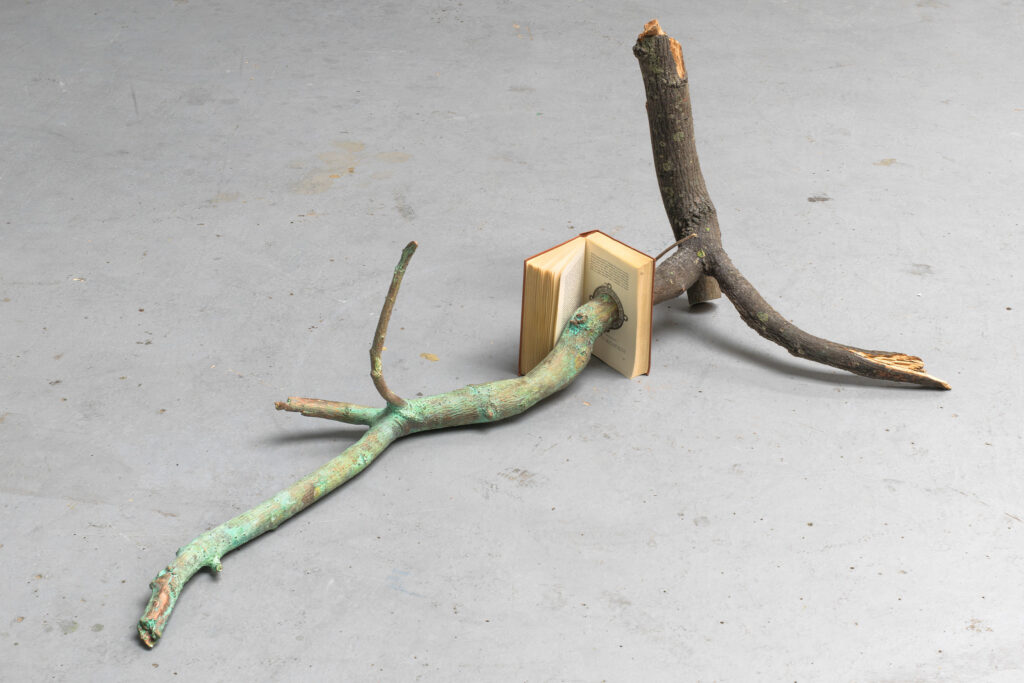
Alicja Kwade Chemische Erinnerungen (Alchemie und Psychologie), 2014 wood, bronze copper-coated, book (C.G. Jung, Alchemie and Psychologie) 55 x 135 x 60 cm
Alicja Kwade Chemische Erinnerungen (Alchemie und Psychologie), 2014. Photo Credit: Courtesy of the artist; 303 Gallery, New York. Image credit: Photograph by Roman März

Anna Borrie How is art relevant and necessary in the Anthropocene, an era marked by climate change and ecological crisis? In what ways do you respond to these challenges, and what responsibilities or roles do you hold in serving society through your work? 

Alicja Kwade I am deeply convinced of the relevance of art and culture. For me, they are what define the essential traits of being human – the need to create. And they are what remain as a universal language.

This is always true, and it applies to the problems of every era. I have Not Chosen to be an Artist. I am one, so I do create.

Anna Borrie Reverence is the deep respect and acknowledgement of the interconnectedness of all beings, recognising the value and significance of every story, culture, and experience. Do you consider your work a reflection of reverence for these connections, and how does that shape the stories you tell through your work?

Alicja Kwade I am deeply convinced of the equal value of all living beings and we do not even know where this starts or ends. The self-elevation we claim for ourselves with such confidence, and by the blindness that comes from it, is hard to understand  And because of that, I believe this is implanted in my works.

Artist Alicja Kwade investigates the boundaries between the natural and the constructed, inviting viewers to reconsider their place within vast systems of time, matter, and ultimately meaning. Working with materials like stone, metal, and glass, her practice is a collaboration with the earth itself. She talks to Anna Borrie about her sculptures that challenge our human assumptions about permanence, value, and truth. Digging into how her work exposes the quiet absurdities and inherited beliefs that shape our understanding of the universe. She urges us to see with greater humility and curiosity and to have reverence for the interconnectedness of all beings. This interview is published by Planted Journal, a non-profit publication dedicated to bridging the gap between humans and nature for personal and planetary well-being.
Alicja Kwade In Blur, 2022 powder coated stainless steel steel, mirror, stones, objects. Photo Credit: Courtesy of the artist. Image credit: Photograph by Lance Gerber.
Artist Alicja Kwade investigates the boundaries between the natural and the constructed, inviting viewers to reconsider their place within vast systems of time, matter, and ultimately meaning. Working with materials like stone, metal, and glass, her practice is a collaboration with the earth itself. She talks to Anna Borrie about her sculptures that challenge our human assumptions about permanence, value, and truth. Digging into how her work exposes the quiet absurdities and inherited beliefs that shape our understanding of the universe. She urges us to see with greater humility and curiosity and to have reverence for the interconnectedness of all beings. This interview is published by Planted Journal, a non-profit publication dedicated to bridging the gap between humans and nature for personal and planetary well-being.
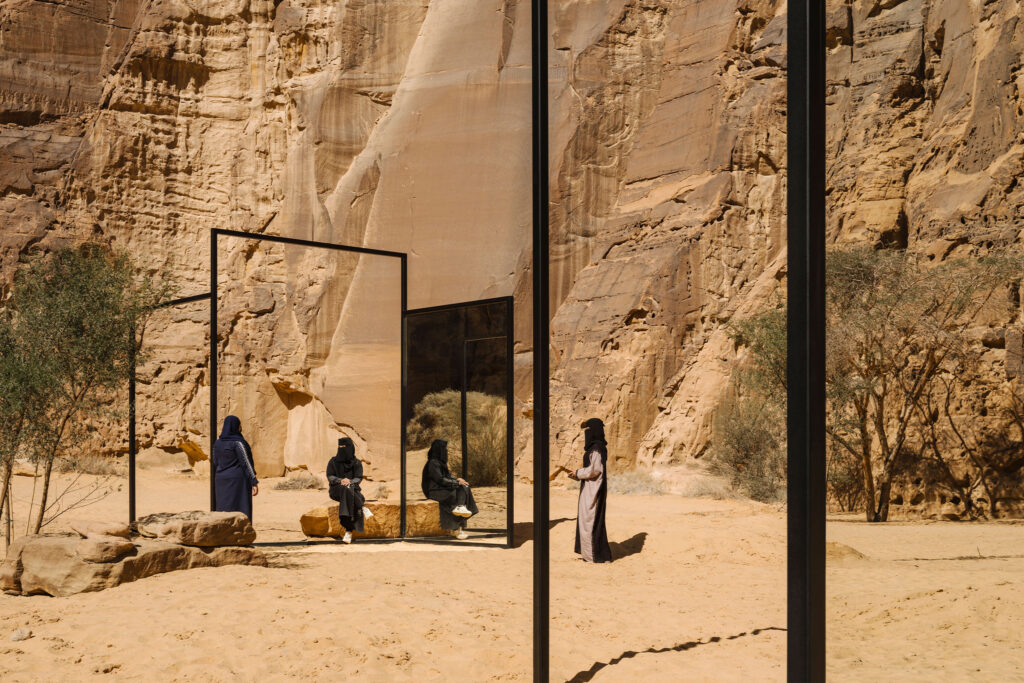
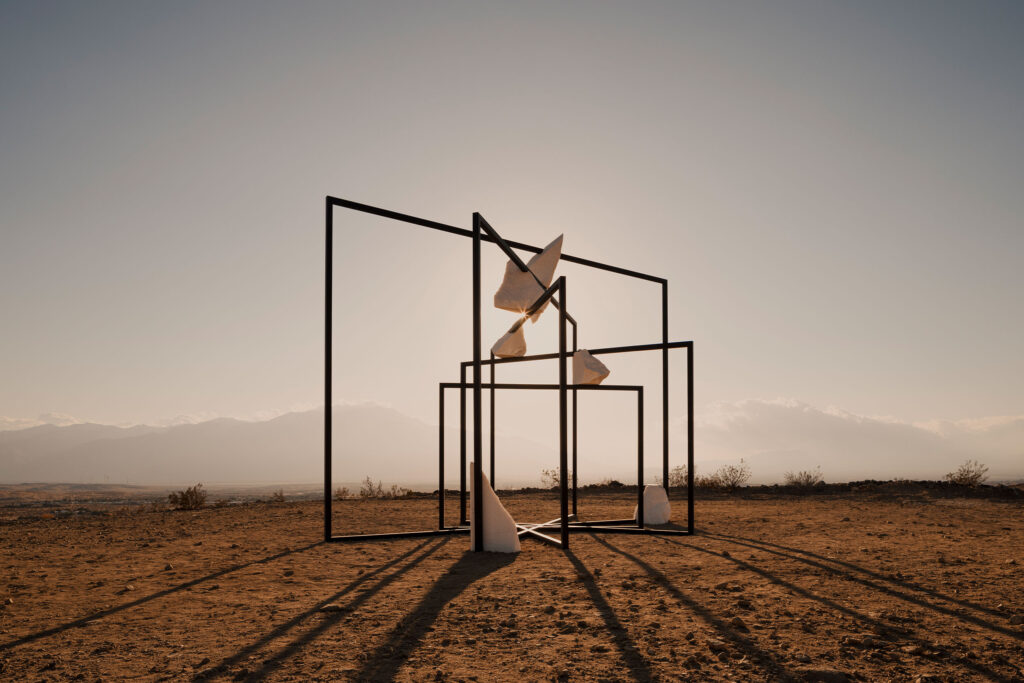
Alicja Kwade ParaPivot (sempiternal clouds), 2020 marble, powder coated stainless steel. Photo Credit: Courtesy of the artist; Desert X. Image credit: Photograph by Lance Gerber

Selected Works: 2025

Words by Alicja Kwade
Interview and Introduction by Anna Borrie
Anna Borrie is Associate Editor at Planted Journal, where she explores the intersections between ecology, art, and storytelling. Her work is rooted in a  creating meaningful connections between people and their environments. She runs a community garden in Madrid, where she cultivates both plants and relationships with fellow gardeners. Her interests lie in creating collaborative environmental art and promoting zero-waste practices, seeking ways to harmonize creativity with environmental responsibility
Join our community

Sign up for our newsletter and become part of our action-oriented creative community

TOP