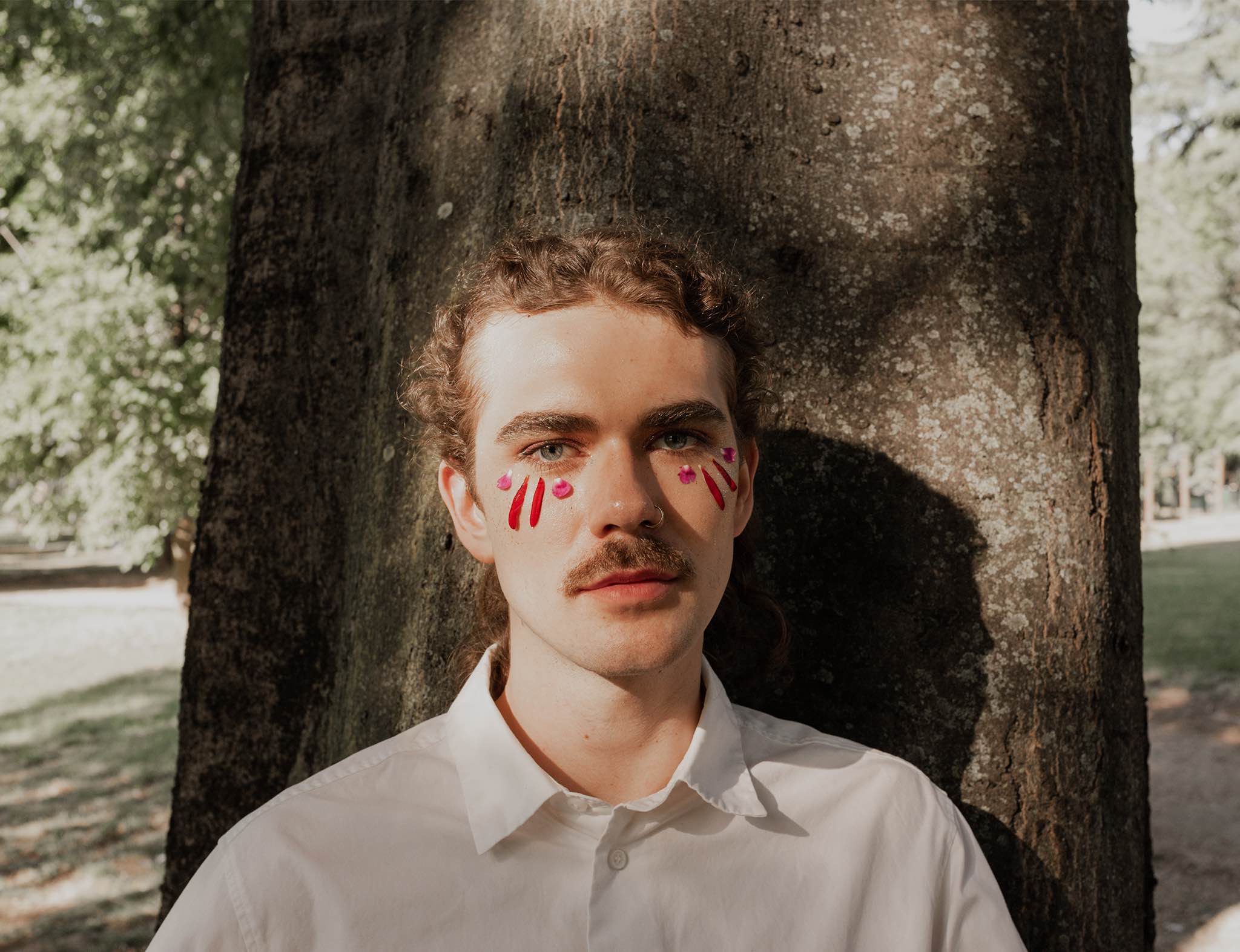


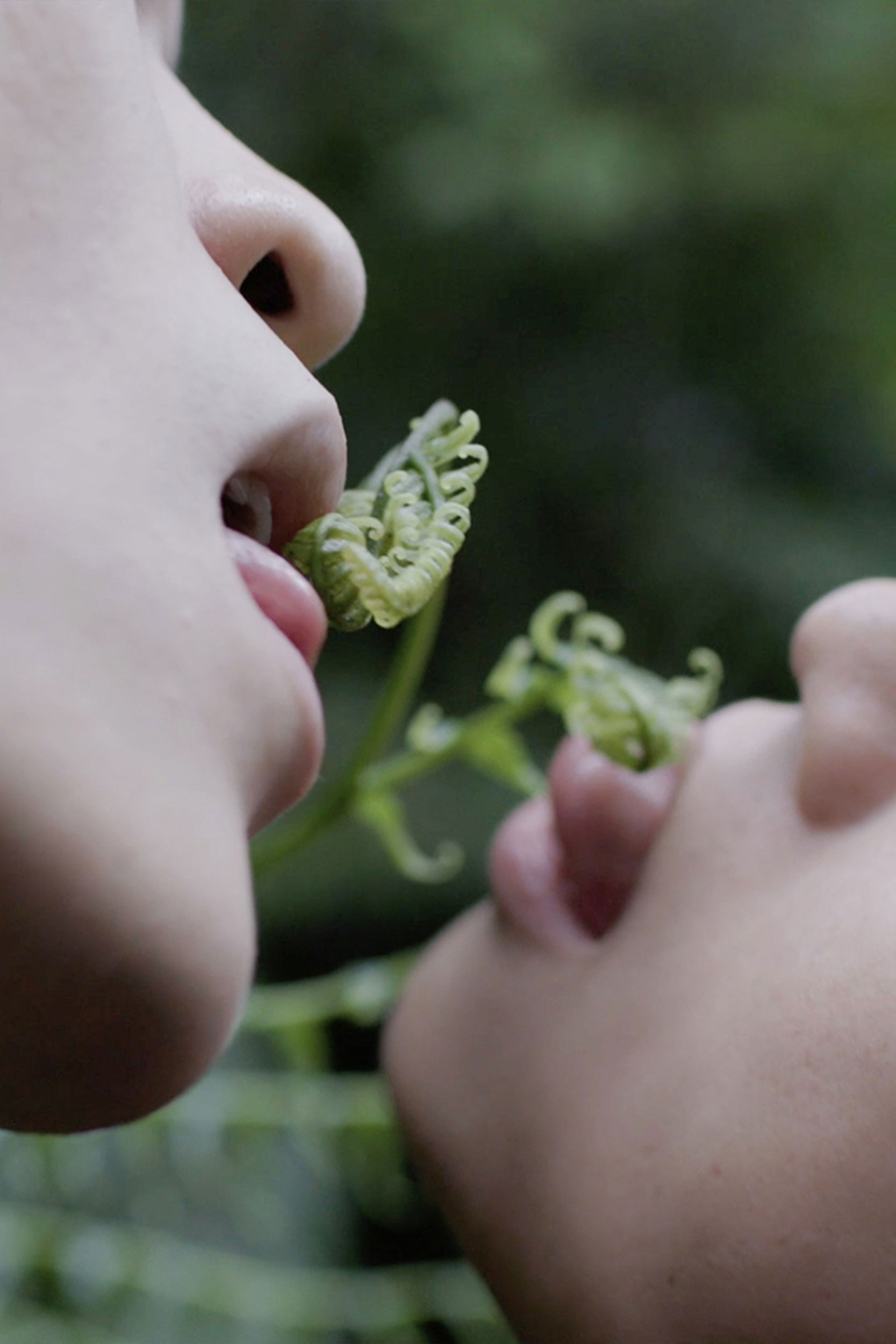
We can begin by saying that ecosexuality imagines a sexual, romantic, and intrinsically queer connection with the Earth. This stance rejects anthropocentrism and human exceptionalism in order to conceive of a sexuality that extends to the rest of the natural world. Considering these notions means tacitly questioning the metaphor of Mother Earth and translating it into that of our lover. Why? Thinking of the Earth as a mother implies seeing her as a caring and indulgent parent. Preferring the maternal figure to the paternal one also means stumbling into an essentialism that reduces both women and the planet to gender roles centered on caregiving, nurturing, and protection. Finally, it reinforces a binary and patriarchal view that paints the Earth as a submissive entity and, above all, predisposed to unconditional love. On the contrary, beginning to see ourselves as loving partners of the Earth, rather than as demanding children, makes room for a more appropriate and gender-neutral representation of the planet; it facilitates the conception of a mutual and non-hierarchical relationship with it and with all its inhabitants.
Founded by Annie Sprinkle and Beth Stephens in 2015 with the drafting of the manifesto of the same name, the ecosexual movement aims to open a conversation about the interconnection between sexuality, queerness, and the environment, to start a revolution centered on pleasure activism, which has been at the heart of their artistic practice for over twenty years. Annie Sprinkle has worked as a sex worker, activist, performer, and sex educator; Beth Stephens is an artist and teacher who has always worked closely with environmental activism. In 2005, at the invitation of artist Linda Montano, Sprinkle and Stephens started the Love Art Lab: a seven-year project that consisted of seven marriages to seven natural elements, from the moon to snow. In one of these marriages, the artists wed the planet Earth, defining themselves as ecosexuals for the first time. Since then, Sprinkle and Stephens have used the term ‘ecosex’ to describe their approach to environmental activism and sexuality, which aims to shift our perception of the Earth from a mother figure to a partner, using this paradigm shift to build a more reciprocal and empathetic connection with the rest of the natural world. They challenge conventional activism, which is often focused on struggle, frustration, and pain, to emphasise how pleasure can actually be a powerful form of resistance.
We aim to decolonize the mountains, waters and skies by any means necessary, for ourselves and future generations. Our preferred methods include love, joy and our powers of seduction to stop the rape, abuse and the poisoning of the Earth. We do not condone the use of violence, although we recognize that some may choose to fight those who destroy, extract and harm the Earth with civil disobedience, anarchist and radical activist strategies. We embrace the revolutionary tactics of art, music, poetry, humor, sex environmental justice and global peace. We know that we do the Earth, we do to our own bodies.
Annie Sprinkle and Beth Stephens,
Ecosexual Manifesto 3.0
Fundamental to the ecosexual vision, the principles of queer ecology combine ecological studies, gender theory, and queer theory to deconstruct the traditional understanding of nature, environment, and identity. In particular, this approach criticises the anthropocentric and divisive mindset fostered by centuries of unequal relationships based on difference—here understood as a divisive value. However, diversity is not the only foundation of biological life that we, as human beings, struggle to digest. So unaccustomed to conceiving of relationships in all their organic complexity, we succumb to the tendency to separate and classify everything in an attempt to understand it. This inclination to simplify reality in order to make it manageable has led us to divide the world into clear-cut and rigid oppositions, creating dualisms far removed from the true essence of things.
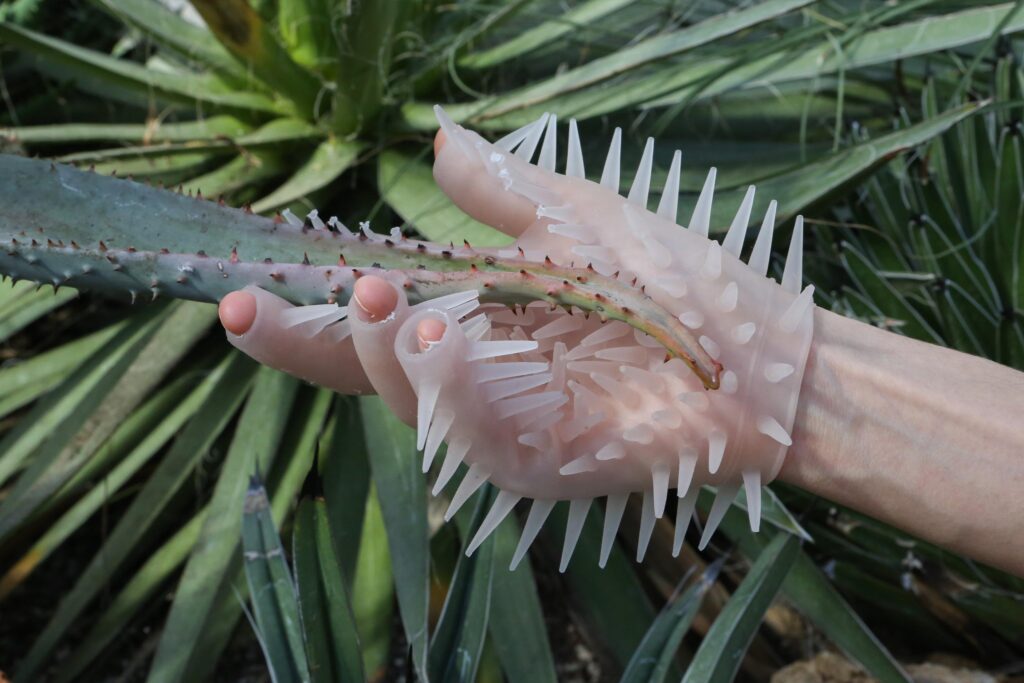
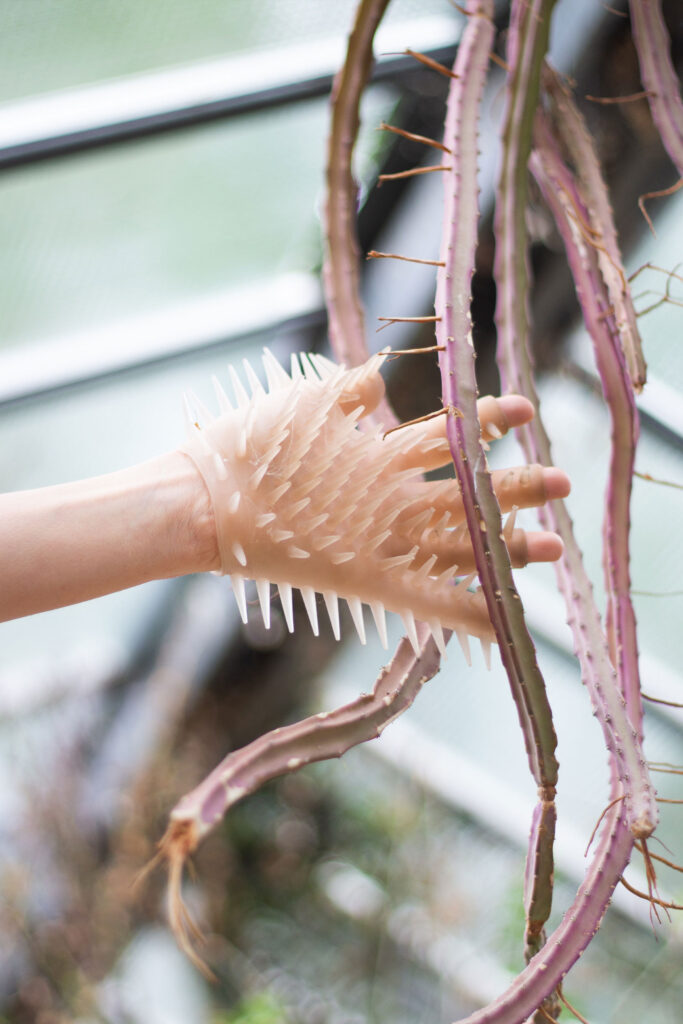
“Les Doigts En Fleur” (2019) is a performance by artist Marina Cavadini, held at the Botanical Garden of Turin, where a group of performers interacted with the flora using latex, silicone, and Lycra clothing and gloves. These costumes, inspired by the shapes and colours of certain plant species, allowed the performers to use physical contact to experience intimacy and closeness and to merge their bodies with the greenhouses and their inhabitants in a sinuous attempt to become plants. Here, the phenomenon of mimicry is used to blur the taxonomic boundaries that divide humans from the plant world, and tactile flirting becomes a tool for creating new hybrid identities and new interspecies relationships. Cavadini tackles the themes of seduction and enjoyment, which in heteropatriarchal culture are usually experienced only from an erotic perspective, in order to conceive them sensually—in the neurological sense of the term. This synesthetic experience therefore represents a gesture of reappropriation of sensory pleasure and of questioning the approach towards the non-human.
Looking at it from a broader perspective, it also fits into the eco-transfeminist philosophy, which highlights the parallelism between, on the one hand, the exploitation of the planet and its non-human inhabitants, and on the other hand, that suffered by the bodies of people socialised as women, in addition to queer, racialised, and Indigenous peoples. All subjectivities are equally oppressed by patriarchal, capitalist, and colonial society. By questioning roles—and the hierarchies and power dynamics they trigger—this work looks not only at interspecies relationships, but also at the theme of the domestication of nature and its possible decolonisation.
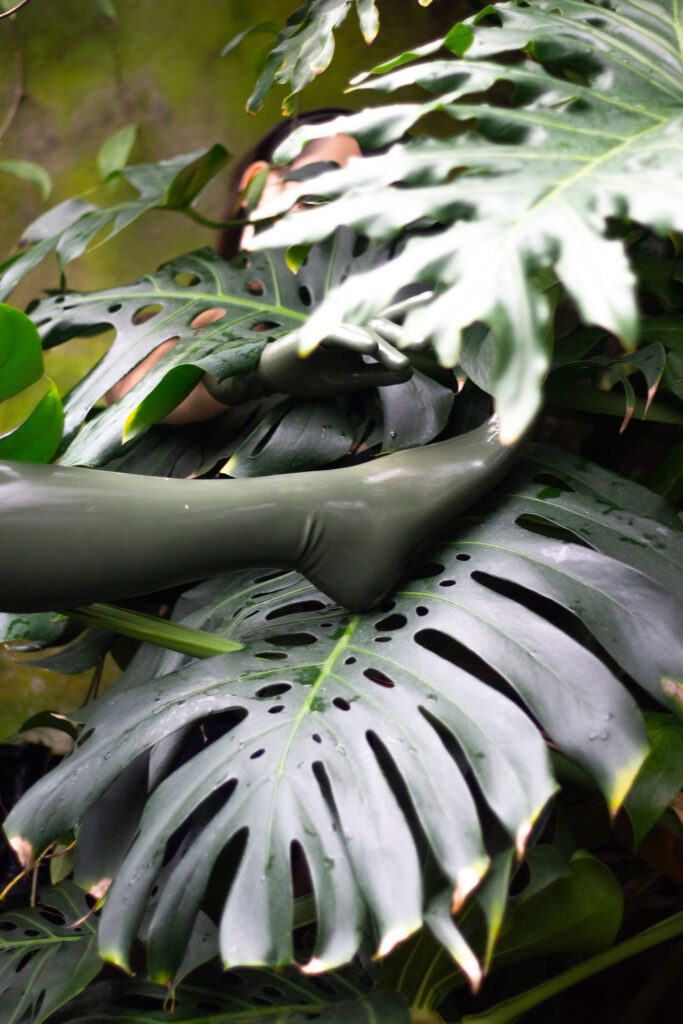
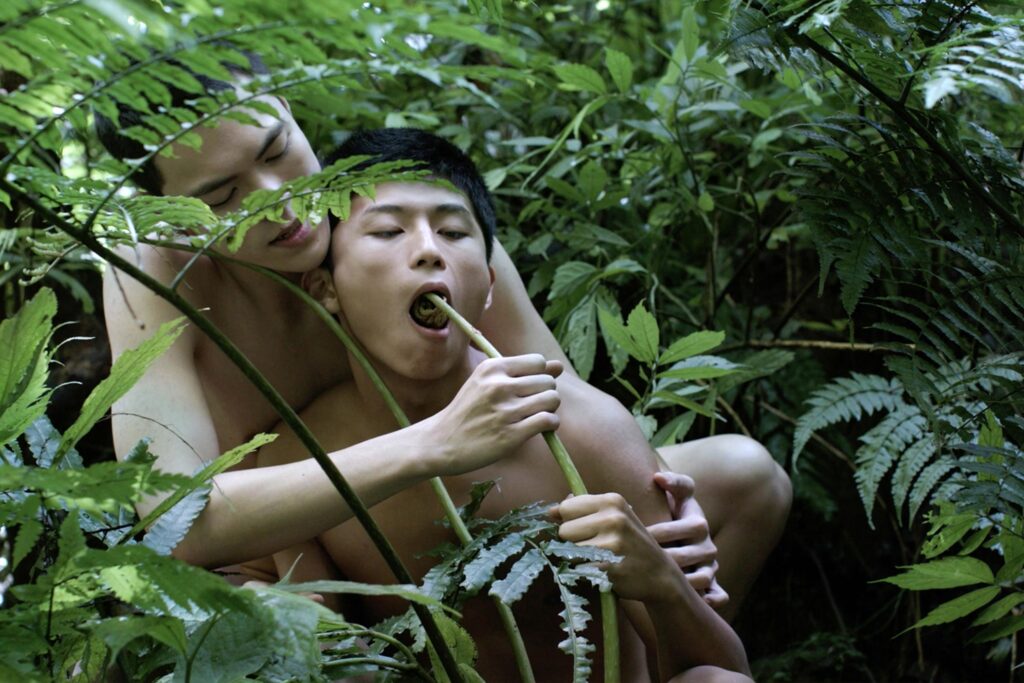
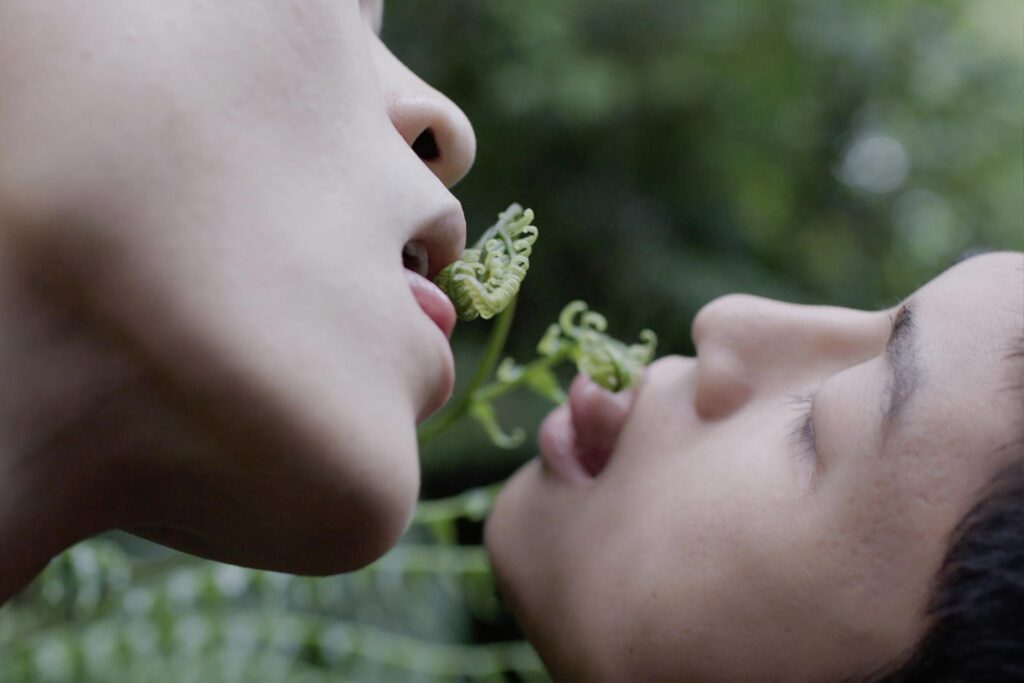
Another plant closely linked to native tradition is the fern; a symbol of regeneration due to its asexual reproduction through spores, this species is considered a delicacy in Taiwan, where it is also harvested for medicinal purposes. Pteridophilia (2016-ongoing) is a video work by Zheng Bo divided into chapters and featuring young men who, immersed in the forests of Taiwan, establish physical and emotional relationships with the vascular plants that surround them. Ferns are the protagonists of this interspecies relational investigation, which the artist explores through BDSM practices, yaoi anime inspirations, and overlaps of spores and sperm. This intimate approach stands in stark contrast to the extractive violence of colonialism and highlights the paradox that commodifying a plant is seen as a natural act, but making love to it is not. Pteridophilia explores the potential of the relationship between plants and queer people, enacting voluptuous interactions based on listening and what Bo calls posthuman vibrancy.
In the centre of the frame is a group of naked young men; their backs to us, they appear to be exploring the plants around them in a state of rapt admiration, caressing the vegetation amid the background sound of birdsong and insects whirring. As their familiarity with the plants increases, these young men move on from their initial exploratory touches and begin to gently kiss, lick and rub the plant bodies with their own.
Alvin Li,
Tate Modern Collection text, 2022
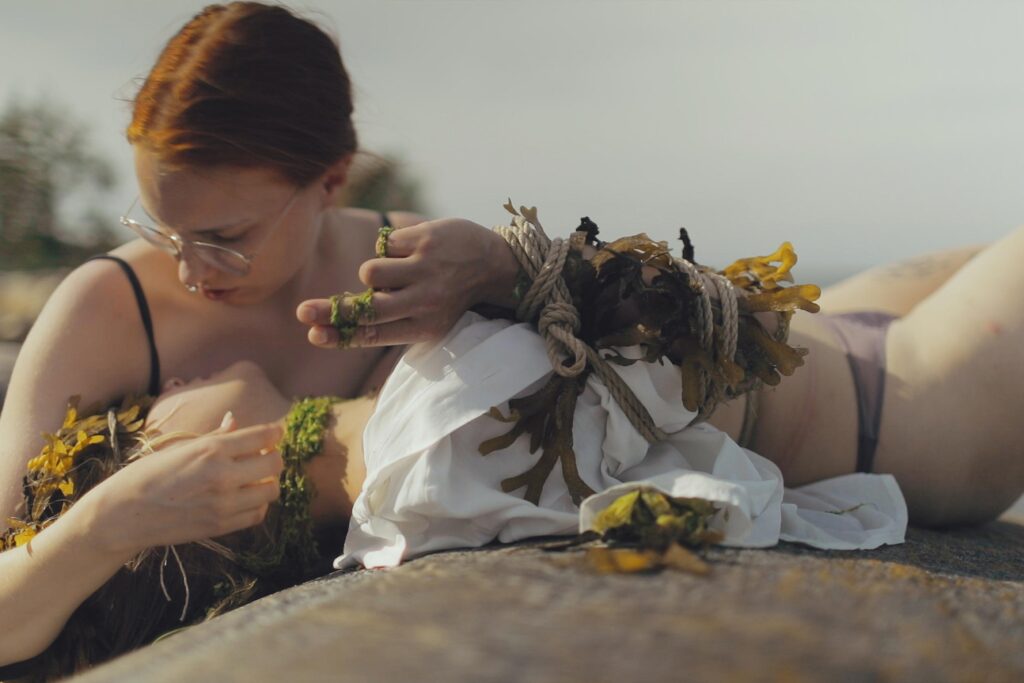
If Zheng Bo’s Pteridophilia channels the invisible, generative force of spores to merge queer bodies with their ecosystem, another kind of binding emerges in HAURU (2020) directed by Luna Inkeri, Emihurts, and Välke Unelma, when visible ropes replace microscopic particles as the medium of connection. Both practices enlist plants—whether the fern or the alga—as active participants in an intimate dialogue between human flesh and the surrounding landscape, weaving bodies into the regenerative pulse of the natural world. HAURU is a documentary about three artists exploring their bodies on a desert island, whose ecosystem helps transform this moment into an eco-erotic experience. The surface of the glacial rocks sweats in the sun, underwater pools reveal worlds without gravity, rhythmic currents sway dense meanders of aquatic plants, carpets of algae envelop like translucent membranes. Time expands, allowing people to interact gently and blur boundaries, then surrender to salty smells and gelatinous textures. The rope envelops human bodies and lush nature, creating a space of creative and safe abandonment.
Contemporary shibari is a BDSM practice that encompasses so many aspects relevant to the ecosexual discourse that it deserves a brief digression. A philosophy limited to the erotic, aesthetic, and contemplative act of binding, shibari presupposes a relationship based on a deep awareness of intimacy and consent. As in many other ethical BDSM practices, the dynamic of dominance/submission is a shared act: both the binder and the bound are part of a dynamic of mutual trust and open communication, verbal and non-verbal. The vulnerability of the bound is a crucial aspect, as they rely totally on the other for their safety, physical and otherwise. Every gesture, every knot, is based on the definition of desires and limits. This raises the already thorny issue of consent, which, now understood between species that experience—and above all communicate—in radically different ways, is charged with further ethical, philosophical, and practical implications. Unable to receive verbal consent, is relying on intuition, sensitivity, and common sense enough to proclaim ourselves entitled to perform certain actions? Is being informed, aware, and empathetic enough to treat another life form in a way that it might consider desirable?
These questions inevitably lead us to an even more tortuous analysis: upstream, can we talk about consent when referring to life forms considered non-sentient? And again: what defines sentience? Central to debates on bioethics and animal rights, sentience is conventionally defined by the presence of a central nervous system or the ability to experience subjective experiences. The anti-speciesist movement responds to this formulation by emphasising the rejection of a hierarchy between species, the precautionary principle (“sentient until proven otherwise”), and the fact that the capacity to suffer should suffice as a fundamental criterion for attributing moral rights.
Does approaching the non-human as an active subject endowed with its own dignity automatically place us in a mutual relationship? Can we, for example, talk about eco-consent? Although this is a question with no definitive answer, reflecting on the concept of non-human consent in the context of sexuality offers an opportunity to reflect on broader issues.
It prompts us to question the way we conceive of and treat other forms of life—not in marginal contexts such as ecosexuality, but in universal customs, in everyday life. Here again is the eco-transfeminist lens, this time focused not on colonial oppression but on patriarchal and anthropocentric domination, which historically abuses the earth as much as it abuses women, seeing it as a resource to be controlled or exploited, without recognising any autonomy or dignity. And so the supposed impossibility of obtaining unequivocal consent from non-human life forms, particularly non-animal ones, becomes a starting point for various artistic speculations.

Created by Australian duo Pony Express, Ecosexual Bathhouse (2016) is a large-scale project consisting of six environments that combine installation, performance, and sensory technologies to offer six erotic experiences. In this universe, environmentalism and sensuality converge, inviting experimentation and allowing viewers to question their relationship with the biosphere. Since people often find it difficult to negotiate consent even among peers who share a common language, Pony Express proposes to broaden this concept, extending it to the entire ecosystem. The goal is to promote a practice of consent that is attentive and enthusiastic wherever eros manifests itself, on multiple levels and in different contexts. A dungeon for geological massages, a sauna for listening to stories whispered in your ear, a room for pollinating flowers using special finger condoms, a darkroom for dancing until you change shape. Each room offers different interactive scenarios designed to celebrate pleasure, hedonism, and above all, union, starting from an imaginary world straddling unspoiled nature and radical subcultures.
Ecosexual Bathhouse is an immersive, participatory artwork inviting you to leave the urban wasteland behind and open yourself up to an intimate encounter with the biosphere. Experiment with pollination, unwind in the sauna or be guided by a bathhouse regular toward your own organic awakening. Catering to all—from the mildly bio-curious to the environmentally experienced—we encourage you to embrace the earth and give in to your budding naturist.
Pony Express
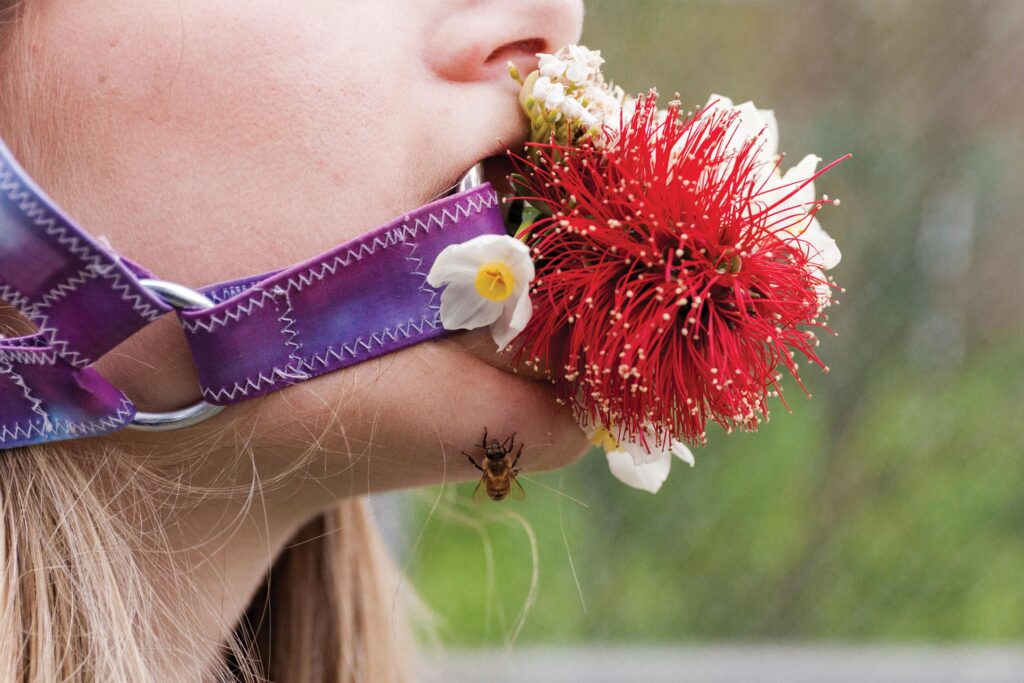
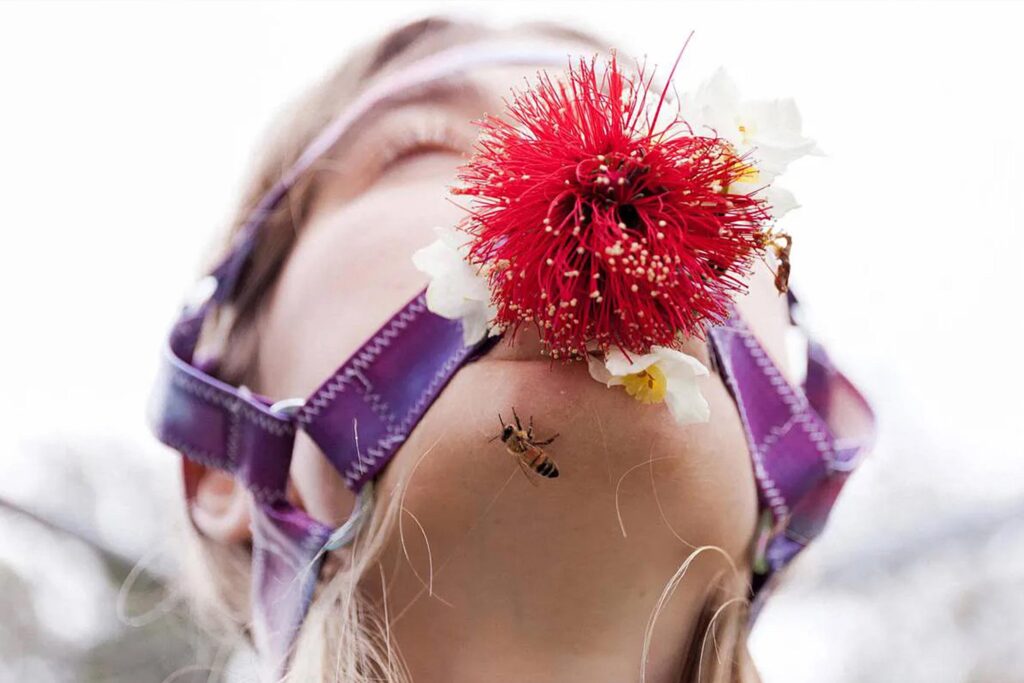
Kinky queer culture is linked to the concept of fetishism not only because the latter is part of BDSM practices, whether heteronormative or not, but because both involve the dismantling of conformist sexual norms. Historically, this overlap is not limited to attraction to objects or bodies but also extends to the revision of gender roles, the exploration of fluid sexual identities, and power dynamics that challenge dominant structures. In this scenario, now even more dense with meaning, fetishism becomes a tool for redefining desire, but also for politicising it. It emphasises sexual liberation and self-determination. It transforms a latex suit into a space of deconstruction and resistance.
But how can fetishism be reflected in an interspecies relationship, especially when our romantic interest falls on someone who belongs to a world extremely distant from our own, as in the case of plants?
The most common form of anthropocentric fetishisation of nature is one that objectifies it. Wild, unspoiled, primitive, exotic—nature as a whole is imbued with a strong romantic and sensual value, and at the same time is emptied of any other quality, reducing it to a mere device for pleasure. The fetishist acts on their desire without taking into account the totality of the fetish, and denies its recognition as a conscious agent. They worship it, yet belittle it. This is a treatment that society has traditionally reserved for people socialised as women—whose feminine essence has often been described using the same criteria used to define that of plants: charming, but apparently passive, if not completely unaware.
The difficulty in recognising plant subjectivity is based on substantial differences: at first glance immobile, inanimate, and expressionless, plants are certainly among the most complex interlocutors to relate to. Although chemical and bioelectric communication between plants has been studied for over a century and is now known to the general public thanks to bestsellers such as The Secret Life of Plants, these life forms continue to be perceived—and consequently described—as enigmatic and impenetrable. In reality, the mystery surrounding them does not stem from any real alienness, but rather from our limited interpretative paradigms, a reflection of our inability to fully understand the green quintessence. But it is precisely the seemingly sphinx-like nature of plants and the absence of adequate interfaces that offer us the opportunity to refine our relational awareness, challenging the object/subject dichotomy. This is because there is an ethical way of understanding fetishisation, in which the fetish is respected in its integrity, recognising its right to influence the way it is perceived and desired. An approach that allows the coveted object to become an autonomous, communicating object, an integral part of a now reciprocal dialogue.
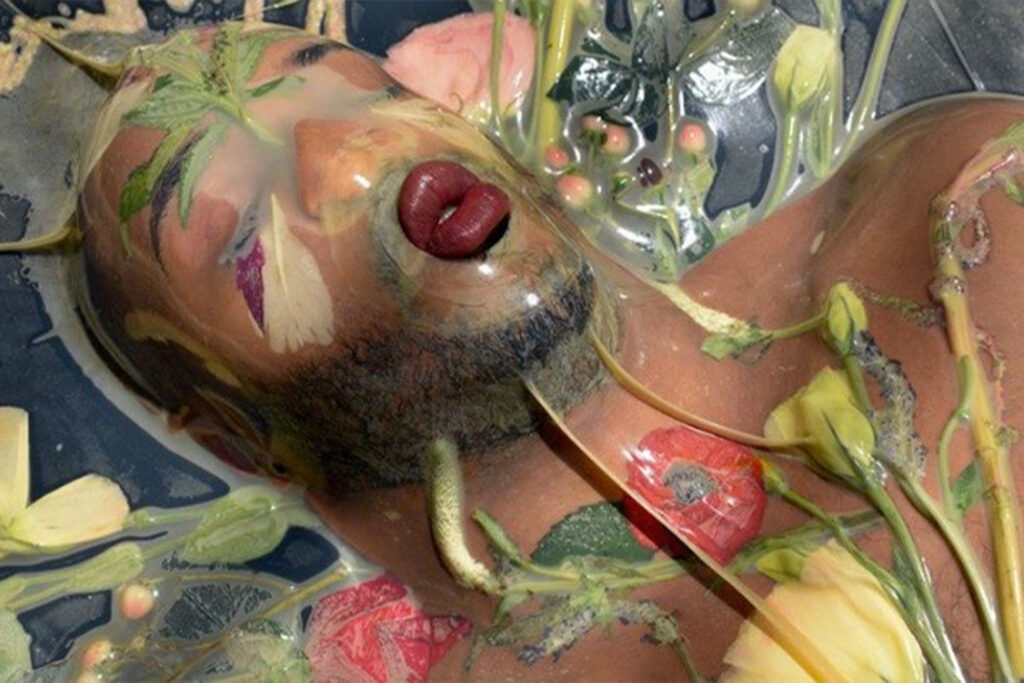
Born from a dialogue between Genevieve Belleveau and Themba Alleyne, Sacred Sadism (2014-2025) is an artistic and performative project that reshaped conventional BDSM methods by filtering them through botany. The project saw Belleveau and Alleyne embodying the role of co-doms in a variety of fetish scenarios: from electrostimulation using aloe to vacuum florification, which allows the sub to feel like a pressed flower. Coined in 2018 by writer Michelle Lhooq to describe Sacred Sadism, the term ‘ecofetish’ accurately describes the vision of the project, which considered plants as fetish objects that enact the ecological connection between all things, shifting the dynamics of erotic power into the realm of more-than-human relationships. The project was in fact about power rather than sex; it took the term ecology in its broadest and most historical sense, incorporating Marxism and anarchism. It aimed to reconfigure BDSM within a new aesthetic and philosophical framework that allows for the creation of multidimensional relationships with the Earth and its inhabitants. As they stated in an interview:
Can you be an ethical lover to the earth if you can’t gain the earth’s consent? It’s a rhetorical, but vital question to us. Our project instead looks at systems of domination and control and hierarchies of power; the exact structures that make up BDSM play; Tops and bottoms, Dominants and submissives. […] what we currently view as consent may not be a reality with the other living beings. Perhaps with some future technology or discovery it will be. I do believe that from before the beginning of the agrarian period humans did work in collaboration with many other living beings, plants included.
Sacred Sadism,
HEDERA vol. I, 2023
As Sacred Sadism’s reflections show, the human and plant worlds have always actively coexisted, probably even in less conventional forms than cereal cultivation. Rule #34 of “Rules of the Internet”, published on 4chan in the early 2000s, states that if it exists, “there is porn of it.” And indeed, two decades of democratisation of the means of artistic production have fostered the proliferation of increasingly explicit botanical fantasies, from science fiction hentai to camming dedicated to plants that control vibrators via MIDI. But recent years, characterised by post-lockdown frustrations and the spread of AI software, have not only given us a surprising fanbase for Poison Ivy; they have also fueled yearnings for rural escapism and the creation of safe spaces and communities where people can express their identity and sexuality. Solar punk futures where ecology and technology combine in new ways to explore one’s sexuality. Whether it is a matter of coping mechanisms or an inevitable evolution towards a post-capitalist society, the result remains the same: online communities are permeated by the desire to be offline—if not totally, at least enough to build alternative realities. Although these speculations are more universal, as they are inspired by romanticism rather than eroticism, they still make us reflect on how the desire to rediscover a deep connection with nature represents a possible vision for the future for many. Integrating sex education with environmental activism brings ecosexuality to the fore as an innovative but effective response to the critical issues of the contemporary world and the need to revolutionise society according to the principles of diversity, equity, and participation—including across species. Revisiting our view of the ecosystem, ceasing to see it as a mere passive backdrop to our anthropocentric experience, allows us to rediscover our active role within a broader reality and makes us realise that we too are made up of a multiplicity of others. Empathy is based on a fundamental commonality: the essential identity between those who feel empathy and those who receive it, linked by the fact that they are both living beings. And experiencing transspecies romantic or erotic relationships gives us the opportunity to develop even greater empathy with other forms of life. It reminds us that pleasure unites us precisely because we are all, already, intrinsically connected.
This essay is a revised and translated edition of Sympathia Naturae Eroticae, originally published by Inactual Magazine in 2025‘.
Cover Photo by Zheng Bo
Words by Zoë De Luca Legge
Zoë De Luca Legge (she/her) is a Milan-based curator, critic, and researcher. Her practice focuses on postnatural and transfeminist studies, and is based on interdisciplinary research. She generates collaborative, slow-paced projects that prioritize on artistic processes rather than their performativity. Former founder of the publishing house Diorama Editions and the online archive Panorama Milano, she is the co-founder of the art label Siliqoon. Her work has been presented by independent spaces and institutions, and she has taught courses and seminars internationally. Recent projects have been hosted by Locarno Film Festival (Locarno), Massia (Häädemeeste), ICA (Milan), Konstfrämjande (Malmö), and PAV (Turin). She was a finalist for the Micro Curatorial Prize at FY Foundation (Shanghai); curator in residence at CPR (Scandinavia); and twice juror for Ducato Prize (Piacenza). She has contributed to numerous publications such as NOT – Nero On Theory, CURA., Domus, Flash Art, il Tascabile, L’Officiel, Inactual Magazine. Currently, she is a member of the scientific committee of Bogiaisso (Chioggia) and of the Eco Steering Committee of Ziemniaki Foundation (Warsaw). Her latest project is Hedera, an anthology dedicated to queer ecology, ecotransfeminism, and ecosexuality.