
Documenting Conflict: Creating From the Edge of Erasure | Daria Koltsova
This interview is part of Documenting Conflict, a series that explores the ways in which conflict is documented and how who gets to document it shapes how we remember, interpret, and understand it. Documentation extends beyond journalists and historians, spilling into studios, workshops, galleries, and public spaces.

This series of interviews with artists will provide a critique on how truth is constructed and what it means to witness in an era of mass media. Trace how creativity and care intersect with the recording of conflict, turning trauma and societal fracture into forms of reflection and dialogue.

Rethinking how conflict is documented means placing empathy and witness at the centre. It is about uncovering what is often silenced and shaping memory in ways that go beyond mere collection, inviting dialogue, reflection, and understanding.
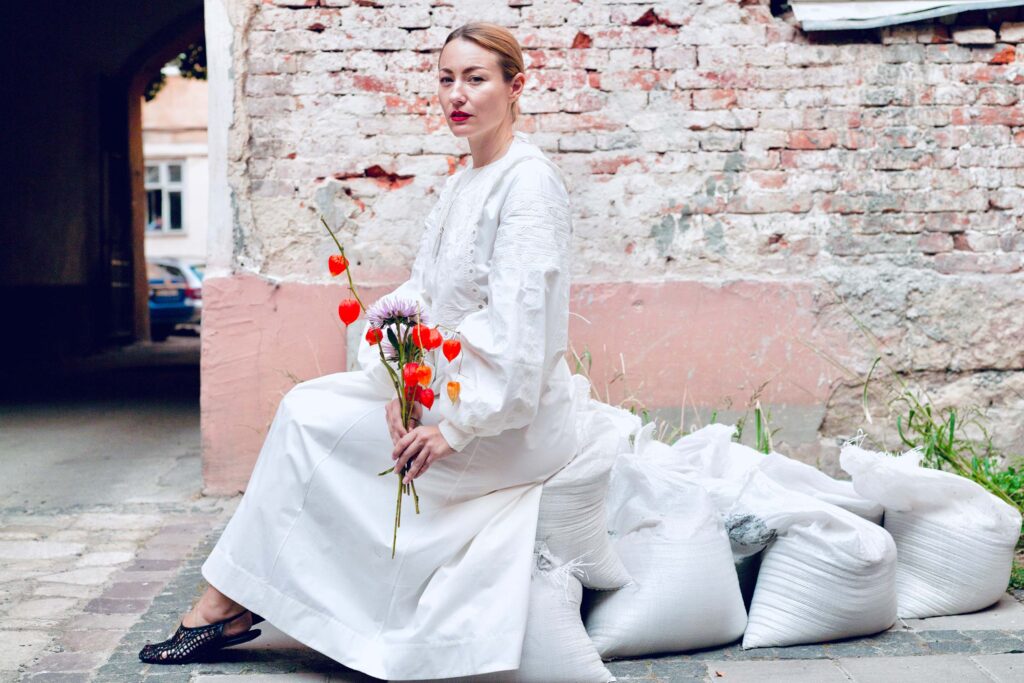
Ukrainian artist Daria Koltsova’s practice emerges from listening to the narratives, memories, and stories, carried across generations, that imperial and colonial regimes have tried to erase. Her work unfolds within what she describes as “the tension between local experience and global frameworks, between private memory and official history”. She feels it is both a privilege and a responsibility to hold space for under-represented voices and to make them felt. Through reflections on memory, land as a living witness, and the quiet language of intimate gestures, she reveals how fragility can become a form of resistance and connection a way of preserving what might otherwise be lost.
Anna Borrie: How do you navigate the responsibility of telling stories that are not centred on dominant cultural narratives?
Daria Koltsova: I go intuitively. Everything comes from lived reality—and I’ve orientated my practice around it. The longing for under-represented stories may be part of who I am, but it is also a response to the Soviet propaganda that defined the world I was born into. Generations of thinkers were silenced, exiled, or killed for speaking the truth—any regime’s greatest threat. Large parts of Ukrainian history were erased, like the 1932–33 Holodomor: no books, no monuments, no official memory before 1991—only fragmented stories whispered by grandparents.
I had to question everything I was taught. I searched family archives and turned to older relatives with painful questions, piecing together fragments of a history deliberately manipulated by Soviet authorities, much like in Orwell’s 1984, where the past was constantly altered to control the present.
This is why I value my freedom as an artist—to work with what is genuine, confusing, unsettling, censored, and complex. My responsibility is to create space where stories can be shared without distortion. In 2017, I created a room at Pinchuk Art Centre with four telephones. I gave the numbers to soldiers and their families so they could call and share, confess anonymously. The calls were live; visitors could only listen. For the first time, these voices were heard directly, without filter.
I remember a school questionnaire labeled “nationality”. It was the mid-1990s; I was seven or eight. Everyone I knew wrote “Russian”, not because we were, but because we never questioned it—the result of meticulous indoctrination.
Much later, I realised my identity—and history itself—was far more complex. This shaped a principle that inspires me: the only way to resist collective myths is through individual voices grounded in lived reality. I deeply respect these voices, and the courage honesty requires. Responsibility, for me, means having a voice—and using it to let others speak, to open the space where quiet, sometimes difficult, or simply too subtle stories can finally be heard.
I remember a school questionnaire labeled “nationality”. It was the mid-1990s; I was seven or eight. Everyone I knew wrote “Russian”, not because we were, but because we never questioned it—the result of meticulous indoctrination. Much later, I realised my identity—and history itself—was far more complex. This shaped a principle that inspires me: the only way to resist collective myths is through individual voices grounded in lived reality.
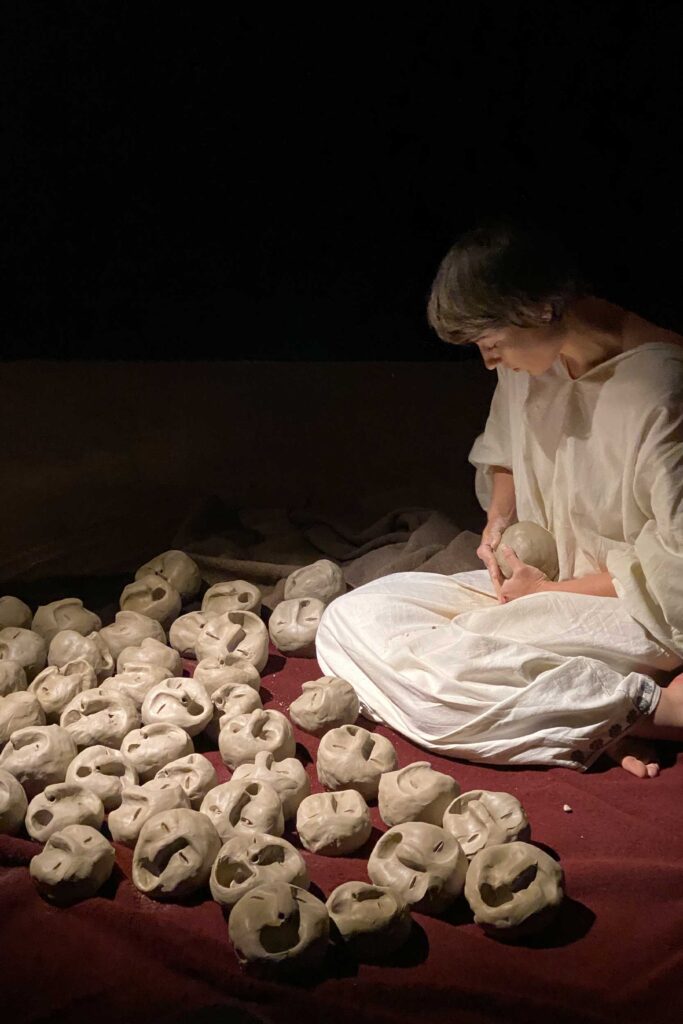
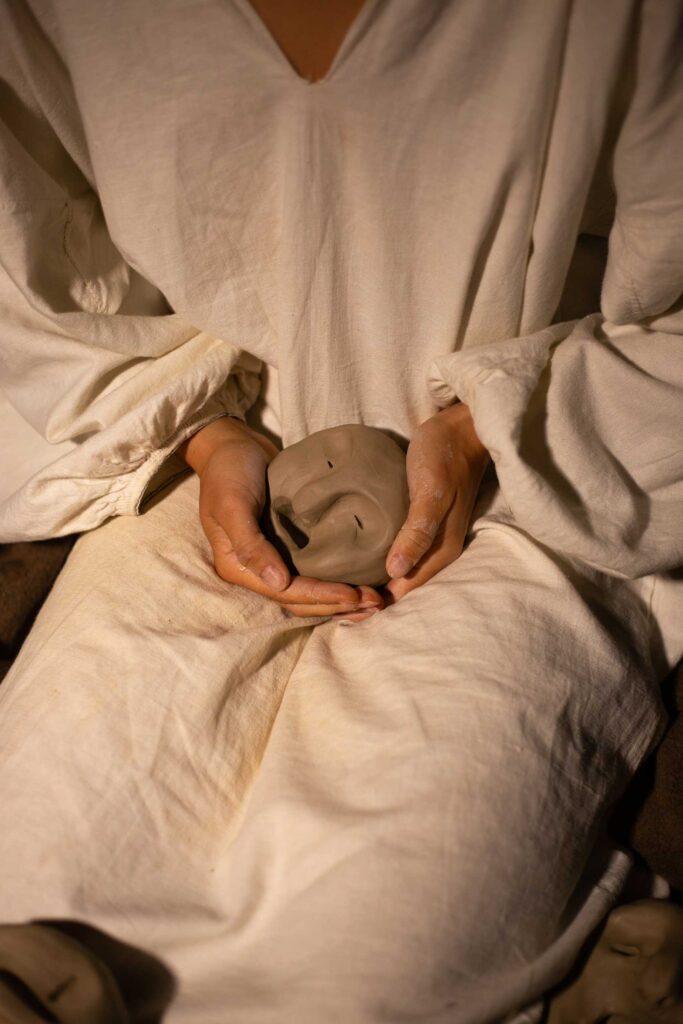
Anna: Do you think the ecological landscape (e.g. land, climate, resources, or extraction) shapes the conflicts you are responding to, and in what ways?
Daria: I think so. Geography is never neutral. It shapes memory, belonging, conflicts and how we respond to them.
I was born in Ukraine, now I live in France. The geographies feel almost opposite. Ukraine is an open land between empires, always exposed and contested. France feels much safer, almost a fortress facing the ocean. Among other things, the landscapes produced very different historical experiences and mentalities.
In Ukraine, people lived for centuries under constant threat, without stable institutions. Tomorrow has always been unclear, property temporary. It shaped the culture of self-reliance, flexibility, improvisation. We usually focus on efficiency and logic, rather than rules, used to relying on ourselves and each other rather than institutions.
At the same time land became an important part of identity. It appears again and again in interviews, letters, memories, literature, songs. It holds memory—sometimes everything that is left. Soviet mass deportations and repressions tried to destroy connection not only to the community, but also to the land. Millions were forcibly moved, forbidden to come back under threat of imprisonment or death. And still deported people, or sometimes their children, returned at the first opportunity. Not for property—there was nothing left, the houses in Crimea were dismantled to the ground—but for something much deeper.
Even today, some of my friends return to Ukraine despite the war. My English teacher returned to Kharkiv. I admire her backbone. Her family luckily survived Soviet time deportation from Kharkiv to Kazakhstan and returned when it became possible. In 2022 she fled to safety. The next year came back. It is simply her home. It is not only about where we live, but rather who we are.
My father died in Germany two years ago. Despite his will, we failed to bring him back home. The war is not only for the right to live on the land, but also to be buried in it. So, for me, the landscape is not just the background where history happens; it is one of its main actors.
The war is not only for the right to live on the land but also to be buried in it.
Anna: There is a tension in telling a local story within global systems, such as capitalism, colonialism, or climate collapse. What led you to explore this space and tension within your work?
Daria: I want to reach understanding and recognition. As a person from Eastern Europe, I’ve always felt misunderstood, exoticised or forced into categories that never fit. Even though Ukraine is geographically close and historically connected, until recently it has remained a kind of unknown and confusing territory for the so-called Western world.
Part of this misunderstanding comes from who tells the story. For a long time the world heard about us through imperial loudspeakers, and we are still trying to reclaim the right to our own voice and our own history. It used to be a classic colonial story, today it’s a neocolonial one. But, when we live through the longest war in Europe since WW2, the largest displacement, ecocide … Why are we still not fully part of global discourse?
Imperial narratives are usually simple and easy to digest, while real history is messy, emotional and complex. That is why it is very difficult to fight imperial lies—they were designed to be easily believed and repeated. Even when absurd.
This tension between local experience and global theories, or private memory and official history—the space where my practice exists. It comes from my deep frustration but also the hope to find a common language. I believe in shared emotional experience. When we feel something familiar we want to explore more.
I just want us to be seen, to feel that we exist.
Imperial narratives are usually simple and easy to digest, while real history is messy, emotional and complex. That is why it is very difficult to fight imperial lies—they were designed to be easily believed and repeated. Even when absurd.
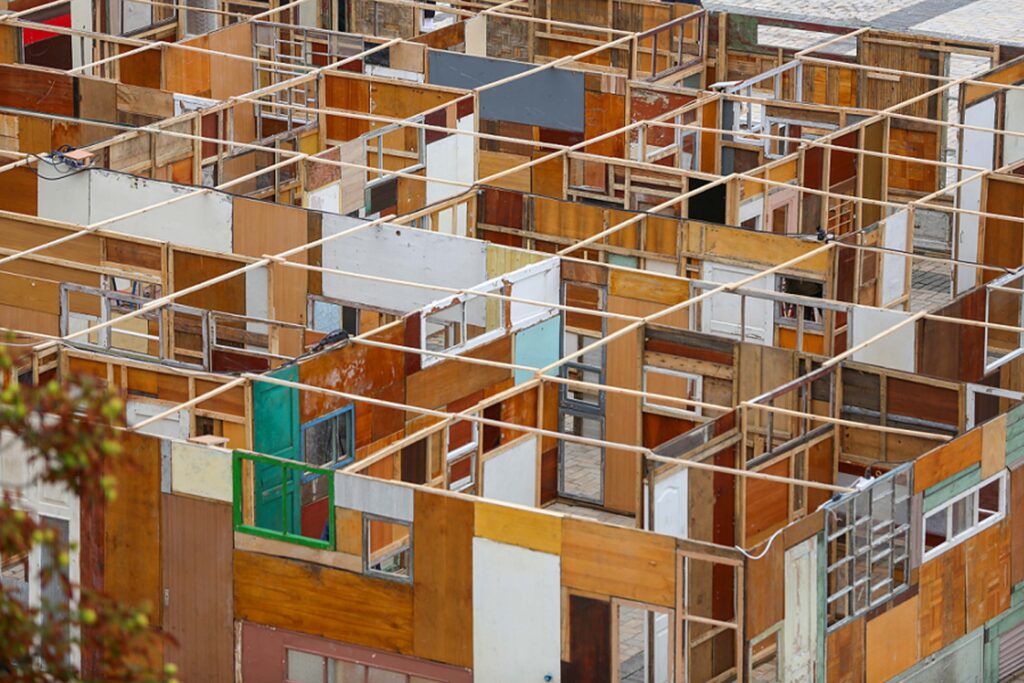
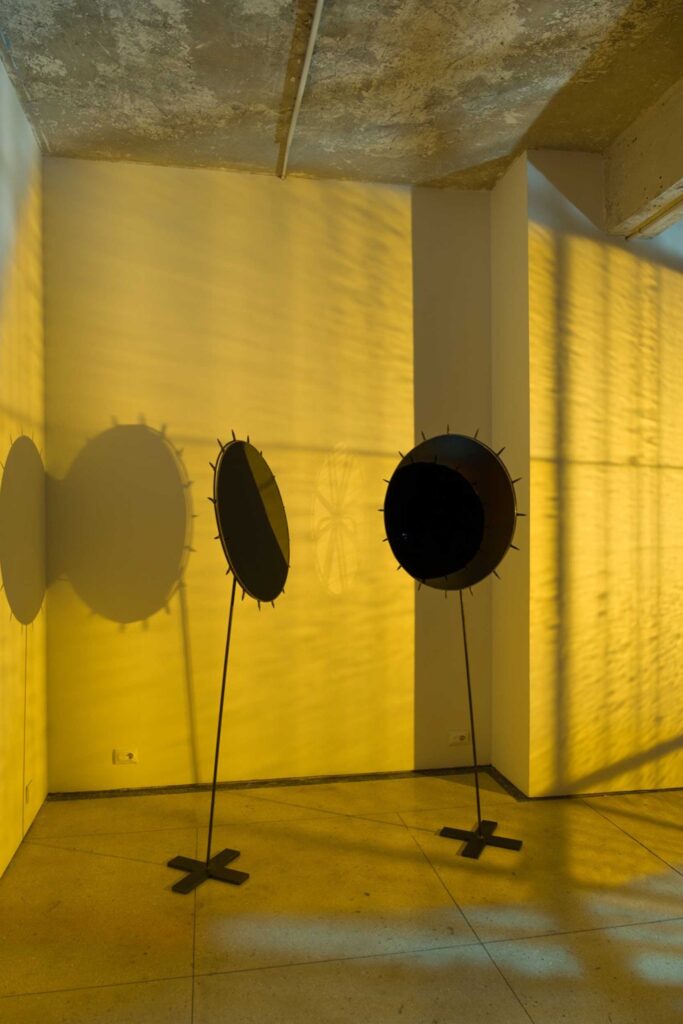
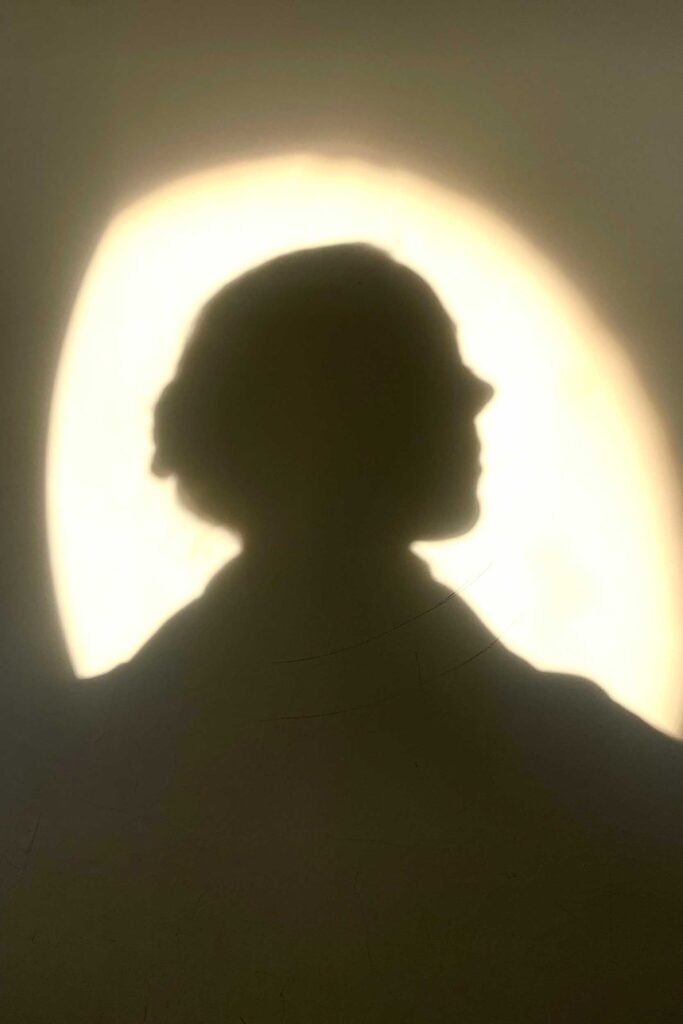
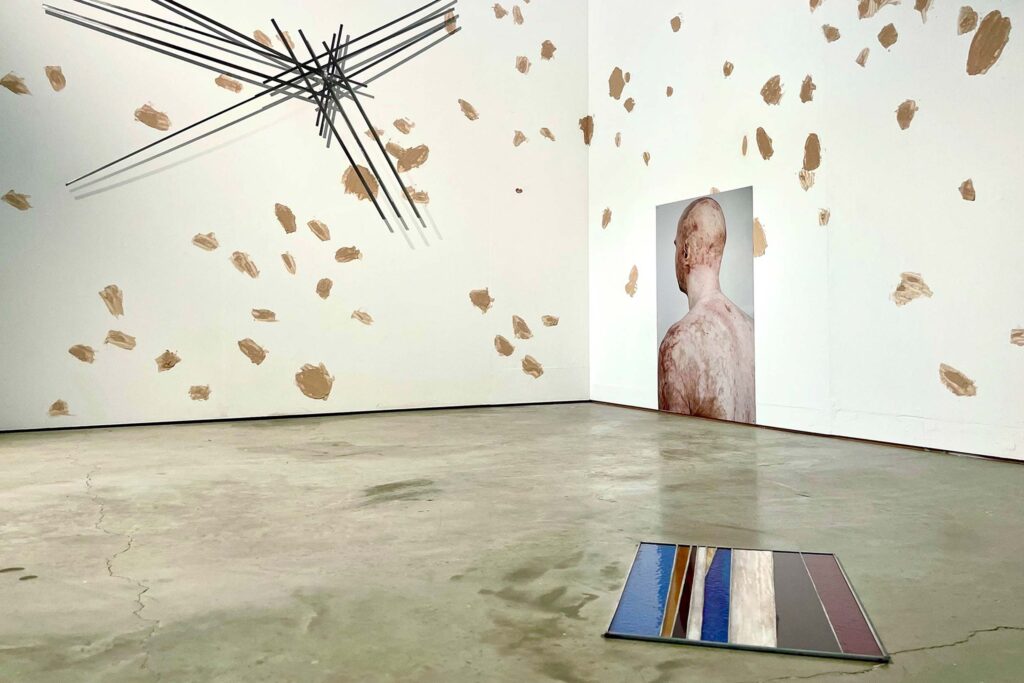
Anna: Memory and resilience are recurrent in your projects but often resist literal representation. How do you decide when an experience should remain abstract rather than be translated into a concrete image or narrative?
Daria: For me, experience is always concrete. Memory, on the other hand, is inherently unstable—we each reconstruct it differently. This gap is where the chance for intimacy appears. I am not so much interested in what exactly happened but in how people perceived it and organised their reality around it.
For example, in 2015 I noticed unusual geometric patterns on windows in Donbass, where the war had already begun. People taped their windows to reduce damage during bombing, just like our grandparents did during WW2. It felt like something from another era, reminding of ancient protective amulets, but later this practice spread across the whole country as more territories came under attack. I used these patterns to create the project “Theory of Protection”.
Since 2022 more than 200 diplomatic and cultural institutions on five continents showed it turning their windows into a statement of fragility and solidarity. There is no literal storytelling, but a code that we easily share. Literal narratives divide, while abstraction speaks to feelings—a universal metalanguage. You may not live through war yourself, but you have experienced the same feelings: fear, uncertainty, hope, vulnerability, loss. Here’s the way into.
Literal narratives divide, while abstraction speaks to feelings—a universal metalanguage. You may not live through war yourself, but you have experienced the same feelings: fear, uncertainty, hope, vulnerability, loss.
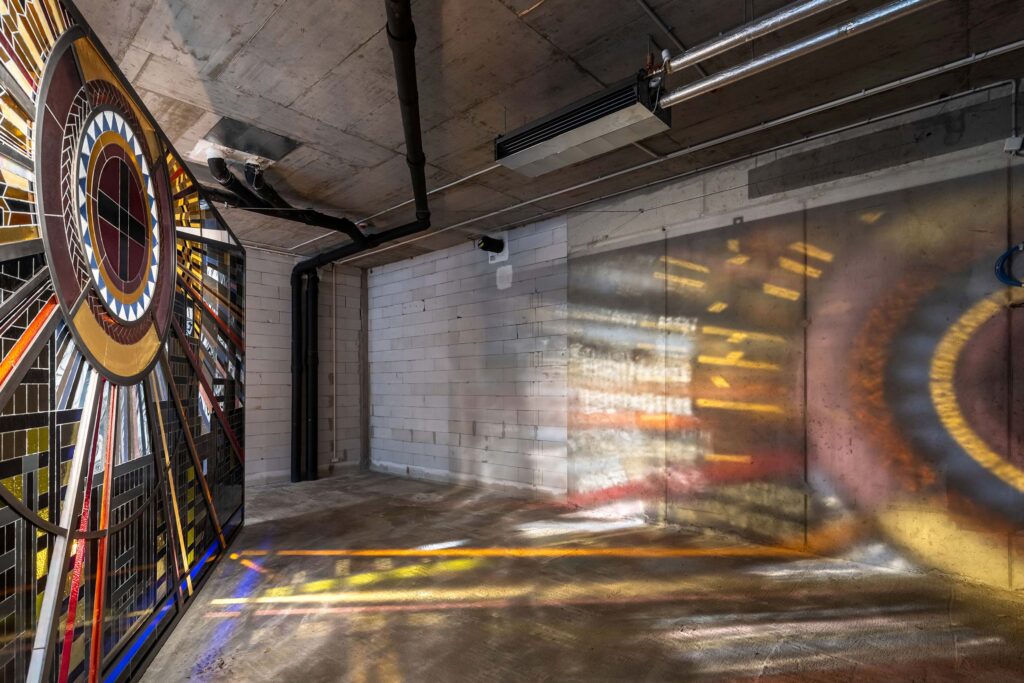
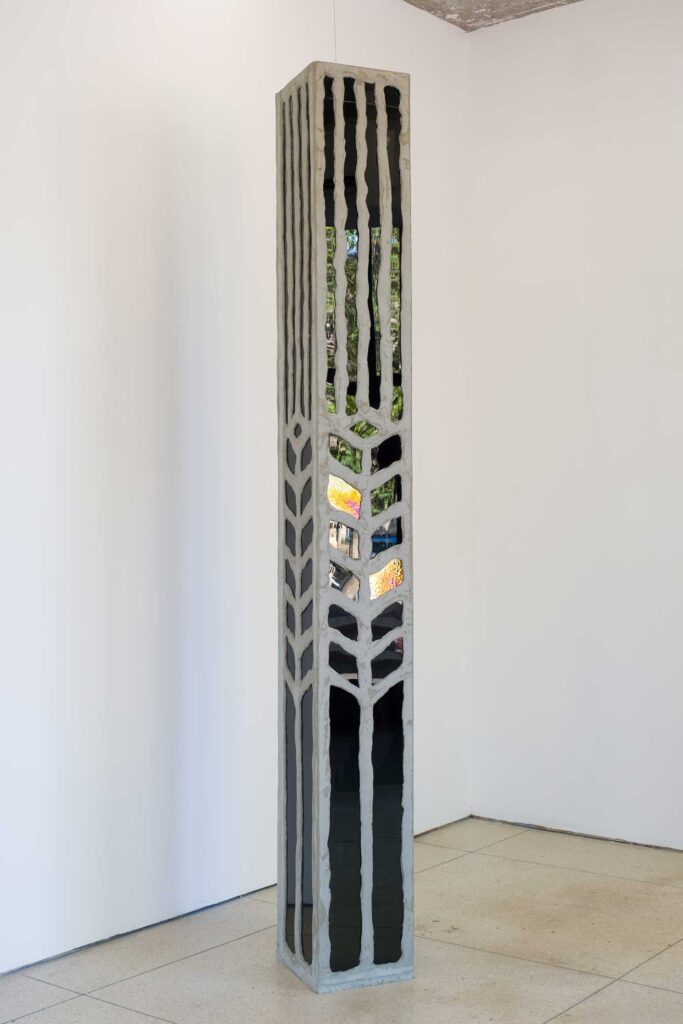
Anna: In Tessellated Self you choose to work with fragile objects and materials such as stained glass to address themes of war, protection, and vulnerability. How does fragility shape both the work and the way viewers encounter it?
Daria: “Tessellated Self” is about psychological identity conflict—about being shaped by a culture that also tried to erase you. I use the urban landscape as a setting and a metaphor, built around the juxtaposition of two symbols.
The first is Derzhprom, a constructivist architectural masterpiece from my hometown Kharkiv. I admired its modernist shapes since I remember myself; it influenced my visual language. Later I realised that these same shapes symbolised red terror and repressions that tried to erase my culture. The second symbol is a Ukrainian wedding wreath with long colourful ribbons—a fragile feminine folk object. For me it became a symbol of cultural survival and rediscovering of my Ukrainian Self. It felt like finally coming back to where I truly belong.
This realisation created an unbearable inner conflict I had to find a way through. A kind of post-colonial “Hero’s Journey” inside what Freud described as the uncanny—something both familiar and terrifying. Like discovering that the father who raised you, educated you, and shaped you actually destroyed your real family and kidnapped you. Now you hate him and hate his part in yourself, but stopping loving him is not that simple. You cannot be the same person anymore, but you also don’t know who you are with this knowledge. Trapped inside this fractured landscape I was asking myself: can it be liveable again?
Fragility is central in this work—not only material, but psychological, cultural, psychical. Viewers feel it instinctively: they move slower, lower the voices, become more aware of their bodies in space. Glass is easily breakable and yet surprisingly resilient, dangerous and visually magnetic. Historically, stained glass was used for propaganda—political or religious. Here this massive stained glass composition brings tension, doubts, conflicts—themes traditionally excluded from this medium. It creates a mixture of awareness and curiosity, desire and hesitation to approach, reflecting the layers the work speaks about.
It happens people read the work very literally and try to find simple war narratives. Recently the Swiss National Museum wanted to show it in Zurich, but at the last moment cancelled when they realised that it wasn’t a literal depiction of the war destruction, which they seem to have expected from a Ukrainian artist. “Tessellated Self” is about centuries of cultural and psychological conflict that shaped ongoing war. Too complicated to fit dominant expectations. I think this story perfectly illustrates the problems we previously discussed.
Fragility is central in this work—not only material, but psychological, cultural, psychical. Viewers feel it instinctively: they move slower, lower the voices, become more aware of their bodies in space.
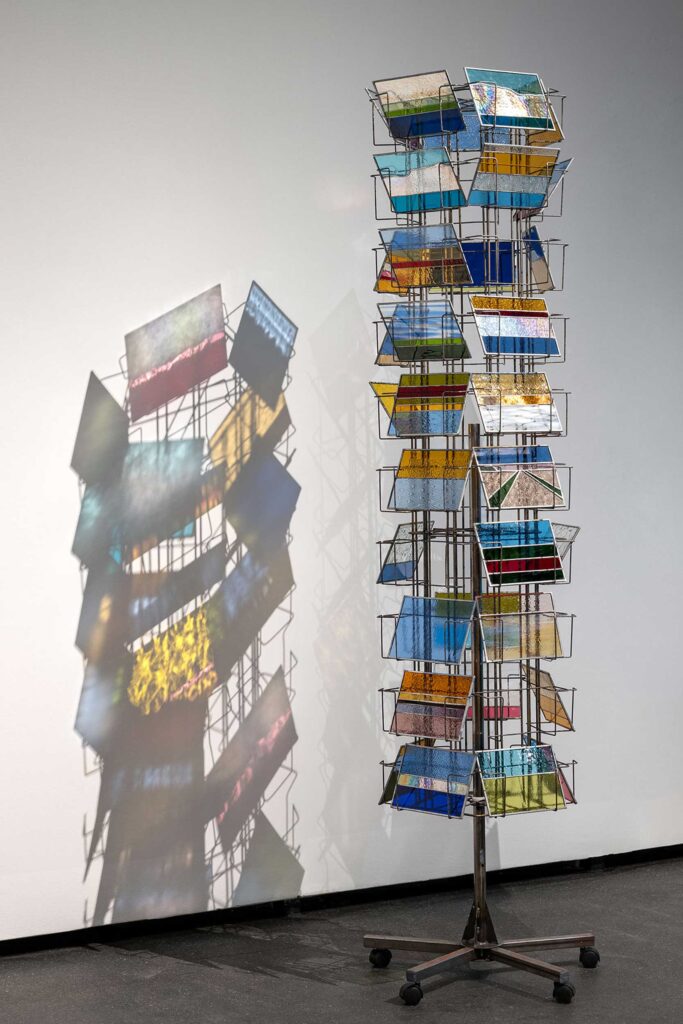
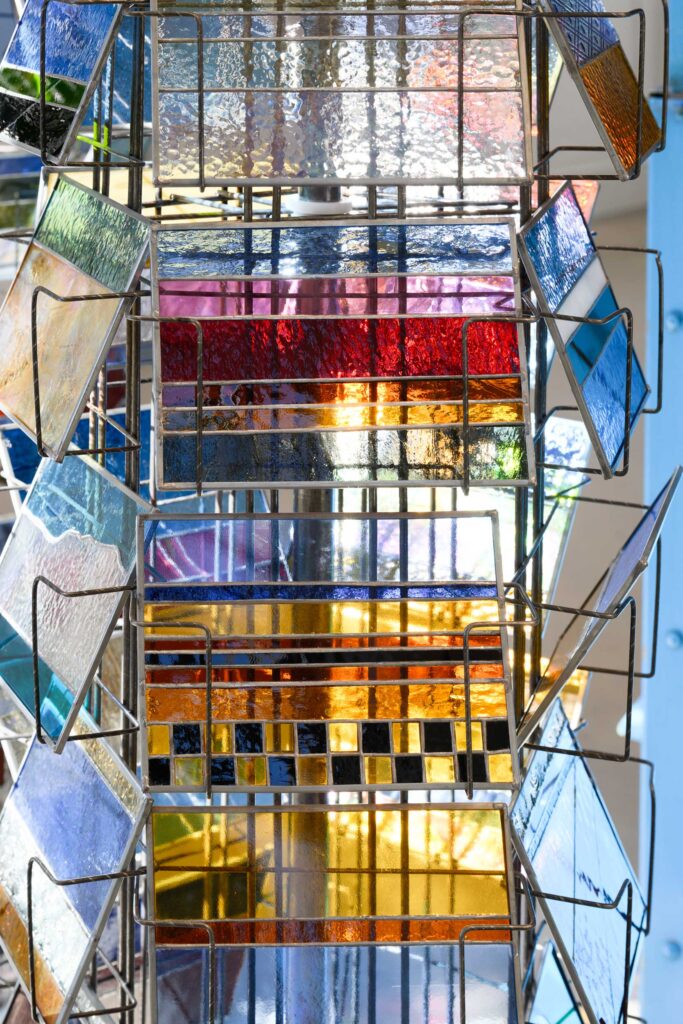
Anna: Postcards from Home draws on an intimate, almost fragile format to speak about displacement, distance, and belonging. What does the gesture of sending a postcard mean to you?
Daria: For me sending a postcard is creating a connection and leaving a trace that cannot be easily erased.
A postcard becomes an intimate piece of a land or a story you can carry and share, an anchor for memory, that protects something from destruction. It happens remembering becomes the only way of resilience.
A postcard may seem like a trivial object, but such fragile things and small gestures often played a surprisingly important role in the struggle over memory, visibility, connection. In many countries prisoners were allowed to send only short censored postcards. Even a word could resist total erasure: Alive. Families kept such proof of existence and detention.
Later they helped historians to reconstruct fates when records were incomplete, hidden or destroyed, like in the Gulag.
Images of the landscapes helped those who left home to share it, even symbolically, with others, sometimes to connect their children to a homeland they had never seen, so that one day they could recognise it. A fragile image that makes invisible visible and preserves belonging across distance, loss, and time. A trace that keeps a place alive.
“Every time I close my eyes, my garden appears before me”, said an old Crimean Tatar—a survivor of the 1944 deportation. His words grew into my project “Postcards from Home”.
A postcard may seem like a trivial object, but such fragile things and small gestures often played a surprisingly important role in the struggle over memory, visibility, connection. In many countries prisoners were allowed to send only short censored postcards. Even a word could resist total erasure: Alive.
Anna: How do the stories, acts of care, or forms of resistance from communities within Ukraine shape and guide the narratives in your work?
Daria: First, I wouldn’t say that my work is geographically limited—it is about people who live with complex realities no matter where. But of course I speak from the place I know best and the people with whom I share a common cultural code and history.
My approach is anthropological. I deeply admire people in all our complexity and vulnerability.
Facing death and danger they don’t simply follow instructions—they remain creative inventing new patterns on their windows. After sleepless nights and work-heavy days, women rush to weave camouflage nets for soldiers they don’t even know. An enlisted artist paints small colourful landscapes from his trench when days are quiet. A woman whose husband went missing two years ago, lost the keys from their flat but never changed the lock leaving the door open: if he comes back and cannot use his key, he might think she moved and leave. Another family whose son went missing keeps serving his plate at every meal—“not to curse”, they say.
We never throw bread away and light a candle every last Saturday of November.
And no matter how rushed we are, the whole country falls still and silent for a minute every day at 9 a.m.
My work begins with small observation: a pattern on a window, a note on a wall, military cloths drying on a balcony line, a detail in a drawing, a gesture, a song, an improvised or inherited ritual, a fragile object. These seemingly insignificant things help me understand something much larger: how reality changes us, and what we do to reality so we can continue living inside it.
My work begins with small observation: a pattern on a window, a note on a wall, military cloths drying on a balcony line, a detail in a drawing, a gesture, a song, an improvised or inherited ritual, a fragile object. These seemingly insignificant things help me understand something much larger: how reality changes us, and what we do to reality so we can continue living inside it.
Words by Daria Koltsova
Interview and Introduction by Anna Borrie
Anna Borrie is Associate Editor at Planted Journal, where she explores the intersections between ecology, art, and storytelling. Her work is rooted in a creating meaningful connections between people and their environments. She runs a community garden in Madrid, where she cultivates both plants and relationships with fellow gardeners. Her interests lie in creating collaborative environmental art and promoting zero-waste practices, seeking ways to harmonise creativity with environmental responsibility.