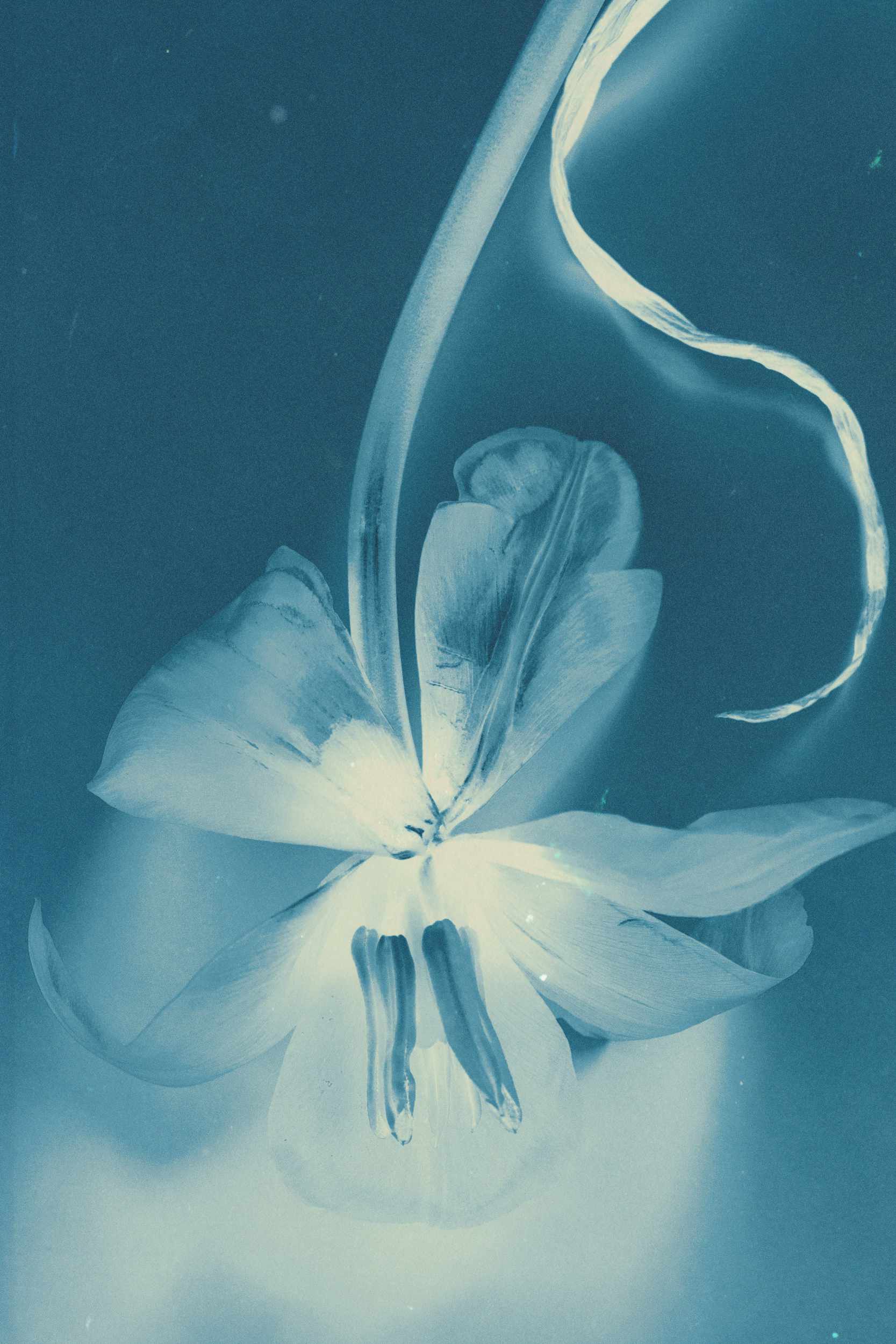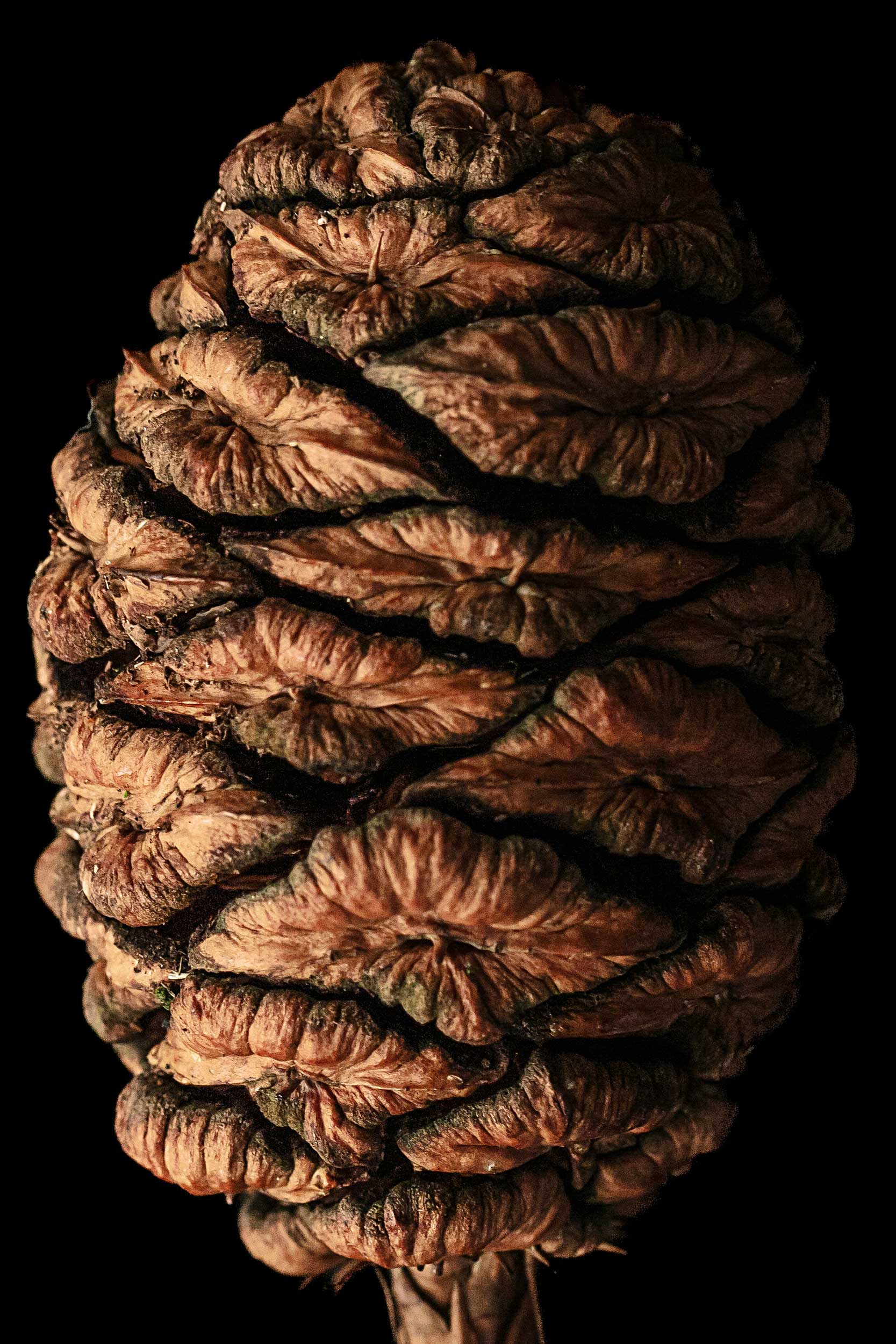


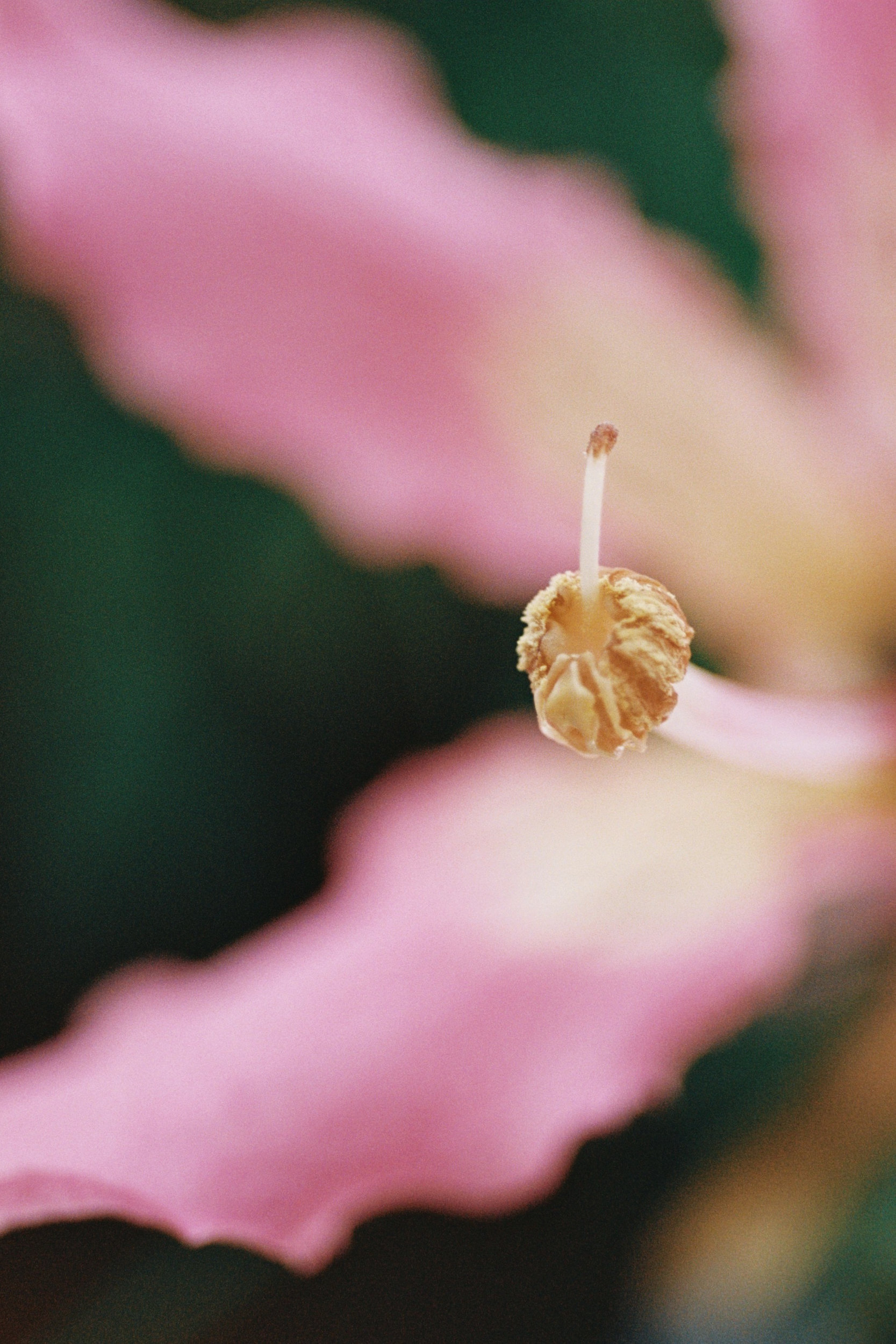
Several members of the Orchidaceae family have evolved by shaping the silhouette of their lips in the image of the female specimens of as many types of insects. The purpose of this camouflage is to attract the males who, after the illusion of a successful courtship, take off again, convinced that they have perpetuated their own species while, ironically, they are transporting the pollen of the plant, facilitating its reproduction.
Zoë De Luca Legge
Zoë De Luca Legge will be facilitating Naturotica: Ecofetish Narrations

Saturday, 31 October 2026,

15.00 CEST online

Full programme and registration here.
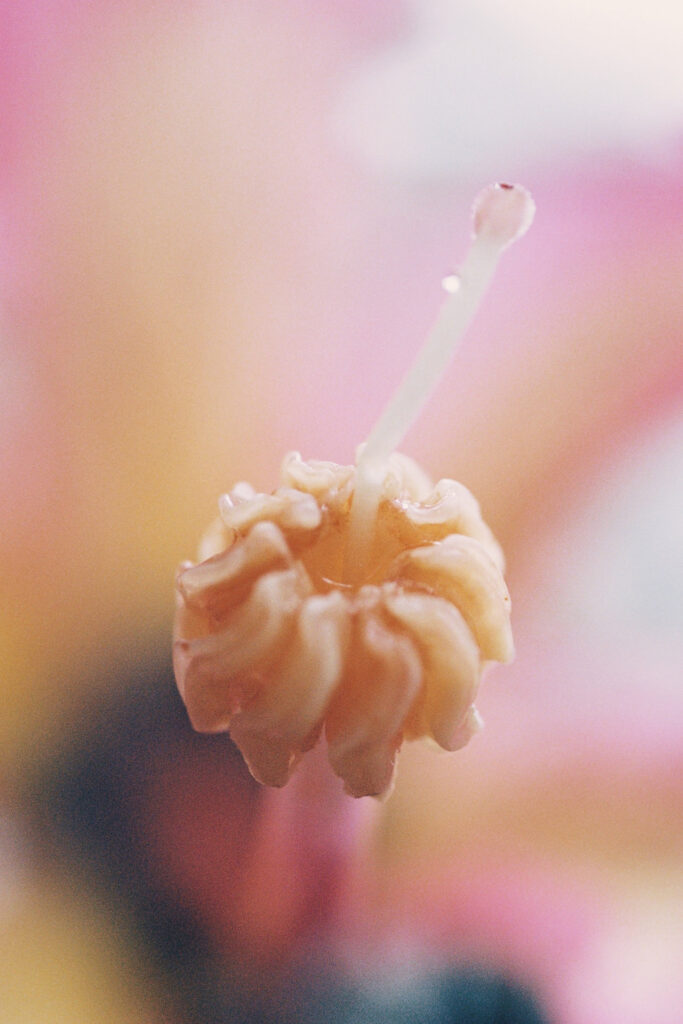
The metal door handle was sinuous, composed of a long tube around which a second one wound itself, rising from one corner to the other like a flat and cold ribbon. It was that freezing temperature, so in contrast to the warm spring evening that acted as a background, that made them emerge from their thoughts. They had spent nearly forty minutes in the traffic, looking out the window, forgetting the route they were taking. Then they crossed the park, barely allowing themselves to be distracted by the song of a blackbird, and hypnotized they continued walking through the paths, up to the steps of the main building. Only the contact of their pocket-warmed hand and the cold-blooded steel of the handle had finally reminded them of the existence of the outside world, which they had been crossing all day by proceeding as automats.
They entered the museum showing the QR code to a guardian as distracted as they were.
Visiting the permanent collection was one of their favorite pastimes since they were young – although over the years the reason for those regular episodes had shifted from entertainment to the comfort of a quiet and familiar environment. Loneliness was a precious balm for them.
They knew by heart the maze of showcases in their succession on the two floors. The thematic departments, divided by heavy blue velvet curtains. The gurgling of the bottle of water installed between the section of reptiles and that of amphibians, as if to spoil any possible evolutionary suspense.
They spent the usual half-hour in the Ocean Hall, where hundreds of shells and corals rested dusty in nineteenth-century reliquaries, their sleep guarded by the skeleton of a sperm whale.
The reason for their visit, postponed for weeks due to the temporary closure of the museums, was in this case due to frustration.
The recent separation had left them shaken and disheartened. Embittered by the knowledge that they and their partner were no longer able to replicate what they once had created. The estrangement was gradual, nourished by stress and by an increasing wearily shallow communication.
When even sex had no longer worked, the disconnection was clearly complete.
Caught up in their thoughts, they sighed in front of a case, tarnishing the glass that separated them from a series of abalones, arranged on a shelf like a tidy row of ears.
In the last few weeks, they had often wondered what had been the definitive crack in their intimacy, the point of no return after which every attempt to understand each other was useless, every gesture wrong, every word too much. Eventually, they realized they were two foreigners in their history, two strangers that the universe had aligned in the same orbit by mistake.
As they exited the mycological section, they noticed a door ajar towards a room immersed in the gloom. They couldn’t help but take a look.
The classroom was practically dark, lit only by the service lights positioned inside the display cases which, unlike their equally dusty sisters exhibited in the public part, were half-empty, at most inhabited by some file or container. In the middle of the room, casually arranged on a large yellow linoleum desk, were a dozen botanical models. They were quite large, probably dating back to the early Twentieth century, in hand-painted wood – the ones that can be disassembled to study the sections of seeds and buds. Attracted by that citrine shelf covered with shiny objects calling them like a sun in the center of the room, they forgot the hesitation with which they had lingered on the threshold.
They entered and closed the door behind them.
The handwritten labels were faded to the limit of legibility, the metal supports rusted, the paint was peeling on the corners. Some of the lathed wooden pedestals, evidently not sealed by the enamel that made some details of the pistils still extremely vivid, were even woodworm-eaten.
In one corner of the table, there were papers with notes about the status of each item.
Asterisks that denoted some missing or useless piece, barely outlined drawings indicating the points in which to intervene. A telephone number.
They reached across the table to pick up the model closest to them. A cream-colored seed, not identifiable due to the absence of a label, from the heart of which a radicle with a sweet, but nervous curve stood out. It aimed decisively upwards, as if it wanted to affirm its own existence and contrast the anonymity to which the by-gone time had induced it.
The model was heavy, despite the woody pulp of its base having been looted by coleopters to the point of giving it a dry but stale odor. That rotting aroma reminded them of the smell of the woods in which they hadn’t walked for a long time. For a moment they even closed their eyes, inhaling deeply through their nose.
Trunks of fallen trees covered with thick, damp moss. Grass stalks laden with dewdrops.
Decayed leaves through which pale, thin sprouts like this one poked through.
When they opened their eyes, they found themself clutching the unknown seed to their chest.
They enjoyed the sensation of that smooth bean against the light yarn of their shirt for a few more seconds, then pulled themselves together and placed it on the table.
Awakened by that unexpected assortment, they took a quick look over their shoulder, aware of the illegality of that contact.
They looked at the other models, turning them over in their hands.
The elementary lines and soft colors reminded them of the illustrations of the textbook they had studied in their early school years, and they found themselves ruminating on how difficult it is to deconstruct the things you metabolize as a child once you’re grown up.
How little are we used to focus on the relationships between things, rather than succumbing to the all-human tendency to separate them to decode them. To our inclination to simplify, to flatten to understand. The need to scan the world by absolutes, creating illusory dualisms that take us away from nature instead of leaving us in contact with our sensations.
Zoë De Luca Legge will be facilitating Naturotica: Ecofetish Narrations

Saturday, 31 October 2026,

15.00 CEST online

Full programme and registration here.
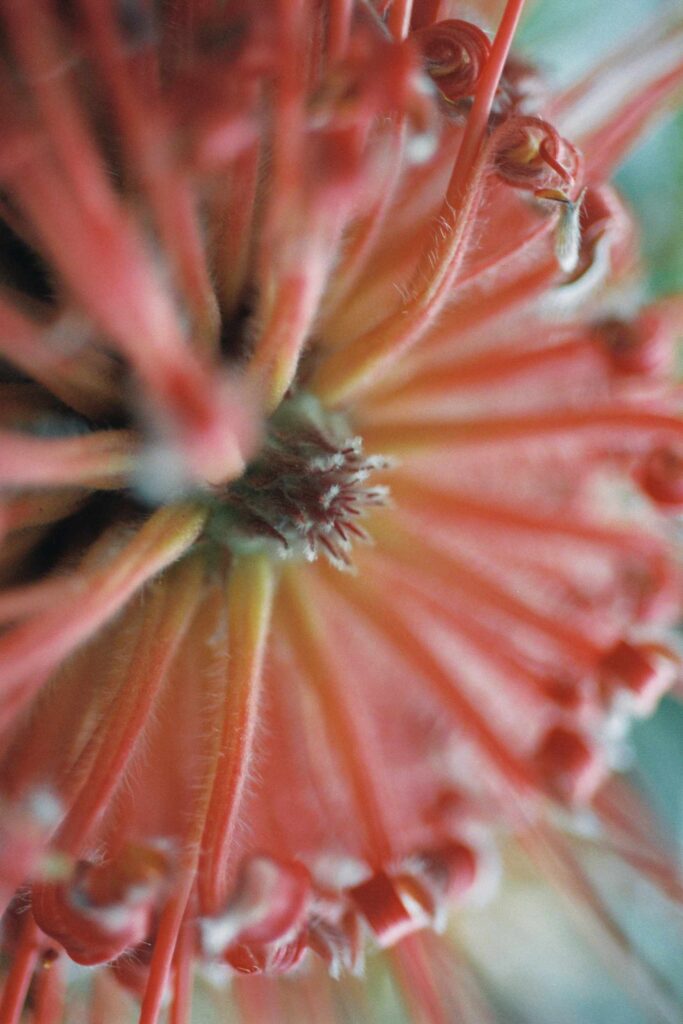
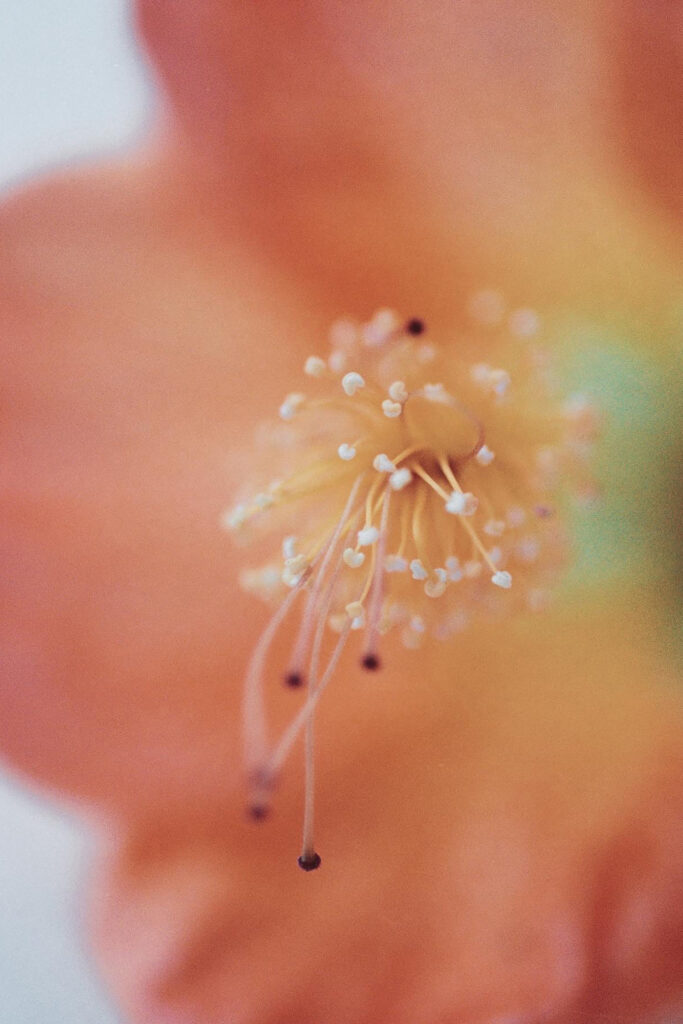
They ran their finger inside the oval of the section of a lily anther, pondering how in recent months they had not been able to hear themselves or really communicate what they were feeling, thus fuelling the one-sided discussions in which they had vented the last energies of their relationship.
Ensnared by the surface of an Arisaema Triphyllum‘s spadix, porous yet shiny as if it were wet, they brought their nose closer to the vexillary cavity, their face tickled by the rolled tip of the spatula, the moist fragrance of undergrowth still in their head.
What they smelled, however, was much more pungent and intense than expected.
An alcoholic odor ripped violently into their nostrils, making their head spin as they retreated in surprise – despite the cluttered appearances, the restoration was already underway.
They moved away from the acid green inflorescence which, stretched at the end of that long and supple stem, had magnetized them to itself like a poisonous predator. They put an open hand on the table and looked around in disorientation. The lights in the dirty cases hovered around them like a silent swarm of fireflies. They felt lulled by this circle of motionless silence, which separated them from an exterior made of cold flickering neon lights, invisible boundaries, and predetermined paths.
While rubbing their nose with the back of their hand, another model caught their attention.
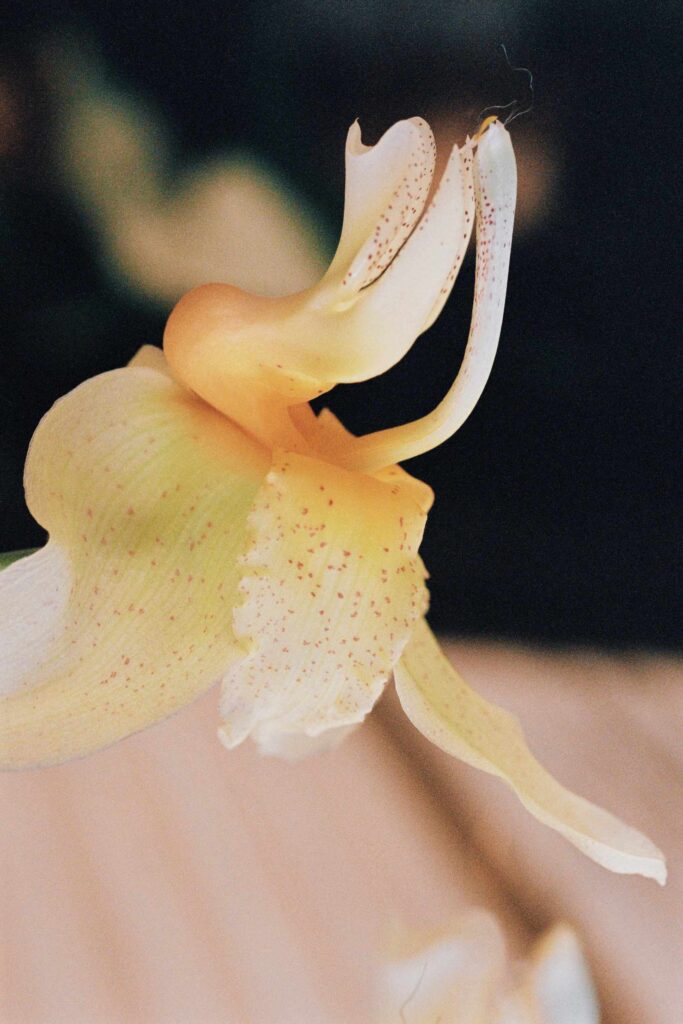
Caladenia Procera, solemnly recited the label in italics. They remembered that flower well. They hadn’t recognized it from the Latin name, but from the labellum, which looked more like a strip of alien fur rather than an orchid petal. The thin purple bumps stood out turgid from the disproportionate chartreuse tongue, which jutted out shamelessly from the rest of the small flower, curling on each side. They had seen it for the first time in a documentary from the 90s, in which a long sequence of voluptuous flaps had illustrated the phenomenon of sexual deception.
Several members of the Orchidaceae family have evolved by shaping the silhouette of their lips in the image of the female specimens of as many types of insects. The purpose of this camouflage is to attract the males who, after the illusion of a successful courtship, take off again, convinced that they have perpetuated their own species while, ironically, they are transporting the pollen of the plant, facilitating its reproduction. Despite the not precisely consensual nature of the relationship, one can nevertheless speak of a relationship that’s advantageous for both parties. The insect feeds on the nectar, and the plant spreads its pollen.
Thinking of the feverish movements with which they had seen the insects rub their hairy thorax against the pollinium, they began to hypnotically rub the palm of their hand on the flower’s mouth. They trembled as they ran their fingers between the rows of papillae, feeling them slam one by one against the hollow between one finger and the other. They felt their fingertips stick to the shiny surface. As they imagined it soaked in sticky nectar, they gradually felt a state of arousal pervading their body as a tingling heat.
Curious how the word sex refers to both the agent and the action, forcing the recipients of the communication to frame the context to understand if the word is intended as a verb or as a subject of the discourse.
Zoë De Luca Legge will be facilitating Naturotica: Ecofetish Narrations

Saturday, 31 October 2026,

15.00 CEST online

Full programme and registration here.
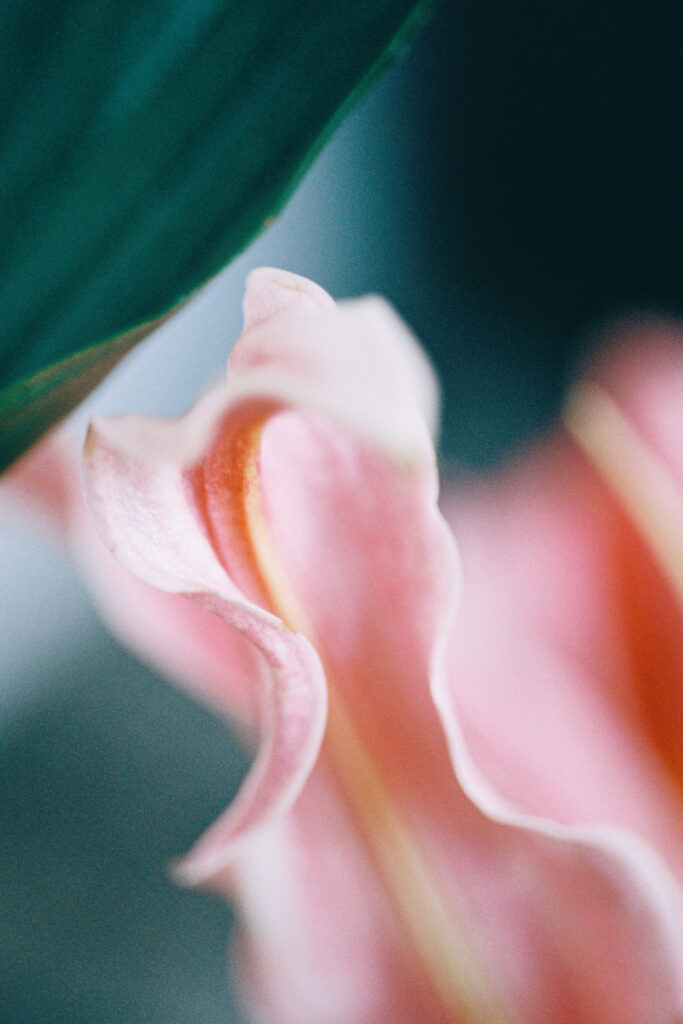
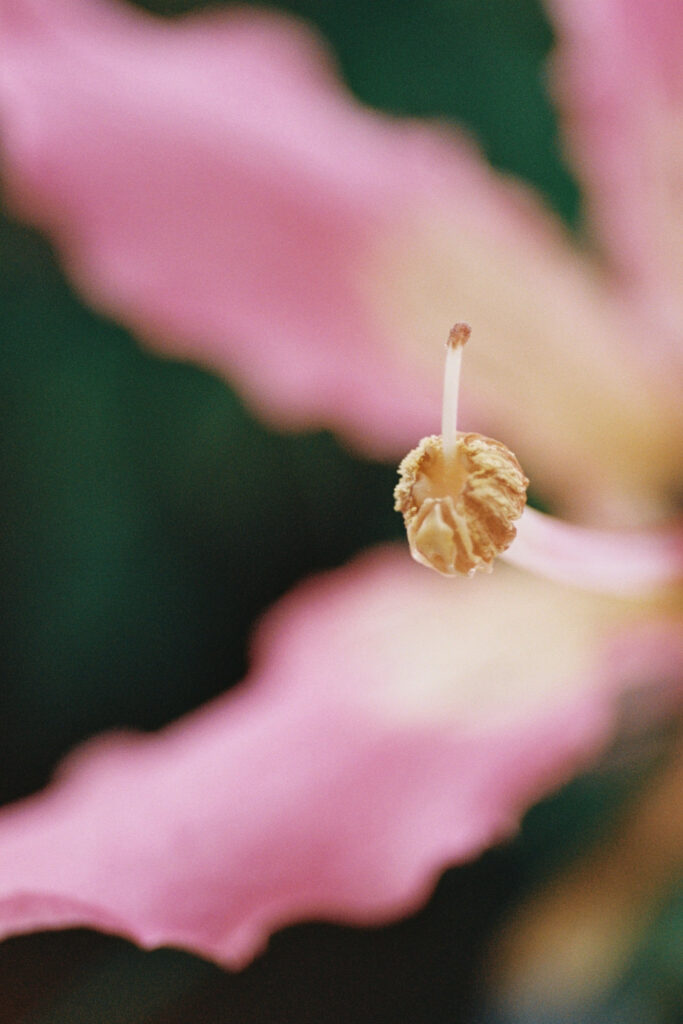
They visualized the motion on which they were fantasizing and they seemed to perceive the same oscillations starting from within themselves, from their chest, and from their belly. They abandoned themselves to that sensation, feeling it expand from inside their organs to every single pore of their skin.
They seemed to feel that summer heat they hadn’t felt on their skin for almost a year.
Here came the smell of the undergrowth again.
This two-way impetus would be a bit like an energy flow shared between the people involved, a liquid that would encompass everyone to make them a single equipotential surface.
Rather than being filtered through relational categories, intimacy would be distributed according to the instinctual desires of everyone, allowing the interactions to be an intrinsic expression of equity.
The surface would hypnotically sway to the rhythm of a single, placid fold, made of single but parallel ripples. A chorus of pleasure free from any convention or expectation.
They squeezed the orchid tongue on their abdomen. They slowly slipped it on the light clothes’ fabric, feeling the ridges descend along the center of the abdomen, adhere to the niche of the navel, and finally along the tense curve of the groin, over which they lightly pressed the purple flap. The friction between the palm of their hand and the tongue of lacquered wood and the fabric of their trousers refined its rhythm. They clung to the model, pressing with their whole hand, fingers sheathed in the curled edges. They gasped as they imagined sticking their arm into the mouth of the sap dripping flower, seeing it disappear up to the elbow. Their mind went lost in a mysterious darkness of ferns.
When they opened their eyes, they were sitting on the edge of the table with their backs tilted backwards.
Their thighs spread wide, their toes touching the floor.
Fingers still intertwined around the model.
Releasing their grip, they discovered the sweat that had formed in the hollow between their thumbs and forefingers. They sighed, still stunned by the fervor that was gradually dissipating along their limbs. A pulsating heat, however, remained well anchored to their torso, at the intersection of the folds of their groin.
They ran a hand under the cotton pants, down to the crotch. The sudden direct contact with the skin, which until now luxuriated protected by a nest of fabrics, made them hold their breath. They took out their hand and held it up in the light. They fascinatingly stared at the filaments of transparent fluid that stretched between their fingers, similar to the sap emitted by some tropical leaves when they finish unrolling.
They hadn’t even realized it.
They turned the Caladenia model over again in their hands, and their thoughts flowed back to the nature of that deceptive alcove.
Zoë De Luca Legge will be facilitating Naturotica: Ecofetish Narrations

Saturday, 31 October 2026,

15.00 CEST online

Full programme and registration here.
If on the one hand, the image of the copulation between an insect and a flower may seem an offense to the detriment of the unsuspecting hymenoptera, on the other hand, it is also true that it represents the fruit of a passion that is as blind as it is pure. A free courtship, clear of any preconceptions that an insect’s mind might be able to conceive. Sex is sex, and the more we transcend the rational structures that we have built around it, the more we would be able to experience it for the candid and visceral impulse that it is. If only we could experience sexual relationships with such awareness! they sighed.
We would conceive sexuality as the fulcrum of infinite possibilities and inclinations. A soft diaphragm ready to accommodate entities differently characterized, without preconceived or inhibiting denotations. Relieved of any projection, eventually forgetful of our own forms.
Bubbles of oil gently beating each other in the water, mingling without losing their exclusive unity.
They lazily pulled themselves to their feet and started to clear their throat, but held back the idea of being heard.
How long had they been in that room?
They wedged the lip of the orchid between the lower sepals from which they had detached it, and once again admired the languid tip that had seduced them like a wasp. It lay slyly under that pollinium so impudently similar to a glans, now back in its place, among the long, striated petals.
On closer inspection, the lateral fringes of the tongue, which had remained attached to the base during their ménage, were adorned with microscopic tufts of thin purple feathers. They were probably chosen to recall the velvety texture of the original papillae, powdered with pollen in every photo or video that immortalized them.
How fleeting was the game of pollen fed by wind and insects, so fleeting, yet vital!
Thinking about it, their last story had been like that too; an ephemeral experience in retrospect, yet essential escort in the process that had brought them to where they were now.
They sighed, halfway between amazed and pleased.
Although plants are indeed the link between the sun and the earth, they would never have speculated that that place would bring them advice as well as comfort, allowing them to find within themselves many of the answers they were looking for.
From now on, they would beware not to forget that nature always helps to read our lives.
For a moment they were tempted to slide the caladenia model into their backpack, already intrigued by the idea of being able to repeat that dreamlike embrace again – perhaps more calmly and less dressed.
They were just stroking their outermost papillae, swinging them from the top of the elastic filaments, when they remembered the first thought those botanical models had evoked: the educational books, full of illustrations lovingly intended for everyone’s learning.
They walked around the table one last time, admiring the models that would slowly be restored to their former glory, and that perhaps one day they would see again behind a glass pane.
After their revolution they headed for the door, ready to immerse themselves again in a world they had forgotten for a while. Ignored by any human presence, they went out and crossed the corridor of molluscs, which now appeared to be laden with peeping presences, tacitly accomplices of their surreal encounter.
They lightly walked out of the door that they had crossed almost unconsciously on the way there.
The first, timid street lamps superimposed their light on the twilight.
They went down the steps, breathing in the warm evening air, the tuft of purple feathers in the front pocket of their shirt, over their nipple, over their heart.
Words by Zoë De Luca Legge
Phots by Pia Riverola
This essay was originally published by HEDERA
Zoë De Luca Legge (she/her) is a half Italian, half Anglo-German curator, critic, and writer. Her activity focuses on the overlays between interdisciplinary studies and slow, collective practices, aiming to originate projects with postnatural and transfeminist premises. In 2011 she founded DIORAMA editions, an independent editorial project. In 2014 she co-founded Siliqoon, an art label whose activities range from artistic residencies, exhibitions, and workshops to Siliqoon Agency, an artist-run communication studio. In 2018 she founded PANORAMA Milano, a digital archive of studio visits with artists based in Milan. She often collaborates with other curatorial and editorial projects.
Zoë De Luca Legge will be facilitating Naturotica: Ecofetish Narrations

Saturday, 31 October 2026,

15.00 CEST online

Full programme and registration here.