

Beyond Apocalypse: Is the World Ending or Transforming?
Apocalypses are not ends; they are transformations.
Lizzie Wade
Scientific journalist
Climate change is often described in terms of crisis, collapse, or even apocalypse. Scientific journalist Lizzie Wade suggests that “apocalypses are not ends, they are transformations”, reframing this as a necessary disruption that can transform how reality is perceived. The climate crisis forces us to reconsider what we perceive and deem as nature or human. It requires a deep shift in how we know the world and what futures are thinkable. The world is not ending but reorganising under pressure; our shared frameworks of meaning are what need to collapse to change how reality appears. Consider the possibility that one of the problems is how the world itself is being conceptualised, as an object that humans can manage, fix, and improve.
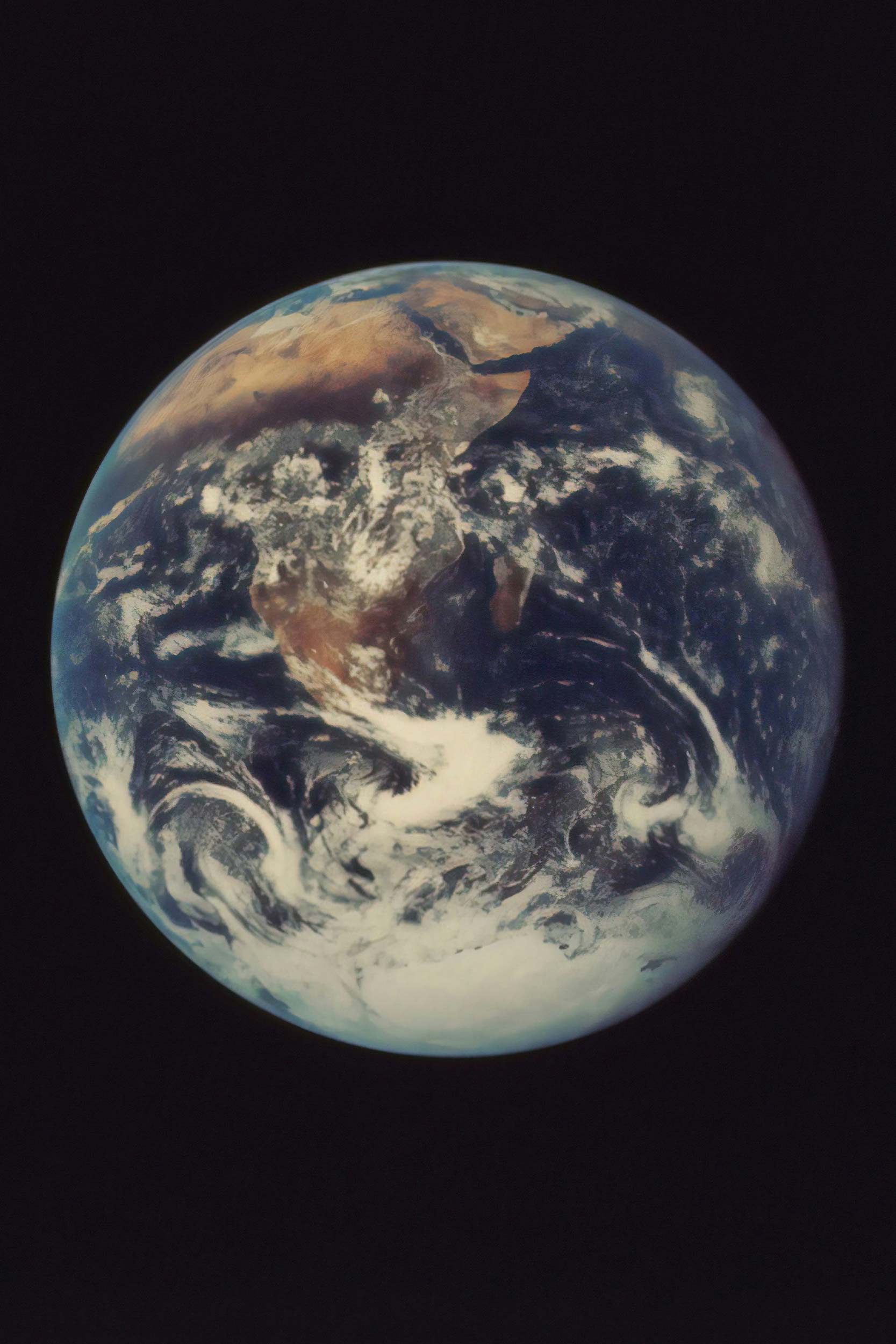
Philosopher and cultural theorist Mark Fisher posed that the climate crisis is tied to a crisis of imagination, as “it is easier to imagine the end of the world than the end of capitalism”. Novelist Amitav Ghosh extends this, suggesting that what may be even harder to imagine is “the end of the absolute geopolitical dominance of the West.” The future appears to be cancelled because our capabilities for imagining alternative futures have been weakened. Earth continues to exist and evolve without us, a perspective reinforced by the natural regeneration of industrial landscapes described at length in World Without Us by Alan Weisman. Speculative realists challenge the anthropocentrist assumption and philosopher Immanuel Kant’s ideology that the world, and reality, is human-centric. Climate systems such as oceans, carbon cycles, and feedback loops exist regardless of human perception or awareness. This means that the reality of climate change is harder to grasp, as it is not a single object but a hyperobject that spans across time and space. It is everywhere and yet nowhere, immediate yet distant. Its effects are visible but never complete, making it feel distant, abstract, producing anxiety and paralysis.
Feminist theorist and philosopher Donna Haraway destabilises the idea of “pure nature”, seeing the Earth as made up of hybrid webs in which nature, technology, and society are deeply intertwined. Here life is co-produced through interdependent systems, not in isolation. Climate change is therefore the visibility of entanglement, not a disruption of nature.
Vulnerability is a fundamental and valuable aspect of human existence, not merely a problem, as transhumanists view it, to be overcome through technological advances. The transhumanist desire to escape limits, both human and ecological, only reiterates the need for acceptance of limitations. The desire for mastery over nature highlights our dependency on it, and the desire to separate ourselves from nature shows how entangled we are within it.
Two futures start to become imaginable: one of ecological restoration, rewilding, and restrained technological intervention; the other a “post natural” world where ecosystems are increasingly synthetic and engineered and controlled by corporations. Haraway disrupted the idea of only two futures, and philosopher Timothy Morton’s “ dark ecology” goes a step further in accepting our entanglement with nature instead of imagining ourselves to be separate from it. Climate change is therefore the realisation that “nature” was never separate to begin with.
Words by Anna Borrie for Rethinking Climate
This essay was influenced by philosopher Eudald Espluga’s workshop as part of Another Narratives, an initiative by Another Way Film Festival to change the climate narrative, one script at a time.
Rethinking Climate:
In a world often defined by crisis headlines and carbon counts, stories of climate action can feel like they live on the periphery, minuscule in the shadow of an overwhelming challenge. Climate stories go beyond scientists, policymakers, and activists. They also take shape in unexpected places: studios, workshops, design labs, community spaces, small corners of cities and in rural landscapes.
These essays grew out of noticing this. They trace how creativity and care intersect with the climate crisis, how artists, architects, and makers are turning what once symbolised environmental failure into forms of renewal. Each story begins with a familiar problem – a tyre fire on the city’s edge, smog above the skyline, discarded textiles, and industrial offcuts – and follows the people transforming these materials and ideas into new forms of value.
To rethink climate is to shift perspective, to see potential where others see residue, and to design systems that regenerate rather than extract. This isn’t only about technology; it’s about creativity, empathy, and design. It’s about finding beauty in what was once waste and building futures that don’t just sustain life but also enrich it.
Anna Borrie:
Anna Borrie is Associate Editor at Planted Journal, where she explores the intersections between ecology, art, and storytelling. Her work is rooted in a creating meaningful connections between people and their environments. She runs a community garden in Madrid, where she cultivates both plants and relationships with fellow gardeners. Her interests lie in creating collaborative environmental art and promoting zero-waste practices, seeking ways to harmonise creativity with environmental responsibility.