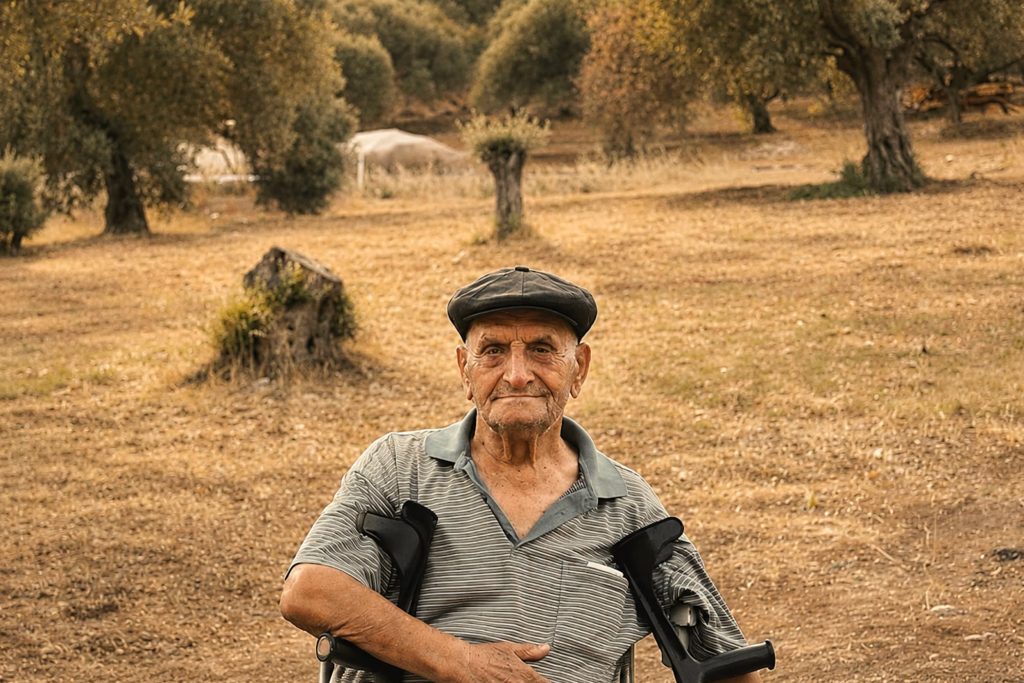
There is a photograph I return to often.
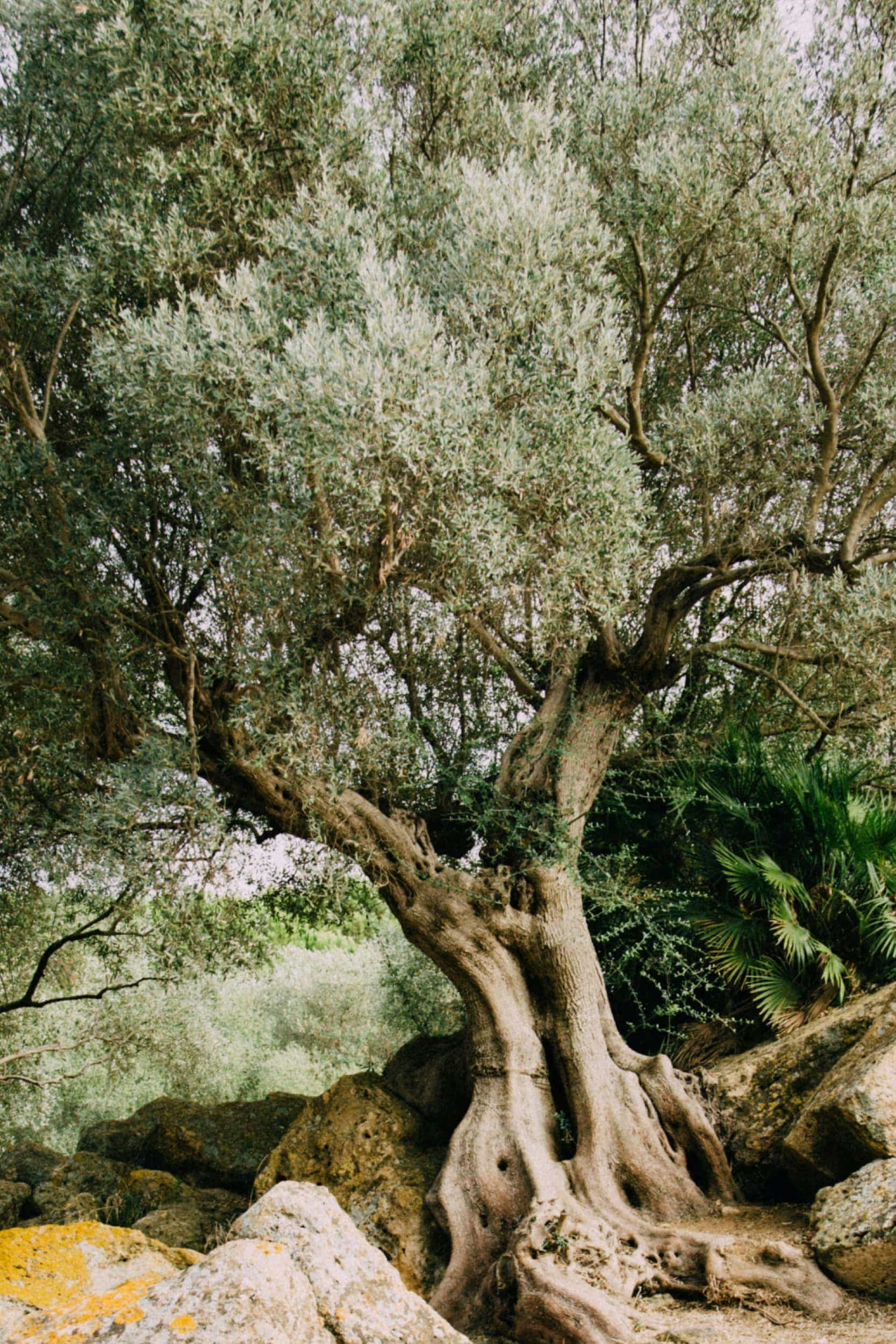
In the photograph, my great-grandfather sits quietly beneath the olive trees of Karaburun on the Aegean coast, surrounded by the dry golden earth that sustained our family for generations. His weathered face carries the silence of labour, migration, drought, and survival. He is not performing for the camera. He simply belongs to the landscape around him, as naturally as the olive trees themselves. The soil around him is dry, stony, sunburnt. Yet everything living around him grows. The fields behind him feel ancient, shaped by salty winds, harvests, and the memories of those who crossed the Aegean carrying little except resilience and agricultural knowledge. Looking at the photograph now, I realise he was never separate from the land. He had become part of its memory.
When I was 21 years old, I took a photograph in the same village. By then, I understood something I could not fully see as a child: landscapes remember people. The wind of Karaburun Peninsula carried my family’s voices long before I was born.
I was born far from the village where my family’s story began. After immigrating to the United States, my parents built their lives around academia, classrooms, and city routines. I grew up surrounded by highways, fluorescent lights, schedules, and apartment buildings. Yet every summer, we still returned to my grandmother’s village home in Karaburun, surrounded by olive groves planted by generations of my ancestors before I was born.
Something changed inside me there.
The landscape felt ancient and mythological, shaped by salty Aegean winds and stories carried across generations.
My grandfather’s family arrived there from Crete during the early twentieth century. They crossed the Aegean carrying almost nothing except agricultural memory—knowledge of olives, vineyards, drought, wind, and survival. They settled in Eğlenhoca village near the ancient region of Mimas, a mountainous landscape tied to Homeric mythology and the restless winds of the sea.
During her childhood, every summer break, my mother travelled to Mimas-Karaburun. Summer began there.
She remembered dusty roads, cicadas singing in the heat, olive branches glowing silver beneath the afternoon sun, and her grandfather’s voice echoing from the grapevine while grapes cooled in metal bowls filled with water.
My mother’s extended family carried water by donkey across dry hills to keep the olive trees alive in the 1940s. My mother did not understand the hardship then. To her, their labour looked eternal, almost sacred, like part of the natural rhythm of the earth itself.
My great-grandpa used to complain that he always saved the sweetest grapes for the grandchildren, but every year wild pigs arrived before harvest and ate the ripest fruit during the night. He built scarecrows to protect the vineyard. In my mother’s childhood imagination, those scarecrows became lonely guardians standing between abundance and loss.
During the summer nights in Karaburun, he sat beneath the olive trees with his grandkids and spoke to them softly, as if the olive trees were ancient beings capable of listening to us, and told stories.
He told my mother the branches stretched toward the sky each night in prayer, asking God for more olives in the coming season. My mother believed him completely.
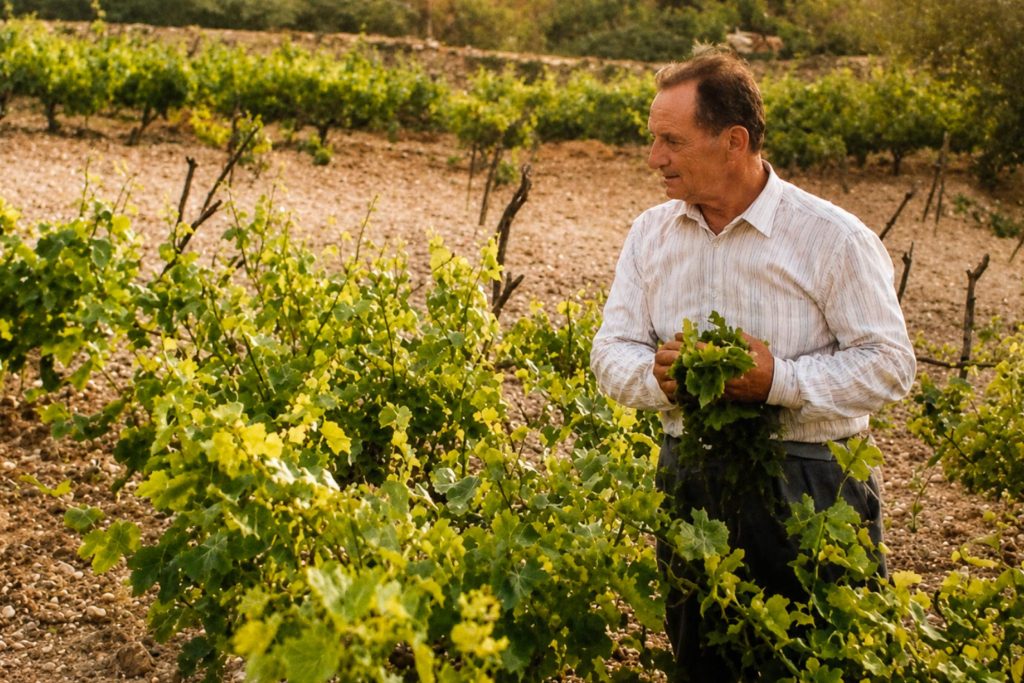
Sometimes he lay directly on the soil, pressing his knees into the earth. He said if scorpions stung his legs during winter, he would not suffer from rheumatism. My mother watched him with enormous eyes, convinced he possessed the wisdom of old gods. To her, he was Zeus.
He never had the chance to attend school, yet his understanding of life felt deeply philosophical, almost Homeric. Homer, the blind poet of the Aegean, understood that true vision does not belong only to the eyes. It belongs to memory, rhythm, listening, and survival.
My great-grandfather read the world this way:
He listened to drought through silence.
He understood weather through olive leaves.
He recognised time through harvests and wind.
In Homer’s Odyssey, mountains rise beside the Aegean as witnesses to exile, longing, and return. Sometimes I imagine the hills of Mimas carrying the same memory. My great-grandfather’s olive trees still stand there beneath the open sky, listening to the salty winds arriving from the sea. Perhaps they are still speaking with Homer.
When the wind moves through their silver leaves at night, I imagine the trees listening to the songs my ancestors once carried from Crete generations ago. The sea separated them from their homeland, yet the olive trees learned their language and protected their memories.
Now the village house is gone.
After my great-grandfather’s death, the vineyard was sold. Many members of my family left agricultural life behind to work in industrial factories, chasing economic survival inside the machinery of modern life. Slowly, they became separated from the land that once sustained them.
Yet decades later, something called family back.
Perhaps the olive trees remembered them before they remembered themselves.
Today those olive trees are more than one hundred years old.
They still feed our family.
They still pray beneath the Homeric sky.
They still listen to the songs carried across the Aegean from Crete.
Every year we still eat fresh green olive oil made from our family land. Its taste carries sunlight, labour, migration, survival, and love across generations.
And perhaps this is abundance:
Not endless consumption,
but continuity.
Not ownership,
but belonging.
Not extraction,
but reciprocity between body, memory, soil, and time.
Sometimes I think the olive trees became the true storytellers of our family. Long after wars, migrations, deaths, factories, and borders, they remain rooted in the same earth, carrying generations inside their branches.
The wind of Mimas still moves through them.
And somewhere beneath that endless Aegean sky, my great-grandfather is still standing among the olive trees.
Words by Dalya Kinsizer
Dalya Kinsizer is a college student studying Interdisciplinary Sciences and History at the University of Central Arkansas, with a mind drawn to the in-between – the spaces where disciplines, cultures, and centuries overlap. She is the producer of After Bastet, an independent history and philosophy podcast that sits at the threshold of time and humanity, asking the questions that don’t fit neatly into any one field. She has isolated and named a novel bacteriophage genome deposited in the NIH GenBank through the Howard H. Hughes Medical Institute, presented her research at the American Society for Microbiology, completed the Foundations of Bioethics programme at Yale University, and is a SPPARK Scholar at the University of Arkansas School of Law. In her free time, she is working on her first historical fiction novella and makes artwork from recycled materials and things she finds in nature. She is passionate about environmental and migratory law, and hopes to pursue a JD upon graduation focusing on the living relationship between ecology and human living. “Where Olive Trees Pray” is her first memoir submission, written in honor of her great-grandfather’s passing and the legacy she feels called upon to carry.