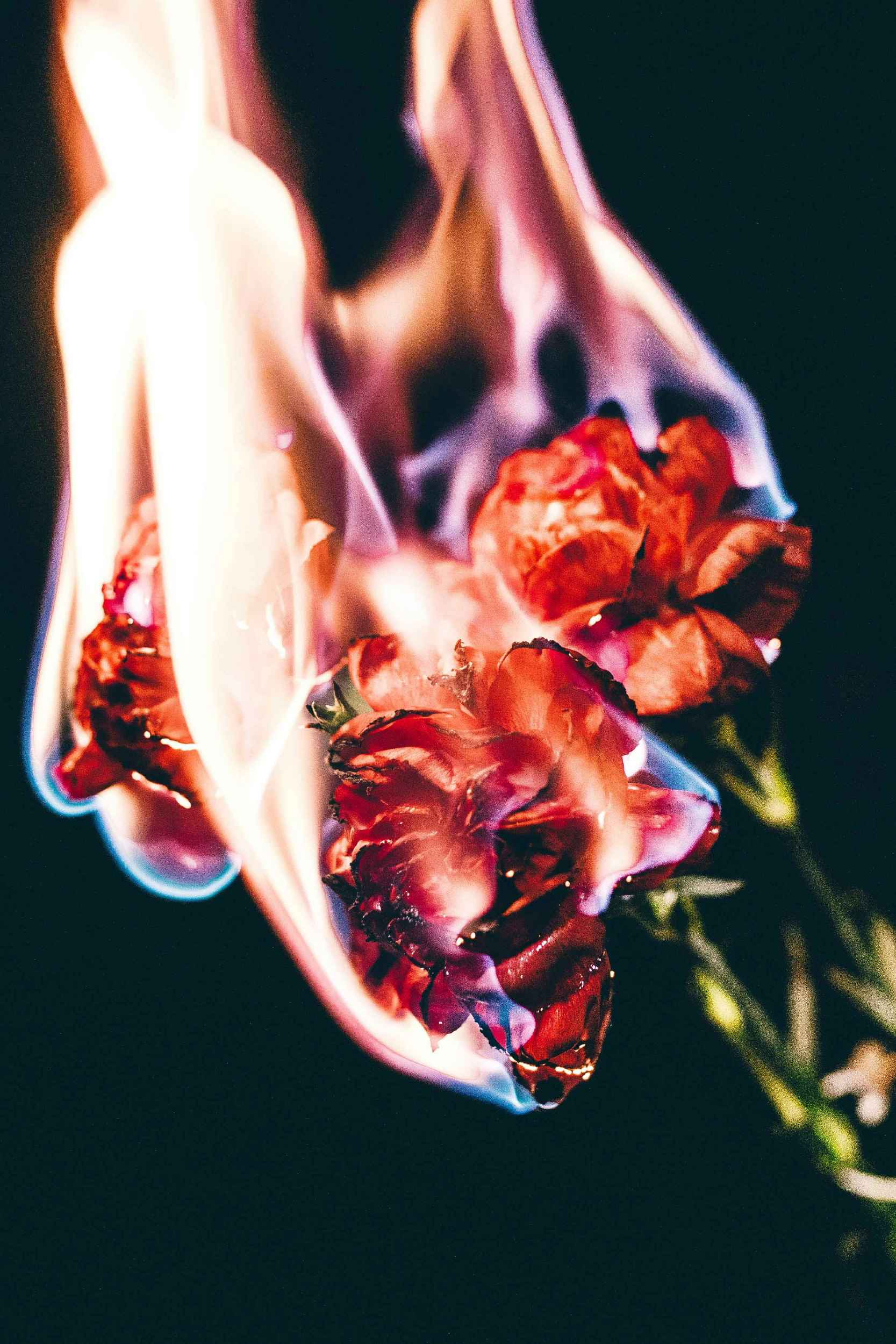
Somewhere in Australia, some birds carry ember sticks in their beaks and drop them on the dry grassland, igniting fire. As small insects and rodents flee to the blaze, the bird feasts in a frenzy. The Aboriginal Australians have long described “fire hawks” in their oral traditions, probably for 40,000 years or more. Perhaps humans are not the only species that work with fire, yet our relationship with the flames is changing the rhythms that were set in deep time.
The Earth’s cycles shift between glacial and interglacial periods. The ice age returns, freezing the world, and as it fades, life thaws. During the last little Ice Age, from the fourteenth century until the mid-nineteenth century, winters and glaciers grew, followed by famine, death and hunger. Later during this period, the scientific and industrial revolutions ignited silent flames.
With the invention of the steam engine, humans could finally harness fire to move machines and eventually even bigger machines, covering thousands of miles, by burning the hidden fire. As Andri Snær Magnason writes in ‘The Age of Invisible Fire’, “James Watt took the torch of Prometheus and hid it in the steam engine.” Perhaps the memory of famine from the Little Ice Age deeply haunted the human mind, so it ran with the torch of Prometheus, burning everything on its way, creating “an age of fire”.
Stephen J. Pyne is an environmental historian; he argues we are entering the age of fire, the Pyrocene. A period defined by human-driven fire, climate change, and fossil fuel combustion. According to him, there are three kinds of fire burning today, each interdependent on the other, functioning in a three-body dynamic. The first fire is ancient; it ignited as plants moved to land 420 million years ago. The second fire, when humankind kindled it to cook food, burnt on the same fuel: grass, woods, and shrubs. None of these fires breached the ecological boundaries, as they were within their “biotic matrix”. It’s the ember of the third fire that disrupts the balance of the living world; it borrows from the dead in deep time, igniting fossil fuels from the geological past and releasing them into the atmosphere. As greenhouse gases heat the planet, the first and the second fires are overpowered by the third, which returns again and again in the warming world.
In 2019, at the World Economic Forum Annual Meeting, Greta Thunberg asked world leaders to drop the false hope and take serious climate action by cutting fossil fuel emissions. “I want you to act as you would in a crisis. I want you to act as if our house is on fire. Because it is.” As wildfires rage across Southern Europe, North America, and Canada, her words have become a prophecy. In southwestern France, nearly 220,000 people are displaced, the largest evacuation orders carried out in France since World War II. In the US, the July wildfire crisis and massive smoke plumes drove AQI spikes above 300 to 500+ in parts of the Midwest and Northeast. Climate displacement, migration, and hazards are not far-fetched realities happening somewhere else or only in the Global South; even in Europe and the US, climate is putting systems on the brink. If your neighbour’s house is burning, you can’t look elsewhere. And when your own house is on fire, will you keep it burning?
Like the human body, extractive systems are pushing the Earth to the edge of ‘burnout’; we have to create boundaries to replenish our inner resources and let Earth do the same. What if we don’t suppress fire but revere it? What if we do not feed fire with the dead of deep time? Perhaps the fire hawk carries a lesson for us to work with fire and let it feed us. We can tend to fire, as it tends to us, feeding each other with responsibility.