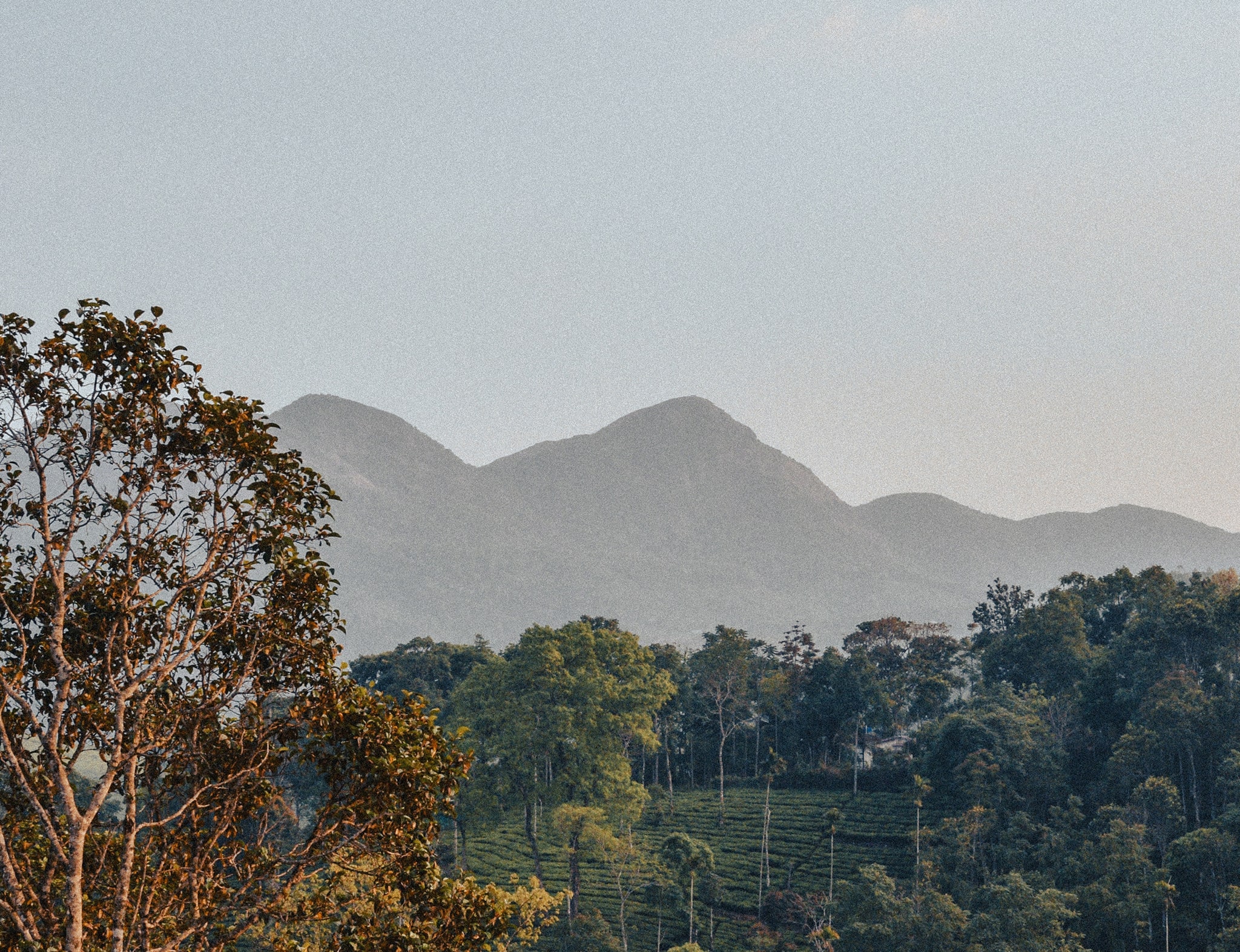
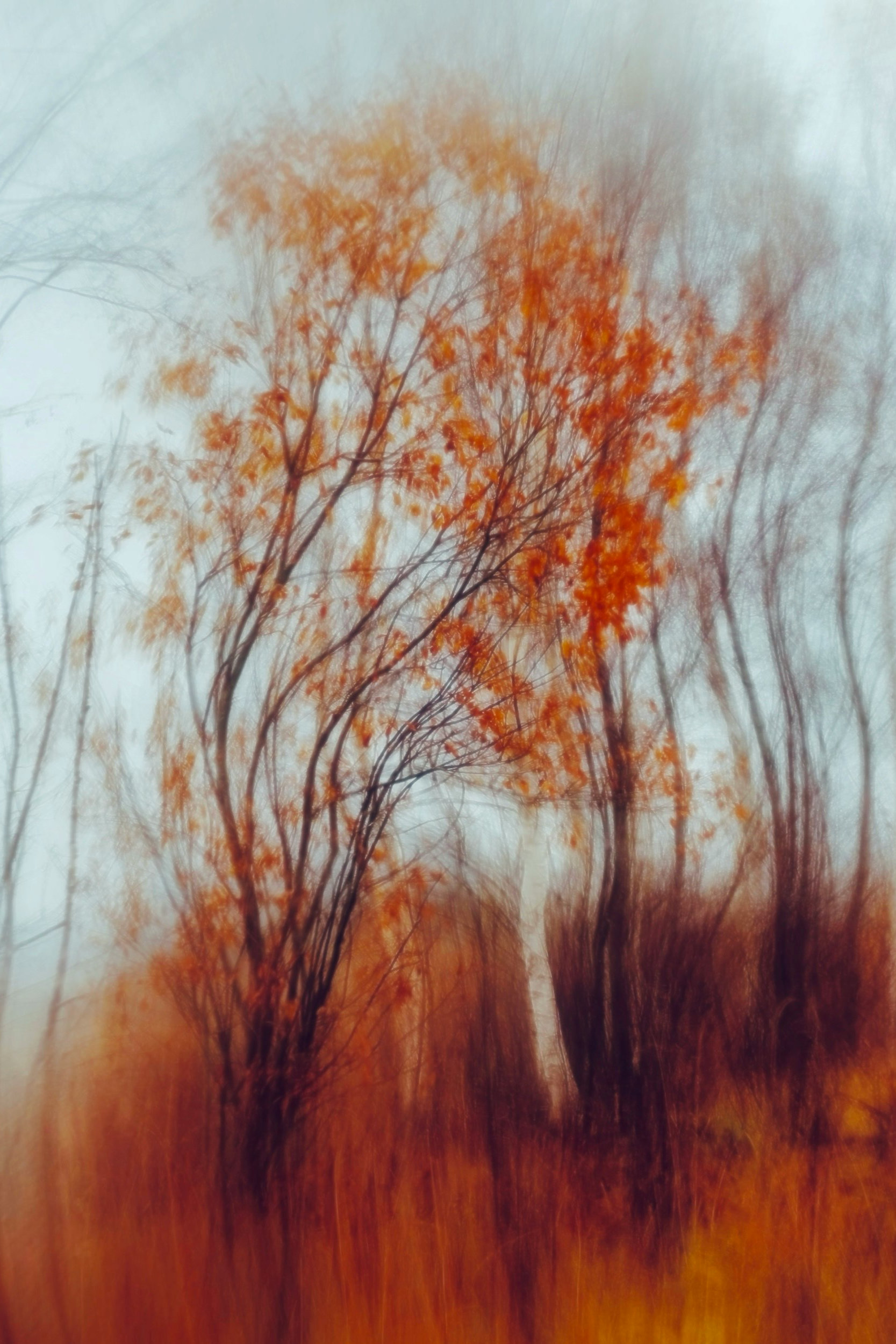
The tree is devouring sunlight, transforming the immaterial into material. It perceives light and gives it form; a new leaf emerges. It senses gravity through its roots, through cellular processes that orient them towards where they need to grow. As human-bodied animals, we cannot give form to sunlight or grow towards gravity; we are constrained by our own biological and sensorial reality. Human eyes can perceive only a tiny fraction of the electromagnetic spectrum, and our ears can detect only a fraction of the vibrations that exist around us. The world we experience is only a small fraction of reality, yet we are constantly in relationship with the imperceptible.
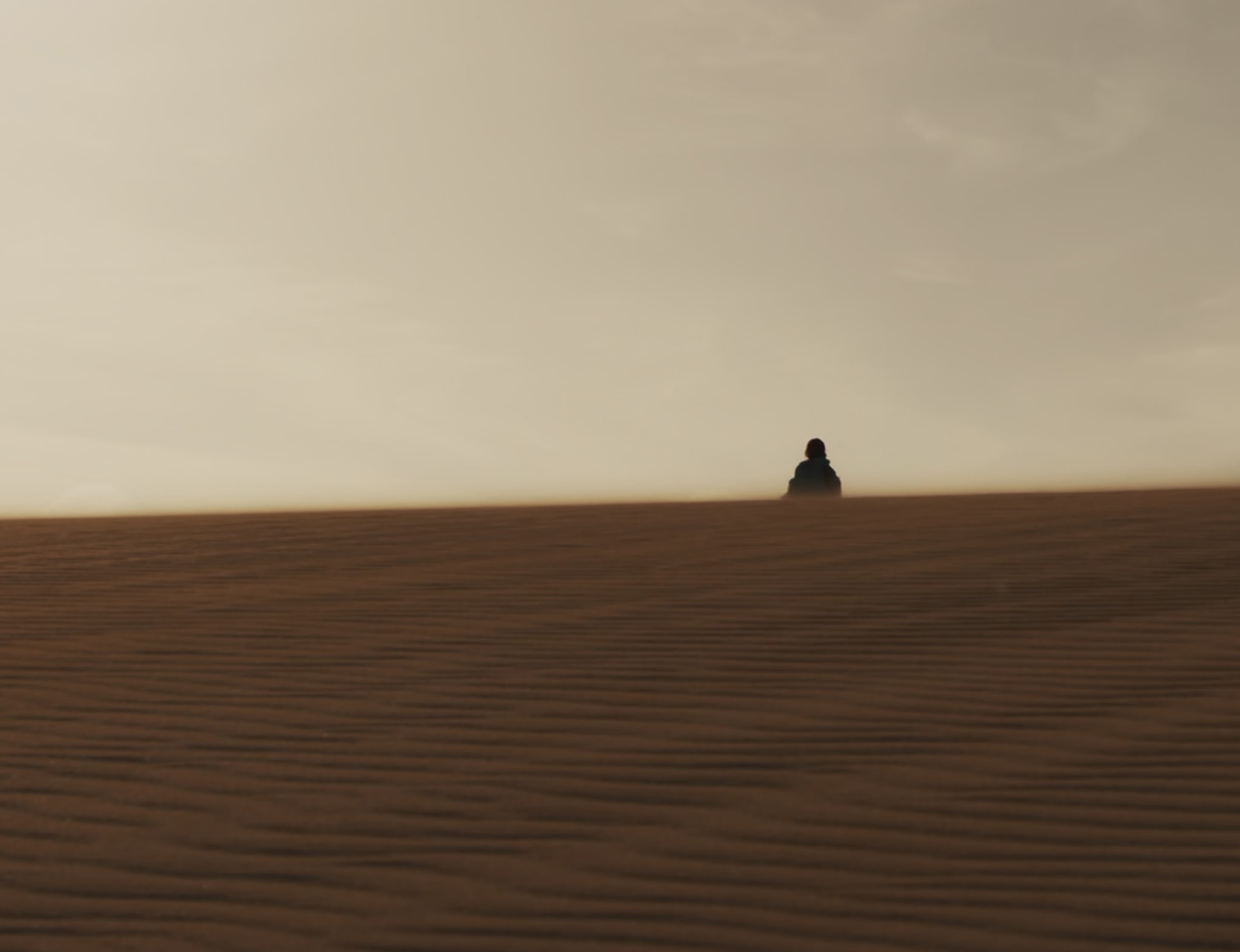
Each organism lives within its own sensorial bubble; the same landscape carries different messages for each being. In 1909, Jakob von Uexküll proposed the concept of Umwelt, often translated as “surrounding world” or “environment”, describing how every creature inhabits a unique subjective world shaped by its biological needs and sensory capacities. While we see waves rising, meeting, and falling, for a sea turtle the sea is also a magnetic field. Particles of magnetite contribute to its ability to navigate Earth’s magnetic field, creating a tactile map. For bats, the world is sonic. By emitting sound waves and interpreting their echoes as they return from surrounding objects, bats can locate and navigate their environment through sound.
We cannot fully grasp the sensorial reality of other beings. We may glimpse it scientifically, but we cannot experience the embodied phenomena. There is a limit to our knowing. As Thomas Nagel writes in What Is It Like to Be a Bat?: “In so far as I can imagine this (which is not very far), it tells me only what it would be like for me to behave as a bat behaves. But that is not the question. I want to know what it is like for a bat to be a bat.” Even with the imagination of another creature’s experience, we remain restricted by our sensorial capacities. As the environment creates unique possibilities for each organism, these worlds constantly interact, forming relationships between organisms and their surroundings. We may not see flowers in the ultraviolet spectrum as bees do, yet this invisible dimension participates in the relationships that sustain our ecosystem.
Within human reality, our individual Umwelt is also shaped by culture, experiences, memories, and language. We enter one another’s Umwelt through words, language and stories, creating a shared reality together.As Jesper Hoffmeyer writes, language can become a “common dwelling place […] one large common Umwelt.” If stories can reconstruct our beliefs, habits, and even our habitats, how might we look towards the past and the future to find new meanings and possibilities? Can we imagine an imperceptible reality that holds space for the living world? Can we use art, stories, and creativity to question existing systems and expand the limits of our imagination? How can we widen our own Umwelt?
Real art questions the existing order. Art is not about representing so-called beauty but rather about questioning the existing judgement about everything in politics, in life, in personal relations, in individual judgement.
Ai Weiwei
Words by Priyanka Singh Parihar
Founder and EIC
Priyanka Singh Parihar is a BIPOC writer, curator, and art director who explores the connection between humans and nature, seeking new ways of existing. Hailing from a rural farming community in India and now residing in Milan, she observes the world through two distinct cultural perspectives: East and West, rural and urban.
Her work with Planted Journal began during a period of severe depression and eco-anxiety. Through creative practice, she found a path to healing. With a history education in Delhi, which provided her with critical and academic tools, and a master’s in fashion styling in Milan, where design, fashion, and aesthetics have shaped her, she is now dedicated to applying her experience to the field of climate justice.