


Working With Nature
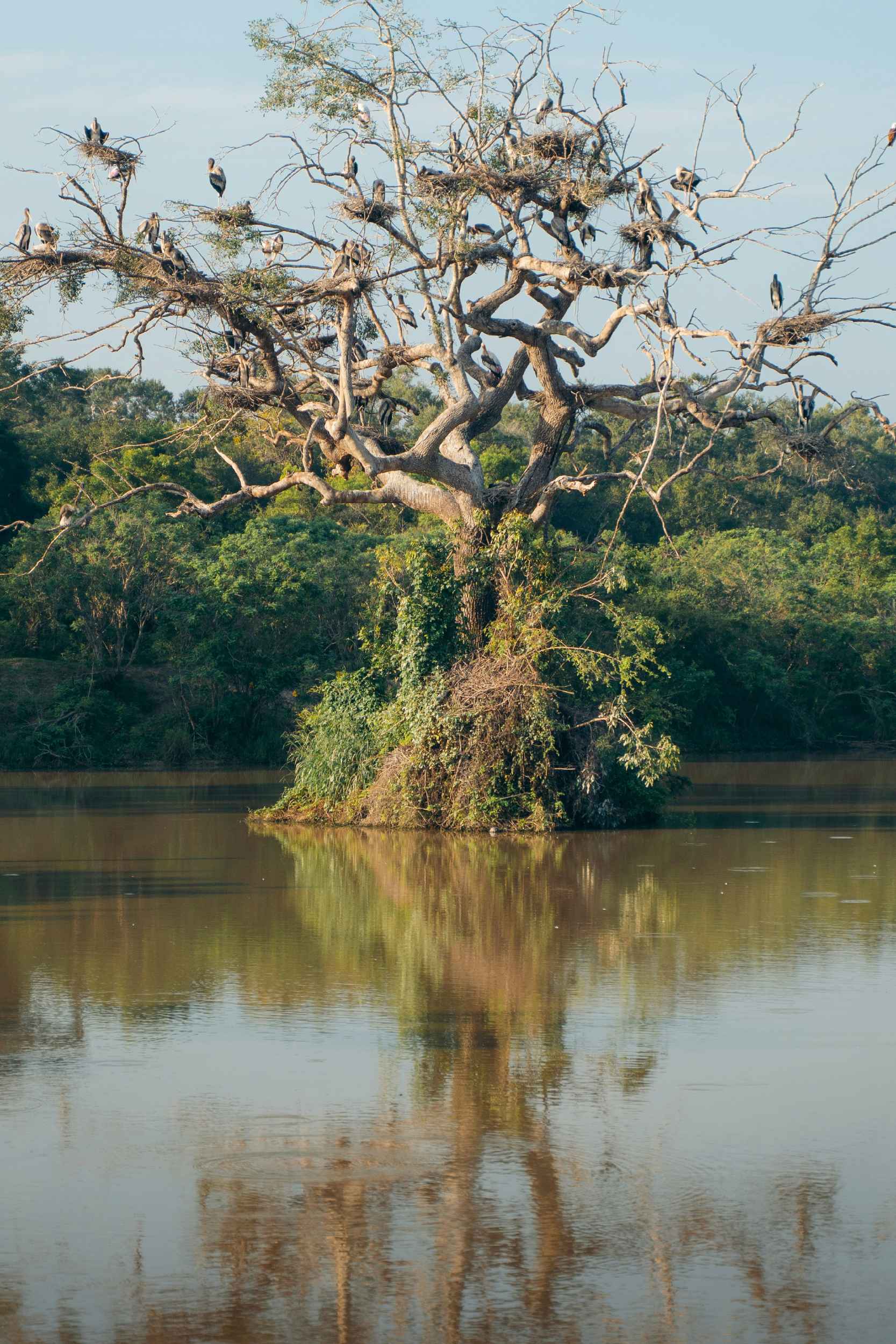
Climate change is often framed as a technological challenge heavily reliant on the advances of renewable energy and climate modeling. While these innovations are necessary, they tell only part of the climate solutions story. Nature-based climate solutions already exist in forests, wetlands, grasslands, oceans and healthy soils. The natural world has systems to regulate the climate, store carbon, recycle nutrients and support life. Our future depends on restoring the natural relationships that have always sustained our planet. In the words of environmentalist David Attenborough, “To restore stability to our planet, we must restore biodiversity. The very thing we’ve removed. It’s the only way out of this crisis we’ve created. We must rewild the world.” The question is no longer whether nature can help solve climate change, but rather, How can ecosystem restoration, biodiversity and traditional knowledge help shape a more resilient future?
Natural ecosystems act as some of the planet’s most effective climate regulators. Carbon is naturally absorbed in forests through photosynthesis, it is locked in the water-logged soils of wetlands, becomes part of the food web in the ocean and is also stored beneath grasslands. There has been a boom in industrial-sized carbon sequestration projects, in particular backed by historical polluters who see this as a way to bury their responsibility through greenwashing. Carbon sequestration at a mass scale is short sighted, however, in that its function is to bury carbon instead of protecting and caring for existing ecosystems. When these ecosystems disappear due to deforestation, pollution and unsustainable land use stored carbon will be released back into the atmosphere.
The unsung heroes of carbon sequestration are mangroves, which capture up to four times more carbon than mature forests. Indonesia has the largest mangrove carbon reserves, providing a nursery for marine biodiversity, filtering water and combating coastal erosion. But climate restoration is more complex than simply planting a larger number of trees. The 1978 Great Green Wall of China was started to combat the expansion of the Gobi Desert and has had to adapt and alter the types of species planted due to location and topography. A healthy forest is never monocultural, but rather includes plants, fungi, insects, birds, mammals, and microorganisms interacting in balance and providing ecosystem services that keep the soil healthy, regulate water and capture carbon. Large monoculture plantations of fast-growing species are essentially green deserts that store carbon temporarily, supporting less biodiversity.
Climate resilience depends on the diversity within ecosystems; that is, it is an ecosystem’s biodiversity that helps it withstand environmental stress. Biodiversity-friendly agriculture is a practice that has slowly filtered into more mainstream food production, where the inclusion of plants for pollination, pest control and soil rejuvenation lean away from standard monocultural crops. Integrated crop-livestock methods such as Rice-Duck-Shrimp Farming in the Mekong Delta in Vietnam allow farmers to avoid pesticides while relying on duck droppings as organic fertilizer. Biodiversity is an investment in long-term climate security, as every species contributes to the stability of the larger ecosystem.
Climate solutions don’t all come from new innovation; they also come from listening to knowledge that has endured for centuries and been passed down over generations. Traditional stewardship practices have maintained healthy ecosystems for generations. Across Canada there has been an increase in controlled burning practices that focus on fire prediction and response. The nomadic practice of rotational grazing in the Mongolian steppe, is used to manage the world´s largest remaining contiguous grasslands. Agroforestry is a practice widely used in Portugal and Spain where livestock graze under plantations. Water harvesting is a popular method of water conservation in arid and semi-arid regions, especially for local agriculture in Tunisia and Burkina Faso. Selective local harvesting protocols passed down over generations ensure the sustainable use of resources without depleting them. Moreover, botanist Robin Wall Kimmerer combines traditional ecological knowledge with Western scientific approaches in understanding our relationship with the natural world. In her book The Serviceberry, she challenges the extractive mindset by offering the idea of a gift economy, where the relationship with the natural world is based on reciprocity rather than ownership. Receiving gifts from nature creates an obligation to care for the ecosystems, species and communities that sustain them.
By working within and mimicking natural systems, there is the possibility of restoring ecosystems. Our path forward is about learning how to live and belong within the natural world and its intricate systems.