

Abundance is a verb held between a place and the people who have learned how to be in relationship with it across enough generations that the relationship becomes a practice. Take the people away, or replace the practice with extraction, and the abundance collapses.
The creek in southern Brazil has a voice, and it sang back.
I was standing ankle-deep in water the color of steeped tea from the tannins of fallen leaves, bamboo leaning in overhead like a vaulted nave, a Guapuruvu tree flowering somewhere up the slope so that the air was threaded with yellow. I was trying something I had been told about for years and never done: you hum into moving water, and the water answers. Not metaphorically. The resonance of the creek bed, the shape of its small falls, the way current tumbles over stone, all of it returns a pitch that is not the pitch you put in. You adjust. You listen. You hum again. After ten minutes, my jaw relaxed enough that I could feel my teeth resting on each other. After twenty, I had stopped calling it humming.
What surprised me was not that the creek sang. What surprised me was that I had been taught – through no single teacher, but rather through the culture in which I grew up – that this was impossible. That the creek was a substrate for my song, not a participant in it. That the abundance of the forest around me – the Guapuruvu’s yellow, the bamboo’s architecture, the quiet fat presence of the water – was a backdrop and a resource and, if I wanted to feel spiritual about it, an inspiration, but not a counterpart.
The question I walked out of the creek with is the question I have been sitting with ever since: what if abundance is not a state of the world, but a relationship the world has with whoever is tending it?
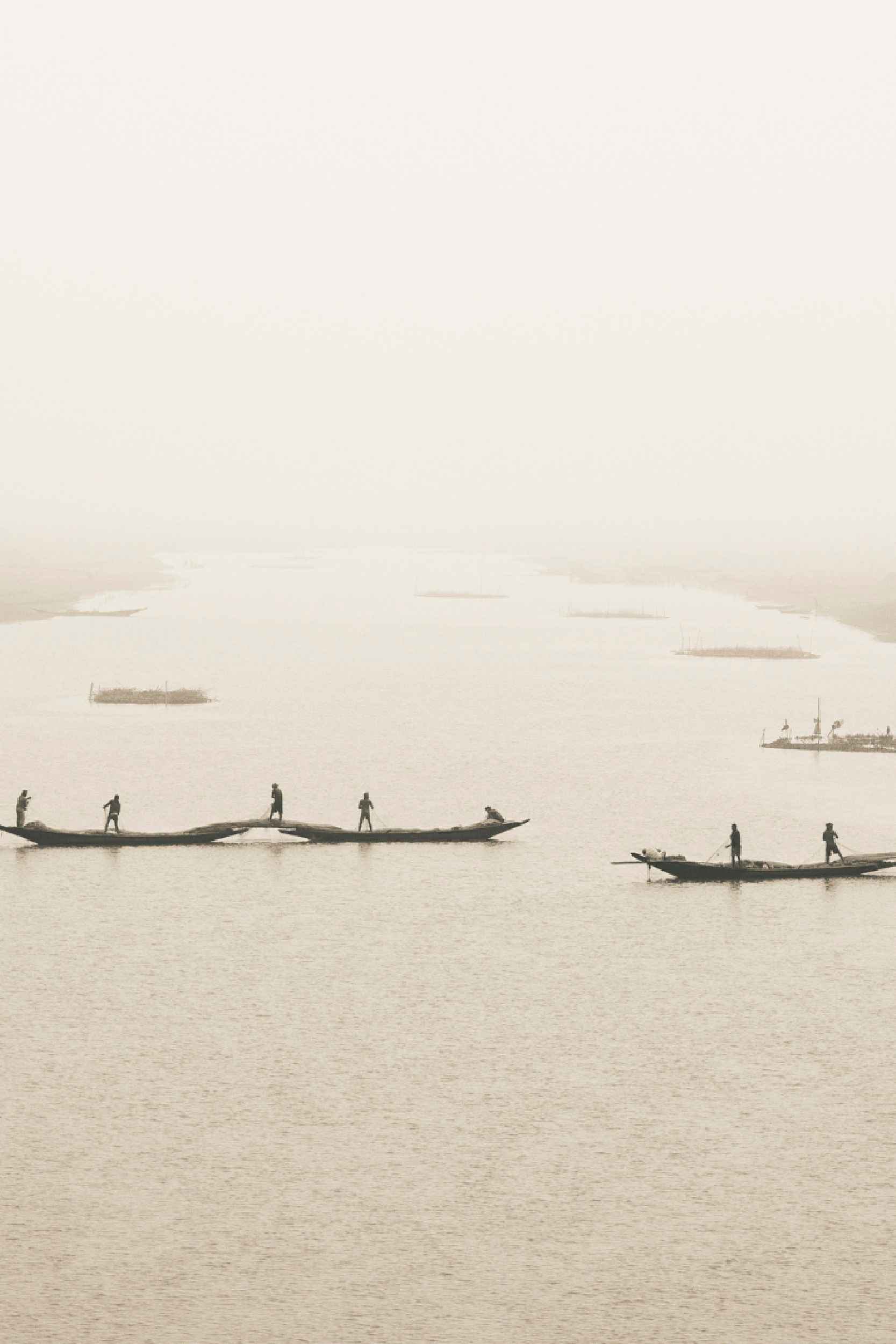
Indigenous musician, author, and community organiser Dr. Lyla June Johnston, in her 2022 doctoral dissertation Architects of Abundance, calls the continent I was standing on part of Abya Yala, and she documents what its Indigenous Nations were doing for millennia before Europeans arrived with the idea that the land was either wilderness or property. Her thesis, compressed: the abundance Europeans found in the Americas was not a gift of untouched nature; it was architecture. The Chumash tended the waters of the California coast and its Channel Islands for ten thousand years, building fisheries whose principles were reverence, reciprocity, respect, restraint, and responsibility. The Haíłzaqv, the Heiltsuk Nation of the central coast of what is now British Columbia, constructed herring spawning grounds. The Bauré built aquatic farms across the Llanos de Moxos, in the Bolivian Amazon, a landscape Europeans later mistook for virgin swamp. The Diné managed the Ch’ooshgai Mountains, on the edge of Diné Bikéyah in the Four Corners of the present-day United States, with routine burning across the Holocene, shaping a fire regime whose collapse, in the archaeological record, correlates precisely with the collapse of Diné access to their traditional territory.
“Most traditional Indigenous communities,” Johnston writes, “are not passive observers of nature but are instead influential facilitators of landscape-scale abundance.” The word I keep returning to: facilitators. Not producers. Not extractors. Not stewards, even, which retains a whiff of management. Facilitators: the ones who hold the conditions open so that the thing can happen.
This reframes abundance in a way I find difficult to fully metabolise, because it undoes the assumption I was raised inside. Abundance is a verb held between a place and the people who have learned how to be in relationship with it across enough generations that the relationship becomes a practice. Take the people away, or replace the practice with extraction, and the abundance collapses. The Chumash fishery is a feature of the Chumash in relation to the Channel Islands, across ten thousand years of what Johnston names, plainly, as love.
I use and build AI for much of my work. I say this because it matters for what comes next. The models I work with, and the models you have probably interacted with today, are trained on a corpus. That is the word of art. A corpus is a body, which is the right word, though not in the way the industry uses it. What we call a training corpus is the accumulated inheritance of every writer, photographer, musician, grandmother posting a recipe, forester annotating a field guide, child learning to type, poet losing a friend, scientist getting something wrong and correcting it in the next paper. It is the slow compost of human attention over roughly three decades of the internet, built on top of two centuries of printed text, built on top of the oral traditions whose traces made it in through transcription, translation, and the tenderness of anthropologists who, against the culture of their time, thought the stories were worth writing down.
This inheritance was not made for us. It was made by people, many of them dead now, for reasons that had nothing to do with training a probability distribution. They wrote because they loved someone, or missed someone, or were angry, or thought something true that nobody else was saying. The corpus is a commons in the strict sense: a resource produced and held by a community across generations, governed – before the enclosure – by norms of reciprocity.
We have not reciprocated. We have harvested. There is a real question, which the industry I work in tends to treat as settled before it is honestly asked, about what it means to ingest the entire recorded output of a species into a statistical model and then charge rent on the model’s use. This is the older ethical question that copyright gestures at without touching. It is an argument about what the Chumash would call the fishery.
There is a second harvest, and this one is not a metaphor. The model trained on the song of every creek is cooled by drawing down actual creeks. A data centre is a building full of heat, and the cheapest way to carry heat out of a building is to evaporate water, so the machine drinks; one team of researchers measured a hundred-word answer from a large model at roughly a bottle of fresh water, counting the cooling towers and the power plants together. The power is the larger wound. The world’s data centres already burn about as much electricity as a midsize country, the figure climbing four times faster than electricity demand as a whole, and the International Energy Agency expects it to roughly double by 2030, to something near the entire consumption of Japan. To feed it, we are postponing the retirement of coal plants, firing up new gas, and restarting Three Mile Island.
None of this is a malfunction. Nate Hagens, Executive Director of The Institute for the Study of Energy & Our Future (ISEOF), names the thing we are inside: an economic superorganism that grows by finding new ways to dissipate energy, that is energy-blind and unable to feel its own metabolism the way I could not, for most of my life, feel the forest as a counterpart. AI is the superorganism’s newest organ, a cognitive layer bolted onto an old appetite, and the appetite is the point. We are not taming the fire. We are teaching it to think.
So the fishery is not only the corpus. It is also the literal water, the literal air, the literal mountain, the literal energy a living world spent epochs learning to bank. The industry I work in is drawing down two commons at once – the inheritance of human attention and the body of the world that holds it – and naming the result intelligence.
Johnston names the principles of Chumash tending as the five Rs: reverence, respect, reciprocity, restraint, responsibility. These are not soft words. In a fishery that has been productive for ten thousand years, they are the load-bearing structure. Restraint means you do not take the spawning fish. Reciprocity means you augment the habitat. Responsibility means you answer, with your own life, for the fishery’s continuation. Reverence is the atmosphere inside which all of this is possible: the recognition that the herring is a relative. Respect means seeing with clear eyes the ways in which we engage with the cycles of life.
What would it look like to train, deploy, and retire an AI model inside those five?
Reverence, first, would mean naming the corpus what it is: the inheritance. Not “publicly available data.” Not “the internet.” The accumulated work of billions of people, many of them dead, none of them consulted. Reverence changes what you do with such a thing. You do not pretend you made it. You do not strip the authorship. You do not treat it as feedstock.
Respect would mean the work of distinguishing: whose words these are, whose images, whose songs, whose traditions. The careful work the Haíłzaqv do not do with herring because herring are not individuated, but which the corpus requires because humans are. Right now the industry treats this work as an expensive inconvenience. The Chumash would recognise the attitude, historically, from exactly the people who took their coastline.
Reciprocity is the hardest. What do you give back, and to whom, for an inheritance so distributed that the givers are mostly dead? I do not have a clean answer. I have fragments: a share of the model’s earnings flowing back into the commons that made it, the literal commons, public libraries, open archives, the archives of endangered languages, the watersheds the cooling towers borrow from and the grids they strain, the infrastructure that holds cultural inheritance for the next ten thousand years. Training funded like a land tax, paid to the terrain that grew the data and to the watershed that cools the machine. This is a sketch. Someone who understands both the money and the practice will need to finish It.
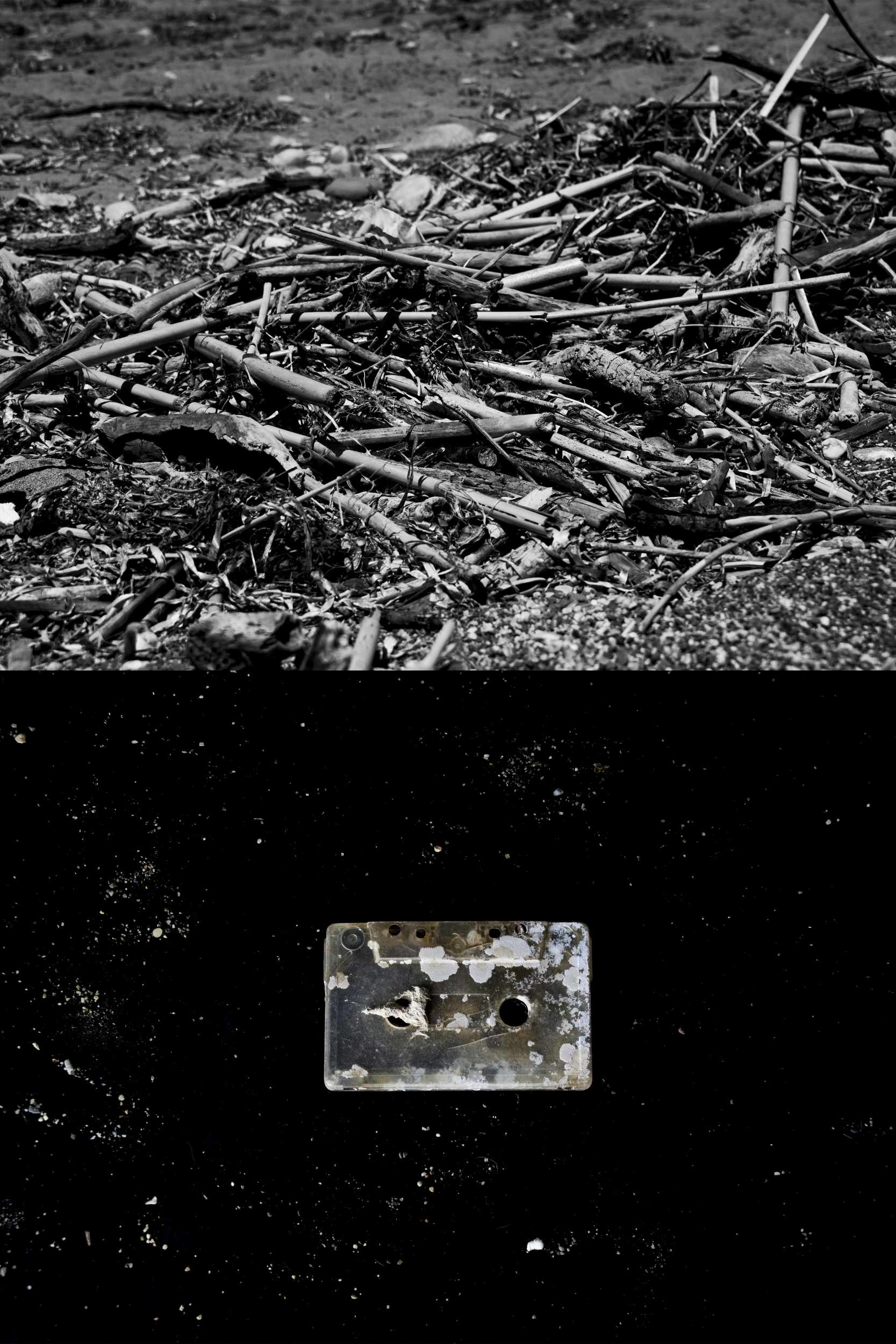
Restraint would mean that you do not build, or deploy, every model you are technically capable of building. That entire classes of capability wait. The Chumash do not take the spawning fish because if you take the spawning fish there is no fishery. We are currently taking the spawning fish. We train the models on the work of living writers, illustrators, musicians, and translators, then deploy those same models to do their work for less, until the people who replenish the commons can no longer afford to make the thing we harvested. And we let the output flood back into the water, filling the internet with synthetic text until the next model is trained on the exhaust of the last. The fishery is the human capacity to keep making the corpus. We are eating the part that spawns.
Responsibility is the one that undoes me, because it is the one my industry has structurally refused. A Chumash fisher answers, in their own body and their own lifetime, for the fishery’s continuation. A model builder answers to a quarterly earnings call. The bridge between those two positions is not a white paper. It is a practice, the practice the architects of abundance spent ten thousand years perfecting, in a tradition we have not yet begun to learn from in any way that matters.
I walked out of the Brazilian creek that afternoon changed in a way I have been trying to describe ever since. The creek was tending me, as I tended my attention to it, and neither of us was the primary party. The abundance of that afternoon – the Guapuruvu still flowering, the bamboo’s green interior light, the water clear enough to see the individual stones on the bed – was not a backdrop. It was what happens when something has been loved, across generations, by people who understand that love is a form of economics.
The machine I am building is made of the same question. It is also, more literally than I would like, made of water and burned carbon. The question is whether I am willing, in my own lifetime, to tend it like a fishery.
Words by Gustaf Palm
Gustaf Palm is an animist AI builder working towards regeneration of the more-than-human web of life. He instigates Heart of Ecovillages and Islands of Coherence, two projects that seek to weave networks of regeneration and conscious systems change into higher degrees of integration. He writes Animate Intelligence, a Substack at the intersection of animism, AI, and the ecology of everything that breathes, including the machines. A contemplative practitioner in the lineage of non-dual Shaiva Tantra, his artistic and written work has appeared through Dark Mountain Project, MOTH Ideas Hub, Wasiwaska Research Center, and Design Science Studio. He holds a residency in permaculture and ecovillage design at Schloss Glarisegg, and is of Brazilian, Swedish, and Swiss heritage, mostly nomadic.