Nearly half a million years ago, before the first cave painting, before any signs of language as we know it, before the first agricultural seeds were planted, early humans performed a ritual, perhaps the first, a funerary rite. In the limestone hills of northern Spain, bodies were given to the Earth in Sima de los Huesos, a vertical shaft 43 ft straight down into pitch darkness, along with a pink quartzite hand axe. For an early human, this axe would have been a precious tool; offering it to the dead marked a gesture for the absence. It was a ritualistic behaviour that surpassed the rational mind. For most of the 20th century, scientific consensus agreed that symbolic behavior emerged in humans not earlier than 100,000 years ago. But this site became evidence that ritual and reverence were much more ancient than first thought.
What is a ritual? It is a repetitive symbolic behaviour that lacks evident meaning. It’s an abstract gesture, shaped by possibilities and imagination. In a biological sense, rituals are also costly behaviours, as they require time and preparation, yet all our rites, seasons, and celebrations are marked with rituals. How could it be that even in our modern society, which often measures transactions, exchange, and meaning through productivity, rituals have survived?
The fragility of our bodies is held together by the strength of ritual. Repetitive ritual sequences can lower activity in the amygdala (the brain’s fear centre) and, by giving the nervous system a sense of control, help reduce anxiety. Rituals give structure to the unpredictable conditions of human existence, creating a sense of purpose amid overwhelming meaninglessness.
Even in the animal world, ritualised behaviours provide predictability, and they are also part of genetic memory. Complex animal interactions such as courtship dances, spider web construction, or fish spawning displays are innate to species. Richard Schechner, in The Future of Ritual, proposed the evolution of rituals in the form of a ritual tree, which shows that, at different evolutionary scales, he considered ritual in non-human animals such as incest to take the form of genetically fixed (insects, fish), fixed and free (birds and mammals), and social rituals (primates).
Some rituals begin with a kiss: when the Kissing Gourami freshwater fish encounter each other, they engage in a lip-locking greeting ritual. By pressing their lips together, they reckon each other’s strength and mark territory without resorting to tissue-damaging aggression. Even though this is not a romantic gesture, the kissing ritual creates appeasement and familiarity over violence. In some toads and frogs, the ritualistic pitch calling discloses size. The playback of low-pitched calls discourages smaller males from entering battle with a larger male when mating. It’s an honest cue, since creating a lower-pitched call requires a larger body. Here, rituals become a part of knowledge, keeping the secrets of fertility.
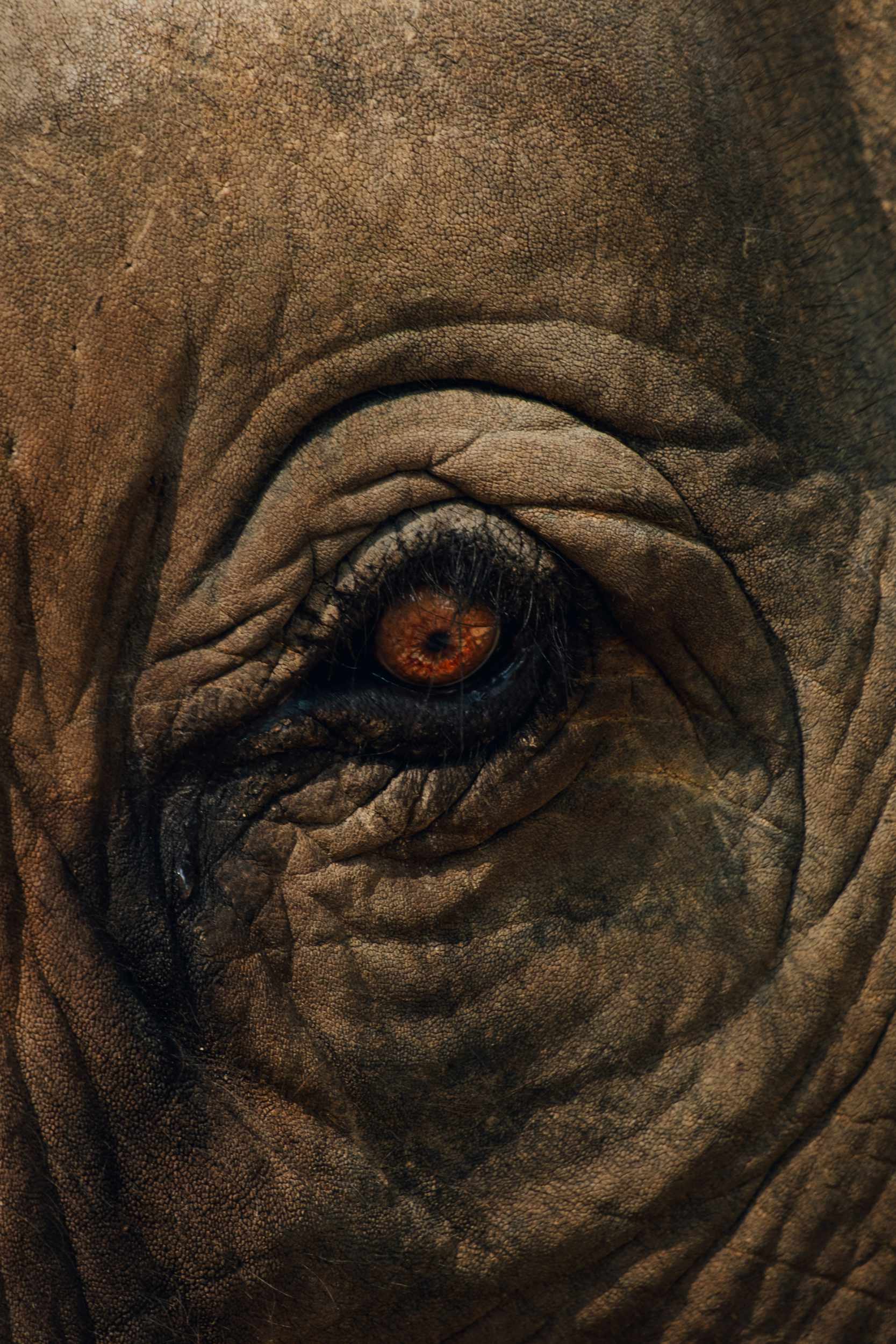
Elephants are the only non-human animals that might perform something similar to funerary rituals, covering their dead with soil and vegetation. Joyce Poole has observed that they extend their trunks over their dead companions, moving across the lower jaw, the tusks, and the teeth, the parts that would have been most familiar in life and most touched during greetings. When our own ideas of symbolic meaning, religion, and spirituality are deeply entwined with the world of our dead, other animals become a portal to this understanding.
Understanding the human condition and our own spirituality is an enigma, but observing behaviours that might signify something similar in other species could be humbling, reminding us of our place in the web of life. In 2016, researchers in West Africa observed that chimpanzees often visit specific trees that seem to have remarkable meaning for them. Upon reaching these trees, they will stand upright, jump, scream, and drum on their hollow trunks in a state of ecstasy. But what made this observation even more puzzling is that chimps collect and carry rocks and stack them at the base of these trees, resembling the cairns humans place at their sacred sites. Could this be some form of spirituality?
We might not reach any definite answers; meaning changes, and we live in a continuum that evolves and unveils itself with time. Meanwhile, the world is hanging by some invisible thread as we move across the dark universe; to be overwhelmed by existence is part of both its madness and magic. What is holding us together through such unbearable unpredictability? Perhaps a gesture, perhaps a song, and reaffirming rituals accompanying us all along.
Words by Priyanka Singh Parihar
Founder and EIC
Priyanka Singh Parihar is a BIPOC writer, curator, and art director who explores the connection between humans and nature, seeking new ways of existing. Hailing from a rural farming community in India and now residing in Milan, she observes the world through two distinct cultural perspectives: East and West, rural and urban.
Her work with Planted Journal began during a period of severe depression and eco-anxiety. Through creative practice, she found a path to healing. With a history education in Delhi, which provided her with critical and academic tools, and a master’s in fashion styling in Milan, where design, fashion, and aesthetics have shaped her, she is now dedicated to applying her experience to the field of climate justice.