Sacred Ecologies: Artists on Land, Spirituality, and Climate | Fernanda Liberti
At a moment when climate change is most often articulated through data sets, political frameworks, and scientific research, Sacred Ecologies begins elsewhere—quietly and with intention. It turns towards cultures, towards memory, towards the invisible threads of our relationship with the natural world. It asks what it might mean to understand ecology not only as a system to be managed but also as something lived, felt, and, in many contexts, revered.

Bringing together a group of visual artists from different continents, the project traces how land, spirituality, and cultural belief intersect within contemporary practice. Through a series of in-depth interviews, each artist reflects on how their work engages with inherited knowledge systems, ecological fragility, and the ongoing negotiation between past and present. These are not simply narratives of environmental concern, but of survival—of how communities, histories, and spiritual ecology endure and adapt under conditions of environmental and cultural threat.

Furthermore, across four online sessions taking place between July and September 2026, members of our creative community will have the opportunity to engage directly with Fernanda Liberti, Alvin Ng, Gui Christ, and Lisandro Suriel, artists whose practices challenge extractive ways of seeing and offer alternative perspectives on our relationship with the natural world. These workshops offer a space for skill development through artist-led encounters, combining presentations, open discussion, and guided exercises to engage with the ideas, methods, and processes behind long-term artistic projects.
Spirituality, culture, and ancestral belief are not separate influences in my relationship to climate, as they are the foundation of it. My understanding of the environment is shaped by inherited ways of relating to land and water, not as abstract ideas but as lived ones, passed through generations. Because of that, I do not see climate as an isolated issue, but as part of a larger imbalance in how we relate to what sustains us.
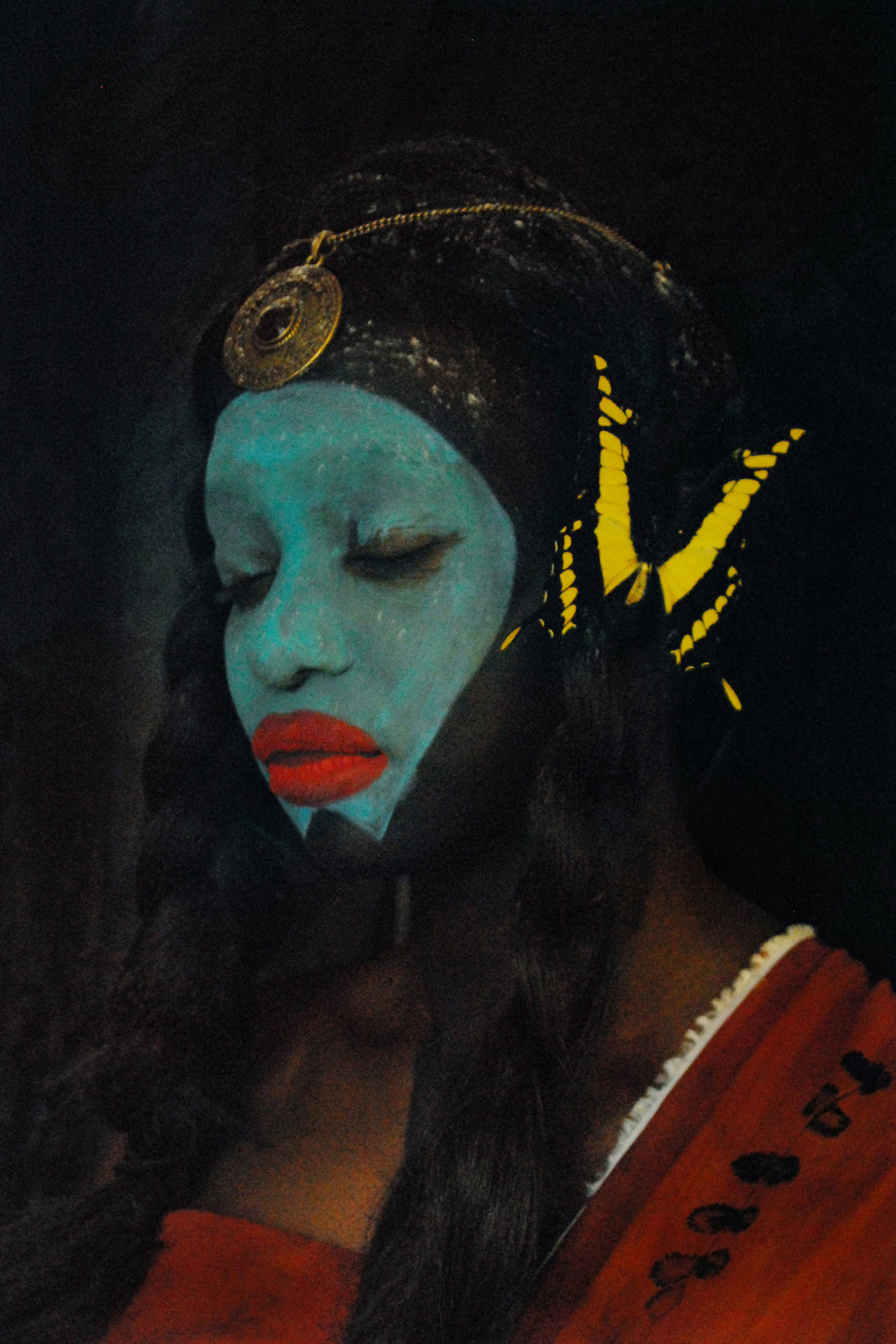
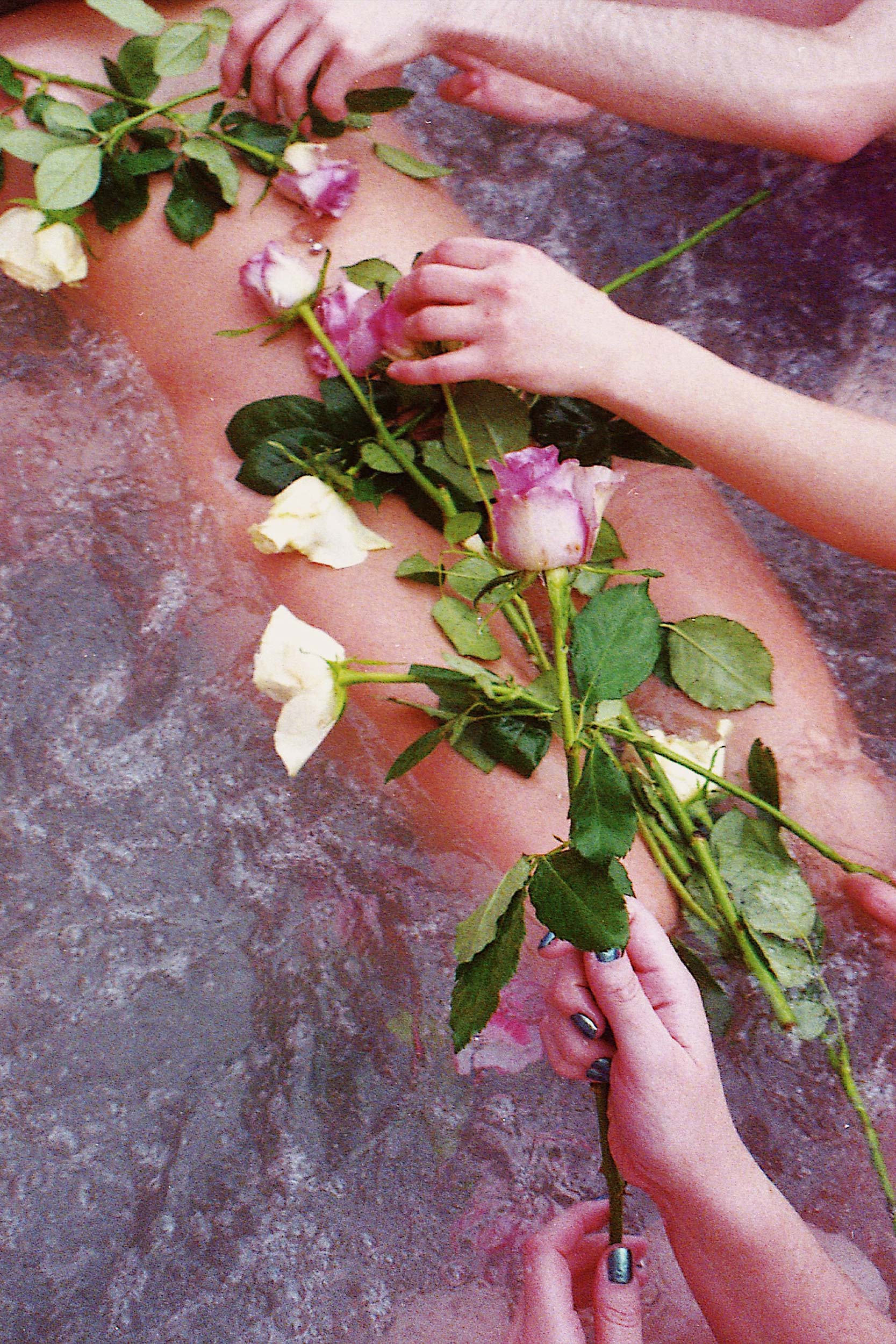
Fernanda Liberti is a Brazilian artist working with photography and video. Growing up in Rio de Janeiro, she was surrounded by the rainforest and the beach while also navigating the rhythms of a bustling city. This tension between the natural and the urban world recurs throughout her work, which spans photography, video, and collage, inviting viewers to immerse themselves in layered realities. Her projects explore post-colonial experiences, including the roles of people of colour, women, and LGBTQ+ communities, while investigating our relationships with ever-shifting environments.
In 2013, Fernanda moved to London to study Photography at London College of Communication (UAL), graduating with honours and receiving a Best in Show award for her series FFF. She continued her studies at the Royal College of Art, earning an MA in Photography in 2022, with research focused on the Tupinambá capes. Her work has gained international recognition, including selection as a Dior Laureate, the British Journal of Photography International Photo Award, the Portrait of Humanity, and the Deloitte Photo Grant in 2023 for her ongoing project Dust From Home. She is also an associate lecturer in Photography at the University of the Arts London.
Virginia Melodia: How do spirituality, culture, and ancestral belief impact your relationship with climate and environmental perspectives?
Fernanda Liberti: Spirituality, culture, and ancestral belief are not separate influences in my relationship to climate, as they are the foundation of it. My understanding of the environment is shaped by inherited ways of relating to land and water, not as abstract ideas but as lived ones, passed through generations. Because of that, I do not see climate as an isolated issue but as part of a larger imbalance in how we relate to what sustains us. It shifts my perspective away from seeing environmental questions as purely technical or scientific problems and more as relational ones about disconnection, responsibility, and how we position ourselves in the world. My work is a way of engaging with that and of reconnecting with those ways of caring, knowing, and relating.
Virginia: In your cultural context, how is the natural world understood as a resource, ancestor, spirit, or something else, and what does responsibility to land, community, and future generations mean within your belief system?
Fernanda: For me, they are all three: resource, ancestor, and spirit. Growing up in Brazil in a deeply spiritual matriarchy on my mother’s side, those concepts were all intertwined. I am part of an Afro-Brazilian religion and belief system in which we see no distinction between spirituality, community, land, and nature, a cosmology that is also shared with many Indigenous cultures of my country. For me, there is no way of taking care of our spirit without recognising and taking care of the different systems around us, which also means understanding responsibility as something collective and continuous, not individual, a duty of care, respect, and reciprocity with what sustains us. I see the environment as a living entity, filled with different spiritual manifestations. In terms of future generations, that responsibility is also about continuity. I am in love with our planet, and I want future generations to be able to experience some of the same things I did: a tropical storm in a rainforest, swimming freely in the sea with animals, and being in harmony with the entities and winds around us.
I am part of an Afro Brazilian religion and belief system in which we see no distinction between spirituality, community, land, and nature, a cosmology that is also shared with many Indigenous cultures of my country.
Virginia: How does your artistic practice engage with ecological concerns, either directly or indirectly, and can you speak about specific rituals, myths, or spiritual practices that influence your work?
Fernanda: In a way, it is quite challenging for me to pinpoint a specific spiritual practice because I grew up inside a big mix of rituals and beliefs, from Afro Brazilian religions to Christianity and Sufism. My upbringing was a kaleidoscope of spiritualism. My mother owned a holistic clinic at some point, is a Reiki healer, and has the strongest faith I have ever seen. This influences everything in my worldview and how I create work. Because of that, my artistic practice engages with ecological concerns in a way that is both direct and indirect, especially in relation to the environment and post-colonial structures of creating and relating to the land. In my country, working with the land was considered a punishment for many centuries, so it is important for me, and for all of us, to detach ourselves from this idea, as here progress has often been associated with the destruction of nature and the abuse of natural resources. My work exists in tension with that, trying to reframe our relationship to land as something spiritual, relational, and alive. Before every trip or artwork, I consult with my Babalorixá and we listen to what the entities are communicating, and sometimes it requires rituals and offerings I cannot talk about, but that guidance is part of how the work takes shape, including how I approach the land itself.
Virginia: How do you navigate the tension between culture and contemporary environmental crises, and how do you see the role of art in the era of climate and ecological crisis?
Fernanda: I do not think that tension is something to resolve, instead it is something I exist within. I come from a context where a deep spiritual relationship to land exists alongside a history of exploitation and disconnection. We used to live in harmony with nature before colonisation, and that rupture still shapes how we relate to the environment today. So there is a constant contradiction between inherited ways of relating to nature and the realities of contemporary environmental crises. For me, navigating that tension is not about choosing one side, but about staying with it and understanding what it reveals, especially the gaps between how we live and what we know. There is also a question of how to return to those ways of relating in a contemporary context, without romanticising them or pretending we can go backwards. I see art as a space where we can imagine what this future moving forward could look like, and where that tension can exist without needing to be simplified. It allows for other ways of engaging with environmental questions that are not only scientific or policy driven, but emotional, spiritual, and relational. My work is a way of holding those contradictions, questioning dominant narratives, and opening space for different ways of relating to land and ecology.
I see art as a space where we can imagine what this future moving forward could look like, and where that tension can exist without needing to be simplified. It allows for other ways of engaging with environmental questions that are not only scientific or policy-driven but also emotional, spiritual, and relational. My work is a way of holding those contradictions, questioning dominant narratives, and opening space for different ways of relating to land and ecology.
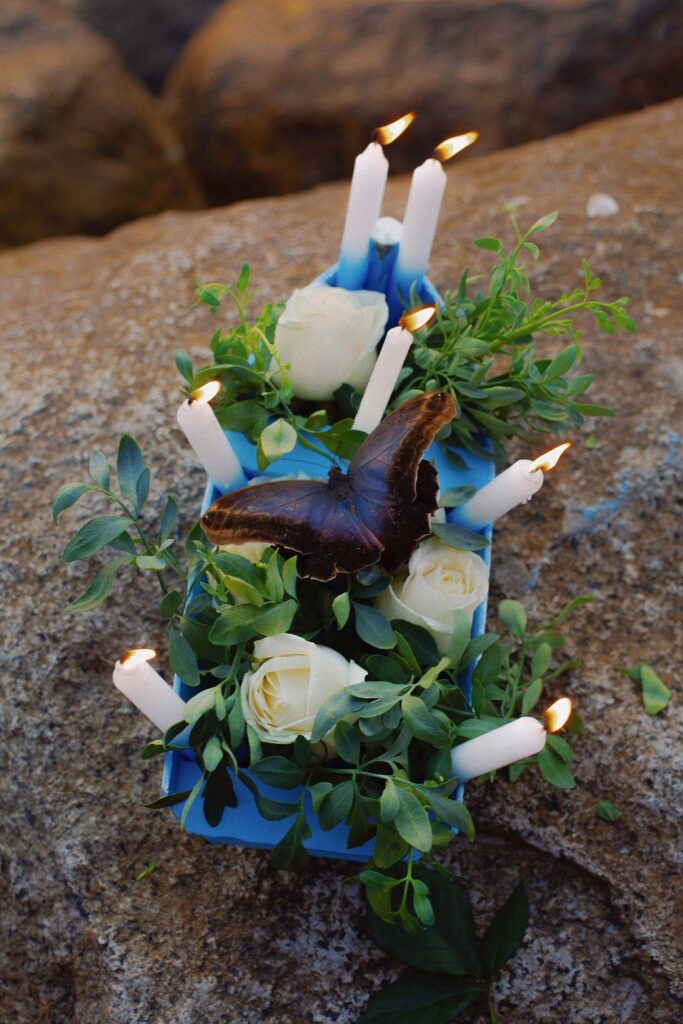
Virginia: What can spiritual or cosmological worldviews offer that scientific or policy driven climate narratives often overlook?
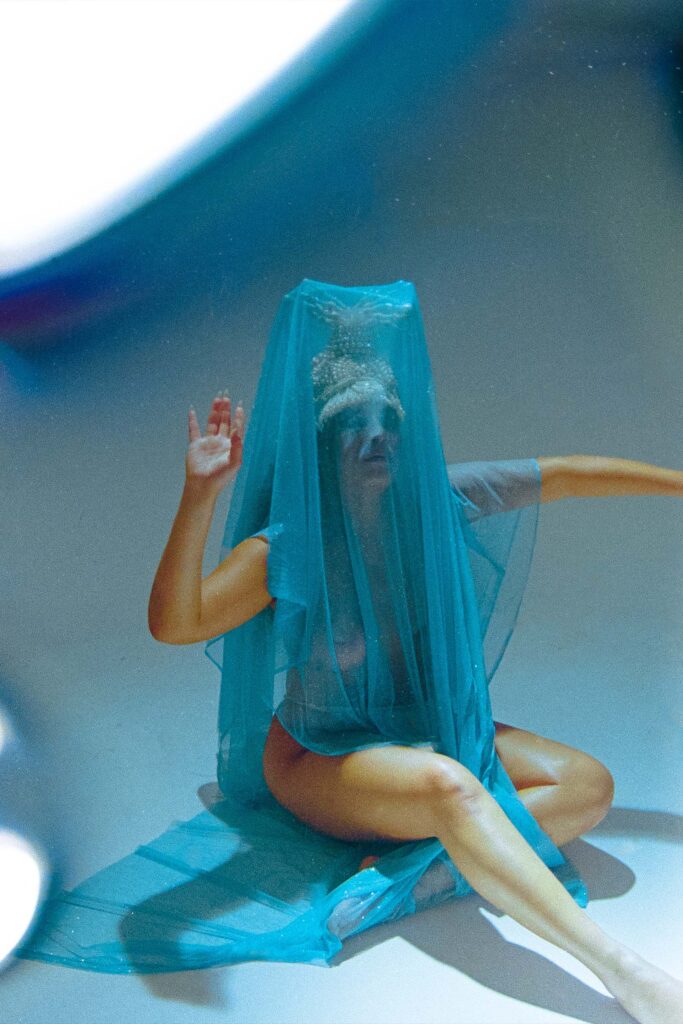
Fernanda: In the West and the Global North, people see ecology as a separate entity, as another item on a list of economic and political subjects. Through the lens in which I was raised and the way I experience the world, we understand the earth and nature as living entities that we must protect in the same way as humans. Science does not account for the spirits in the forest and their enchantment, or the ones in the waters, so it also fails to understand that those powers are above us and how much they can actually influence us. What human can stand against the arrival of a storm or a massive wave crashing on them? If that happens in the West, we think about logistics, prevention, and how to predict and prepare for new storms, without realising that respect and connection with the environment and those spirits are the biggest protection we need. For example, in Brazil we have an institute that manipulates the weather, not cloud seeding, actually weather changing, and it is as real as any science. And, interestingly enough, the first person to hire their services was Margaret Thatcher. Between the earth and sky, there are many layers of life that science or politics do not reach.
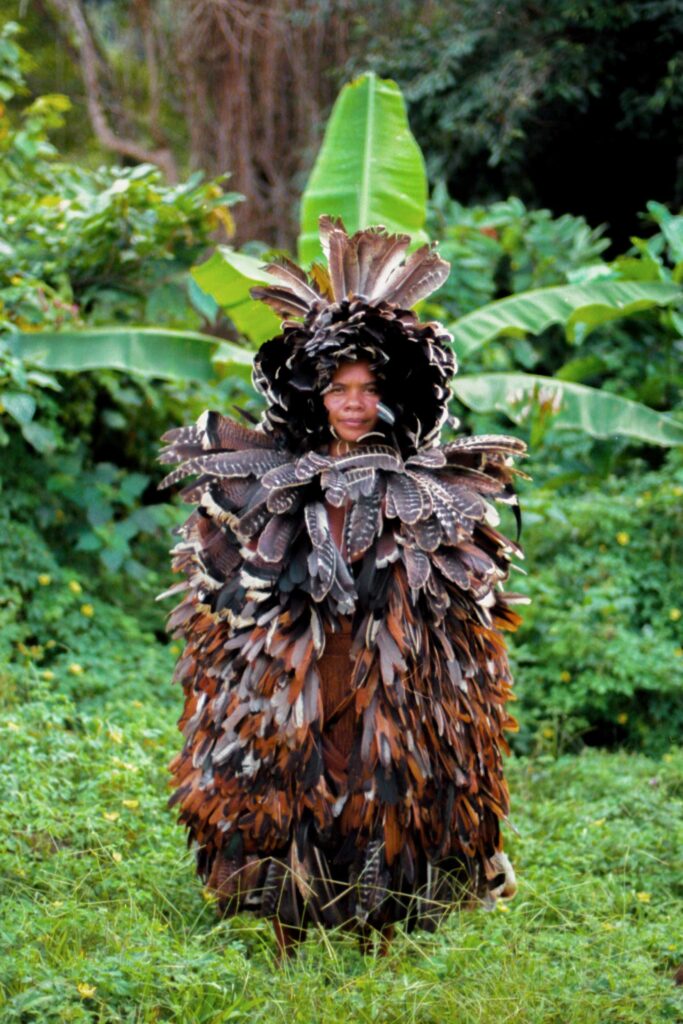
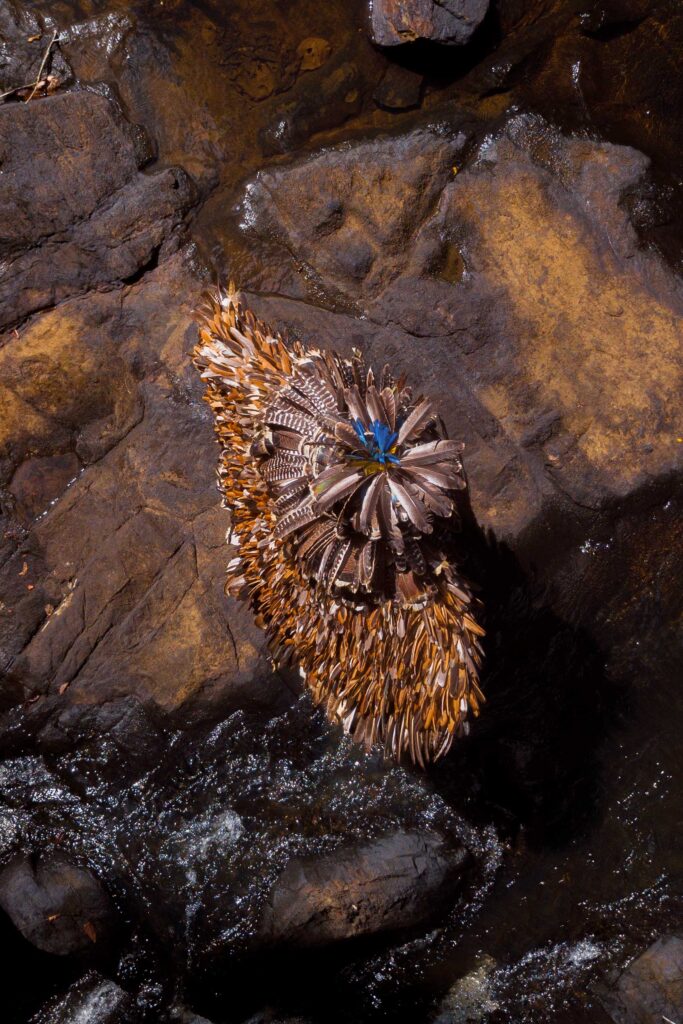
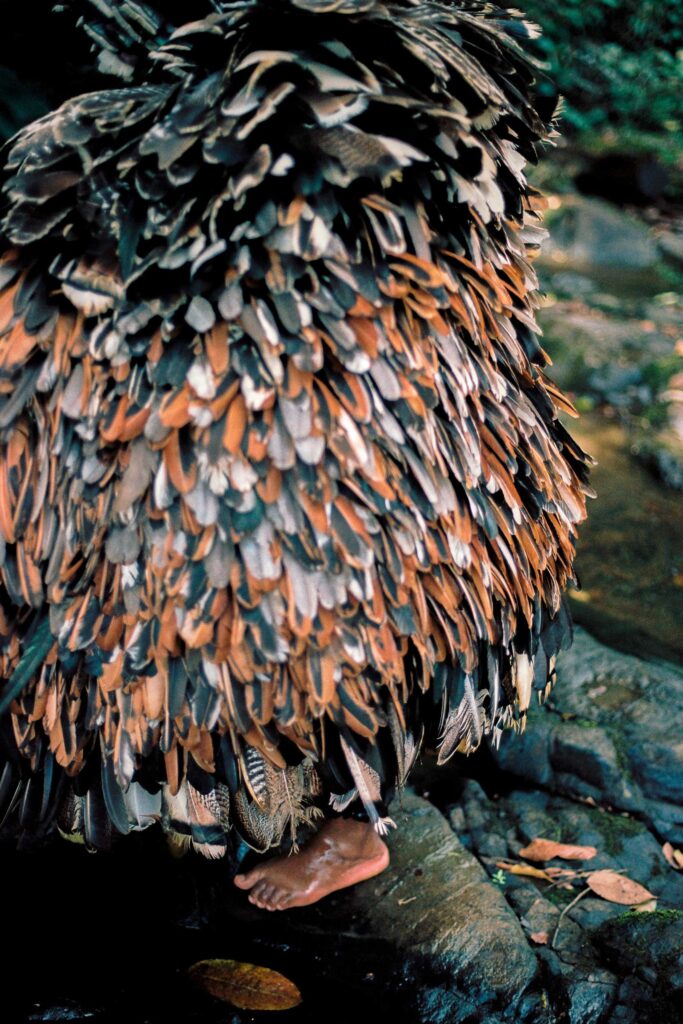
Virginia: Your work often unfolds through close, embodied encounters with materials and techniques. Could you share how the process of learning from or alongside Tupinambá feather work has shaped your sense of time, care, and artistic responsibility?
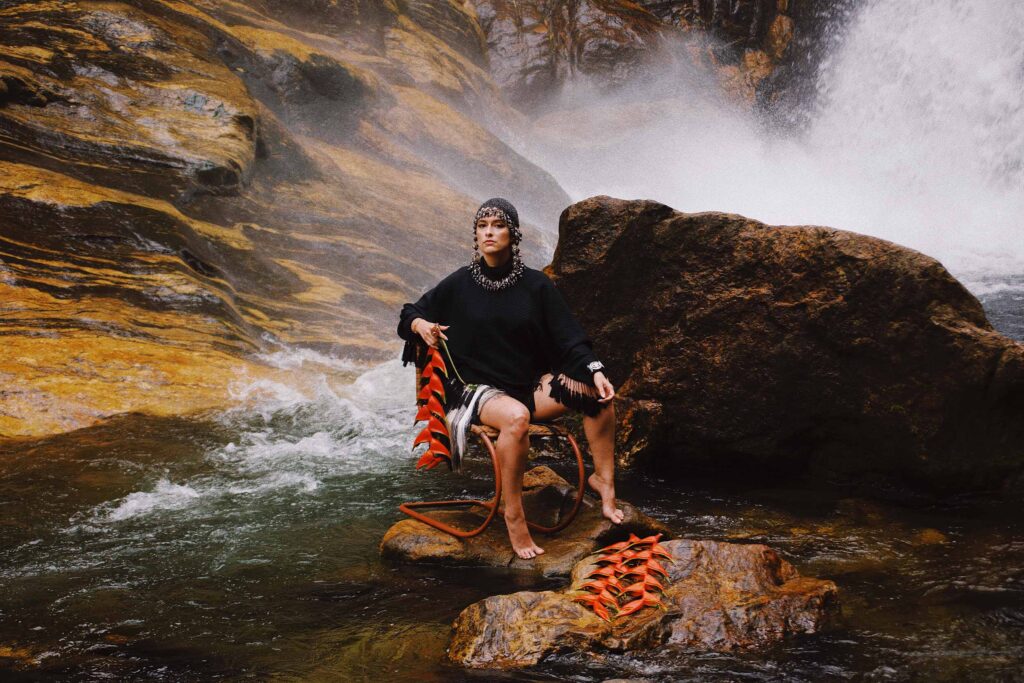
Fernanda: I always say I did not choose to do this project, the mantle chose me. It is incredible because I felt a spiritual calling towards it years before Glicéria Tupinambá had managed to craft the capes again, the first person to do so in centuries. I had many signs throughout the process, which led me to believe I was in the right place at the right time: people who would show up in my path, whispers in the wind, songs that would play on their own. In my career, I had worked with many diverse communities, but this was my first time working with an Indigenous community in my own country. At first, I was quite reserved, as I wanted to be respectful, but the moment I arrived there, Glicéria whispered in my ear that I was at home, and it never felt otherwise. I have built strong relationships not only with her but with many people from her family, so in that sense the responsibility felt even bigger. I was not only talking about people I met, I was talking about people I love. I spent around four years on this project. Glicéria spent decades, so it also taught me that the time of the spirit and of creation are not connected with human time or with capitalism, where we are forced to be constantly producing. Nature and art have their own tempo, and it is something we must learn to respect.
Between the earth and sky, there are many layers of life that science or politics do not reach.
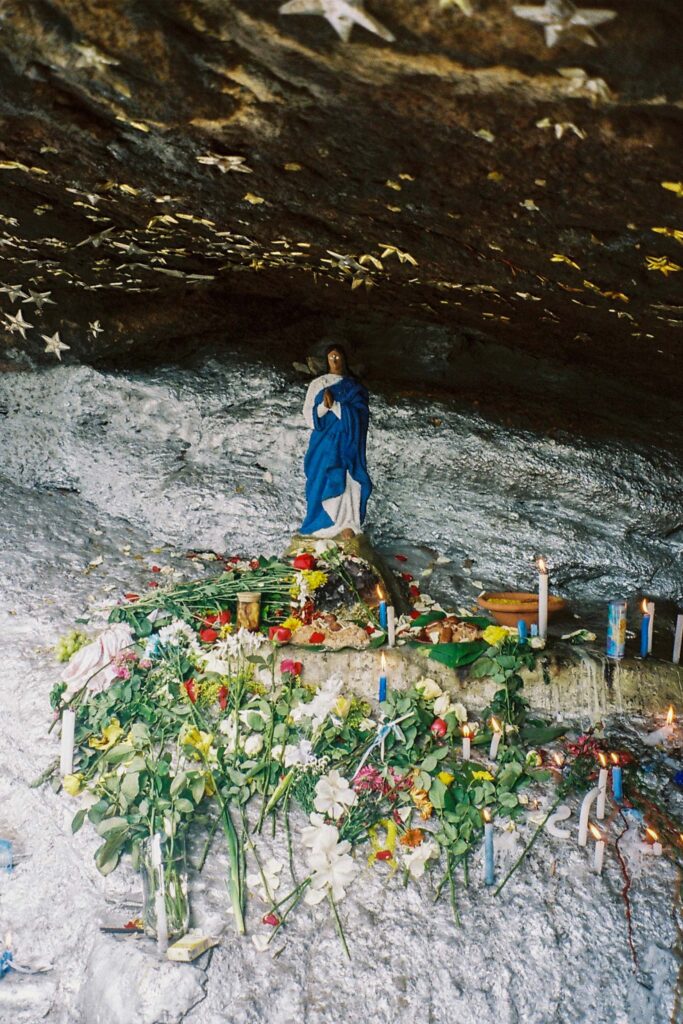
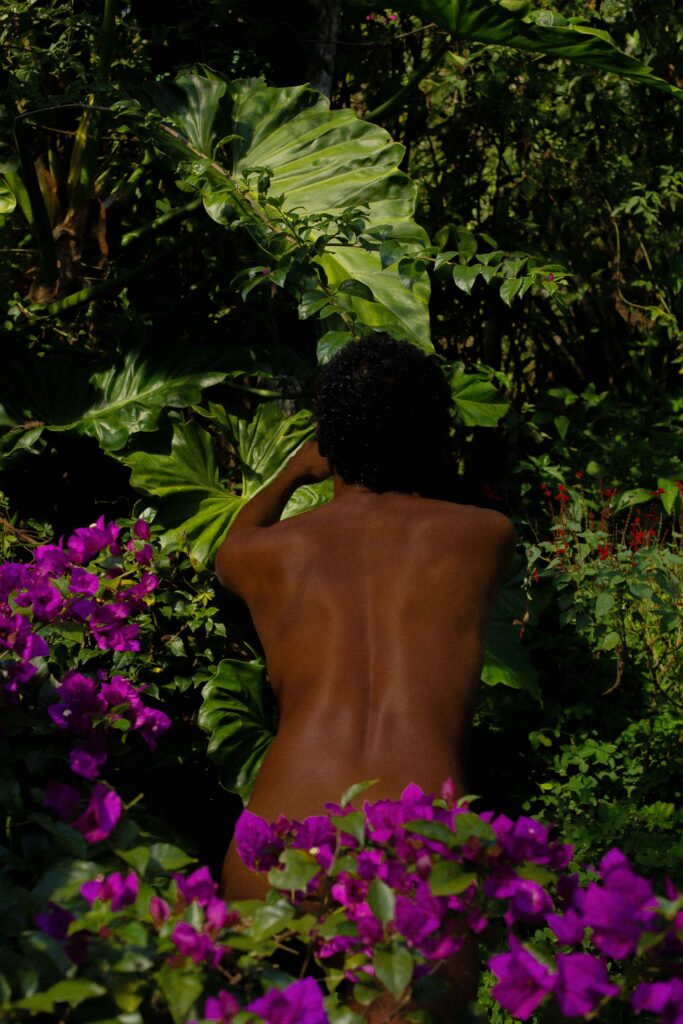
Virginia: There is a strong sense of listening in Feather by Feather: Dancing with the Tupinambá, to histories, to materials, to more than human presences. How do you approach this act of listening, and what does it ask of you as an artist working across cultural and ethical boundaries?
Fernanda: I have learned so much from the Tupinambá community, so listening was a very important part of the process. They are not only incredible people to meet, but also amazing storytellers, especially considering that oral storytelling is how their culture has survived for so many years. When I first went there, I spent the first days hardly taking any photos. The most recognisable images from the project came on the last day, when I felt I had experienced at least a bit of the community and was able to capture their stories in a way that felt personal, because in a way it really was. I know a lot of artists who work in what I call extractivist photography, in which they go somewhere, take what they find interesting, and leave without returning, which is the opposite of how I want my work to exist in the world. I want my work to engage and empower the communities I am working with, it must be a dialogue. Every time I see Glicéria, she mentions how I would throw myself in the dirt to take the best angles and shots, so although I was an outsider, I approached this the same way I approach everything, by fully throwing myself in. That experience also shaped how I understood my role within the project. Many times I was travelling and showing our work, so I always had the concern of giving the community the space and recognition they deserve. In this project, I saw myself as a kind of vessel, bringing my own artistic vision and experience combined with my spirituality while being in dialogue with the Indigenous cosmology and ways of knowing that were shared with me. There was so much systemic and historical violence towards their community that from the beginning I wanted to take on the role of a facilitator, of an ally, rather than someone who speaks over them or represents them. Listening meant stepping back, being attentive, and understanding what was being offered, what could be shared, and what needed to remain protected. Working in that way asks for a constant awareness of boundaries, trust, and responsibility. It is not only about listening to people, but also to histories, to materials, and to presences that are not always visible, and accepting that not everything is mine to interpret or translate. When I returned to the community for the first time, they were doing an important and sacred ritual where only Indigenous people are allowed to take part, except for me and Augustin, a long time collaborator of Glicéria, who were invited as special guests for being important allies to the community. That was the moment I fully understood that the respect and trust I had for them was mutual.
Virginia: In engaging with feather work as a living practice rather than a static tradition, how do you navigate questions of continuity, collaboration, and authorship within your work?
Fernanda: Engaging with feather work as a living practice means understanding that it does not belong to the past; it exists in the present and continues to evolve. Working alongside the Tupinambá community made me very aware of that continuity, especially through Glicéria’s work in bringing the mantles back after centuries. It is not about preserving something static, but about being part of an ongoing process that carries history, spirituality, and knowledge forward. Because of that, collaboration becomes central. Nothing in the Tupinambá community is solo, so this would not be different. The project also would not be possible without the help of my friends Pedro and Alexandre, who believed in my work since the beginning and not only encouraged me to go forward, but went with me on the first two trips to Bahia. In both trips, Pedro drove more than 1200 km on his own. So I never saw this project as something I was doing alone, but as something that existed through relationships, through trust, and through what was shared with me over time. My role was to be present, to listen, and to work in dialogue rather than impose a narrative.
Engaging with feather work as a living practice means understanding that it does not belong to the past; it exists in the present and continues to evolve. Working alongside the Tupinambá community made me very aware of that continuity, especially through Glicéria’s work in bringing the mantles back after centuries. It is not about preserving something static, but about being part of an ongoing process that carries history, spirituality, and knowledge forward.
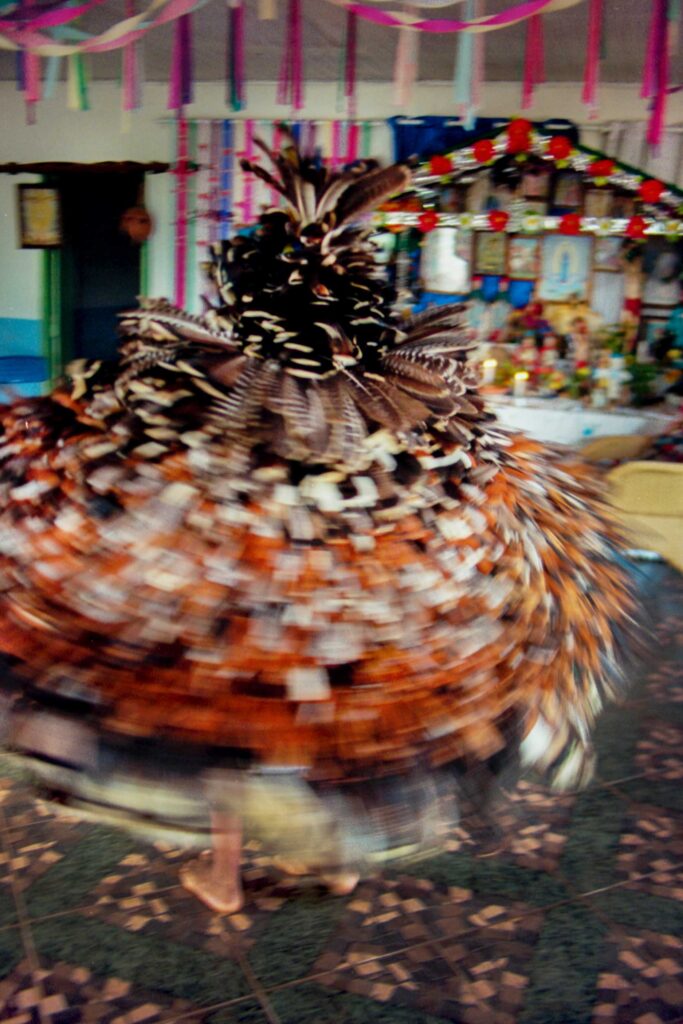
Virginia: Your project touches on the intimate entanglement between bodies, human, animal, and environmental. How has this shaped your understanding of vulnerability, reciprocity, and care in the context of ecological precarity?
Fernanda: Working with entanglements between human, animal, and environmental bodies made me realise how interconnected everything is, and how vulnerability is something we all share. It is not a weakness, but a condition of being alive. We are all exposed to each other, dependent on each other, and affected by the same forces. That also changed how I understand reciprocity. It is not only about giving something back, but about recognising that we are always in relation, and that what we take, we must also care for. Especially in the context of ecological precarity, where so much has been built on extraction and destruction, it becomes important to think about how to exist in a more balanced and respectful way. Care, for me, comes from that awareness. It requires time, attention, and responsibility, not only towards people, but towards land, materials, and the spiritual presences that are part of the work. It is about understanding that nothing exists in isolation, and that how we treat one thing will always affect something else.
Virginia: Many of your works seem to hold space for both fragility and resistance. How do you cultivate this balance in your practice, and what role does tenderness play in responding to histories of violence and extraction?
Fernanda: Analysing it, I see this contrast in my work comes from being Brazilian. We are both very sensitive and very resistant people, and those two things exist at the same time. It is also who I am as a person. I can be very gentle and soft, but also a warrior, and that naturally comes into my practice. I was always uncomfortable with how my country has been represented in the media, often through violence or hardship alone. I am not a photojournalist in the sense that I do not have a commitment to capturing only an objective truth. I have the space to also work with beauty, with poetry, and with more subjective ways of seeing. Many of the people I work with, or who appear in my work, already face different forms of struggle or marginalisation, and are often expected to be strong and resistant all the time. Because of that, I want my work to also be a space where they can be soft, where tenderness is allowed, and where that softness is understood as a form of power. For me, tenderness is a way of responding to histories of violence and extraction without reproducing them. It allows me to approach difficult realities with care, and to create space for other narratives to exist. You can be political and still work with joy. In fact, I deeply believe our joy is resistance in itself.
Working with entanglements between human, animal, and environmental bodies made me realise how interconnected everything is, and how vulnerability is something we all share. It is not a weakness, but a condition of being alive.
Join Fernanda Liberti for Sacred Ecologies Study Club: Exploring Land, Ritual, and Care.
Drawing from her long-term research and artistic practice, Fernanda will share the process behind developing works created in dialogue with communities around the world, and how these encounters shape image-making, storytelling, and collaboration.
Through presentation, discussion, and reflection on specific projects, participants will explore how ideas evolve into artworks through listening, trust, research, reciprocity, and exchange. The session will also open conversations around spirituality, ecological awareness, ethics, authorship, and the responsibilities involved in creating work connected to lived histories, communities, and environments.
Rather than approaching artistic practice as an isolated act, the Study Club considers creativity as something relational—shaped by intuition, encounter, care, time, and attention.
Participants will gain insight into the realities of long-term artistic research, from initial intuitions and conceptual questions to the development of images, narratives, exhibitions, and collaborative processes.
Accessibility & Support
Most proceeds from ticket sales go directly to the artist.
For every 10 tickets sold, one free place is gifted to someone who may not otherwise have access to the opportunity.
The remaining funds support Planted Journal’s work amplifying culture, environmental awareness, art, community-led initiatives, and under-represented voices worldwide.
Interview by Virginia Melodia
Virginia Melodia is a storyteller. She tells stories through writing, poetry, photography and video. Her mission is to connect people with nature and our shared humanity. She wants to inspire others to consciously live and remain in the presence. She shares narratives that evoke a deep sense of connection and reverence for our planet and ourselves.
As a creative, Virginia loves shaping experiences that feel alive and draw people in. Growing up between languages and living in different countries opened her eyes to many ways of seeing, and taught her to value the beauty in every culture and viewpoint. She’s passionate in blending visuals and language into stories that speak to the soul. She looks for inspiration in the world as it unfolds around her—the honesty of nature, the intensity of human feeling, and the many layers of everyday life. She believes storytelling can help us understand one another, look inward with courage, and ignite positive change in the world.