


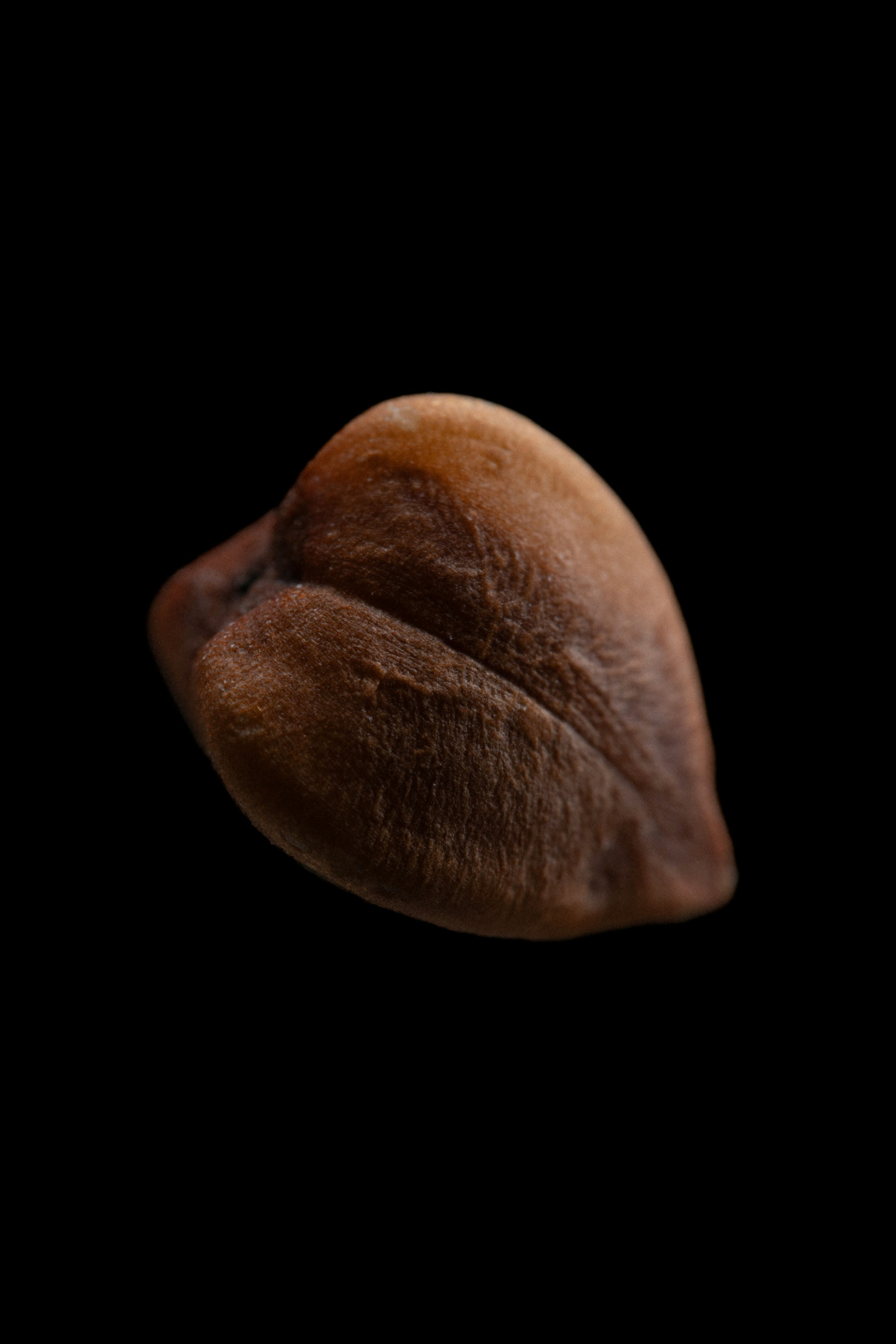
I named the two buckwheat plants ROM and REM after Romulus and Remus, the mythical twins of Rome. They were similar in size and appearance, and as my new bandmates, I needed to recognise them as equals. The names ROM and REM got more interesting when I learned that fasciculatum stems from fascis—a small bundle—to describe buckwheat’s distinctive clusters of leaves.
I planted seedlings of Eriogonum fasciculatum in my backyard last fall when I learned that California Buckwheat was known for being resilient in hostile situations. This was my response to a 2020 study proving that chronic lead pollution is pervasive in the soil of Santa Ana. Lead poisoning, which causes severe or fatal symptoms, is bundled with other fossil fuel economics that require paving over our entire city until only 4% of its land remains as green space.
After placing the seedlings in the dirt in a small patch behind my music studio, sprinkling in fungi dust for fertiliser, the buckwheat grew throughout the spring, extending strands of fresh green stems and deep root systems. This drought-tolerant perennial retains water, stabilises soil, and attracts pollinators while also embodying the superpower of bioremediation—the ability to decontaminate environments through organic materials.
Fasciculatum absorbs heavy metals, drawing pollutants from the ground and redistributing the chemicals through long, layered branches. Bioremediation is most effective through an entanglement of many species acting in solidarity together. The buckwheat’s root systems are now intertwined with mycelium, delicate threads of fungus in a symbiotic relationship to trade nutrients, accelerate compost, enhance photosynthesis, and encourage growth.
A mail-order testing kit helped me confirm extremely high levels of lead in the patches of soil where the buckwheat thrived with their mycelial kin, but within six months of planting, they were unexpectedly joined by new neighbours. Sowthistle started growing in the same patch, producing seed puffs that catch in the wind like parachutes, spreading widely for offspring to absorb toxins elsewhere. Tropical milkweed, called bloodflower for their vivid shades of red and orange, sprouted up through cracks in a nearby slab of concrete, where they would enrich the soil through a reciprocal relationship with Monarch butterflies wearing matching colours.
Mockingbirds, hummingbirds, finches, parrots, and doves swoop down into the garden constantly to enjoy an excess of nourishment and nesting materials. Cats, raccoons, possums, and squirrels also make a home on this land that is infected but still bountiful. No one exists in isolation; there are only revolving relations of constant exchange beyond any single being, countless patterns of life flourishing as a collective for mutual benefit.
Backyards like mine have become sites of struggle to maintain even a small measure of Earth’s biodiversity, and yet qualified workers with specialised skills have arrived spontaneously, without my intervention, showing up in service to a healthier community and a renewable economy. They are an organised force revitalising the land. They belong here.
Interspecies solidarity can coalesce for all kinds of reasons—like starting a worker’s union, or a band. Because they represented founders of this new multispecies backyard community, I named the two buckwheat plants ROM and REM after Romulus and Remus, the mythical twins of Rome. They were similar in size and appearance, and as my new bandmates, I needed to recognise them as equals.
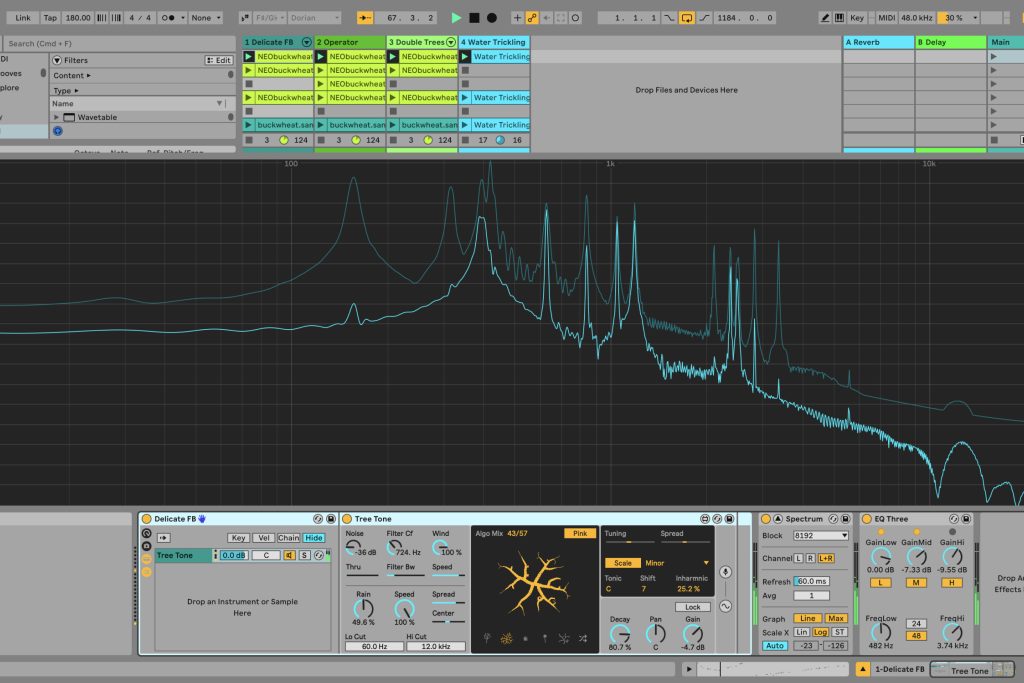
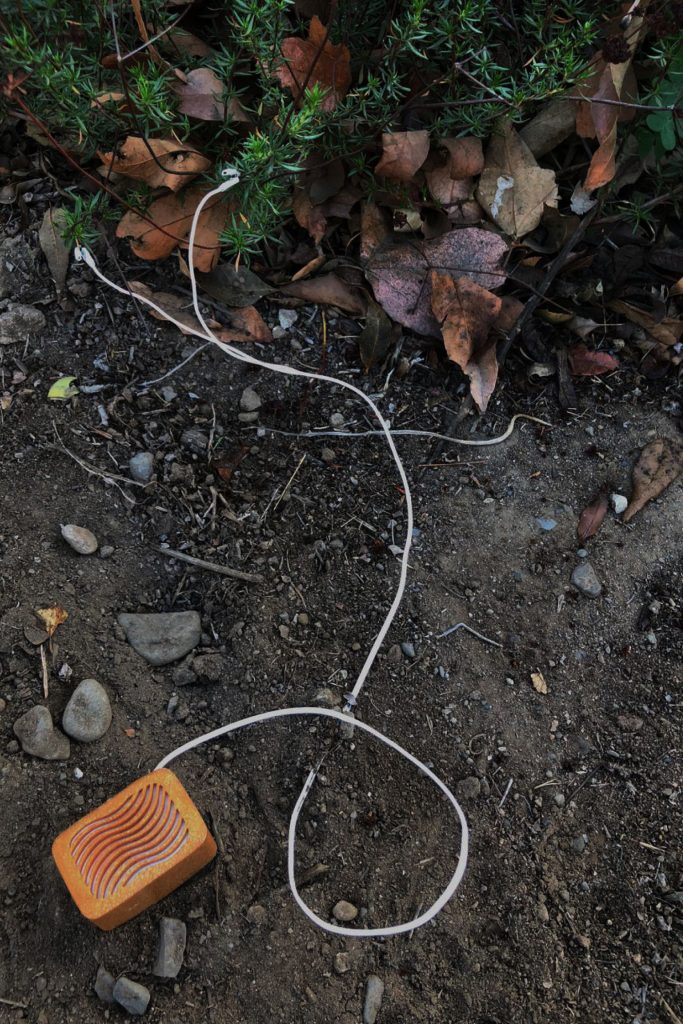
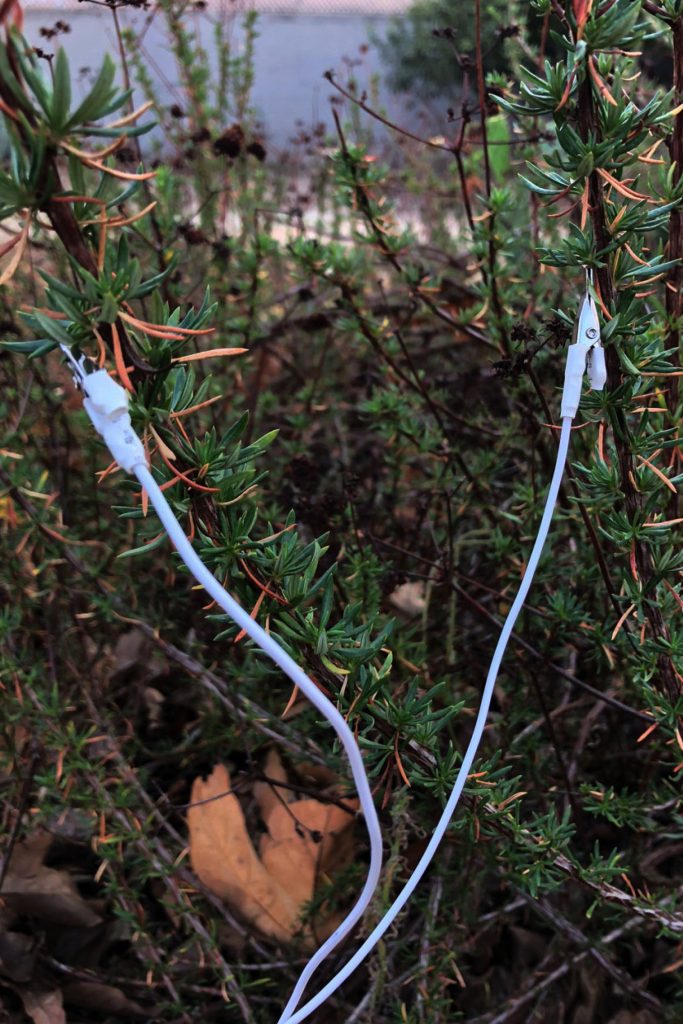
In addition to their transformative work cleaning up lead-infected land, ROM and REM are also musicians. Their side hustle is initiated through PlantWave, a device that converts electricity into sounds. One end of the tool has delicate sensors that are attached to leaves, while the other plugs into synthesisers or music software. As the electrical signals pulsing within their bodies are translated—first into data, and then into tones—the plants make music.
This collaborative art practice becomes a kinship ritual that syncs the rhythms of people and plants with digital technology. In my studio, PlantWave is linked to a customised sound system enabling ROM and REM to have their own distinct instrumental voices. One plant can use a virtual keyboard to play simple melodic phrases with long rests in between notes, while the other generates resonant soundscapes of twinkling ambient feedback.
When I play along on drums, we become a trio attuned to the sounds of bioremediation, listening intently to the dense ecology around and within us. As musical director, I carefully design sonic signatures for each plant, poetic impressions of their unique characteristics that reverberate across space. This can result in flowing streams of meditative tones or dissonant alarm bells signalling the wild violence of extreme weather and mass extinction.
ROM and REM operate as both a warning system and a solution for a stubborn problem, so they’re offered the capacity to sing with honest accuracy and innovative expression. Their clear melodies and ambiguous harmonies reflect the feeling of immersion in a garden, surrounded by abundance and danger simultaneously.
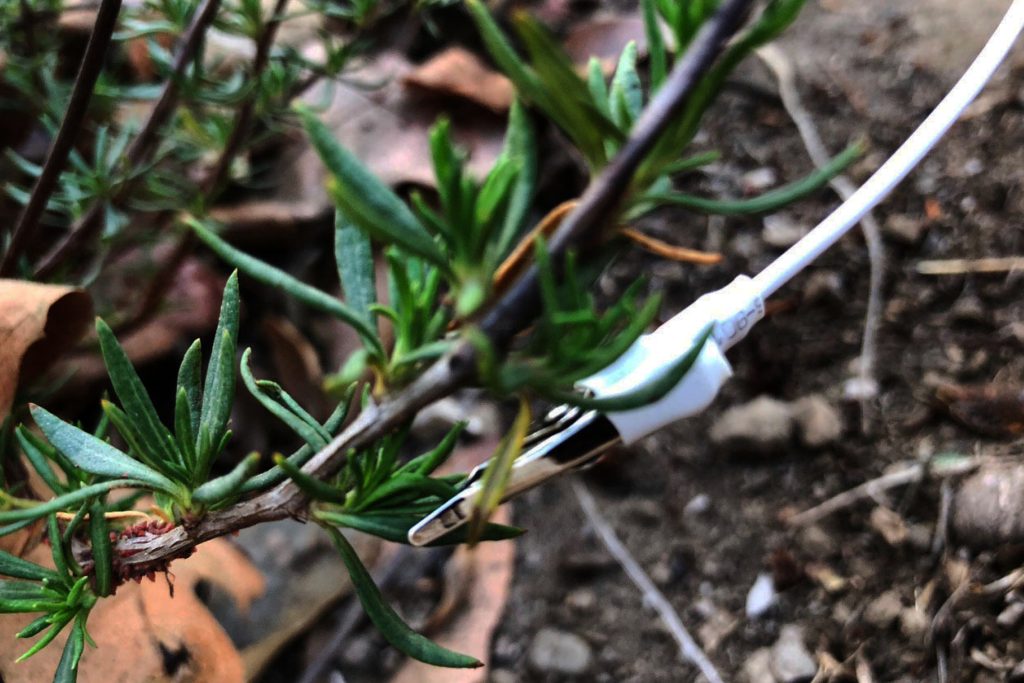
Plants move strategically and logically, their biology functioning through complex rhythmic responses to different types of stimuli in a dynamic environment.
Plants successfully adapted to life on Earth millions of years before any animals, including Homo sapiens. Indigenous peoples around the world have long known plants as wise living ancestors, while modern science has barely started to catch up. Darwin’s well-worn phrase “survival of the fittest” has often been misunderstood to signify the role of physical strength in evolution, but the evolutionary theorist originally meant fit as in adaptable, able to make smart decisions as individuals and species in a complex web of life.
Rather than dominance, cooperation is usually the most efficient route to achieve growth and mitigate loss. The pioneering work of J.C. Bose has led to the emerging study of plant intelligence, which documents their complex abilities to communicate through electrical and chemical signals. Plants move strategically and logically, their biology functioning through complex rhythmic responses to different types of stimuli in a dynamic environment.
The names ROM and REM got more interesting when I learned that fasciculatum stems from fascis—a small bundle—to describe buckwheat’s distinctive clusters of leaves. This word branched off into Latin languages as fasces, a specific term for the bundle of wooden rods symbolising the Roman Empire. Under Mussolini’s rule, these signature bundles appeared on the official seal of OVRA, the Italian police squads that became a model for the Gestapo in Nazi Germany.
Fascism sprouted up as a new word-virus to describe this phenomenon, but the shapeshifting fascis also split from the same linguistic roots into fascia: the flexible web of tissue that links muscles, bones, and nerves across the bodies of animals. A structural framework for the movement of complex beings, it can become stiff and inoperable when injured or inflamed.
By the summer of 2025, little pinkish-white flowers had blossomed on ROM and REM as Santa Ana was taken over by a militarised occupation. National Guard troops and Marines were deployed to support masked agents as they assaulted and kidnapped human beings. Masked men in unmarked vehicles continue to violently arrest and murder people, claiming to enforce the arbitrary lines of a nation-state, instead of honouring the fluid interactions of nature. Only sometimes identifying themselves as ICE or Border Patrol, these roving gangs are being met with nonviolent resistance from impacted communities, who have built rapid response networks to police the police.
The withering vines of fascism and fossil fuels are choking out the working class and afflicting every species, but governments and corporations can’t restrict everything. Imagination and dreaming are essential forms of work that empower movements to experiment, strategise, and create real responses to challenging situations.
Plants and music have the inherent potential to move minds, loosen bodies, open perspectives, explore possibilities. Small groups of diverse teams can demonstrate effective resistance, no matter how far underground their efforts may seem. Growing from the middle in every direction, the roots go deep and the branches reach far, continuously composting death and turning over new life. Boundaries dissolve between self and other, work and play, economy and ecology.
If plants can be labourers, artists, and climate activists, then what else can they be? What else can we all be?
If we listen closely, the dreams of plants are broadcasting up from the underground. Empires in decline are reckoning with the laws of nature while green is growing through concrete, bumping up the volume, declaring the presence of multitudes.
Imagination and dreaming are essential forms of work that empower movements to experiment, strategise, and create real responses to challenging situations.
Words by Greg Camphire
Greg Camphire is a musician, writer, and teaching artist based in Southern California who creates collaborative works with plants through electronic music production, live performances, videos, and essays that draw inspiration from surrealism and ecology, building on a foundation of percussion to unearth the sounds and stories of landscapes. He operates a multimedia studio and mobile soundsystem called Spooky Action Labs.


