

2.75 million years ago, in northern Kenya, early humans were shaping the first tools. Striking stone against stone, a force giving form to the imagination. Here, between mind and materiality, lie the origins of language, culture and beauty. Gathering rocks from the riverbed in the Turkana Basin, hominins carved tools from stones for 300,000 years. Before this, the stone tools were made and forgotten, lost into thoughts of nothingness. But this was probably the first time in human history that material culture was retained in memory. Some form of language emerged here, as knowledge was passed through gestures and utternances, a safekeeping for generations to come.
Geological evidence suggests that these tools might have helped humans survive climate change. During this period, the lush wetlands turned dry, semidesert. While other animals were forced to migrate or evolve, humans survived through creation. Tools became extensions of the body and its possibilities, extracting marrow from the bone and digging roots from the ground. Over the course of ten years of archaeological excavations at Namorotukunan, around 1,300 tools were recovered. the deeper the excavation went, the older the tools. The Earth held millennia of hand gestures, waiting to be found in another space and time.
Objects are also containers of abstract spiritual experiences. Materials carved from meaning give tangible form to emotions, a solid form to consciousness, and something to hold onto when invisible forces far bigger than our being shift. Among such oddity, religiosity and faith shape the psyche.
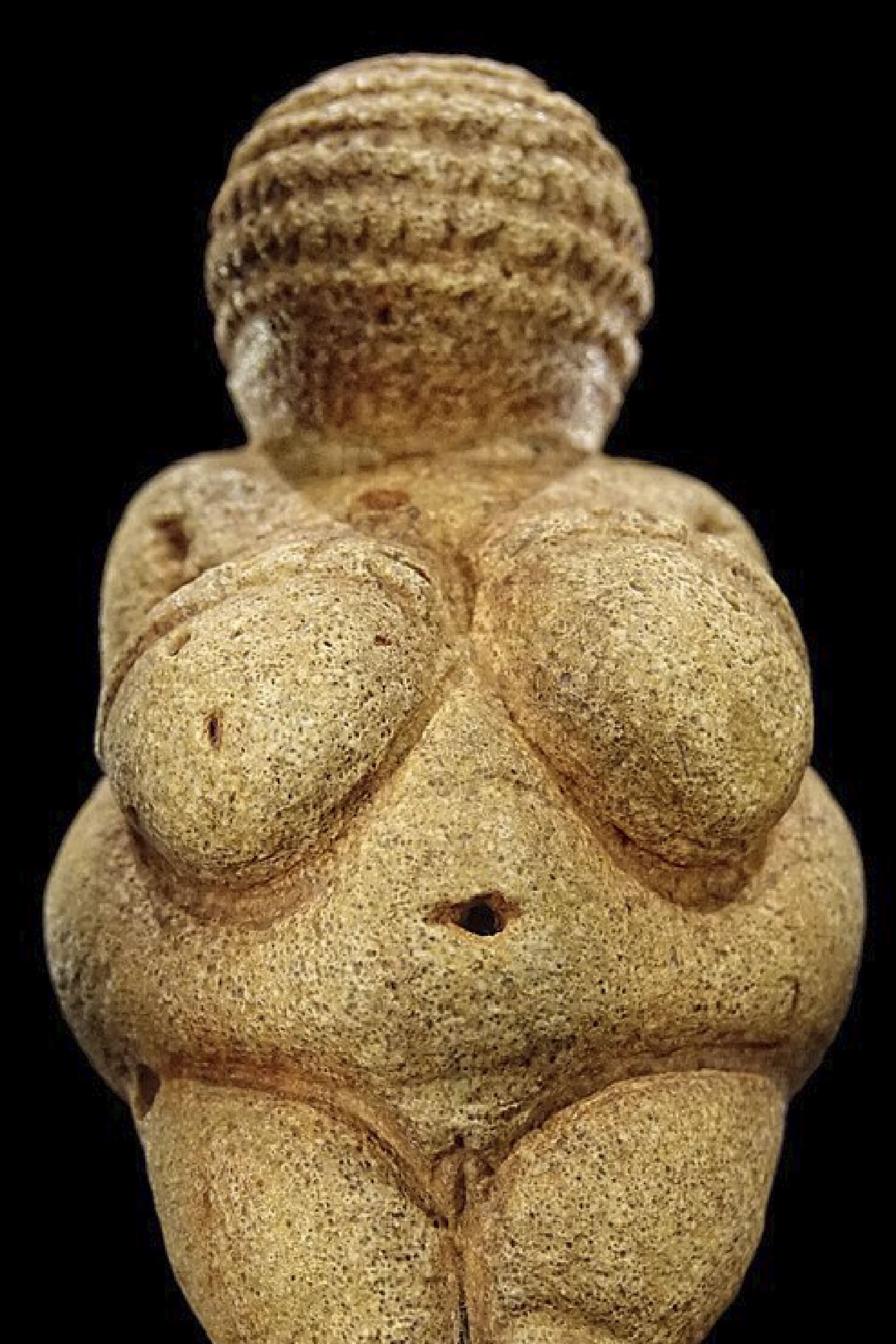
Around 28,000 years ago during the Last Glacial period, severe cold tested the limits of human imagination and creativity. Across Eurasia, voluptuous Venus figurines, with exaggerated breasts, big buttocks and fat rolls, were carved from mammoth ivory, clay and limestone. In an age of such scarcity, the full-bodied figurines were a contradiction. While there are different interpretations of their purpose and meaning, research suggests that these figurines may have been a response to climate change. As the glaciers grew and food became scarce, women with obesity might have had better chances of surviving childbirth and breastfeeding. So, these figurines might have been worn as amulets and passed from grandmother to mother and mother to daughter. For women of childbearing age, the embodiment of the accentuated female form may have served as a talisman of fertility and survival. And the feminine form also changed with the changing Earth; closer to glaciers, the sculptures were more accentuated, and the body size proportions were greater when the glaciers were advancing, whereas the sculptor became a learner when the climate warmed and glaciers retreated. Women and Earth, mirrored each other.
Around 11,700 years ago, at the end of the Last Glacial period, the Levant warmed; lush woodlands of wild oak and pistachio spread across the landscape. Yet nothing in nature is permanent; a severe cold and dry period known as the Younger Dryas struck the region’s hunter-gatherer communities. The Natufians, adapted to these changing conditions. They lived in settlements close to the river. Their society was the earliest form of agricultural society, and its advent was marked by an object. The Natufian sickle was used to harvest wild plants and with the times, these sickles became more intricate, engraved with geometric patterns and animal figurines, this is also the first evidence of artistic expression on everyday tools. While it is hard to decipher why the sickle was decorated, nonetheless it shows human affinity for beauty, pleasure and sensuous experience.
In the Stone Age, objects shaped both the senses and spirit, the mind and the material. The stone tools, the figurine and the sickle are memories of humanity, objects that remained resilient amidst climate change. And while we find ourselves amidst another change, what objects will become our memories and mirror?
Words by Priyanka Singh Parihar
Founder and EIC
Priyanka Singh Parihar is a BIPOC writer, curator, and art director who explores the connection between humans and nature, seeking new ways of existing. Hailing from a rural farming community in India and now residing in Milan, she observes the world through two distinct cultural perspectives: East and West, rural and urban.
Her work with Planted Journal began during a period of severe depression and eco-anxiety. Through creative practice, she found a path to healing. With a history education in Delhi, which provided her with critical and academic tools, and a master’s in fashion styling in Milan, where design, fashion, and aesthetics have shaped her, she is now dedicated to applying her experience to the field of climate justice.