Sacred Ecologies: Artists on Land, Spirituality, and Climate | Lisandro Suriel
At a moment when climate change is most often articulated through data sets, political frameworks, and scientific research, Sacred Ecologies begins elsewhere—quietly and with intention. It turns towards cultures, towards memory, towards the invisible threads of our relationship with the natural world. It asks what it might mean to understand ecology not only as a system to be managed but also as something lived, felt, and, in many contexts, revered.

Bringing together a group of visual artists from different continents, the project traces how land, spirituality, and cultural belief intersect within contemporary practice. Through a series of in-depth interviews, each artist reflects on how their work engages with inherited knowledge systems, ecological fragility, and the ongoing negotiation between past and present. These are not simply narratives of environmental concern, but of survival—of how communities, histories, and spiritual ecology endure and adapt under conditions of environmental and cultural threat.

Furthermore, across four online sessions taking place between July and September 2026, members of our creative community will have the opportunity to engage directly with Fernanda Liberti, Alvin Ng, Gui Christ, and Lisandro Suriel, artists whose practices challenge extractive ways of seeing and offer alternative perspectives on our relationship with the natural world. These workshops offer a space for skill development through artist-led encounters, combining presentations, open discussion, and guided exercises to engage with the ideas, methods, and processes behind long-term artistic projects.
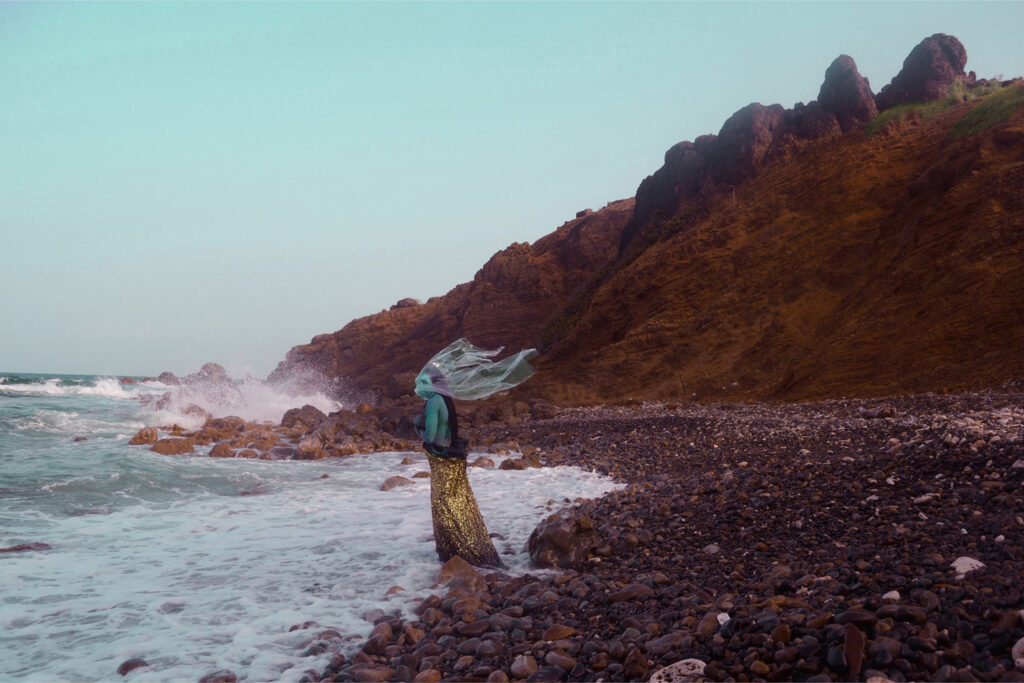
The wisdom of our African predecessors suggests that there is no difference between ancestral belief and reverence for nature, as these seemingly different ideas begin to cosmologically intertwine the deeper one gazes into the history of creation. Nature is the ancestor—it is our mother; a continuum from which wisdom is drawn; it is the source of our medicine, our sustenance, our home, our bodies, and our responsibility.
Lisandro Suriel
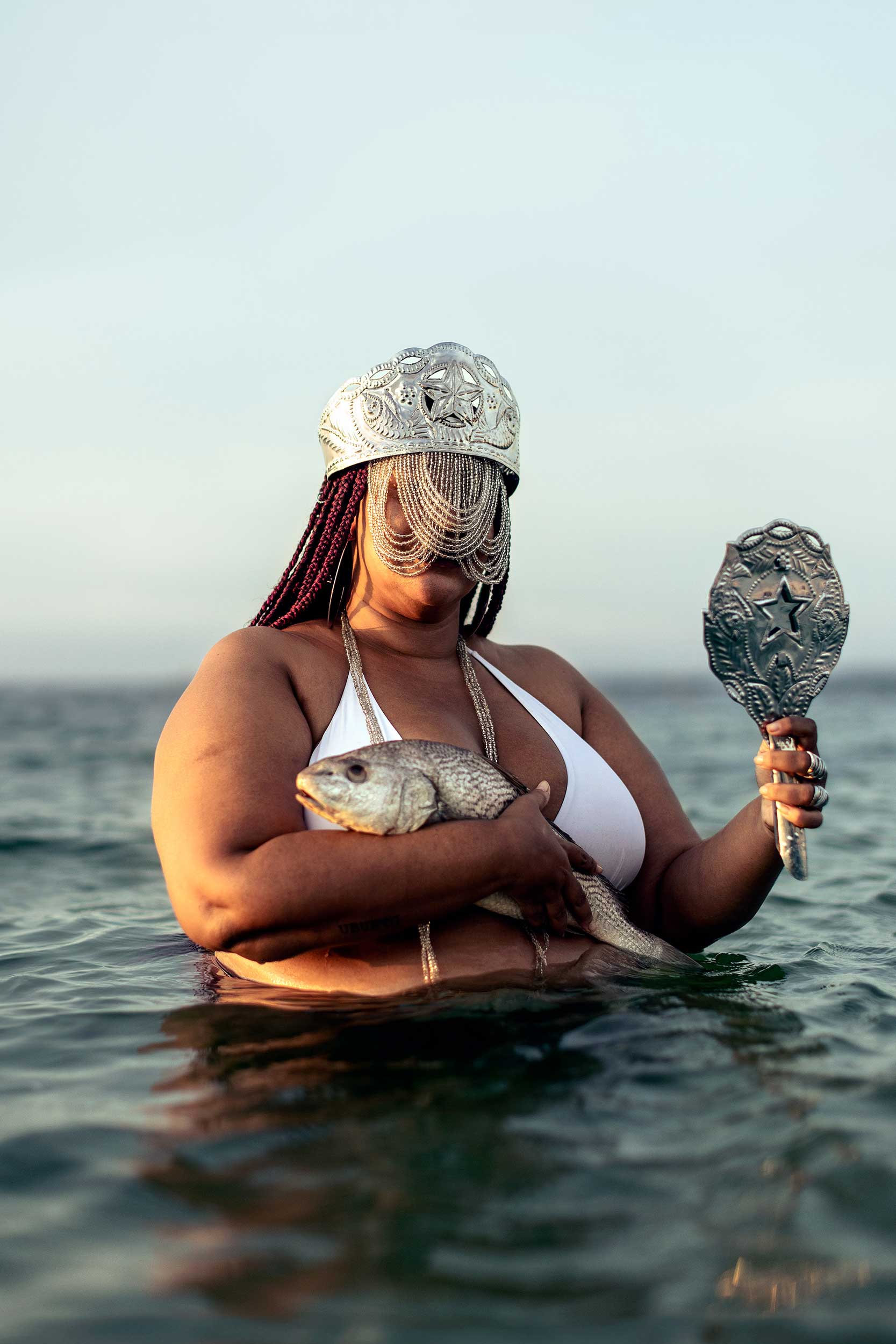
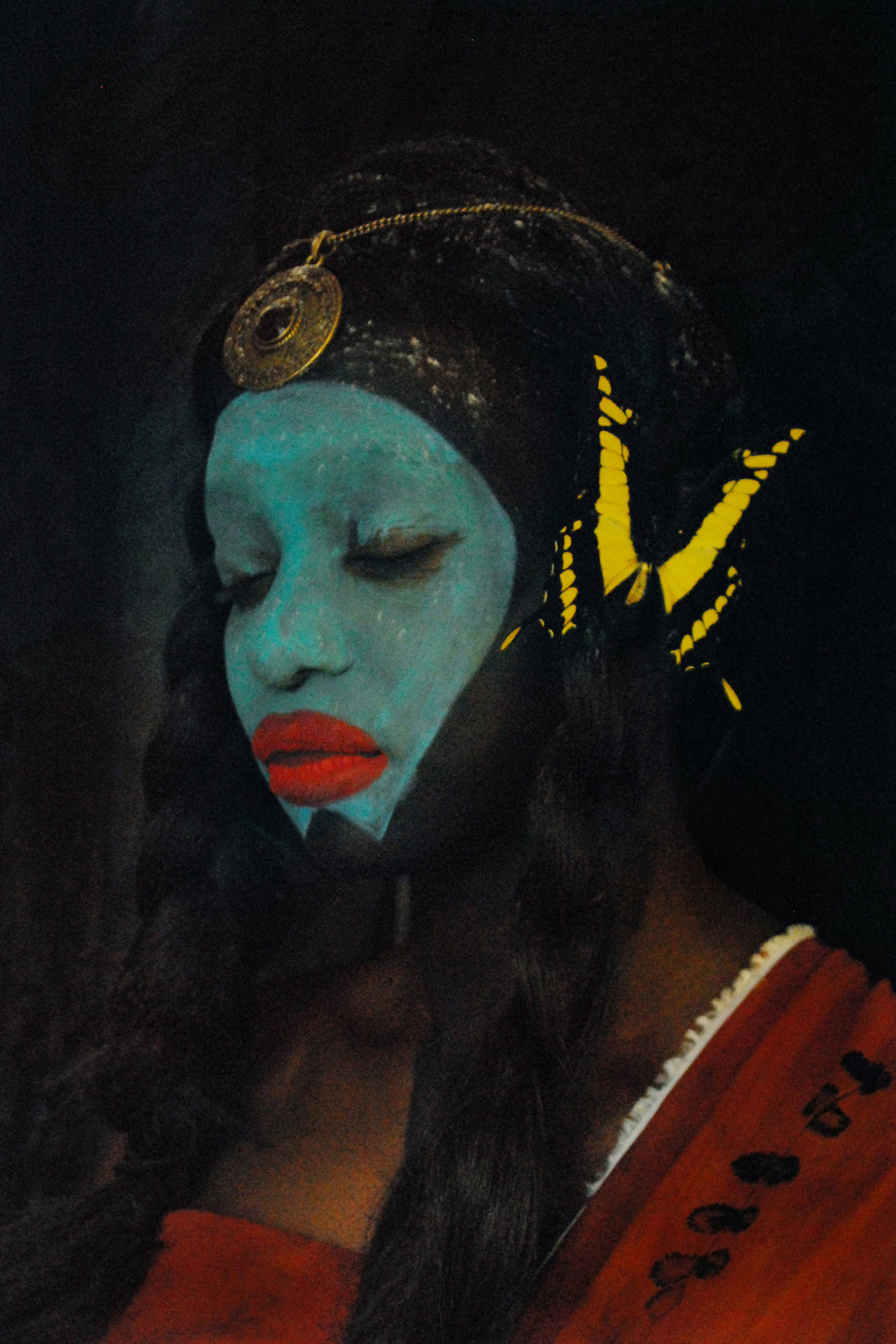
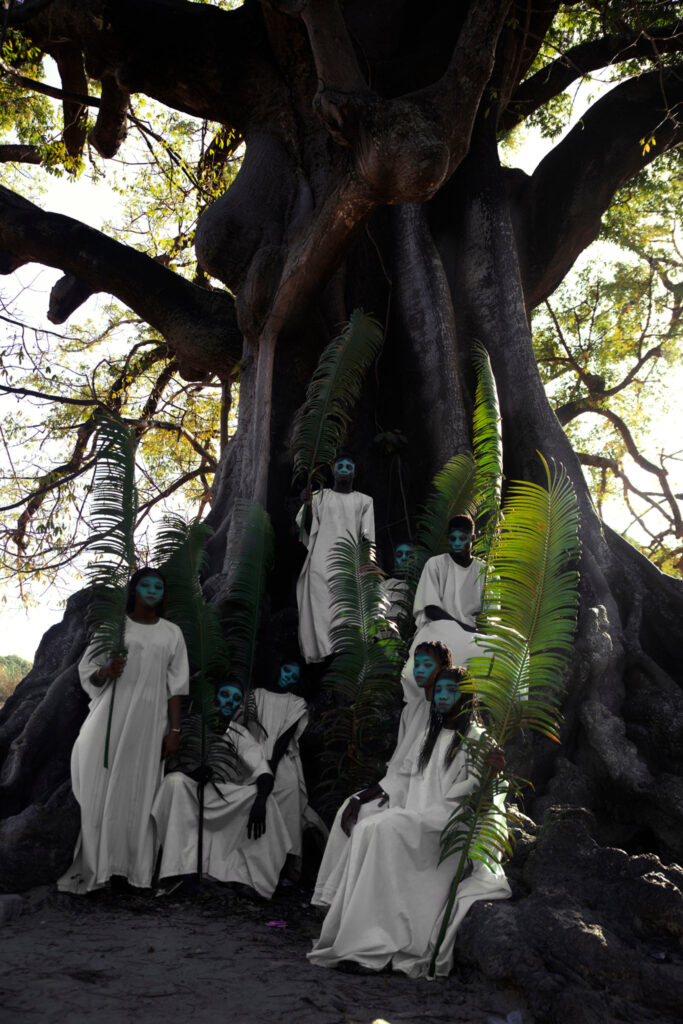
In the visual language of Sacred Ecologies: Artists on Land, Spirituality, and Climate, where land is read as an archive and atmosphere as memory, the practice of Lisandro Suriel unfolds as both invocation and inquiry. A photographer of magical realism and an artistic researcher rooted in the Caribbean, Suriel works at the threshold between the visible and the immaterial, directing and producing visual concepts that draw equally from filmic sensibility and cosmological thought. His images do not simply depict; they conjure—summoning ancestral presence, myth, and landscape into a shared field of perception.
Educated at the Royal Academy of Art in The Hague and later at the University of Amsterdam, where he completed a Master’s by research in Artistic Research and Art Studies, Suriel’s work is grounded in rigorous inquiry. His academic engagement with early twentieth-century illustrations of West Indian mythology—examined through the lens of cultural aphasia—forms the conceptual bedrock of his ongoing project, Ghost Island. Here, the fractures of colonial history are not merely narrated but re-imagined, approached through what he proposes as the imaginative lens: a vital apparatus for understanding how folkloric figures animate cultural memory and operate as agents within history itself.
Ghost Island is both personal and planetary. It gestures to Suriel’s insular upbringing in Saint Martin while expanding into a broader meditation on the Black Atlantic as a space of overlapping temporalities, hauntologies, and spectral identities. Through a visual deconstruction of New World imagination, Suriel traces the invisible continuities that bind landscape, architecture, and body to ancestral knowledge systems. In this way, his practice aligns seamlessly with Sacred Ecologies: both insist on the inseparability of environment and cosmology and on the necessity of re-sensing the world through forms of intelligence often dismissed as myth.
What emerges is not simply an aesthetic, but a proposition: that ecology is not only a matter of preservation but of perception—of restoring relationality between the human and the more-than-human, the living and the ancestral, the material and the unseen.
Virginia Melodia: How do spirituality, culture, and ancestral belief impact your relationship with climate and environmental perspectives?
Lisandro Suriel: Personally, I believe that these concepts (spirituality, culture, and ancestral belief) are some of the fundamental building blocks of what makes us human. These qualities are universal, and thus something that everybody can relate to. Be it rooted in empiricism, capitalism, and occidental historicity on one end, or Ifa, sovereignty, and inherited philosophical imaginations on the other, these core concepts shape the basic orientation from which we cultivate our humanity—and thus with it, our approach to ecology. In other words, the frameworks of our experienced realities seem to dictate the degree of harmony we seek with nature, and vice versa. This means that our humanity (spirituality, culture, and ancestral beliefs) in many ways can never be uncoupled from our veneration or denunciation of nature; our histories and identities thus come to reflect the degree to which we listen to our environment.
The curse and the gift from my own Afro-Diasporic and Caribbean perspectives disallows me to ever unsee pervasive patterns of coloniality. With this in mind, the current ecological paradigm—signified by ownership, extraction, displacement, exploitation, and profit—presents itself more as an empire over nature than a climate of sovereignty. Hence, just as the perpetrators of colonial violence must learn to humanise the enslaved and their descendants to undo coloniality, the perpetrators of ecocide must unlearn the servile view of ecology in order to heal the environment. This much-needed restitution perhaps calls for what ancestral wisdom has long known throughout the ages: that the best approach for ecological dialogue is through the humanisation of nature itself. Notably, this is the threshold where spirits and mysteries are birthed into existence, forming the mythical lens at the buttress of our human story: the loa, the orisha, the zemi, the devas, the genii, the angels, and the gods.
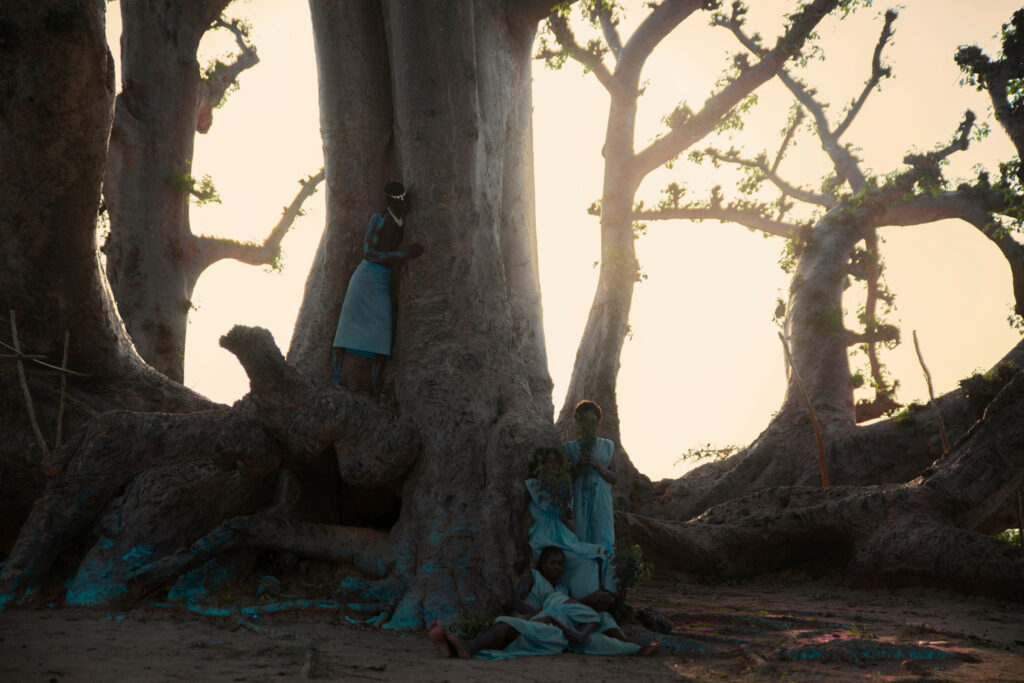
Virginia: In your cultural context, how is the natural world understood—as a resource, ancestor, spirit, or something else—and what does responsibility to land, community, and future generations mean within your belief system?
Lisandro: I think I should begin by briefly explaining the cultural and historical contexts that shaped the ecological paradigm I experienced growing up in the Caribbean. After the abolition of slavery, the colonial powers re-imaged the Caribbean as a site for tourism in order to keep the territories profitable. Over time, many places imported royal palms, bananas, and various other allochthonous plants from other tropical and subtropical regions in order to cultivate a kind of postcard picturesque aesthetic. This was to transform the harsh colonial landscapes, bearing the scars of violent histories, into tropical ideals ready for tourist consumption. If you pay attention, in Soualiga (Saint Martin), where I am from, you find that a distinctly tropically idealised flora grows around the ports and the resorts. These plants are neither endemic to the region nor commonly found in the surrounding landscape.
Moreover, the Saint Martin coat of arms bears the Latin phrase “Semper Progrediens”, which means “always progressing”. Growing up I’ve come to find the term repeatedly used to denote the successes of commercial enterprise, often at the cost of ecological integrity. The reshaping of the landscape to accommodate a constant influx of consumers from the Global North has very tangible effects on the local ecology and ecological paradigm. Seabeds have been dredged for marinas, mountainsides carved into bedrock to construct high-rises for foreign investors, and roughly twenty-nine of the island’s thirty-seven beaches have been converted into luxury hotel- and real estate -ventures rather than remaining wild places. It was in this progress-oriented context that I found myself growing up, questioning whom these constructed tropical ecologies were intended for and where I find my own existence within them.
Beyond ecological erasure, the culture of tourism and the paradigm of progress have arguably been detrimental to the preservation of endemic cultural practices. In my experience, collective ancestral memory has therefore become somewhat vestigial and fragmented—still, enduring and ever-present like ghosts of the past. For this reason, I have made it my life’s work to counter these erasures by resurrecting ancestral wisdom scattered and embedded within the landscape of its people, through my artistic research practice. The wisdom of our African predecessors suggests that there is no difference between ancestral belief and reverence for nature, as these seemingly different ideas begin to cosmologically intertwine the deeper one gazes into the history of creation. Nature is the ancestor—it is our mother; a continuum from which wisdom is drawn; it is the source of our medicine, our sustenance, our home, our bodies, and our responsibility.
Virginia: How does your artistic practice engage with ecological concerns, either directly or indirectly, and can you speak about specific rituals, myths, or spiritual practices that influence your work?
Lisandro: My artistic research practice engages the unseen influences of identity that buttress the human story, specifically that of the Black Atlantic and Caribbean worlds. I steadily maintain that the mythical lens is the best through which to view how unseen agents engage identity and the telling of history. This methodological choice emerges from the erasure of historic records and the suppression of cultural practices across the Atlantic World, brought about by centuries of institutionally induced amnesia throughout the colonial and post-colonial eras. Growing up, we were taught that Caribbean indigeneity was primitive, that Columbus brought civilisation, and that our African ancestors were trafficked as enslaved chattel, a truly apocalyptic foundation upon which to build any discourse on identity.
In response, I seek to root Caribbean historiography and identity beyond the Transatlantic apocalypse. Yet, the scarcity of records left in the wake of colonial violence has led me to attend to the immaterial transmission of our histories through storytelling, spiritual practices, and other embodied forms of knowledge. It has guided me to, in a way, root our identity within a mythical temporality, where the ancestors themselves constitute the Mysteries of Nature.
My work primarily departs from the lens and teachings of Ifa, an ancient, earth-centred philosophy, spiritual practice, and divination system originating in Yoruba West Africa. Within this cosmological view, all aspects of nature and existence house intelligent spirits with whom we might engage, known as the orisha. It is also understood that the ancestors, once deified, are able to become orisha themselves, presiding over their own distinct mysteries of nature. In Ifa, active communication and engagement with nature are for understanding our purpose and to learn about ourselves. Here, nature is not only our teacher, but is intrinsically bound to our destiny.
The scarcity of records left in the wake of colonial violence has led me to attend to the immaterial transmission of our histories through storytelling, spiritual practices, and other embodied forms of knowledge. It has guided me to, in a way, root our identity within a mythical temporality, where the ancestors themselves constitute the Mysteries of Nature.
Lisandro Suriel
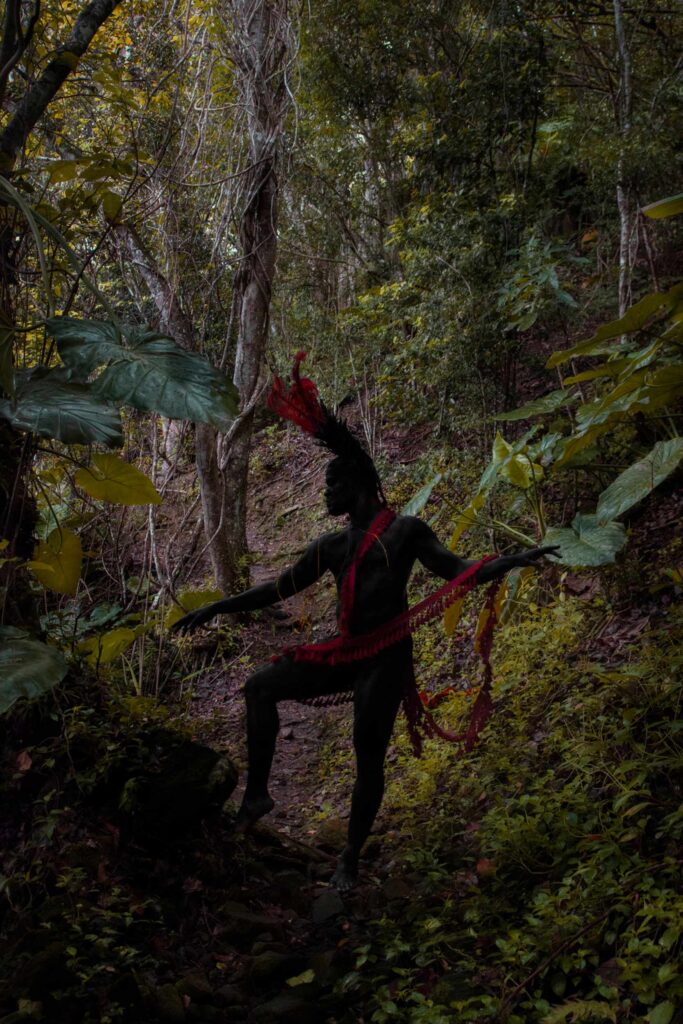
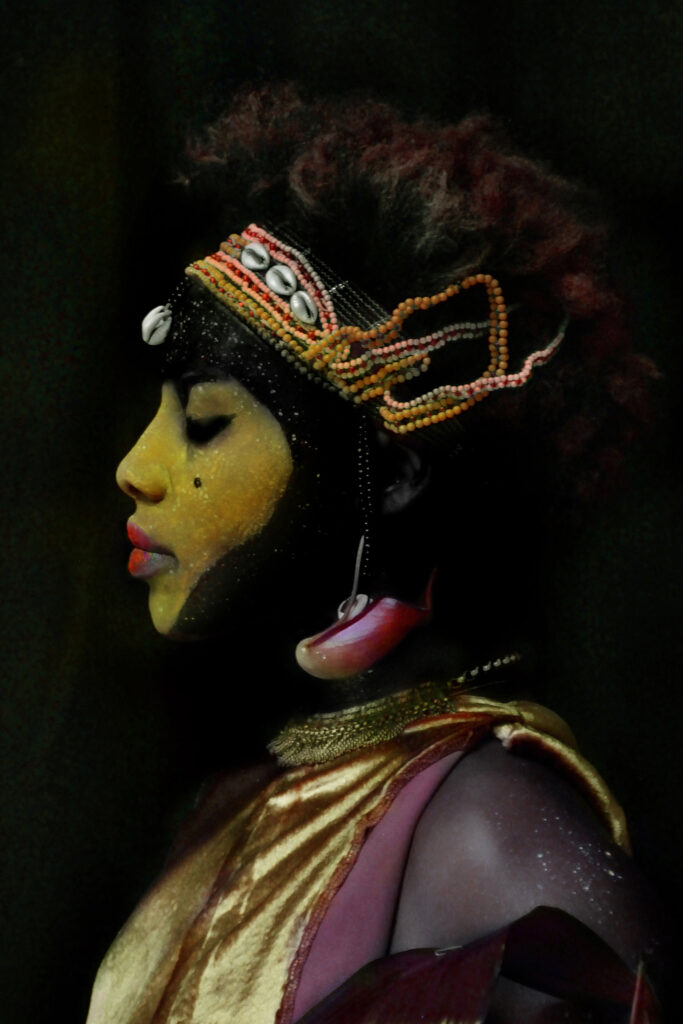
Virginia: How do you navigate the tension between culture and contemporary environmental crises, and how do you see the role of art in the era of climate and ecological crisis?
Lisandro: Culture, simply put, is the awareness (or framework thereof) through which a society at once builds its understanding of reality and engages with it. It is therefore the function and responsibility of the artist to position themselves at the peripheries of the cultural sphere, so as to transmit meaning from unseen influences beyond the scope of perception. In this sense, the artist appears almost akin to a magician to those operating within the general sphere of culture. The liminal space that the artist occupies in the world grants them a unique vantage point, revealing both an overview of society (or aspects of it), as well as a tether to the unseen ether of the collective unconscious (often interpreted as inspiration); they are, in effect, cultural shamans.
Artists place people in direct contact with the collective unconscious, allowing for confrontation, affirmation, reevaluation, and development of the collective cultural awareness. In this way, artists are fundamentally engaged in shaping meaning and the broader body of culture, the very frameworks through which reality is understood. It is through this lens that I interpret the role of art and choose to navigate the tensions of crises and catastrophe, to authentically and rhythmically convey the voices of the unseen. In my work, the unseen influences happen to be both ancestral and ecological; though, as I have mentioned before, that can be one and the same.
Culture, simply put, is the awareness (or framework thereof) through which a society at once builds its understanding of reality and engages with it. It is therefore the function and responsibility of the artist to position themselves at the peripheries of the cultural sphere, so as to transmit meaning from unseen influences beyond the scope of perception. In this sense, the artist appears almost akin to a magician to those operating within the general sphere of culture.
Lisandro Suriel
Virginia: What can spiritual or cosmological worldviews offer that scientific or policy-driven climate narratives often overlook?
Lisandro: To me, cosmological worldviews can serve to humanise ecology and to create a deeper meaning that can more easily be conveyed. Cosmological paradigms have also been shown to be very effective at transmitting meaning across generations. In the face of war, oppression, violence, or catastrophe, I believe that storytelling is the ultimate reservoir of information about who we are and can be an effective tool to help us find harmony. We see this in the Caribbean, where the wisdom of ancient Africa has endured the Middle Passage against all odds.
When practiced in a non-dogmatic way, cosmological perspectives may also counter anthropocentric agendas by placing ecology at the centre of grand narratives. By centring historiography around forces of nature, history no longer belongs to any one nation, race, or political ideology; instead the narrative belongs to nature itself. In this way, notions of ownership—as we have been taught—are fundamentally challenged. Consider the Tamarind tree: etymologically, its name derives from “tamar-e-hind,” meaning “date-palm from India,” while Dakar, the capital of Senegal, reflects the Wolof word for the same tree. From this, we might begin to trace a more elusive and interconnected history.
Across a vast region spanning from West Africa across the Sahel and Horn of Africa into India, tamarind trees are widely understood to be the abodes of spirits known as jinn, suggesting cultural continuities stretching from one continent to another, thanks to Ethiopian and Arab traders. Even in the Caribbean, the tamarind tree is said to be the home of jumbees, the counterpart to Quranic jinn in the Atlantic World. Here, we see how the stories of many nations, generations, and even cultures, are touched by—and encapsulated within—the spirit of a seemingly ordinary angiosperm. Perhaps this tree, now prevalent across the Caribbean, might one day serve as a bridge of meaning—one that precedes coloniality—linking the intertwined histories of African and Indian diasporas in the region.
Moreover, cosmological thinking reorients ecological policy-making toward the agency of nature itself. I have heard accounts from Suriname where construction projects were abandoned due to recurring floods attributed to the disapproval of resident spirits. Building could only resume if permission was granted by the spirits after proper consultation and ritual. Here is an example of ecological policy rooted in the consent of nature itself. Above all, it is this consent of nature itself that scientific or policy-driven climate narratives often overlook, as they aim to speak on behalf of an ecology presumed to be voiceless and devoid of agency.
Virginia: How has growing up in Soualiga (Saint Martin) shaped your understanding of land—as geography, memory, or spiritual presence?
Lisandro: Growing up here, I have been made very aware of the concept of land ownership and its inherent absurdity. Perhaps because the island is so small (only 37 square miles), yet still claimed by two European powers (France and the Netherlands), its entire narrative is shaped by the tension between ownership and sovereignty. Moreover, the Dutch side of the island is among the most densely populated in the Caribbean, bringing the disparities and politics of land distribution sharply into focus.
Additionally, as I grew older, I’ve had to come to terms with the shattering of my perception of wilderness. Mountain ranges that I thought were wild places as a child turned out to merely consist of secondary or tertiary (re)growth. This was due to the fact that the original vegetation had been cleared completely to make way for plantations during the colonial era. Here we see how local ecology holds the memories of violence in plain sight.
At the same time, these vast stretches of land remain largely privately owned or inherited. Entire hills belong to specific families, who hold the power to alter the landscape at will. As a result, access to land or nature is experienced not as a right, but as a precarious privilege—one that can be withdrawn at any moment.
Therefore, this insular perspective has made me highly aware of the fact that all land-ownership today—as we interpret it—is merely the legalisation and redistribution of colonial theft. Comprised of stone walls, built by our enslaved ancestors, the land is strewn with borders devised by those who had only our demise in mind. In my view, harmony, decolonial restitution, mobility, and sovereignty can never come from this paradigm of ownership.
By centring historiography around forces of nature, history no longer belongs to any one nation, race, or political ideology; instead the narrative belongs to nature itself.
Lisandro Suriel
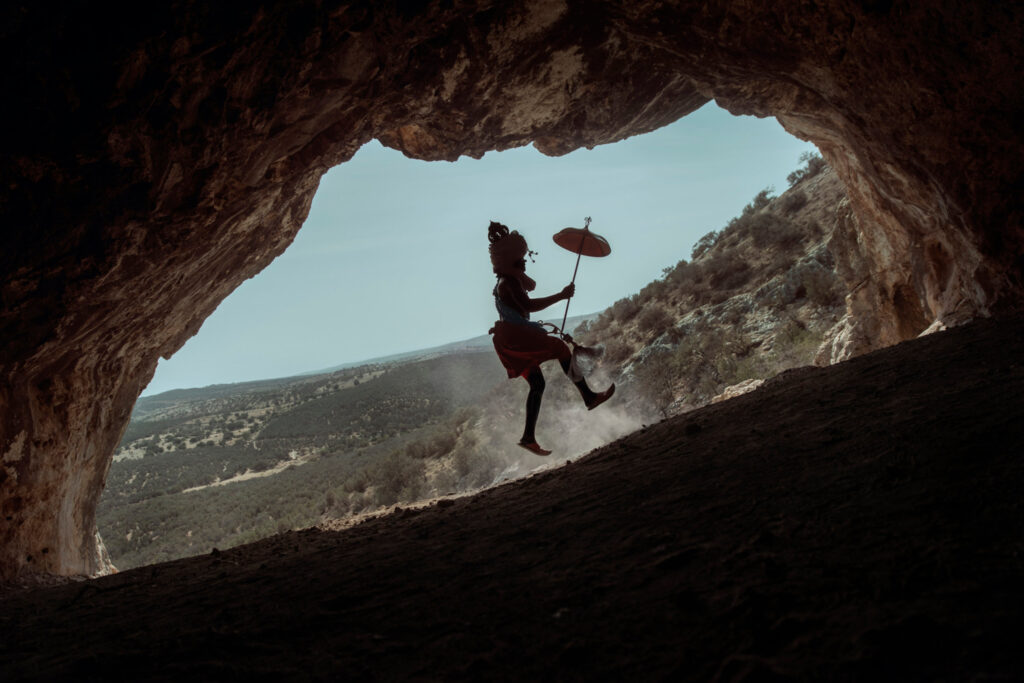
Virginia: Your project Ghost Island explores Caribbean hauntology and the spectral identity of your ancestors throughout the Black Atlantic. How has researching West Indian mythology and folklore changed your way of approaching the histories of colonisation, and did it influence your environmental perspective today?
Lisandro: In Caribbean storytelling, anybody can serve as a node of knowledge. This principle shapes the approach I take in my work, as I aim to democratise the telling of history. Emphatically, in my work I am most interested in the narratives we have been conditioned to fear or forget—those that are rooted beyond the conventional colonial narratives that are associated with Black or Caribbean histories. Often Black history is narrowly equated with slavery, when in fact it represents an attempted erasure of our story and identity more than anything else. My work seeks possibilities for ontological anchorage in times and places beyond the Western gaze on Blackness. Rather than through colonial frameworks, my artistic research practice strives to view our stories through the eyes of eternity, the lens of nature and cosmology. To approach history and identity in this way is a form of epistemic disobedience that does not rely on Western empiricism as the default way of knowing or validating knowledge.
Throughout this process, I can say that the ecological dimension of my work emerged organically and unexpectedly, somewhat as a surprising side-effect stemming from the unseen spectres of our lived realities. When I set out on this journey, I did not know what I would find and where it would take me. At the start, I could not imagine that the rights to reclaim Black historiography would equate to cosmological rights, as well as ecological rights. Often within Black ancestral frameworks, nature itself is the most fundamental manifestation of heritage, as it is both an infinite reservoir and conduit for wisdom and existence. Ultimately, through cosmological understanding and the personification of nature, the environment becomes an extension of our community.
Virginia: In your personal journey, how has working on Ghost Island changed your understanding of your country—as ecological care, ancestral practices, identity and political history?
Lisandro: The perspective my journey has yielded is perhaps one that frames collective colonial trauma as a severance from nature. I see the ecological shortcomings in Soualiga that I have mentioned throughout this interview as remnants of colonial violence. For example, coming back to our coat of arms slogan, Semper Progrediens (always progressing): in Saint Martin specifically, there seems to be a traumatic rejection of “primitivity”—an implicit rejection of any form of living that seems too dependent on manual agricultural labor on the land. This is my own observation, of course, one of exchanging the harsh plantation landscape for a lucrative paradise that visually adheres to the West’s tropical ideals.
Furthermore, a second dimension of our severance from nature is rooted in imposed religious paradigm. Historically, European powers sought to erase Indigenous, African, and Caribbean wisdom through forced conversions of our ancestors to Christianity. This has affected our collective retention of memories pertaining to the spirits of nature, medicine, parables, and rituals to varying degrees. That being said, this is not a phenomenon unique to Soualiga; we are but a microcosm reflecting a broader, globalised paradigm of ownership, extraction, ecological disregard, and the masking of violence with what can only be described as contrived virtue or luxury.
I think that by framing the colonial project as one that fundamentally induces a severance from nature creates a space for healing and undoing. Ecological rights and wisdom are inherently anti-colonial and can serve as a crucial starting point for understanding both our past and our future.
Often within Black ancestral frameworks, nature itself is the most fundamental manifestation of heritage, as it is both an infinite reservoir and conduit for wisdom and existence. Ultimately, through cosmological understanding and the personification of nature, the environment becomes an extension of our community.
Lisandro Suriel
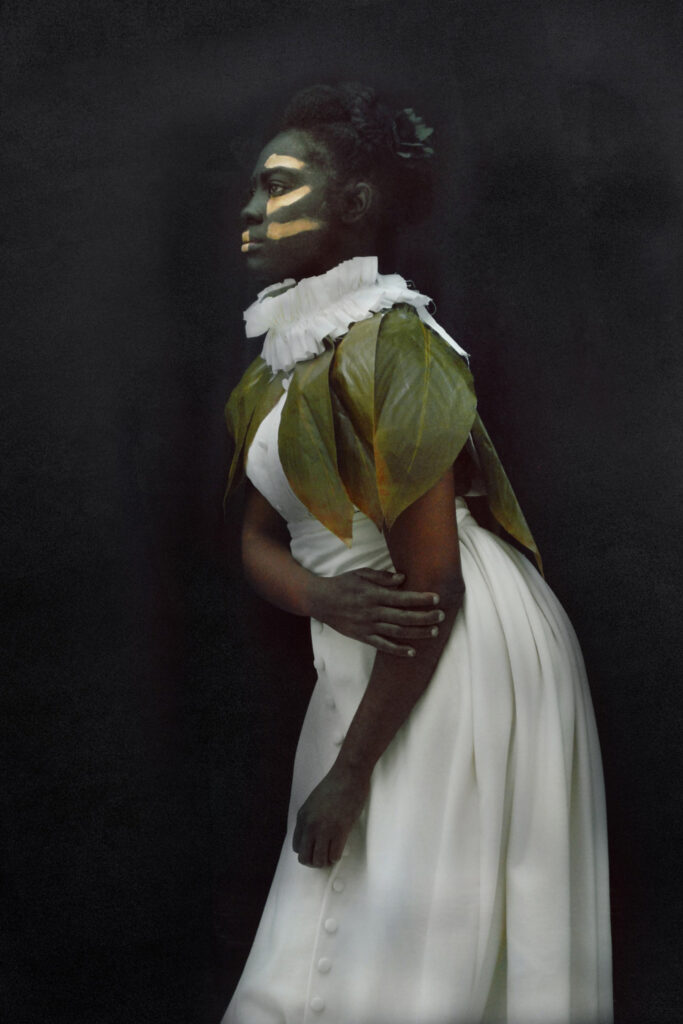
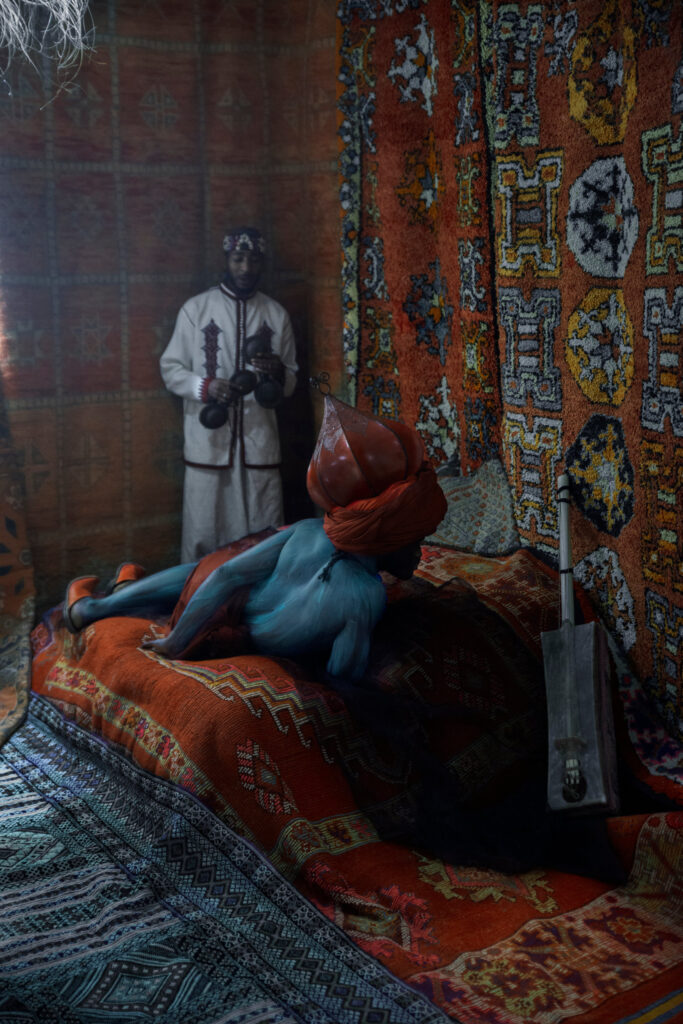
Virginia: At a time when climate change is largely framed through science and politics, how can visually deconstructing New World imagination and cultural beliefs offer alternative ecological frameworks?
Lisandro: Reiterating what I mentioned before: the deconstruction of New World Imagination (mythology, folklore, superstition, ghost stories, etc.) sheds light on the often-invisible agents in culture and society. These agents, more often than not, comprise Mysteries of Nature or ancestral spirits that, in turn, imbue facets of ecology with personality and meaning. Emphatically, it is this production of this particular kind of meaning that diverges from strictly scientific and political frameworks. It restores agency to the environment and allows the natural world to wield and exercise its own consent. Moreover, it shows how our human identities are intrinsically intertwined with nature and our relation to it. Without identity, we would lose what makes us human; therefore, without nature, we would exist within ontological vacuity. As is the case with politics and science, they only exist because there is nature to sustain or inspire them.
Virginia: Do you see your work as a form of care or resistance in relation to land and identity? If so, how does that manifest in your culture and practices?
Lisandro: I don’t really consciously position my work as resistance. Though I think its subversive nature is inevitable, due to the fact that it aims to reclaim historicity and identity in an unapologetic way by linking them to cosmological tropes or archetypes of nature. I am also not primarily concerned with providing care. Again, I think this is but a natural side effect of creating spaces of reclamation. However, what I am fundamentally interested in is truth and the ways we frame our realities around it—in other words, our identity.
This manifests in my practice as an endless curiosity about—and research into—ancestral perspectives, as well as considering whose frameworks and references determine the constructs of the realities we live in. For example, I am very aware that the current landscape in Soualiga is really shaped by and for the Global North’s idyllic dream of paradise. So, I naturally ask myself: whose dream, or whose imagination, are we living in without question? And why are our own magical perspectives or Indigenous constructs of reality seen as more irrational than the touristic myth of tropicalisation?
Ultimately, for me, the purpose of my work manifests in questions, as I am a firm believer that it is more important to ask the right questions than it is to formulate a correct answer. Without question, there is only stagnation and compliance—and nature, of course, is full of questions. They inspire us to ponder. They are, after all, the Mysteries of Nature: the loa, the orisha, the zemi, the devas, the genii, the angels, and the gods.
Our human identities are intrinsically intertwined with nature and our relation to it. Without identity, we would lose what makes us human; therefore, without nature, we would exist within ontological vacuity. As is the case with politics and science, they only exist because there is nature to sustain or inspire them.
Lisandro Suriel
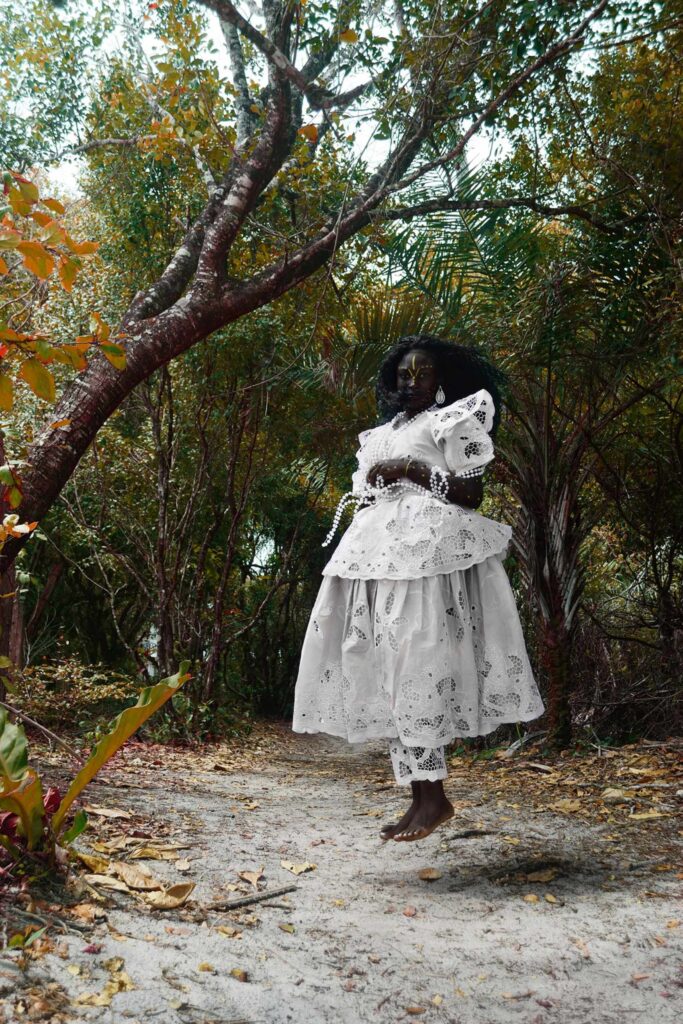
Join Lisandro Suriel for the Sacred Ecologies Study Club
The Supernal Atlas: Mapping Atlantic Imagination
The Supernal Atlas: Mapping Atlantic Imagination seeks to introduce the spectres of the Atlantic world by way of storytelling and guide the participants in mapping the imaginal realms by way of archetypes—often rooted in ancient ecological ideals. The goal is to discuss the imagination as an epistemic tool for engaging layered historicity and to understand cultural identities of the Atlantic world, focusing on themes rooted in Afro-Caribbean mysteries and decolonial thought.
Suriel’s studyclub is grounded in the premise that freedom in the Atlantic world is deeply rooted in Afro-Caribbean theologies and philosophies, which are often marginalized by Western paradigms. Also drawing upon thinkers like Abby Warburg and Gayatri Spivak the study club utilizes the concept of “aesthetic education” and “the Mnemosyne Atlas” to reimagine knowledge production. The process of constructing this “Atlas of Imagination” subverts traditional institutional structures of power, empowering participants to become nodes of knowledge and possibly reclaim forgotten narratives. In short this is a space for participants to explore the intersections of imagination, ecology, identity, and historical memory.
Explore:
• Myth, ecology and Caribbean visual storytelling
• Ancestral knowledge and collective memory
• Decolonial approaches to image-making
For every 10 tickets sold, one free place is gifted to someone who may not otherwise have access to the opportunity.
Full Series Pass (All 4 Study Clubs) – 15% Discount
Full Series participants receive exclusive access to recordings of all previous Study Club sessions, allowing you to revisit conversations and catch up on any sessions you may have missed throughout the programme.
To support students, we’re offering 22.22% off all individual Study Club sessions.
The Full Series Pass already includes a 15% saving, and by applying the exclusive student discount code, students receive a total saving of 35% on the full series.
To learn more, email us at hello@plantedjournal.com
Accessibility & Support
Most proceeds from ticket sales go directly to the artist.
For every 10 tickets sold, one free place is gifted to someone who may not otherwise have access to the opportunity.
The remaining funds support Planted Journal’s work amplifying culture, environmental awareness, art, community-led initiatives, and under-represented voices worldwide.
Interview by Virginia Melodia
Virginia Melodia is a storyteller. She tells stories through writing, poetry, photography and video. Her mission is to connect people with nature and our shared humanity. She wants to inspire others to consciously live and remain in the presence. She shares narratives that evoke a deep sense of connection and reverence for our planet and ourselves.
As a creative, Virginia loves shaping experiences that feel alive and draw people in. Growing up between languages and living in different countries opened her eyes to many ways of seeing, and taught her to value the beauty in every culture and viewpoint. She’s passionate in blending visuals and language into stories that speak to the soul. She looks for inspiration in the world as it unfolds around her—the honesty of nature, the intensity of human feeling, and the many layers of everyday life. She believes storytelling can help us understand one another, look inward with courage, and ignite positive change in the world.