Sacred Ecologies: Artists on Land, Spirituality, and Climate | Gui Christ
I am part of an Afro-Brazilian community rooted in Yoruba traditions, whose origins trace back to what is now Nigeria and Benin. Within this cosmology, our deities are not merely representations of nature—they are understood to inhabit it and also are the elements of nature.
Gui Christ
Gui Christ is a São Paulo–based artist whose practice moves between documentary, anthropology, and spiritual worldview. Working closely with Afro-diasporic and historically marginalised communities, his images trace the enduring imprints of colonialism in Brazil while opening space for memory, resistance and alternative ways of seeing. Since 2015, he has contributed to international publications including Time Magazine, National Geographic and El País, while developing long-term bodies of work that are both socially embedded and visually immersive.
His early photobook Marrocos (2016) documented one of São Paulo’s largest housing occupations, followed by Fissura (2020), which examined the world’s largest open-air drug market. More recently, his ongoing project M’Kumba centres Afro-Brazilian spiritual practices, mythologies, and the persistence of religious racism—earning major international recognition, including First Place in Portraiture from the Sony World Photography Awards. In exhibitions and collections across Brazil, Europe, and the United States, Christ’s work insists on a decolonial reading of image-making—one where land, body, and belief are inseparable.
Within the context of Sacred Ecologies, Christ’s understanding of nature as sacred presence—rather than passive resource—reframes ecological discourse through ritual, ancestry, and reciprocity. His work does not simply depict environmental crisis; it embodies a relational worldview in which spiritual continuity and ecological survival are intrinsically linked.
Virginia Melodia: How do spirituality, culture, and ancestral belief impact your relationship with climate and environmental perspectives?
Gui Christ: I am part of an Afro-Brazilian community rooted in Yoruba traditions, whose origins trace back to what is now Nigeria and Benin. Within this cosmology, our deities are not merely representations of nature—they are understood to inhabit it and also are the elements of nature.
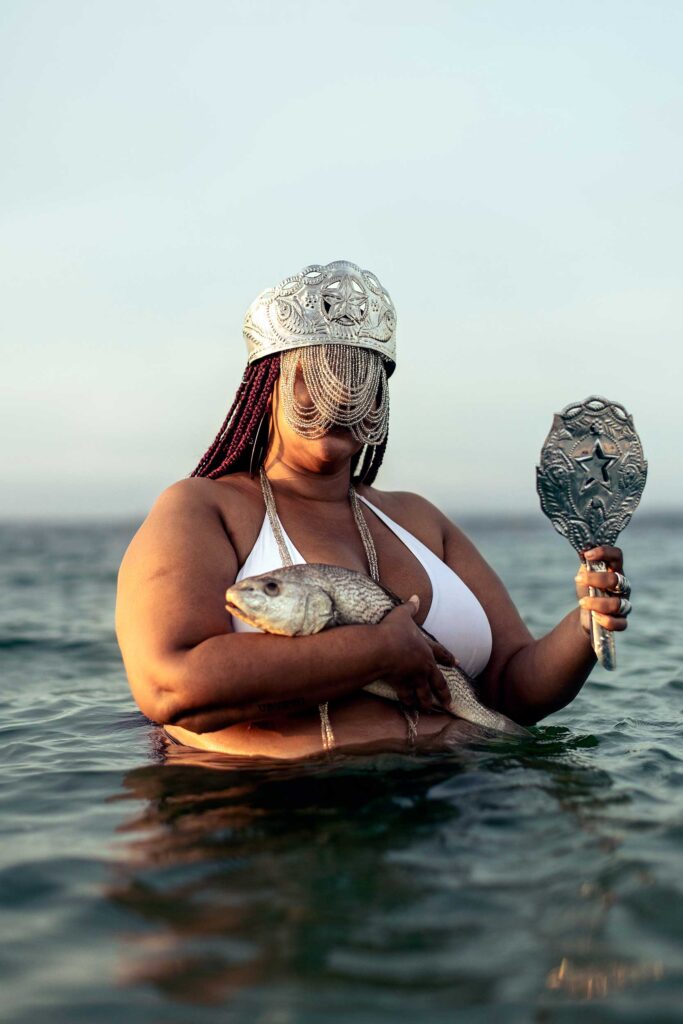
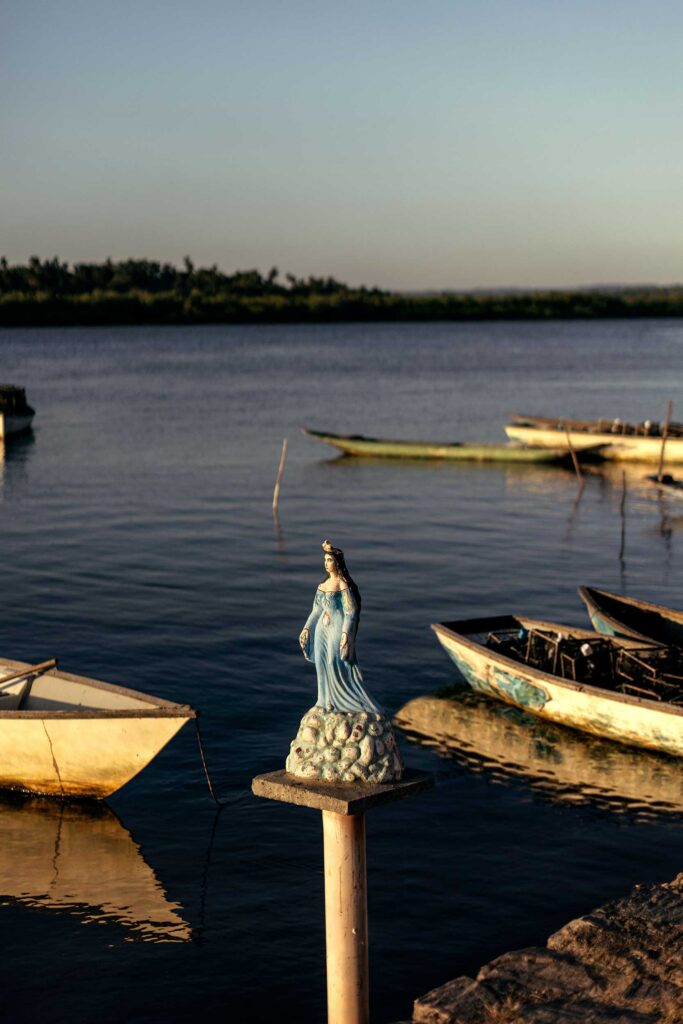
So when I speak of a river or a waterfall, I am referring to Òṣun. When I speak of the wind, I am referring to Ọya. When I speak of the leaves, I am speaking of Ọ̀sányìn. Nature, in this sense, is not separate from the sacred—it is where the sacred exists. Within our mythology, the relationship between nature and divinity is intrinsic and inseparable. It is precisely through the balance between human beings and the natural world that these forces remain present. And it is this balance that sustains not only the environment but also our social, spiritual, and mental well-being.
Virginia: In your cultural context, how is the natural world understood—as a resource, ancestor, spirit, or something else—and what does responsibility to land, community, and future generations mean within your belief system?
Gui: Within my cultural context, we understand the world as deeply interconnected. There is no separation between what is often defined as sacred and what is considered mundane. For us, we live within a sacred world—because it is a creation of Olódùmarè (God). Everything is connected. This understanding goes beyond the idea of natural resources as something to be used; it also includes our relationship with our ancestors, who have lived within this same sacred world. We also understand that the divinities we venerate—the Orishas—are, in many ways, also ancestral forces. In other words, we are descendants of these forces of nature, and we carry them within our bodies.
Our connection to the world is therefore structured through these relationships—with the Orishas, with our ancestors, and with our community. Just as we must live in balance with nature, we must also live in balance with one another.
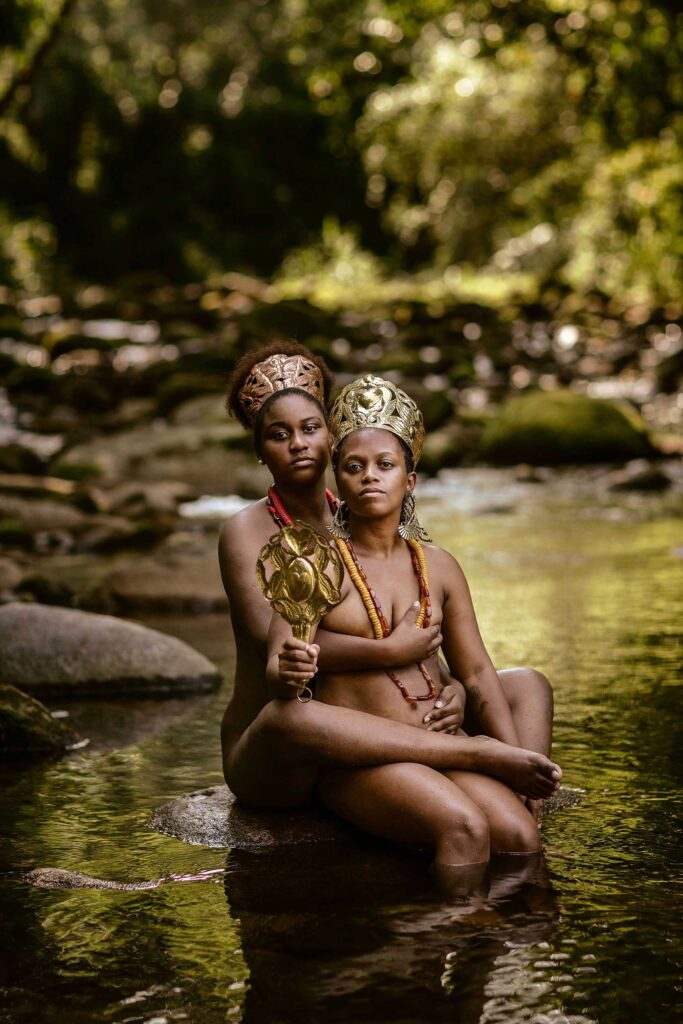
Our temples function as living ecosystems, where each person has a role shaped by the natural force that governs them—what we understand as their Orisha, which can also be understood as an ancestral force or the elements of nature itself. Each individual participates in sustaining this collective balance.
Ultimately, this way of life is guided by the continuous circulation of what we call ‘axé’—a vital force that constitutes existence itself. It is through this shared responsibility that axé is sustained among us, and in turn, returned both to the community and to the natural world in a continuous cycle of reciprocity.
Our temples function as living ecosystems, where each person has a role shaped by the natural force that governs them—what we understand as their Orisha, which can also be understood as an ancestral force or the elements of nature itself. Each individual participates in sustaining this collective balance.
Virginia: How does your artistic practice engage with ecological concerns, either directly or indirectly, and can you speak about specific rituals, myths, or spiritual practices that influence your work?
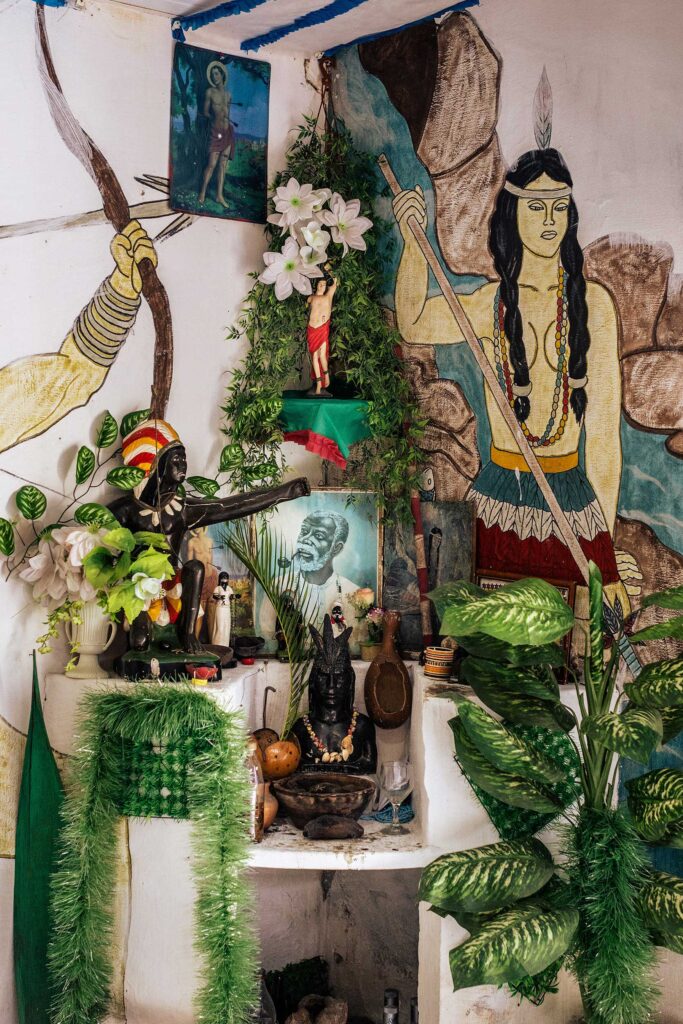
Gui: My artistic practice is directly tied to nature and to the community I belong to, which we also understand as being embedded in nature. My community is located near one of the few remaining forested areas in São Paulo, the largest city in South America—a territory that has been undergoing intense destruction due to urban expansion.
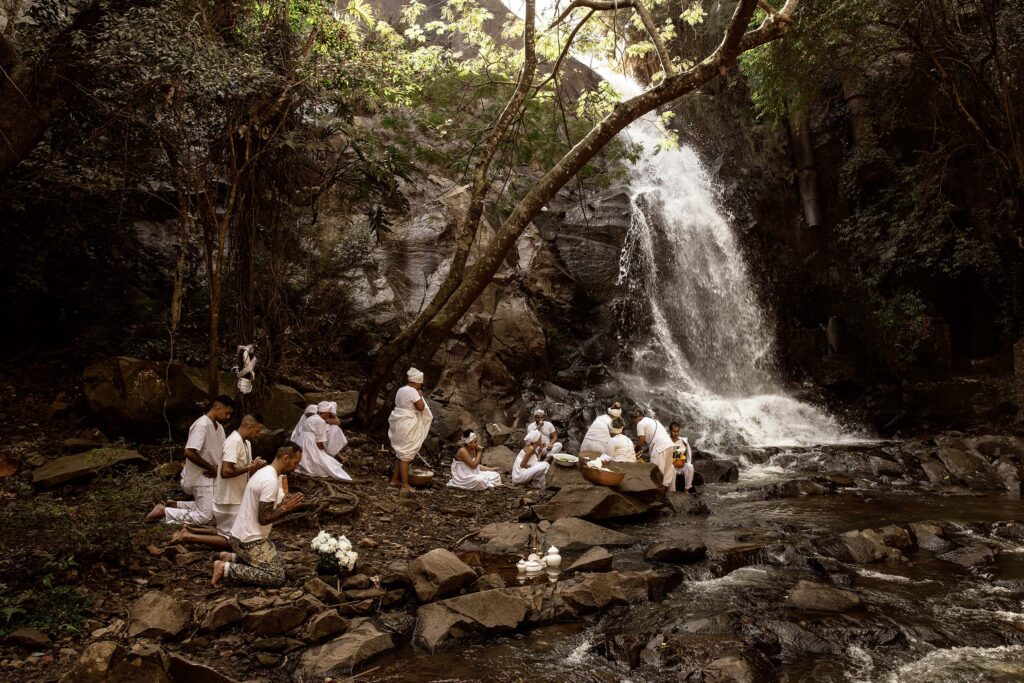
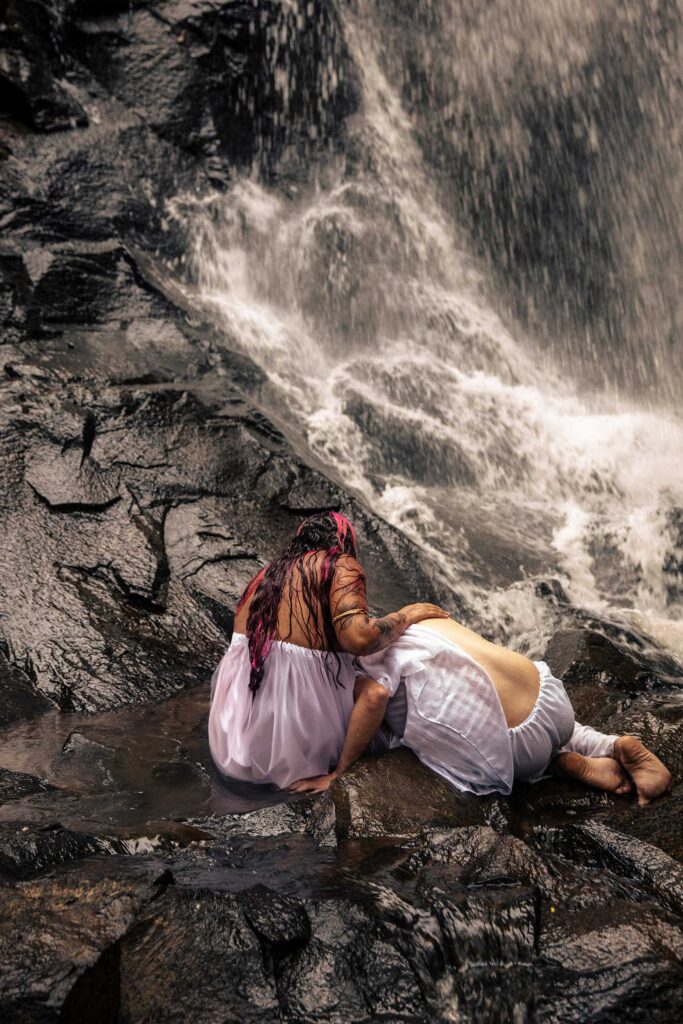
Our forests are gradually disappearing, and the waterfall where we once performed sacred rituals is now nearly dry. Much of my work in M’Kumba is created in this environment—a place that still holds traces of nature, but is constantly under threat.
As our Orishas are not only present in nature but are manifestations of it, my photographic practice—in which I translate mythological narratives—is always deeply connected to landscape and to these spiritual forces. Within our rituals, nature is not symbolic—it is constitutive. We believe that every human being is formed by three types of “blood”: animal, which flows through our veins; vegetal, which comes from the leaves; and mineral, which comes from water and stones.
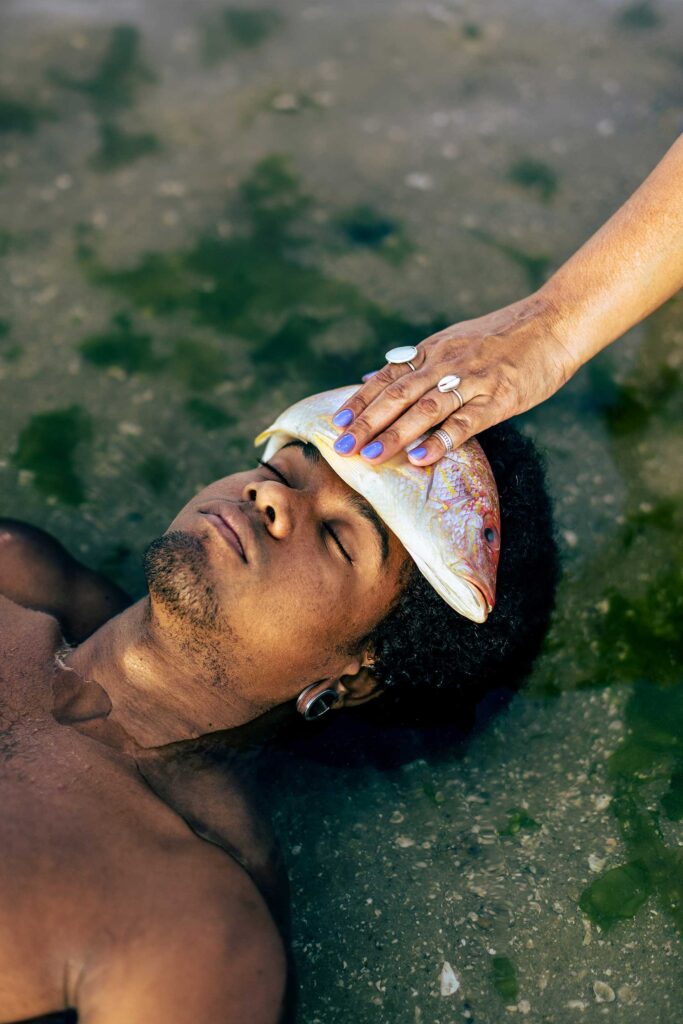
In the initiation process, which lasts 21 days, the first ritual act takes place at a waterfall. The initiate’s head is washed with mineral water—the mineral “blood”—associated with Òṣun, the Orisha of rivers and waterfalls. Only through this direct contact with nature does one become able to manifest the sacred.
Virginia: How do you navigate the tension between culture and contemporary environmental crises, and how do you see the role of art in the era of climate and ecological crisis?
Gui: As an artist, I am deeply concerned by the expansion of mass culture, especially through digital systems that often disregard values of preservation, collective well-being, and ecological balance.
Driven by profit, mass culture and large corporations continuously exploit not only natural resources, but also social inequalities and even our time—transforming existence itself into a commodity. This system sustains itself through extraction, accumulation, social inequality and alienation.
In this context, I believe the role of art is fundamental. Art creates space for reflection and reimagination. It allows people from different cultures and cosmologies to express their experiences, their urgencies, and their ways of understanding the impact of environmental collapse.
Art has the power to transform perception—to reinvent how we see, how we relate, how we produce and consume. It is not only a form of expression, but a tool to question dominant systems and to propose other ways of existing in the world.
Our forests are gradually disappearing, and the waterfall where we once performed sacred rituals is now nearly dry. Much of my work in M’Kumba is created in this environment—a place that still holds traces of nature, but is constantly under threat.
Virginia: What can spiritual or cosmological worldviews offer that scientific or political-driven climate narratives often cannot?
Gui: Cosmoperceptions—whether from Afro-diasporic traditions, Indigenous cultures, or other ancestral worldviews—offer a spiritual relationship with the world and nature. They invite us to sense nature deeply, to understand it as a realm where our ancestral divinities dwell and where, one day, we will also return.
These cosmoperceptions engage all senses—beyond what the eyes can see—through touch, intuition, and embodied perception.
In contrast, scientific and political narratives often cannot grasp this dimension. They tend to reduce nature to something measurable, limited, and external—and even then, something to be extracted. It is this spiritual and sensory relationship—where nature is both origin and destiny—that can reorient our understanding and interrupt the ongoing destruction of the natural world.
Virginia: M’Kumba reclaims and honours Afro-Brazilian spiritual heritage. How do you understand this as an ecological gesture?
Gui: Since we honour our ancestors and the Orishas—who dwell in nature and are nature itself—reclaiming our ancestral memory is inseparable from reclaiming the preservation of the environment.
To protect our spiritual heritage is to protect the ecosystems where these forces exist. This gesture is not only about memory, but about continuity. It is through this preservation that not only our ancestors endure, but that humanity and future generations may also continue to exist.
Virginia: In M’Kumba, how does the body become a site of both survival and cosmology?
Gui: While many Western traditions separate body and spirit—often perceiving the body as something to be controlled or diminished—Afro-diasporic cosmoperceptions understand the body as a sacred site.
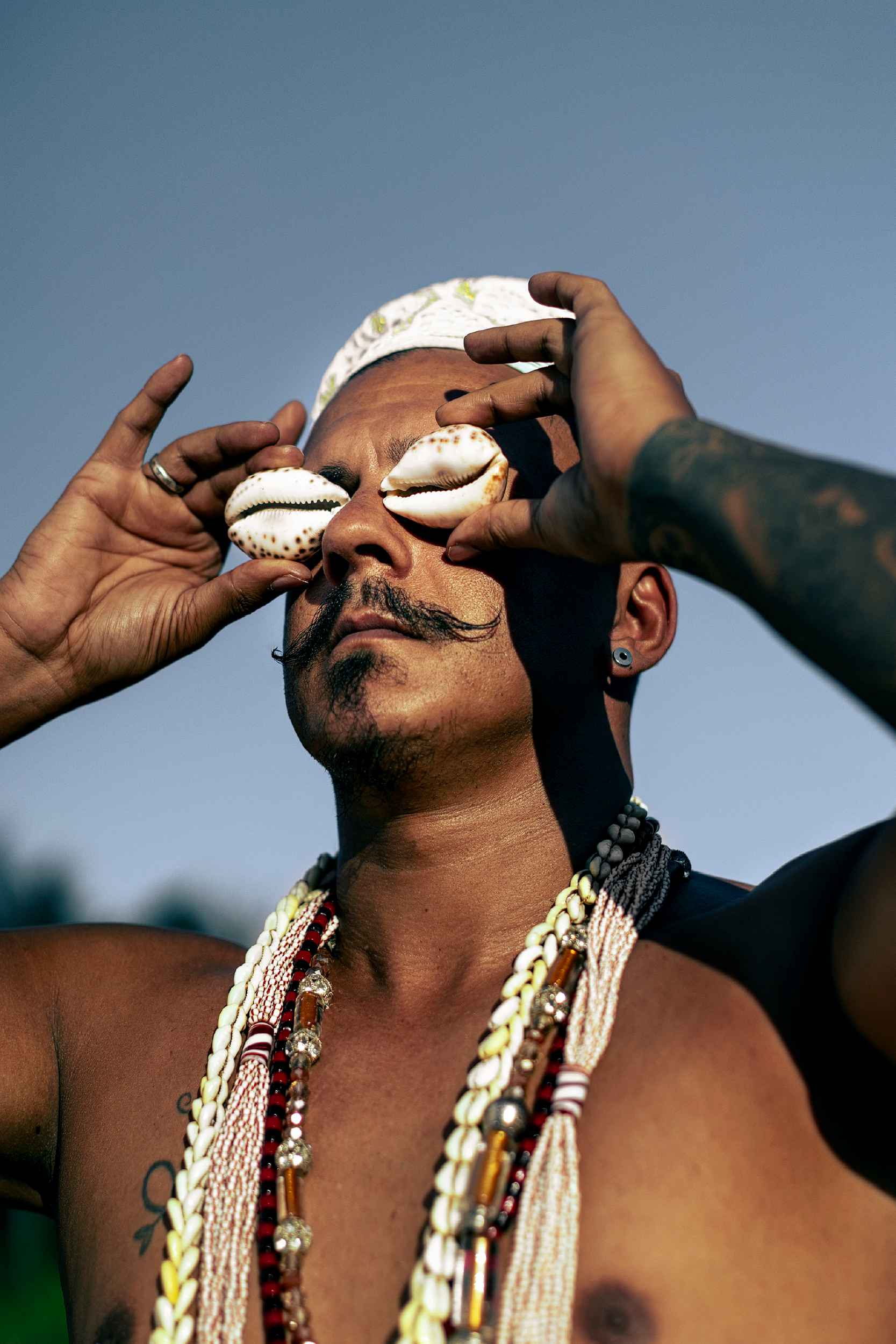
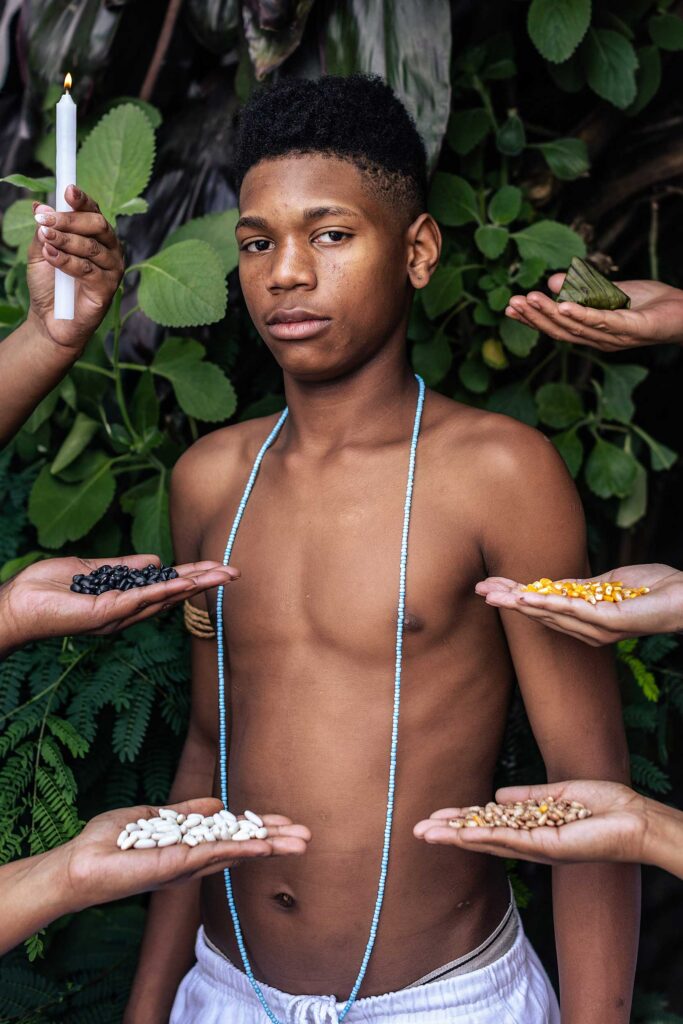
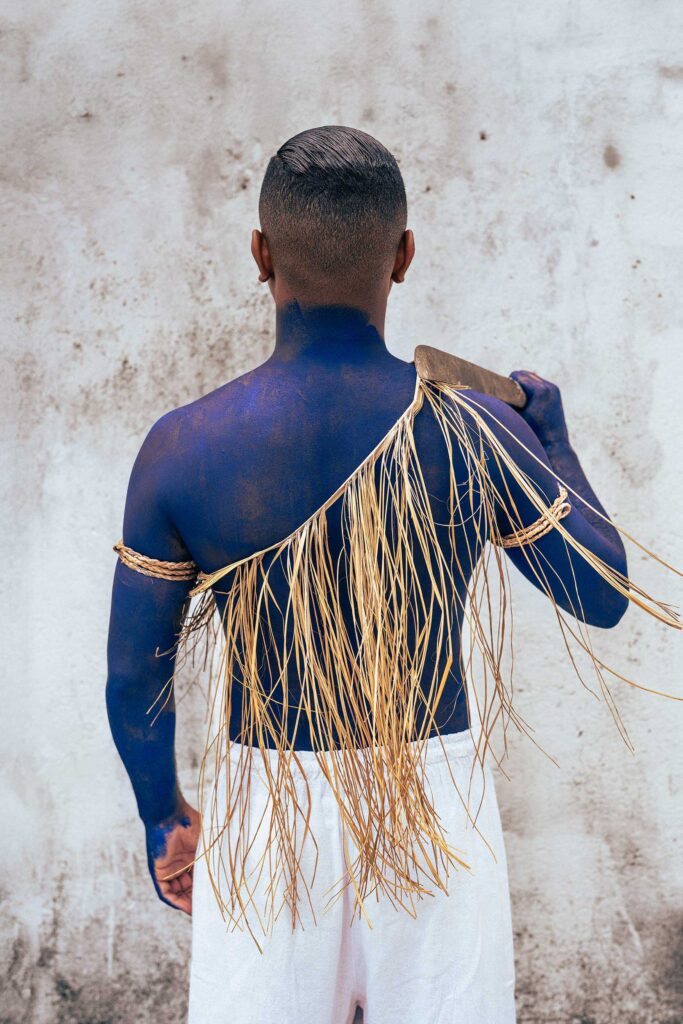
The body carries not only the divine, but also the presence of those who came before us. It is through the body that Orishas and ancestors manifest, especially in states of trance. Our knowledge is not written—it is lived. It is transmitted through voice, gesture, dance, ritual, and through what we wear: garments, beads, and adornments. These are embodied grammars, inscribed not on paper, but on the body itself. And because the Orishas are also manifestations of nature, the body is inseparable from the environment. To honour the body is to honour the land. The sacred, the body, and the earth exist in continuous relation.
The body carries not only the divine, but also the presence of those who came before us. It is through the body that Orishas and ancestors manifest, especially in states of trance.
Virginia: How do you navigate rupture and continuity in relation to Brazil’s colonial history?
Gui: In my practice, I work through the concept of diaspora as both rupture and reinvention. Although the diaspora was marked by extreme violence—with African peoples forcibly displaced and their spiritual systems suppressed—it also created a space of encounter.
Different cultures, which would not have met in Africa, were brought together and, in this forced coexistence, began to reconstruct their cosmologies, rituals, and mythologies.
Through this process, new forms of continuity emerged. These traditions re-rooted themselves in Brazilian soil, creating new relationships with land and environment. Devotion becomes the thread that reconnects past and present. Through it, ecological memory is restored—not as something fixed, but as something that is continuously re-created through practice, ritual, and care.
Virginia: How does your work insist on a decolonial understanding of ecology?
Gui: My work insists on a decolonial understanding of ecology by refusing the idea that the environment can be separated from history, from the body, and from structures of power. What we call “nature” has long been shaped by colonial violence—the same violence that displaced peoples, silenced cosmologies, and transformed land into resources.
Within Afro-diasporic cosmoperceptions, the land is not an object to be managed, but a living continuity that holds memory, ancestry, presence, and sacrality. To care for the land is not an environmental gesture alone—it is an act of resistance against the ongoing logics of extraction that are deeply entangled with racism and coloniality.
In M’Kumba, I work from within this understanding. The images do not separate body, ritual, and landscape, because these separations do not exist in the cosmologies that sustain the work. The body carries memory, ritual sustains relation, and the land is where these forces meet.
Virginia: What does it mean to imagine climate justice through ritual?
Gui: To imagine climate justice through ritual is to shift the ground from which justice itself is understood. Within Afro-Brazilian cosmoperceptions, ritual is not symbolic—it is a practice of balance, a way of sustaining life through continuous exchange.
In our traditions, nothing exists in isolation. Through what we call axé—the vital force that moves through all beings—life is maintained by circulation, not accumulation. Rituals activate this flow. They reestablish connection between body, land, ancestry, and time.
Climate justice, in this sense, cannot be reduced to policy or regulation alone. It requires a reorientation of how we relate to the world. It requires recognising that the earth is not a passive ground, but a living presence with which we are in constant relation.
Afro-Brazilian spiritual frameworks offer not a metaphor, but a methodology: reciprocity as ethics, reverence as practice, and collective care as a condition of survival.
Through ritual, justice is not imposed from above—it is cultivated from within the relationships that sustain life. It is in this continuous exchange, in the movement of axé, that both the earth and those who inhabit it may endure.
In M’Kumba, I work from within this understanding. The images do not separate body, ritual, and landscape, because these separations do not exist in the cosmologies that sustain the work. The body carries memory, ritual sustains relation, and the land is where these forces meet.
Interview by Virginia Melodia
Join Gui for Ojú Órun: Territory, Body, Cosmoperceptions and Contemporary Photography with Gui Christ
Saturday 29 August 2026 | 15:00 CEST | Online
120–150 minutes
Combining artist talk, visual presentation, guided creative exercises, and collective reflection, Ojú Órun invites participants to think about territory not simply as geography but as a living system shaped by memory, spirituality, ancestral knowledge, and political struggle.
Drawing from Gui’s long-term project M’Kumba, the session explores how contemporary photography can move beyond colonial visual traditions and develop alternative approaches rooted in embodied knowledge, ritual memory, and relationships with land.
Designed for artists, photographers, researchers, students, and anyone interested in Afro-diasporic visual culture, ecology, decolonial thought, and contemporary artistic practice, the workshop offers both critical reflection and practical inspiration.
Explore:
• Decolonial approaches to photography and ecology
• Afro-Brazilian cosmologies and embodied knowledge
• Ritual, ancestry and ecological thinking
For every 10 tickets sold, one free place is gifted to someone who may not otherwise have access to the opportunity.
Sacred Ecologies Full Series Pass (All 4 Study Clubs) – 15% Discount
Full Series participants receive exclusive access to recordings of all previous Study Club sessions, allowing you to revisit conversations and catch up on any sessions you may have missed throughout the programme.
To support students, we’re offering 22.22% off all individual Study Club sessions.
The Full Series Pass already includes a 15% saving, and by applying the exclusive student discount code, students receive a total saving of 35% on the full series.
To learn more, email us at hello@plantedjournal.com