


The Seed, the String and the Silhouette: From Land to Material to Fashion | Aditi Mayer
Fashion might appear superficial on the first glance, yet it’s the loudest affirmation of our conscious and unconscious desires. Those desires, when manipulated and overwhelmed, can erode the sense of self; constant consumption doesn’t only rupture the connection between us and nature but also our connection to ourselves. The clothing we wear carries the remnants of material and memories from the land where it was grown, the hands that made it and the borders it crossed to reach us,  its story continuing even after we let go of it. Clothing is a political matter, organised under structures of harm or healing, justice or injustice.

Planted Journal, in its mission to bridge the gap between humans and nature, is introducing The Politics of Fashion: On Climate, Craft, Consumption and Colonialism. This series explores fashion beyond its surface, examining how the stories of what we wear shape the relationship between the personal and the planetary, the past and the present. By inviting selected creatives, designers and activists from across continents, the series seeks to challenge models of consumption and extraction and reintroduce fashion as a form of care.
There is an intelligence embedded in the way cultures have evolved in response to their environments—what people grow, what they eat, what they wear, what materials they build with, how they mark seasons, and how they gather. These traditions aren’t arbitrary. They are often the result of generations of observation and adaptation to a particular ecology.
Aditi Mayer
Climate Activist and Founder of The Artisan Archive
Aditi Mayer is a Punjabi-American artist, storyteller, and climate activist based in Los Angeles, where she holds familial memories in a collection of dhurries inherited from her grandmother, alongside generational textiles passed down through the women in her family. For her, material culture and environmental justice are part of the same story: a single thread that weaves people and planet.
After a decade of work in the industry, she founded The Artisan Archive—a storytelling platform, an impact lab, and a brand. Through it, she is documenting the culture, history, and political systems rooted in locality, while investing in those realities and creating economic pathways through material offerings. The first project will be launched this season, rooted in her land of origin, Punjab.
Being Punjabi makes that relationship with land especially visceral for me. Punjab itself is named for its rivers, and agriculture has shaped so much of its cultural and economic life. Farming appears in our language, music, food, folklore, spirituality, and social traditions.
Priyanka Singh Parihar: “What does it mean to inherit a relationship with land?” you ask in ‘In Conversation with The Land’. How do ancestral relationships, family, and traditions guide your practice as a creative, activist, and storyteller?
Aditi Mayer: I increasingly think of culture as a kind of blueprint for how to live in relationship with land.
There is an intelligence embedded in the way cultures have evolved in response to their environments—what people grow, what they eat, what they wear, what materials they build with, how they mark seasons, and how they gather. These traditions aren’t arbitrary. They are often the result of generations of observation and adaptation to a particular ecology.
So when I think about inheritance, I’m interested not only in what we receive materially but also in what forms of knowledge we inherit—and what forms we may need to reclaim after generations of disruption.
Being Punjabi makes that relationship with land especially visceral for me. Punjab itself is named for its rivers, and agriculture has shaped so much of its cultural and economic life. Farming appears in our language, music, food, folklore, spirituality, and social traditions. At the same time, Punjab has experienced profound ruptures in its relationship to land—from colonialism and Partition to the industrialisation of agriculture.
That tension between inheritance and rupture guides a lot of my work. Whether I’m looking at cotton seeds, handloom weaving, agricultural practices, or clothing traditions, I’m often asking: what knowledge existed here before? What survived? What disappeared? And what might become possible if we begin treating culture not as something fixed in the past, but as a living repository of ecological intelligence?
For me, reclamation is not about romanticising tradition. It’s about recognising that some of the answers we’re looking for may already exist within the relationships our ancestors cultivated with place.
Priyanka: Reflecting further on land, your work spans different landscapes—from handloom weavers in India, shea cooperatives in West Africa, and agroforestry projects in Peru to kintsugi masters in Japan. In different cultures, traditional craft is a spiritual practice. Do you see the climate crisis also as a spiritual crisis, a moment of amnesia, where humans have intellectually separated from the systems of Earth?
Aditi: I do, although I might describe it most fundamentally as a crisis of relationship.
One framework I often return to is Marx’s idea of alienation. In his writing on estranged labor, he describes how industrial capitalist production can alienate a worker from the object they produce, from the act of making itself, from other people, and ultimately from their own sense of human agency. I think we can extend that idea further: so much of our contemporary economy also alienates us from the ecological systems that make production possible in the first place.
We encounter a shirt without the cotton field. A table without the forest. Food without soil. We experience products almost as if they materialise into the world fully formed, stripped of the ecological, cultural, and social relationships that produced them.
That is part of why craft has become so important to me. I think about Sōetsu Yanagi’s ‘The Unknown Craftsman’ and the philosophy of mingei, which challenged the idea that beauty belonged only to individual artistic genius and instead located it within ordinary, useful objects made through inherited traditions, often by anonymous craftspeople. Yanagi was interested in the relationship between beauty, utility, repetition, material, and collective knowledge—the idea that an object can contain something far larger than the individual who made it.
Craft puts context back into the object.
We encounter a shirt without the cotton field.
A table without the forest.
Food without soil.
We experience products almost as if they materialise into the world fully formed, stripped of the ecological, cultural, and social relationships that produced them.
Aditi Mayer
Climate Activist and Founder of The Artisan Archive
Priyanka: How can we reclaim memories and connection through craft? As a storyteller, do you have one to share where this has already happened?
Aditi: I actually think about this through objects in my own home.
I have a collection of dhurries that came to me through my grandmother, alongside other textiles that have moved through the women in my family. They’re beautiful objects, but what makes them valuable to me has very little to do with their monetary value.
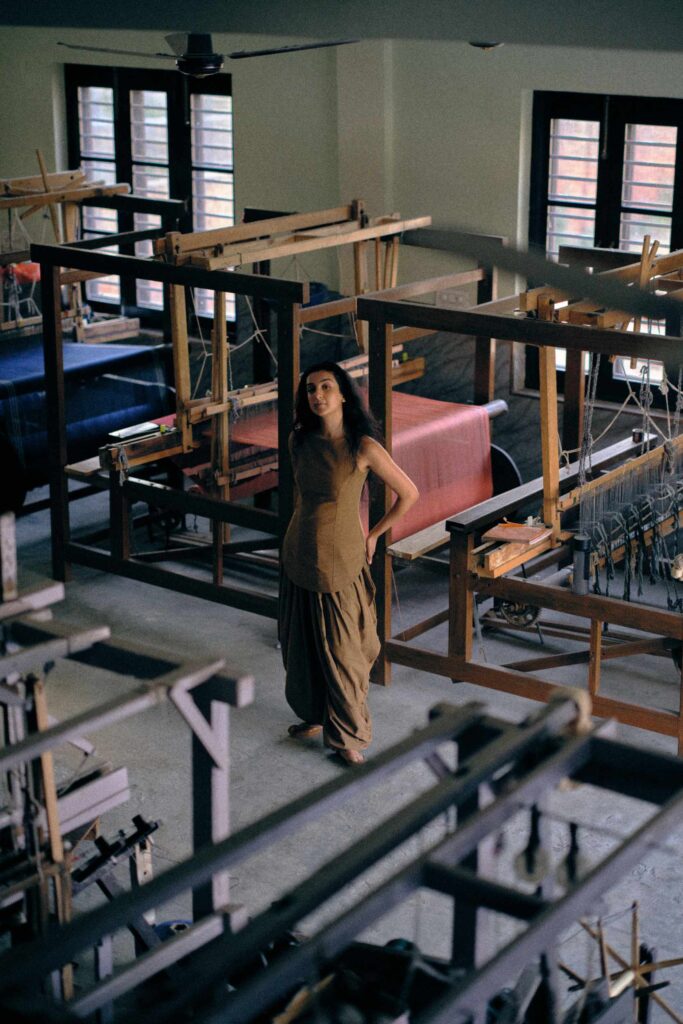
In Punjab, so much textile knowledge historically existed within women’s spaces. Practices like phulkari embroidery and dhurrie weaving moved through families, homes, marriages, and generations. They were not necessarily conceived of as products destined for a marketplace. In many cases, they were things women made for one another and passed down.
Priyanka: The past and present are intertwined. In your conversations, you mention how the British Raj in India was an empire of cotton, and as a National Geographic Fellow, you documented the decline of native cotton varieties in Punjab, India. In this context, did you find a common thread influencing the past and the present? What is the one lesson we can learn from India’s independence movement that can still be relevant today for building more regenerative economies?
Aditi: One of the things my work in Punjab has taught me is that native ecologies have had to survive multiple waves of disruption.
Under British colonial rule, India was increasingly positioned within an imperial economy that favoured the export of raw materials and the import of British manufactured cloth. India, once globally renowned for its textile production, became a major market for British cotton textiles, while colonial economic structures helped reshape local production systems around the needs of empire. Then, in the twentieth century, Punjab became the epicentre of another enormous transformation through the Green Revolution.
I don’t think those two histories should be collapsed into one another—the Green Revolution was a post-independence project that dramatically increased agricultural productivity and addressed very real concerns around food security. But it also helped move Punjab toward increasingly standardised, high-input forms of agriculture, with long-term consequences for groundwater, soil health, and crop diversity.
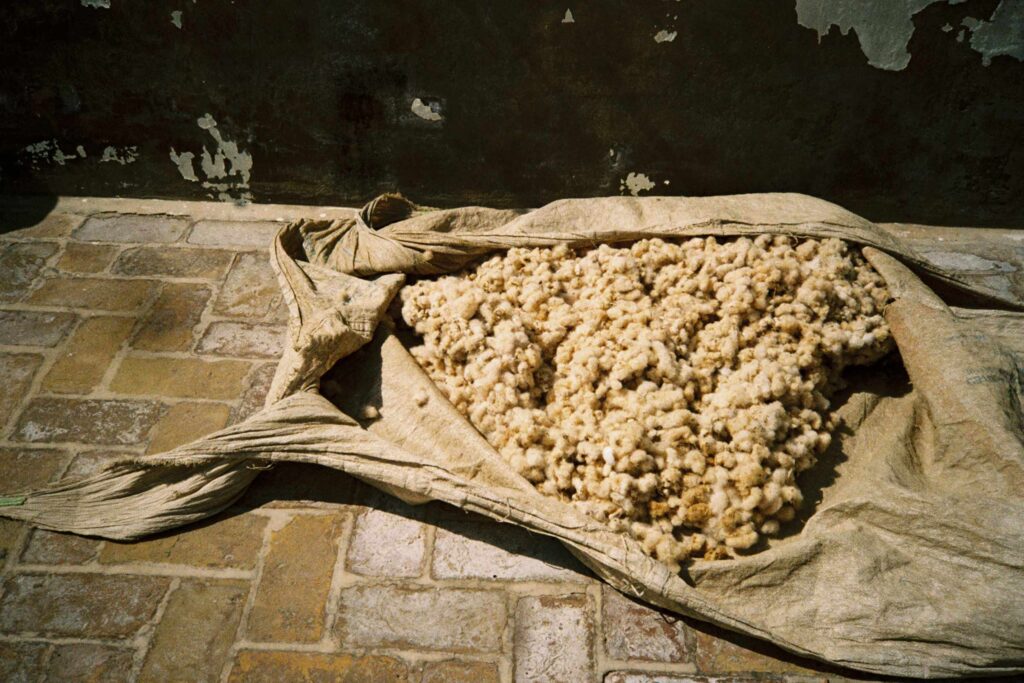
So when I began documenting the disappearance of native cotton in Punjab, I realised I was looking at an ecology that had survived both colonial extraction and later models of agricultural modernisation. That is what makes seed sovereignty feel so political to me. The lesson from India’s independence movement that I find most relevant today is the idea that self-sufficiency can be a form of reclamation. Swadeshi was not simply a boycott of British cloth. It was an argument about economic autonomy: who produces what a society needs, who controls that production, and where value circulates. The movement toward economic self-reliance became deeply connected to the politics of independence.
Priyanka: When we think of labour exploitation in fashion, we often map it to the Global South. Yet you also organised with labour in Los Angeles’ garment industry. What are the similarities in experiences of labourers across the world whose well-being suffers at the expense of fast fashion? What is the role of the consumer in this context?
Aditi: My entry into fashion was actually through garment worker organising in Los Angeles. I started engaging with the industry after Rana Plaza when I was still a teenager. Like many people, I initially understood garment exploitation as something that happened “over there”—in Bangladesh, India, Cambodia, or elsewhere in the Global South. And then I learned about the conditions facing garment workers in my own city. That completely disrupted the geography I had associated with exploitation.
What I came to understand is that the common denominator isn’t a particular country. It is a business model built around producing more, faster, and cheaper while continually pushing the true costs of that system downward. Workers absorb those costs through low wages and precarity. Farmers absorb them through depressed commodity prices and debt. Communities absorb pollution. The planet absorbs waste. The geography changes, but the logic can be remarkably similar.
Priyanka: We might see a BIPOC person in advertising, but behind the scenes, marginalised communities remain at a disadvantage. This creates a paradox: another form of extractivism. When working with brands, how do you navigate this? For you, beyond the aesthetics of representation, what makes a truthful inclusion?
Aditi: I think representation matters, but representation alone is a very low bar.
Fashion has become incredibly fluent in the aesthetics of diversity. You can create a campaign that looks progressive while nothing about the underlying system producing that image has actually changed. So when I decide whether to work with a brand, I’m usually looking much further upstream. Can they account for their supply chain? Are they meaningfully interrogating how their products are produced? Are they trying to disrupt some part of the conventional fashion model—whether through circularity, material innovation, labour practices, traceability, longevity, or a different relationship to production and consumption?
No company is perfect, and I don’t necessarily expect perfection. I’m more interested in whether there is a meaningful theory of change behind the work. For me, truthful inclusion is when representation extends beyond who appears in front of the camera and begins affecting the infrastructure behind it. I’m much more interested in the latter.
Fashion has become incredibly fluent in the aesthetics of diversity. You can create a campaign that looks progressive while nothing about the underlying system producing that image has actually changed.
Aditi Mayer
Climate Activist and Founder of The Artisan Archive
Priyanka: The Artisan Archive weaves cultural preservation with climate adaptation. What is your vision for The Artisan Archive? What projects, collaborations, or ideas are you especially excited about?
Aditi: The Artisan Archive is really where all of the different strands of my work are beginning to come together. I envision it as three things simultaneously: an impact lab, a brand, and a storytelling platform.
The storytelling component allows us to document material cultures and the people, landscapes, histories, and political systems behind them. The impact work allows us to go beyond documentation and actually invest in the survival of those systems. And the brand allows us to create objects that can generate economic pathways back into the communities and practices we are documenting.
We’ll be publicly launching this Fall, and our first project is rooted in Punjab.
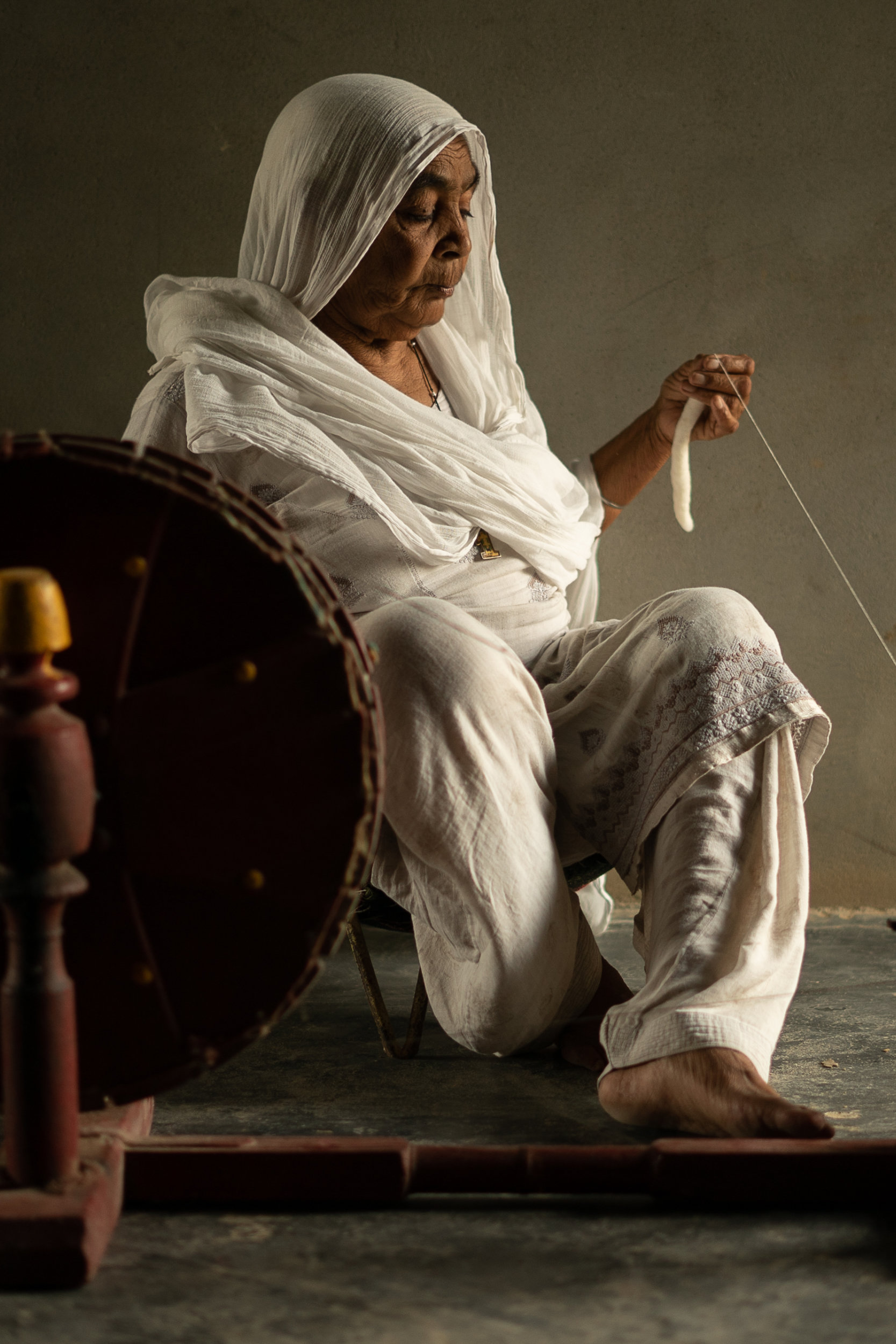
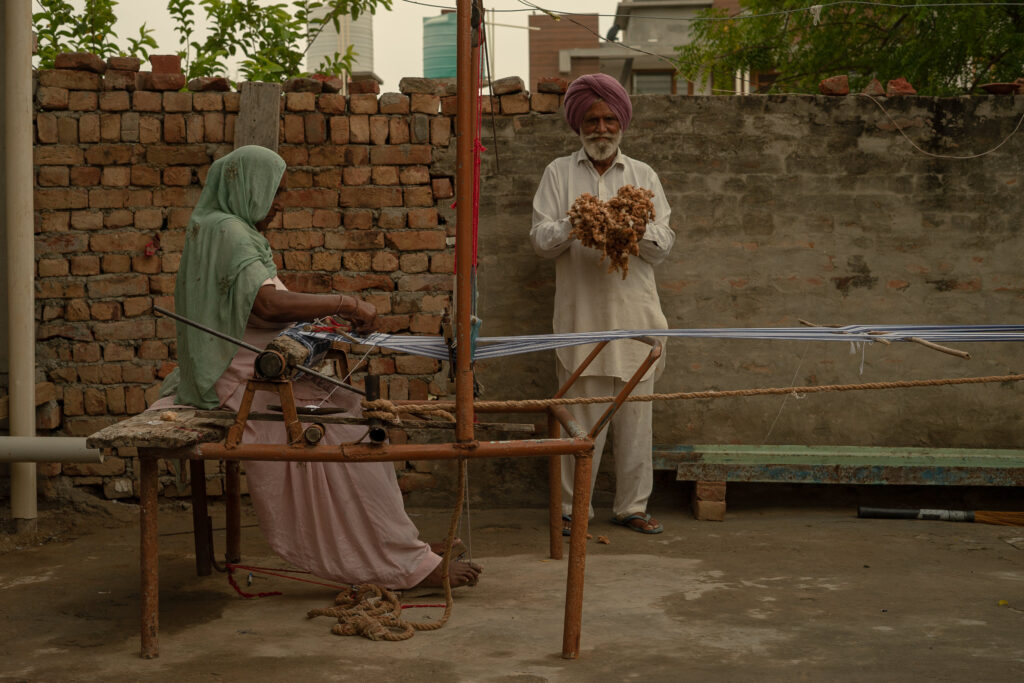
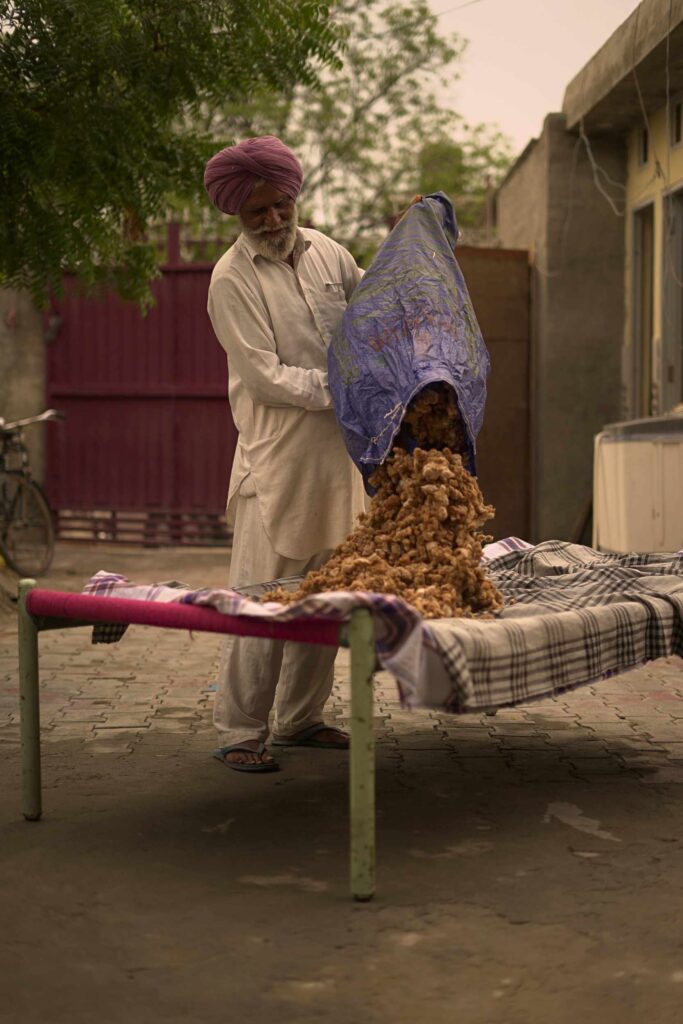
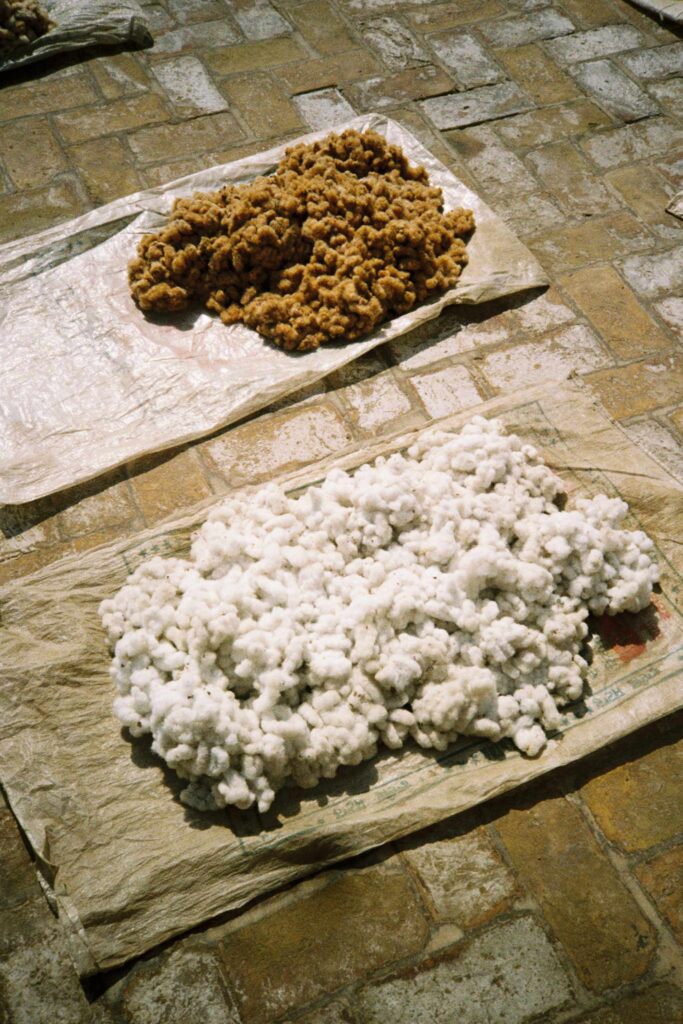
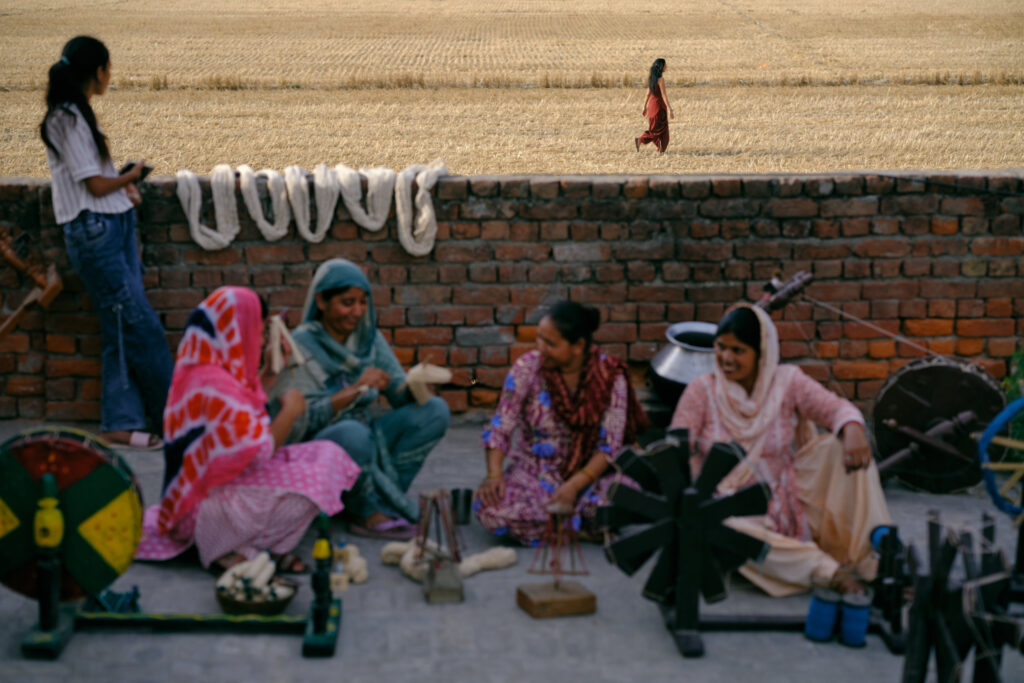
For the past several years, I’ve been following the story of a native brown cotton seed that had nearly disappeared from the region but had been preserved for decades by an elderly farmer. Through our work with Kheti Virasat Mission, that story has expanded into something much larger: supporting the cultivation of Indigenous cotton, working with a women-led weaving school connected to the tradition of Trinjan, and creating an inaugural clothing collection rooted in Punjabi silhouettes.
I often describe our methodology as seed, string, silhouette.
The seed asks: where does the material begin? What ecology does it belong to? Who grows it?
The string asks: how does that raw material become textile? Who spins it, dyes it, weaves it? What knowledge and infrastructure have to exist for that transformation to happen?
And the silhouette asks: what cultural language does the final garment belong to? Rather than taking a material out of its context and designing something entirely disconnected from place, how can the form itself continue the story?
Our first collection is an attempt to connect all three.
What excites me most about The Artisan Archive is that I don’t want preservation to end with documentation. An archive traditionally looks backward. I’m interested in asking what an archive looks like when it also creates conditions for the future.
Priyanka: What does “the politics of fashion” mean to you personally?
Aditi: To me, the politics of fashion is really a question of relationships and power.
Priyanka: Fashion might appear to be an individual affair. However, we are constantly communicating through it, affirming our belonging to a culture, place, or tradition. Do you believe this relationship between clothing and belonging is being eroded in an era of constant consumption? If yes, what are the ways in which we can ground ourselves to find meaning in what we wear beyond passing trends?
Aditi: There is always another microtrend, another aesthetic, another version of yourself being presented to you. We’re increasingly encouraged not only to buy new clothes but to continually remake ourselves through consumption.
For me, the antidote is simply relationship. Know what you actually like rather than what you have been told to like that month. Wear something long enough for memories to attach themselves to it. Meaning accumulates through time. Trend culture depends on us not giving it that time.
The seed asks: where does the material begin? What ecology does it belong to? Who grows it?
The string asks: how does that raw material become textile? Who spins it, dyes it, weaves it? What knowledge and infrastructure have to exist for that transformation to happen?
And the silhouette asks: what cultural language does the final garment belong to? Rather than taking a material out of its context and designing something entirely disconnected from place, how can the form itself continue the story?
Aditi Mayer
Climate Activist and Founder of The Artisan Archive
Introduction and Interview by Priyanka Singh Parihar
Founder and EIC
Priyanka Singh Parihar is a BIPOC writer, curator, and art director who explores the connection between humans and nature, seeking new ways of existing. Hailing from a rural farming community in India and now residing in Milan, she observes the world through two distinct cultural perspectives: East and West, rural and urban.
Her work with Planted Journal began during a period of severe depression and eco-anxiety. Through creative practice, she found a path to healing. With a history education in Delhi, which provided her with critical and academic tools, and a master’s in fashion styling in Milan, where design, fashion, and aesthetics have shaped her, she is now dedicated to applying her experience to the field of climate justice.