

Between Land and Body: The Fabric of Health Touched by Fashion | Lucia Cuba
Fashion might appear superficial on the first glance, yet it’s the loudest affirmation of our conscious and unconscious desires. Those desires, when manipulated and overwhelmed, can erode the sense of self; constant consumption doesn’t only rupture the connection between us and nature but also our connection to ourselves. The clothing we wear carries the remnants of material and memories from the land where it was grown, the hands that made it and the borders it crossed to reach us,  its story continuing even after we let go of it. Clothing is a political matter, organised under structures of harm or healing, justice or injustice.

Planted Journal, in its mission to bridge the gap between humans and nature, is introducing The Politics of Fashion: On Climate, Craft, Consumption and Colonialism. This series explores fashion beyond its surface, examining how the stories of what we wear shape the relationship between the personal and the planetary, the past and the present. By inviting selected creatives, designers and activists from across continents, the series seeks to challenge models of consumption and extraction and reintroduce fashion as a form of care. 
My training in public health taught me to think in systems: a body’s health is never just its own; it’s shaped by water, soil, labour, housing, policy, and community. It’s a short step from there to a planetary scale, where the more-than-human world – land, plants, animals, ecosystems – is part of the same fabric of health that fashion touches at every stage, from fibre to landfill.
Lucia Cuba
Artist, activist, and educator
Lucia Cuba is a fashion designer, textile artist, activist, and educator. Her practice explores biopolitics, public health, gender, and non-Western fashion systems. Cuba’s unique educational background with an MFA in Fashion Design and Society from The New School University and a BSc in Social Psychology from Cayetano Heredia University in Peru gives her a distinct approach to unveiling hidden dynamics of fashion and society. For her, a garment is activated when worn by a body; it becomes a medium of meaning-making, a site where the intimate and public realities converge. It moves through every aspect of the ecosystems that intertwine personal and planetary health. Through her work, she urges us to recognise this power.
As a Latin American scholar, she is also dedicated to preserving her culture through an online database, BASELAT, archiving resources, fashion and textile practices that don’t necessarily fit within narrow academic methodologies. This work acknowledges the plurality, cosmology, and generational practices of the region. It resists traditions being absorbed by global post-colonial systems that discredit the maker.
Cuba’s work has been exhibited at the Boijmans Van Beuningen Museum, the New York Museum of Arts and Design, and the Museo Amparo, among many other international venues. She received the Han Nefkens Award in Fashion (2014), a United States Artists Fellowship in Design (2019), and the Rockefeller Foundation’s Bellagio Center Residency Fellowship (2022). She currently works as an Assistant Professor of Fashion Design and Social Justice and is the former Director of the MFA Fashion Design and Society at Parsons, The New School.
For the Politics of Fashion, we invited Cuba to go deeper into her political practice rooted in art, design, culture, public health, and what it means to design in times of polycrisis.
Priyanka Singh Parihar: Your educational journey spans psychology, public health, and design, a unique interdisciplinary background. What inspired you to move into fashion, and how do these different fields continue to shape your practice and the way you think about fashion today?
Lucia Cuba: I came to fashion the other way around. I trained first in social and educational psychology at Universidad Peruana Cayetano Heredia, then went into graduate studies in educational psychology and doctoral studies in public health. I had practised design informally since I was a teenager, but I never thought of it as a formal path until the early 2000s, when Peru moved from dictatorship to democracy. That political shift opened enormous space for cultural and artistic expression, and I found myself drawn into alternative, independent design circles, fortunate to approach the practice that way.
For years, though, I struggled to bring my two worlds together. Peru didn’t have university-level fashion education at the time, so there was no obvious place for someone trained in the social sciences to practise design critically. By 2009, I stopped trying to build a personal brand or work within the industry as it was structured and started developing projects at the intersection of fashion and social issues instead. I looked for an educational space that could hold both a rigorous social framework and a serious creative practice and found the MFA Fashion Design and Society at Parsons, which, by coincidence, launched the same year I started looking. A Fulbright scholarship made it possible for me to study in the US, and I joined the programme’s first cohort in 2010.
Psychology and public health never left my practice; they became its foundation. I don’t see a garment as a finished object so much as evidence, something that carries power, health, gender, and belonging on a body. Every project I’ve built since, from Artículo 6 to Exercises on Health, comes from that same instinct: to ask what a piece of clothing knows about the world it moves through.
Priyanka: Fashion systems are deeply intertwined with planetary systems. When you speak about public health, do you also consider planetary health and more-than-human communities? How did these ideas shape your project Exercises of Health?
Lucia: Yes, absolutely, and increasingly so, though that’s the answer of who I am today: older, more critical, and admittedly still working out how to carry it into practice. My training in public health taught me to think in systems: a body’s health is never just its own; it’s shaped by water, soil, labour, housing, policy, and community. It’s a short step from there to a planetary scale, where the more-than-human world – land, plants, animals, ecosystems – is part of the same fabric of health that fashion touches at every stage, from fibre to landfill. I’ve only recently let myself hold all of this together and ask what it means for my own creative practice.
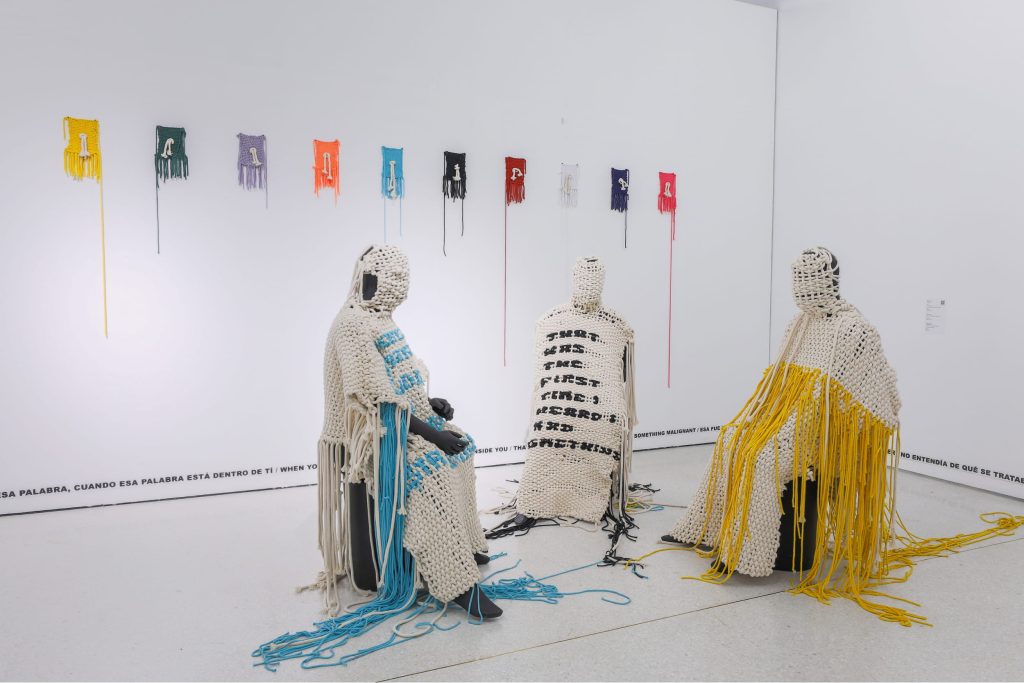
Exercises on Health (Ejercicios en Salud) grew directly out of that thinking. It’s a long-term project at the intersection of fashion design and public health, exploring notions of health and its absence through garments and wearable forms. During my residency at the Museum of Arts and Design in New York, for example, I built a chapter of the project around conversations with museum visitors about what health meant to them, their fears, their care practices, and their absences, and translated that language into written reflections. These conversations are often facilitated in workshops with different publics and help prompt the making of wearable devices that reflect on issues we often experience from a distance or only in specialised places/spaces (like a doctor’s office, a classroom, etc.).
Priyanka: Across many textile traditions in Latin America, clothing embodies relationships with land, community, and ancestry. Beyond its consumer dimension and colonial past, fashion can hold stories, cultural memory, and spiritual knowledge that help us understand our place in the world. In this context, how do you envision BASELAT as a space that nurtures not only academic discourse but also cultural and spiritual exchange?
Lucia: I founded BASELAT in early 2018 because I kept running into the same problem: so much extraordinary thinking, making, and teaching around fashion and textiles in Latin America was happening outside the frameworks international academia recognises as legitimate knowledge. BASELAT became a way to share what already existed: publications, practices, organisations, and resources working on fashion and textiles across the region and its diaspora, without turning it into another citation index, which I also understand as a kind of exclusion. Textile practice across Latin America is rarely just aesthetic or economic; it carries cosmology, ancestral technique, a spiritual relationship to land and material, and forms of collective memory that don’t always translate into an academic paper. A pollera, a weaving pattern, a dye process passed down for generations, is a form of knowledge as rigorous in its own right as anything produced in a university. Over time, BASELAT also became the foundation for an elective course I teach at Parsons, Fashion Systems: Latin America, where students engage with fashion and textile practices from within Latin American territories on those same terms.
That process also showed me how much I still wanted other ways to share and archive this knowledge. Together with two colleagues and friends based in Peru, Mozhdeh Matin and Susie Quillian, we launched a new project last year called ETC, Espacio Textil Contemporáneo, building an online archive of the people and practices shaping contemporary textiles in Peru today. We think of this work as infrastructure for an exchange that colonial and industrial fashion systems worked hard to interrupt: the relationship between maker, material, land, and ancestry. Nurturing it means resisting the extraction that happens when traditional textile knowledge gets absorbed into global fashion without credit, context, or reciprocity and treating its cultural and spiritual dimensions as knowledge.
Latin America is rarely just aesthetic or economic; it carries cosmology, ancestral technique, a spiritual relationship to land and material, and forms of collective memory that don’t always translate into an academic paper.
Lucia Cuba
Artist, activist, and educator
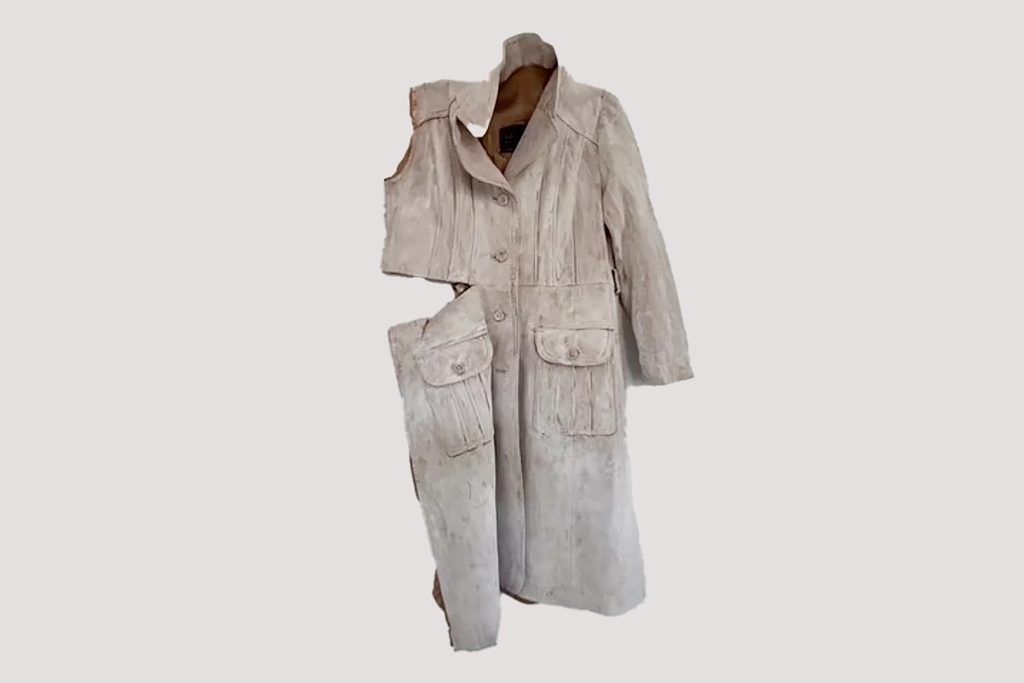
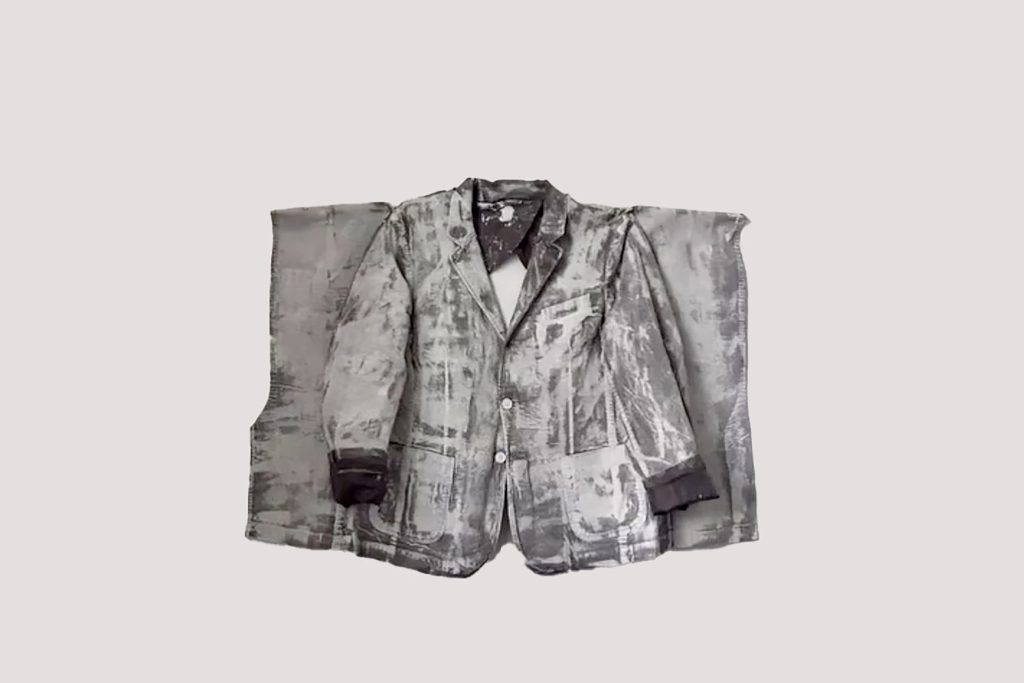
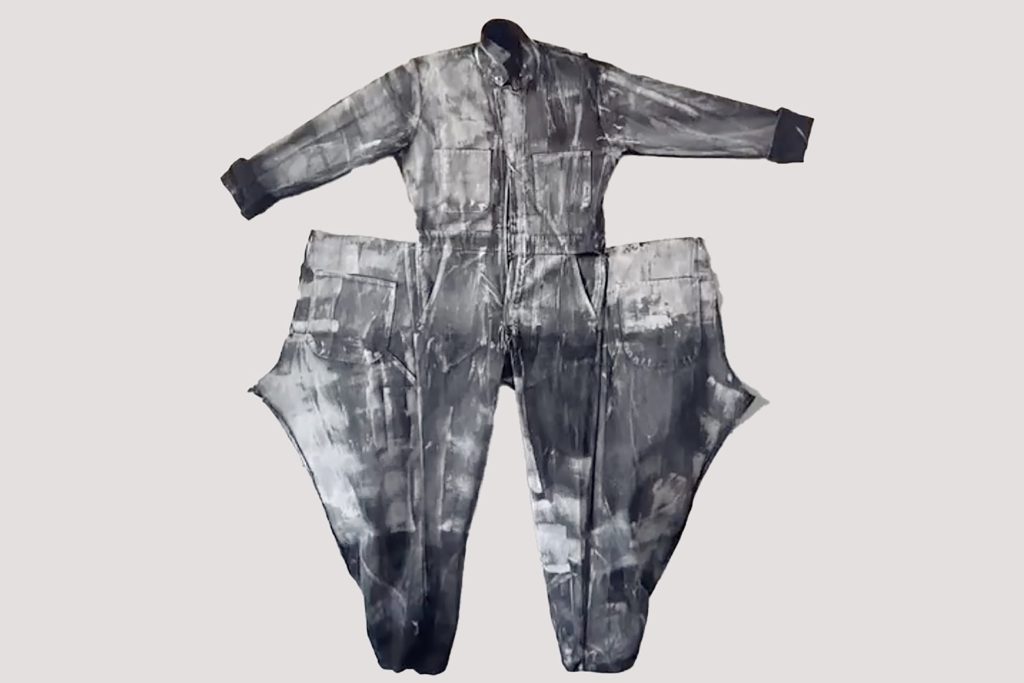
I think of garments as performative and political devices that become fully activated once they’re worn, moved in, and reacted to. A dress on a hanger can carry a message, but a dress on a body, in front of other people, activates an entirely different register of meaning.
Lucia Cuba
Artist, activist, and educator
Priyanka: Performance has always been central to fashion; we communicate through what we wear and how we inhabit clothing. In your practice, performance becomes a tool to connect fashion with the body and with broader social and political questions. How do you use performance to make political issues tangible, and what kind of engagement or reflection do you hope it evokes in audiences?
Lucia: I think of garments as performative and political devices that become fully activated once they’re worn, moved in, and reacted to. A dress on a hanger can carry a message, but a dress on a body, in front of other people, activates an entirely different register of meaning. That’s why performance and public actions have been central to almost everything I make, from the twelve actions that made up Artículo 6 alongside its clothing collection to workshops like Wearables for/by Protest to interactive installations built during Fashion Education Week at Parsons.
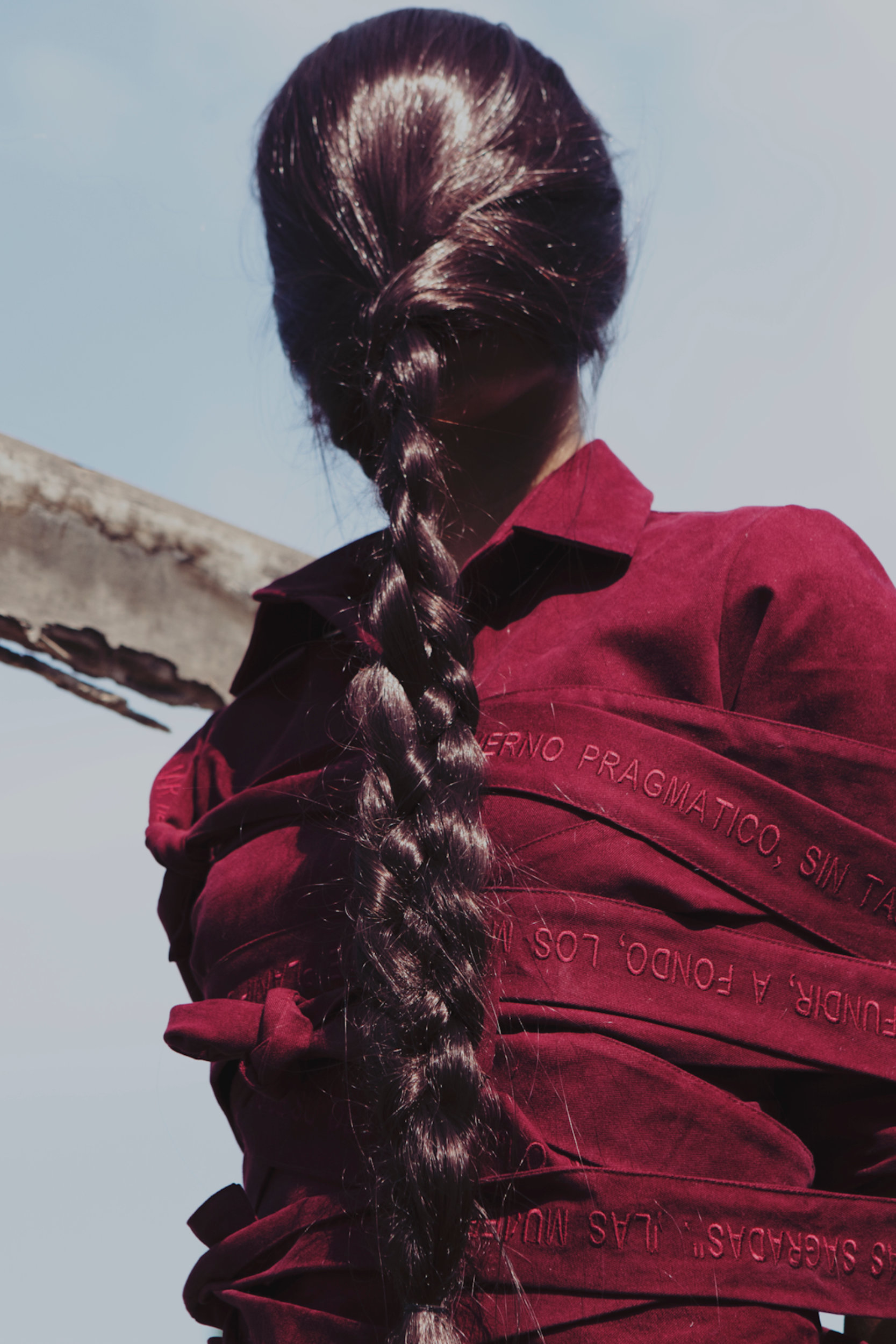
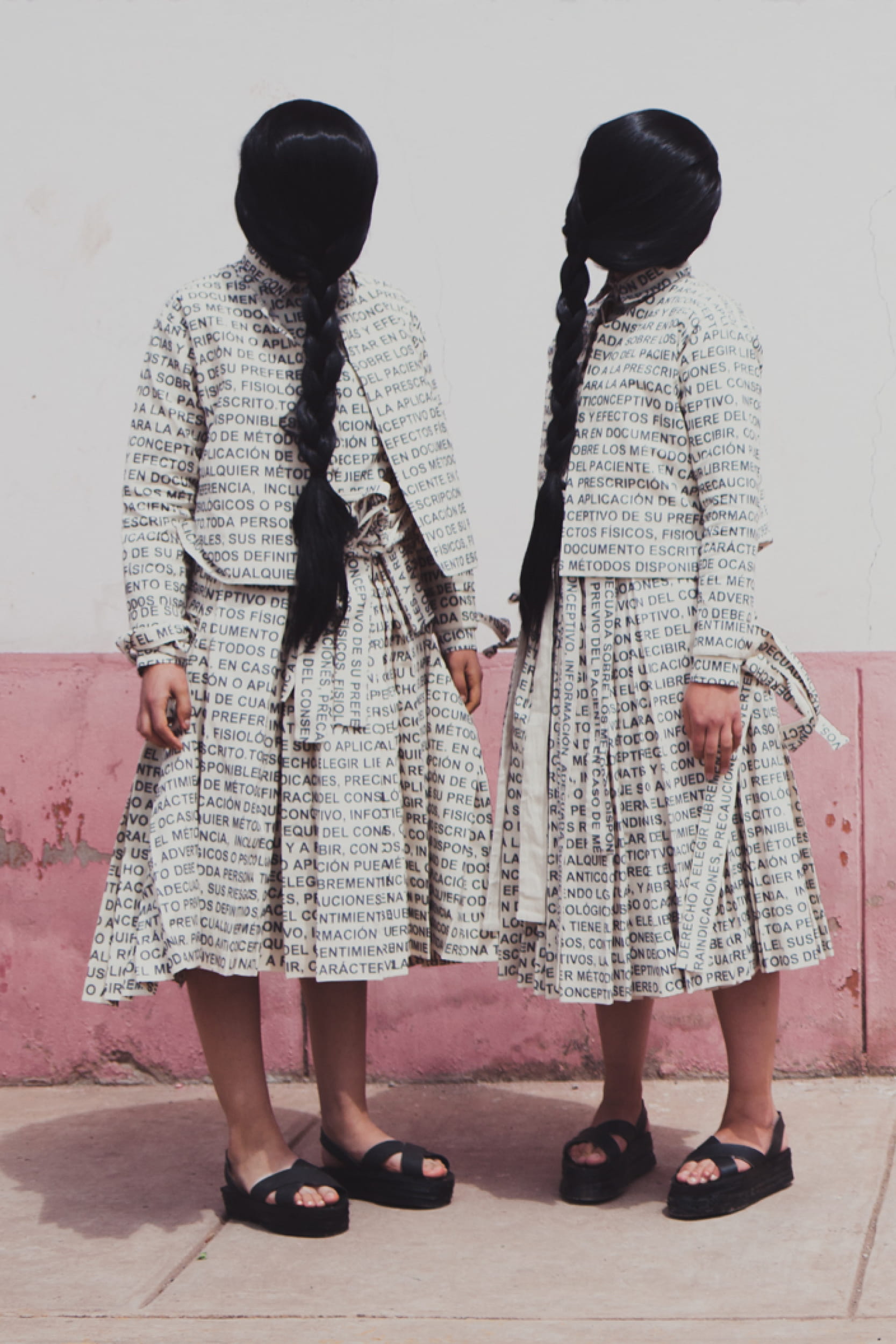
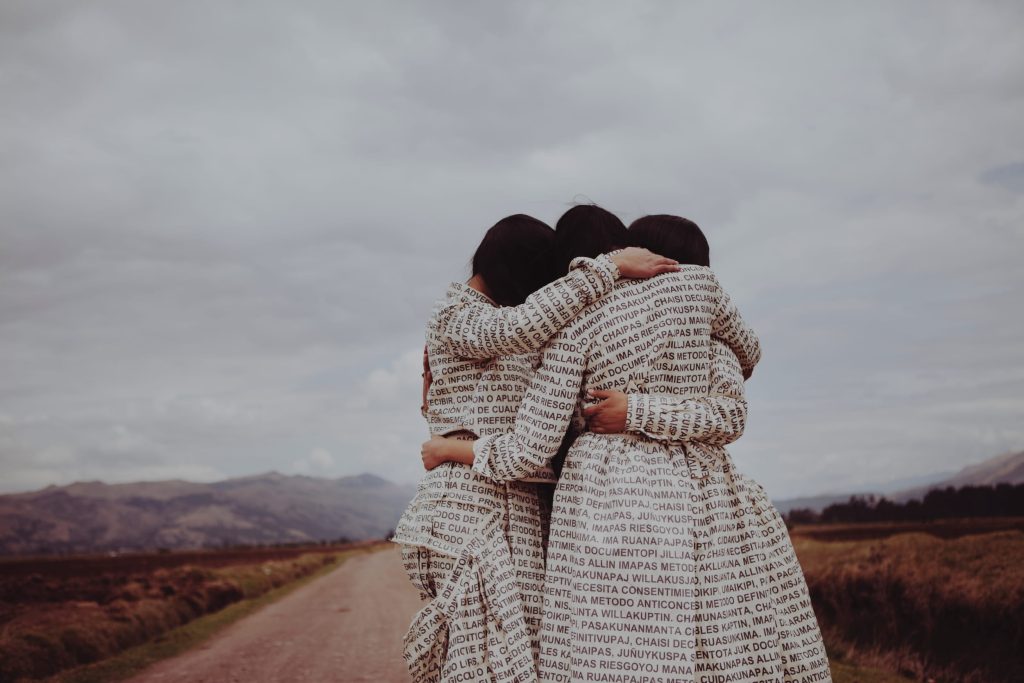
Performance lets me refuse the distance a gallery wall or a runway usually creates between the work and the audience. When people are invited to wear something, alter it, or witness it worn in public space, they stop being spectators of an issue and become, at least briefly, participants. With Artículo 6, wearing garments printed with testimonies, legal language, and the text of Peru’s General Health Law in public space turned an abstract policy failure into something a passerby had to physically encounter.
I hope that people who encounter these leave with a felt sense of their own agency and their own body within a political issue. Dressing is already a political act whether we acknowledge it or not; performance just makes that impossible to ignore, at least for the length of the encounter.
Priyanka: Your project Artículo 6: Narratives of Gender, Strength, and Politics explores the forced sterilizations carried out in Peru between 1996 and 2000. How did this project begin, and what responsibilities did you feel in working with such a sensitive history? Could you also share a story of resilience or collective strength that emerged through your collaboration with the communities involved?
Lucia: Artículo 6 began around 2011, out of a conviction I couldn’t set aside: that the forced sterilisation of thousands of women and men, mostly Indigenous and from economically marginalised communities in the highlands, the coast, and the Amazon, under Alberto Fujimori’s government, was a wound Peruvian society still has not fully reckoned with. I had followed the case since it first became public in 1997 and studied it again later during my public health training, which helped me understand the system behind it and the scale of what had happened. Living outside Peru at the time, I felt the frustration of a citizen who wanted to take part in that search for truth, memory, and belonging, and I started thinking about the access and networks I had and about the power clothing has to move through spaces where these conversations rarely reach: a fashion editorial, a runway show.
I began by returning to Lima and Cusco, reconnecting with organisations, organisers, and some of the women I had learned about years earlier through my public health studies. That process was critical for understanding my own position and privilege and the position and privilege that come with a fashion practice. I made a foundational decision early on not to produce anything for commercial circulation. Instead, the work moves through what I think of as an economy of affect: forms activated on people’s bodies and in spaces that hold the case, its stories, and the possibility of truth and justice, rather than objects for sale. Their testimonies, along with political speeches, legal documents, and Peru’s General Health Law itself, became the project’s raw material. The name is a deliberate, ironic reference to Article 6 of that law, which guarantees the right to choose one’s own contraceptive method freely, the very right that had been violated.
The responsibility I felt most was to not make the work extractive, either from a social science approach or a design one. These women had already had their bodies and their choices taken from them once; I didn’t want to take their stories too. I worked to keep their testimony present without turning their pain into spectacle and to route the project back to accountability. The clothing collection, built from reinterpreted Andean pollera silhouettes, was only one part of a larger structure of twelve public actions; I never wanted the garments alone to carry the full weight of the history.
What has stayed with me most is how visibility can travel unpredictably and how little it has to do with resolution. A garment referencing Artículo 6, with language from the health law printed across it, was later worn in a widely seen interview, and for a moment, audiences who had never heard of this case were discussing Peru’s reproductive rights history. That moment didn’t resolve anything, and it wasn’t really mine. The real resilience was, and still is, in the women who have spent decades publicly demanding justice they still have not received, regardless of who was listening. But I understand my responsibility to keep asking the question alongside them.
Priyanka: In today’s political and ecological climate, what do you see as the role and responsibility of the fashion designer? As an educator, what principles do you hope the next generation of designers will carry forward? If there is one lesson you hope your students never forget, what would it be?
Lucia: I think designers today must accept that neutrality was never available to them: every material choice, every silhouette, every labour arrangement already reflects a political and ecological position, whether we examine it or not. The designer’s responsibility now is to make that position conscious and accountable, to ask who a garment harms or cares for across its whole life, from fibre to landfill, from the hands that made it to the body that wears it.
As an educator, the principle I most want my students to carry forward is that fashion can be practised in multiple ways. Fashion education has long trained people to answer to market standards, Western beauty ideals, and industrial production logics as though these were neutral facts rather than choices. I believe many of us in fashion education would love for the next generation of designers to question the beauty ideals, technical hierarchies, and infrastructures we take for granted – down to something as basic as which bodies our mannequins and sizing systems assume as default – seeing patternmaking, cutting, and construction not as neutral, but as decisions that already carry assumptions about whose body matters.
Also, that a garment is never just a garment. Every decision behind it, and every decision we make in choosing to wear it, is already shaping the kind of world we’re building. At its best, fashion is a practice of care and justice, not a departure from politics but one of its most intimate forms.
I think designers today must accept that neutrality was never available to them: every material choice, every silhouette, every labour arrangement already reflects a political and ecological position, whether we examine it or not. The designer’s responsibility now is to make that position conscious and accountable, to ask who a garment harms or cares for across its whole life, from fibre to landfill, from the hands that made it to the body that wears it.
Lucia Cuba
Artist, activist, and educator
Priyanka: What does “the politics of fashion” mean to you personally?
Lucia: To me, the politics of fashion starts with an often-ignored fact: dressing is never neutral. Every time we choose what to put on our bodies, we are making a statement, consciously or not, about identity, belonging, resistance, economic access, and our relationship to systems of power, gender norms, labour systems, colonial histories, and beauty standards. Fashion is often dismissed as superficial precisely because it is so intimate and so ordinary; we live inside it every day, which makes its politics easy to overlook.
In some way, the politics of fashion means refusing that dismissal: treating the garment as a site where public and private meet, where a body carries the traces of who made it, under what conditions, from what materials, taken from what land, and worn under what expectations. It also means recognising power at every stage of the practice, not just in the finished object: who gets to design, who gets represented as a mannequin or a model, whose measurements become standard, whose techniques get called ‘craft’ and whose get called ‘fashion’.
Working across psychology, public health, and design has shown me that the politics of fashion is inseparable from the politics of the body – how bodies are regulated, cared for, harmed, or celebrated by the systems around them. That’s why projects like Artículo 6 and now Acts of Wearing matter to me: reproductive rights, children’s rights, access, state violence and eugenics are already fashion questions, because they are already questions about what happens to a body, and clothing is one of the most immediate technologies we have for expressing, protecting, harming, or exposing that body to the world.
So when I say fashion is political, I don’t mean it becomes political when a designer chooses an activist theme. I mean it already is, in every closet, every classroom, every factory, whether we choose to look at it or not. My practice is simply an insistence on looking.
Priyanka: Share with us an experience, a memory, or an incident that made a long-lasting impact on your perception of fashion as a medium for creating the transition we so desperately need in a changing world.
Lucia: One period that shaped everything that followed was Peru’s transition from dictatorship to democracy in the early 2000s. I watched cultural and artistic expression that had been constrained suddenly open up: alternative design, independent publishing, and new platforms for saying things that hadn’t been sayable before. That taught me early that creative practice and political transition aren’t separate processes; a society’s capacity to imagine something different often shows up first in its art and its subcultures, before it shows up in its institutions.
The second is the fieldwork behind Artículo 6 itself: sitting with women in Cusco and Lima who had lived through forced sterilisation, and hearing them describe decades of pursuing justice that had not yet arrived. I went in as a designer and a researcher, and left understanding that a garment could hold testimony institutions had failed to hold, that cloth could carry what courts and governments had refused to acknowledge. I began to realise that fashion could also be a field and practice about memory and repair.
Both experiences point to the same conviction: transition doesn’t happen only through policy or protest, but also through the slower work of making things visible and felt, translating a political reality into something a person can carry into a room on their body. That’s the contribution I think fashion can make; fashion is one of those languages through which a society can process what it has lived and imagine what comes next.
Priyanka: Fashion might appear to be an individual affair. However, we are constantly communicating through it, affirming our belonging to a culture, place, or tradition. Do you believe this relationship between clothing and belonging is being eroded in an era of constant consumption? If yes, what are the ways in which we can ground ourselves to find meaning in what we wear beyond passing trends?
Lucia: I think the relationship between clothing and belonging is being obscured more than destroyed. Overconsumption and trend cycles definitely disconnect a garment from its origin (removing the hands that made it, the land the fibre came from, and the tradition a technique might carry). When clothing is produced at the speed and volume fast fashion demands, there’s no time for it to hold a relationship to person, place, or ancestry; it’s designed to be replaced before a connection can be formed.
Fortunately, there is also a movement within fashion that thinks we can rebuild that, deliberately, through more situated relationships with what we wear: learning a garment’s provenance (who made it, from what, and under what conditions); valuing repair and mending as much as acquisition; and seeking out makers and traditions with direct, acknowledged heritage rather than techniques extracted and resold as a trend. It can be as simple as asking, before buying anything, whether something represents me, my body, my values, and my place in the world, or just this season’s algorithm. Belonging through clothing is about relationship to people, land, and history.
Fashion is often dismissed as superficial precisely because it is so intimate and so ordinary; we live inside it every day, which makes its politics easy to overlook.
Lucia Cuba
Artist, activist, and educator
Colonial trade routes established the geography fashion production still largely follows, with raw materials and labour drawn from the Global South, design authority, capital, and profit concentrated in the Global North. That basic asymmetry – who works, who designs/creates, who owns, who profits – has outlasted formal colonialism by centuries.
Lucia Cuba
Artist, activist, and educator
Priyanka: Sustainability has become ‘exclusive’. With the jargon of greenwashing campaigns, fashion brands are confusing customers, and prices are often beyond the reach of many. What do ‘sustainability’ and ‘luxury’ mean in this context? And what about people who genuinely cannot afford to buy ‘sustainable’ brands, in this case, how do we move beyond shaming and find an ethos of fashion that is inclusive?
Lucia: ‘Sustainable’ fashion has largely been absorbed into the luxury market, which means it has inherited luxury’s exclusivity along with whatever environmental or labour improvements it claims. When sustainability requires a price point that only a small group of consumers can reach, it also stops functioning as a solution to fashion’s systemic harm and starts functioning as another marker of status: who can afford to consume ethically becomes its own form of distinction.
What troubles me most is how this framing quietly blames individual consumers, especially those with the least purchasing power, for a crisis produced by industrial-scale production decisions made by corporations. People who cannot afford sustainable brands are often already practising the most genuinely sustainable behaviours, including repairing, mending, sharing, buying/using secondhand, and wearing garments until they’re worn out. These are long-standing practices in communities across Latin America and elsewhere, not new innovations invented by premium labels.
It would be great if accountability went upward, toward supply chains, labour practices, and production volumes, rather than downward onto individual purchasing choices. It also means recognising and valuing the sustainable knowledge that already exists in communities that were never marketed to as ‘sustainable consumers’: repair economies, communal textile practices, secondhand and informal markets, etc. Sustainability should be a baseline expectation of how fashion is produced, regardless of who is buying it or what they can afford.
Priyanka: Clothing has been a crucial commodity that shaped the colonial past. In your opinion, is the colonial legacy of the past still embedded in today’s fashion systems?
Lucia: Yes, deeply, and often in ways the industry doesn’t examine closely enough. Colonial trade routes established the geography fashion production still largely follows, with raw materials and labour drawn from the Global South, design authority, capital, and profit concentrated in the Global North. That basic asymmetry – who works, who designs/creates, who owns, who profits – has outlasted formal colonialism by centuries. It also shows up in aesthetics and technique. Western beauty ideals continue to be treated as a universal default rather than one tradition among many; sizing standards, pattern systems, and even the tools we furnish a fashion classroom with – cutting tables rather than looms, for instance – encode assumptions about whose body and whose making practice is ‘standard’ and whose is ‘specialised’ or ‘ethnic.’ Indigenous and traditional textile techniques are frequently absorbed into global fashion as ‘inspiration’ or ‘trend’, stripped of the communities, histories, and economic value that produced them, an old colonial pattern of extraction with a new label.
We see this constantly in fashion education. Curricula still tend to centre Western frameworks of creativity and production as neutral, rather than as one historically specific, colonially enforced model among many. Decolonising fashion shouldn’t be about adding a unit on ‘global textiles’ to an existing syllabus, but redirecting authorship and creativity, credit, and economic benefit back to the community on which fashion has always depended, and treating non-Western systems as equally rigorous traditions, not raw material and inspiration for someone else’s collection. So much rigorous thinking is already doing this work: Tanveer Ahmed’s writing on decolonising fashion pedagogy should be required reading for anyone teaching a fashion class, alongside the Design Justice Network’s principles, shaped in large part by Sasha Costanza-Chock and Arturo Escobar’s idea of the design pluriverses. They’re only three of many people building this thinking across the field.
Priyanka: How can we practise care through our fashion choices? By demanding a fairer supply chain, do you think we can connect profoundly with not only other humans who made our clothes but also with the planetary body?
Lucia: Care is a foundational word because it reframes fashion away from consumption and toward relationship. Practising care through what we wear starts with re-establishing the connections that industrial fashion works to hide: knowing, or at least asking, who made a garment – under what conditions, from what material – how to care for it, and what happens to it after we’re done wearing it. That single habit of asking, treating a piece of clothing as something with a history and a future rather than a disposable object, already changes the relationship.
Demanding a fairer supply chain is part of that same practice of care. Every garment connects a wearer to a chain of other bodies (the farmer or the person tending the fibre, the spinner, the weaver, the cutter, the sewer, and eventually the land the material was drawn from and the water and soil affected by its production and disposal). When we ignore that chain, we remove ourselves from a relationship clothing was always meant to carry. Reconnecting to it, through the questions we ask, the brands we hold accountable, and the choices we make about repair, reuse, and slower consumption, is a way of practicing solidarity with people we’ll likely never meet.
That solidarity doesn’t stop at the human level, either. The same supply chain that connects us to garment workers also connects us to cotton fields, dye rivers, sheep, silkworms, and the ecosystems those materials come from and return to. Practising care through what we wear helps recognise that the fairness we demand for the people who made our clothes and the health we want for the planet are the same relationship, seen from different angles.
Introduction and Interview by Priyanka Singh Parihar
Founder and EIC
Priyanka Singh Parihar is a BIPOC writer, curator, and art director who explores the connection between humans and nature, seeking new ways of existing. Hailing from a rural farming community in India and now residing in Milan, she observes the world through two distinct cultural perspectives: East and West, rural and urban.
Her work with Planted Journal began during a period of severe depression and eco-anxiety. Through creative practice, she found a path to healing. With a history education in Delhi, which provided her with critical and academic tools, and a master’s in fashion styling in Milan, where design, fashion, and aesthetics have shaped her, she is now dedicated to applying her experience to the field of climate justice.